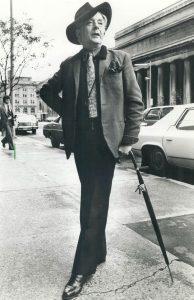
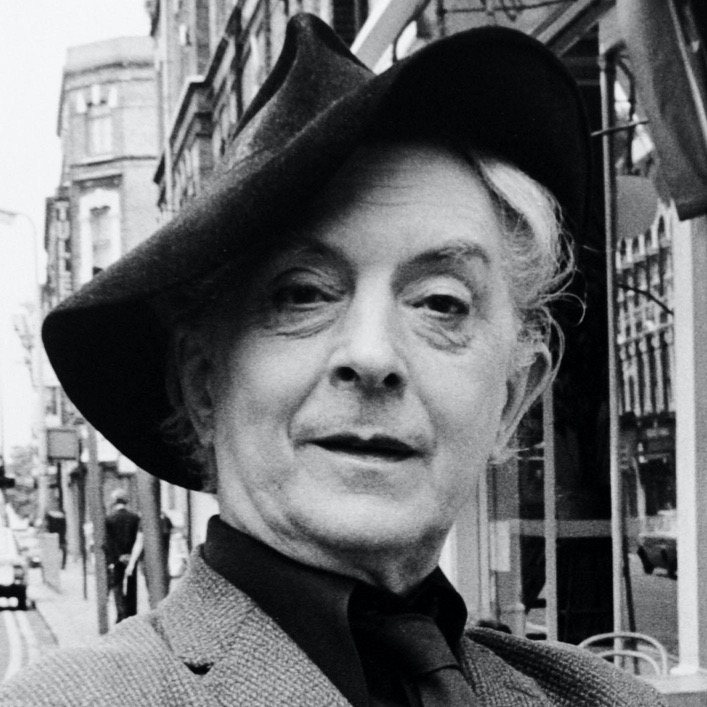
 Quentin Crisp, London, 1980. Credit: Simon Dack Archive/Alamy Stock Photo.
Episode Notes
From a young age, Quentin Crisp was determined to be himself—makeup, painted nails, dramatically dyed hair, and all—even if it consigned him to a life of poverty and isolation. Hear the author, raconteur, and provocateur in a 1970 conversation with Studs Terkel before he found late-in-life fame.
———
For a brief overview of Quentin Crisp’s life, read this 1999 New York Times obituary. Find out more in the three installments of Crisp’s autobiography: The Naked Civil Servant (1968), How to Become a Virgin (1981), and The Last Word (published posthumously in 2017; excerpt here).
To better understand Crisp’s world, read this short history of LGBTQ rights in the UK or take a deeper dive with Peter Ackroyd’s Queer City: Gay London from the Romans to the Present Day and Queer London: Perils and Pleasures in the Sexual Metropolis, 1918-1957 by Matt Houlbrook. Also check out LGBTQ-related items from the London Metropolitan Archives and the Museum of London.
Crisp’s first memoir, The Naked Civil Servant, brought him to the attention of documentarian Denis Mitchell. Mitchell interviewed Crisp in his famously grubby one-room apartment for the investigative current affairs program World in Action; watch the segment here.
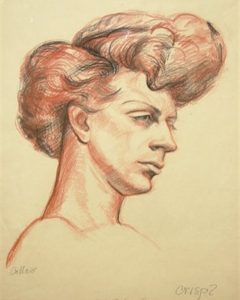
For most of his adult life, Crisp earned a modest living by working as an artist’s model. You can see some of the portraits he sat for (as well as some glamorous photos of young Crisp by Angus McBean) in the National Portrait Gallery’s collection.
In 1975, The Naked Civil Servant was adapted for the screen. See Crisp introduce the film here. John Hurt starred as Crisp and earned a BAFTA award for his performance. He reprised the role in a sequel over 30 years later.
Following the film’s success, Crisp toured the UK and North America with a celebrated one-man show titled An Evening with Quentin Crisp. You can watch it in its entirety here. The show opened at the Players Theatre in New York City on December 20, 1978. Crisp revisited the play 20 years later to rave reviews.
In 1987, the musician Sting was inspired by Crisp to write the song “An Englishman in New York.” Crisp starred in the music video, which you can see here. Watch Sting talk about the song and his friendship with Crisp in this interview.
In addition to his autobiographies, Crisp also wrote books like How to Have a Life Style (1975), Doing It with Style (1981), Manners from Heaven (1985) and Resident Alien: The New York Diaries (1997), a compilation of columns he wrote for the New York Native, a gay New York City newspaper.
Crisp was a frequent guest on talk shows throughout the ’70s, ’80s, and ’90s. Watch a few of his appearances on Late Night with David Letterman here.
Crisp had plenty of detractors in the LGBTQ community and was criticized for the provocative statements he made equating homosexuality with mental illness, dismissing gay liberation, and downplaying the AIDS epidemic (though he later donated regularly to AIDS organizations). Watch him talk on the subject of gay liberation here.
In 1993, Crisp played Queen Elizabeth I in Sally Potter’s Orlando. You can see him in the trailer here and read his recollections of the experience here.
Crisp’s estate is tended by his longtime friend Phillip Ward. Ward also co-edited the final installment of Crisp’s autobiography and created Crisperanto: The Quentin Crisp Archives from personal effects left to him in Crisp’s will to keep his memory alive.
Crisp died on November 21, 1999. Listen to his friends and family share their memories of Crisp in this recording of his memorial service.