
Creative Evolution
Henri Bergson
While intelligence treats everything mechanically, instinct proceeds, so to speak, organically. If…we could ask and it could reply, it would give up to us the most intimate secrets of life. -from Chapter II Anticipating not only modern scientific theories of psychology but also those of cosmology, this astonishing book sets out a impressive goal for itself: to reconcile human biology with a theory of consciousness. First published in France in 1907, and translated into English in 1911, this work of wonder was esteemed at the time in scientific circles and in the popular culture alike for its profound explorations of perception and memory and its surprising conclusions about the nature and value of art. Contending that intuition is deeper than intellect and that the real consequence of evolution is a mental freedom to grow, to change, to seek and create novelty, Bergson reinvigorated the theory of evolution by refusing to see it as merely mechanistic. His expansion on Darwin remains one of the most original and important philosophical arguments for a scientific inquiry still under fire today. French philosopher HENRI BERGSON (1859-1941) was born in Paris. Among his works are Matter and Memory (1896), An Introduction to Metaphysics (1903), and The Two Sources of Morality and Religion (1932). He was awarded the Nobel Prize for Literature in 1927.
About the author
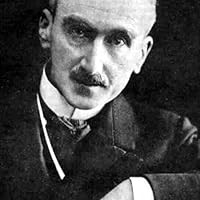
Henri Bergson
Popular and accessible works of French philosopher and writer Henri Louis Bergson include Creative Evolution (1907) and The Creative Mind (1934) and largely concern the importance of intuition as a means of attaining knowledge and the élan vital present in all living things; he won the Nobel Prize of 1927 for literature.
Although international fame and influence of this late 19th century-early 20th century man reached heights like cult during his lifetime, after the Second World War, his influence decreased notably. Whereas such thinkers as Maurice Merleau-Ponty, Jean Paul Sartre, and Lévinas explicitly acknowledged his influence on their thought, Bergsonism of Gilles Deleuze in 1966 marked the reawakening of interest. Deleuze recognized his concept of multiplicity as his most enduring contribution to thinking. This concept attempts to unify heterogeneity and continuity, contradictory features, in a consistent way. This revolutionary multiplicity despite its difficulty opens the way to a re-conception of community, or so many today think.
(Goodreads.com)