

The Undiscovered Self
C.G. Jung, R.F.C. Hull (Translator)
One of the world’s greatest psychiatrists reveals how to embrace our own humanity and resist the pressures of an ever-changing world.
In this challenging and provocative work, Dr. Carl Jung—one of history’s greatest minds—argues that civilization’s future depends on our ability as individuals to resist the collective forces of society. Only by gaining an awareness and understanding of one’s unconscious mind and true, inner nature—”the undiscovered self”—can we as individuals acquire the self-knowledge that is antithetical to ideological fanaticism. But this requires that we face our fear of the duality of the human psyche—the existence of good and the capacity for evil in every individual.
In this seminal book, Jung compellingly argues that only then can we begin to cope with the dangers posed by mass society—”the sum total of individuals”—and resist the potential threats posed by those in power.
About the author
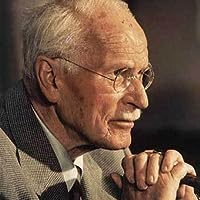
C.G. Jung
Carl Gustav Jung (/jʊŋ/; German: [ˈkarl ˈɡʊstaf jʊŋ]), often referred to as C. G. Jung, was a Swiss psychiatrist and psychotherapist who founded analytical psychology. Jung proposed and developed the concepts of extraversion and introversion; archetypes, and the collective unconscious. His work has been influential in psychiatry and in the study of religion, philosophy, archeology, anthropology, literature, and related fields. He was a prolific writer, many of whose works were not published until after his death.
The central concept of analytical psychology is individuation—the psychological process of integrating the opposites, including the conscious with the unconscious, while still maintaining their relative autonomy. Jung considered individuation to be the central process of human development.
Jung created some of the best known psychological concepts, including the archetype, the collective unconscious, the complex, and synchronicity. The Myers-Briggs Type Indicator (MBTI), a popular psychometric instrument, has been developed from Jung’s theory of psychological types.
Though he was a practising clinician and considered himself to be a scientist, much of his life’s work was spent exploring tangential areas such as Eastern and Western philosophy, alchemy, astrology, and sociology, as well as literature and the arts. Jung’s interest in philosophy and the occult led many to view him as a mystic, although his ambition was to be seen as a man of science. His influence on popular psychology, the “psychologization of religion”, spirituality and the New Age movement has been immense.