

2 days ago (democritikos.medium.com)
Do these categories still matter?
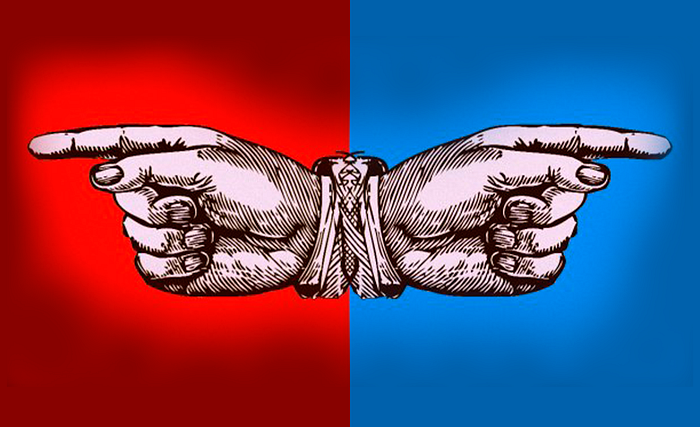
At some point, a question often arises in political science classrooms, conversation between political enthusiasts, journalistic gatherings and family reunions: Does it make sense to talk about left, right, or even centre today?
Accepting the challenge of giving my own interpretation, based on political history, and taking the bull by the horns, I can say that this question has answers, convoluted and complex, but it is not unanswerable, as is often claimed in order to try to put the matter to rest.
Initially left and right were categories designating a literal place, a position: during the French Revolution, the midwife of modern politics, those on the left of the king were those in favour of extending citizenship rights to the common people or third estate, which included everything from rich non-aristocrats to farmers. In other words, 80 to 90% of France. That was at least the theory.
To the right of the king sat the defenders of the privileges of the aristocratic and estamental society, the prevalence of the king as the exclusive sovereign (or with shared but still prevalent sovereignty), and the political and social influence of the Church.

Of course, this origin shows how arbitrary these concepts are, for if the French deputies had sat differently, the names would have been switched around. There is nothing intrinsic, essential…right?
It’s true that a culturalist look reveals some references that could be interpreted as related to the moral value given to the terms left and right: for example, in the Christian tradition, someone is often referred to as being “at the right hand of God”, in positive terms, while the sinister (sinistra = left, in latin) is regarded as negative. Being left-handed has been frowned upon for centuries. In Spanish being “left-handed” with someone or something is linked with weakness, while “getting right” or “doing something right-handed” implies order or correctness. In fact, in English the term right coincides with the meaning of correct. Numerous right-wing political parties have taken advantage of these fortunate coincidences.
During the French Revolution, there was the far left, such as the most radicalized Jacobins (La Montagne, the Hebertists, etc.), led by Robespierre or Saint-Just. There was the far right, like the staunchest supporters of absolutism and the divine right of kings. And there was the centre, the Plain, the moderates who defended a mixed system of shared power, a kind of constitutional monarchy, as did some of the Girondins and personalities such as Madame de Staël. These were the initial “winners” of the Revolution, for the king was not deposed until 1793, and only then was the first French Republic created.

But the left of the time also won, (a largely liberal left, and not socialist; and a republican liberalism, concerned with enlightening citizenship, with public schools, with building states, not dissolving them into nothingness as some so-called classical liberal sor libertarians claim today) because a Constitution was adopted, France was declared a nation (not just a kingdom) and sovereignty was placed in the hands of the people.
Subjects became citizens, and the elimination of all privilege based on birth was promoted. Economic restrictions were also removed and the road to capitalism was paved. Blue blood was no longer to imply a person’s success and social advancement. From this inheritance comes nationalism, which although it may sound strange today, was initially linked to progress and to the left of the time, as it defended that sovereignty was not royal, but national/popular, and that people were not subjects of the Crown, but citizens of the Nation. The Cadiz Constitution in 1812 in Spain, inherited these values and became one of the most advanced in the world, as well as the Trienio Liberal of 1820–1823, which I studied attentively in previous blog pieces . (in Spanish). The invasion of a coalition of absolutist powers destroyed the liberal government and reinstated Fernando VII.
Exhibition: Spain’s Trienio liberal (1820-1823)
Edit description
Trienio Liberal (Liberal Triennium) (1820-1823)
Trienio Liberal (1820-1823)
That said, let us look at the present: hundreds of years have passed since the Revolution. In that time, what is understood by left and right has adapted, there have been thousands of changes and replacements, and above all — in my opinion — two key meanings that have altered the old denominations: on the one hand, the original left, which was liberal, built a market model that attacked the old guild and estates system of the Ancien Régime. The Carlists and the Malcontents are a good example of this in the case of Spain.
However, the illiberal right wing ended up taking over the market and national sovereignty, which definitively defeated the model of the Ancien Régime and gave way to liberal, constitutional and capitalist states. From the shortcomings and difficulties of this model, different ideologies emerged and grew, such as socialism, anarchism and syndicalism.

Marxism, which followed socialism, gave impetus to the latter in many countries and claimed to be the real left, the one that was now with a people whom the liberal bourgeoisie had left marginalised, becoming in their eyes a new aristocracy that replaced that of the Ancien Régime and prevented the democratisation of nation-states. They were not without reason, because the increasingly conservative liberals refused to extend the vote out of a fear — logical at the time — of the demagogic populism of the overwhelmingly illiterate masses, who tended to take revenge on the elites. Elites that often not only squeezed but also suffocated.
In this context, socialism and trade unionism were revived with great force, and conservatism and liberalism, historical rivals (in the 19th century there was always a Liberal and a Conservative Party in each country), came closer together in the face of the “red menace”. This led both liberals and conservatives towards parties and philosophies that were close to each other, always with their nuances, because in truth the triumph of liberalism and its national-constitutional ideas was of such magnitude that it can be said that it died of success, by convincing others of its ideas, especially because of the nationalist and economic candy , so attractive then and now.
Thus, by the end of the 19th and the beginning of the 20th century, it could be said that the right had regrouped in a new conservative-liberal version, and the left, even with its more “centrist” exceptions, was seduced by the powerful social discourse of socialists and trade unionists. At its extreme, it was already embracing anti-establishment options such as anarchism and communism. Revolution was emblematic of the leftist and socialist movementst, despite the fact that historically it was the liberals who were the first modern revolutionaries. But, in the eyes of the new left, they were all sustainers of the evil of evils: capitalism.

All this means that in a way the original right took over the ideas of the original left, and then the new socialist left condemned both liberalism and conservatism, because for socialists the key struggle was that of capitalism-proletarian revolution. They made a total dichotomy : either you defend the workers or you are with the capitalist ruling class.
But then came, after the nightmarish 20th century and the totalitarianisms, a gigantic consensus which meant a new twist for the left-right divide: socialists and many communists renounced revolutions and the smoking ruins of”popular democracies” (dictatorships in the name of the people) , accepted representative democracy and modifying market societies from within; conservatives accepted the progressive secularisation of societies, the liberalisation of customs and the need for reforms; in turn, liberals accepted that a democracy collapses without a middle class and without some kind of redistribution of wealth: hence the consensus of welfare states. Keynes, for example, was not a socialist, he was more of a social-liberal or social-democrat.
Was John Maynard Keynes a liberal?
People should be free to choose. It was their freedom not to choose that troubled him | Schools brief

An economist born out of the bloody price that two World Wars had exacted, and someone who saw how the horror of war had shattered economic and political orthodoxies: capitalist states intervening in their economies to support the war effort; communist states turning to the market or nationalism, and allying with their theoretical enemies to defeat fascism; colonial powers unravelling; women working in jobs previously off-limits to them, and so on. World War II truly changed the world. Nothing was left untouched, not even ideologies.
This new social liberalism (and the lesser known ordoliberalism), combined with a faith in globalisation as opposed to nationalism (which had brought misery) was the product of the renunciation of the maxims of different ideologies. For more than a few analysts, the traditional right and left had died. Or at least, it was one of their deaths.
The battleground between left and right became more about identities (feminism, LGBT+ rights, racial minorities, etc.) than about economics, sovereignty or revolutions. Therefore, we could say that the left and the right, simplistically speaking, merged on many of the issues. But these mixtures have led the discontented to reactivate new lefts and new rights that have other dividing lines (other cleavages, in political science). And that is the key. For example, the dividing line is obviously no longer whether absolutism yes or absolutism no, but the positions on globalisation, immigration, subsidies or the extension of certain civil rights. Different kinds of left-wing and right-wing populism as well as new waves of nationalism based on Carl Schmitt’s model of friend-enemy and on the idea of clash of civilizations have emerged from the economical crisis and social tensions.
How populist authoritarian nationalism threatens constitutionalism or: Why constitutional…
The problem with movements and parties spearheaded by “populist” leaders such as Putin, Erdoğan, Orbán, Kaczyński or…

Additionally, the debate now revolves around the position on what kind of national identity is projected and promoted: civic and secular nationalism or identity essentialism. And there, behind the proposals that we see today, if one pulls the historical thread, one can still distinguish the ideological roots, the traditions of thought to which they adhere. It is not enough to say “right” and “left”, you have to be precise. Because obviously, for the rightists of the 19th century, today’s rightists would be leftists, and for the leftists of the 19th century, today’s leftists would be rightists. Let’s remember the Declaration of the Rights of Man, issued a month after the fall of the Bastille, clearly stated “Property is an inviolable and sacred right”, but also “Law is the expression of the general will”. Nowadays, many leftists criticize the first satatement, while many conservatives criticize the latter.
Today people continue to claim the labels of left, right or centre, and therefore they remain relevant. They cannot simply be thrown away, in an effort to mix everything or cut o ut any philosophical debate. Like so many social categories, if they exist it is because people still believe in them, they still have something to tell about ourselves, even if it is something about our prejudices and common places. However, we must not abandon ourselves to simplification: what is it to be a liberal? And a socialist? And a conservative? And an environmentalist? And a nationalist?
Geography also alters these assumptions, since the American left claims to be liberal, while in Europe the liberal tends to be identified with the right… at the same time, the European right is a thousand times more social than the American right, although they may later coincide on some migratory or traditional moral issues.
The 1970s and 1980s marked a new turning point when market fundamentalism triumphed, initially rejected by both the left and the conservative right, and later taken up by the latter in the face of the certain stagnation of Keynesianism. But from there new divides emerged, today relatively clear: you know that it is very difficult for a left-wing party or voter to promote the privatisation of schools, while if you hear that proposal without knowing the political colour you are going to tend to think it comes from the right. 100% of the time? No, but I dare say 80% of the time.
But if we make a reality check to daily policies, we will find left-wing parties supporting that a region of the same country gets control of tax collection while they criticize tax havens (Spain), or a conservative party recently passing a law in favor of gay marriage (Greece). Reality never stops showing how difficult labeling is.
Catalonia’s frustrated dream: to tax and spend like Basques – France 24
Catalonia’s frustrated dream: to tax and spend like Basques
– France 24 Catalonia’s frustrated dream: to tax and spend like Basqueswww.france24.com

Because of the legacy of liberalism, on the one hand, and socialism, on the other, there are options that both believe in progress but along different paths: some believe that material progress will come from competition in an open and deregulated market; and others believe that the state should lead and even play the leading role in growth. Many defend a position that sees both the market and the state as indispensable and complementary agents.
Add to this the nationalist debate, which is a question of how far one’s space and one’s power go, i.e. a question of identity and sovereignty. And you can find nationalists on the right and on the left. It is more complicated to find capitalist libertarians — or anarchists — who are also nationalists.
In conclusion: there are many rights and many lefts, they have changed over time and it is not possible to divide them into two perfectly compartmentalized blocs. The political arc is profoundly mixed. But there are historical threads — and traditions of thought — that can be traced to understand what remains today. The origin of ideas is important, it brings us closer to the why of things.
It is for this, as for so many other reasons, that history is fundamental to understanding politics. Never trust those who talk a lot about politics but don’t know history: they are like scientists who dismiss the work of those who came before them, while making everyone excited with their great projects. But… What great projects are based on nothing?

Written by Democrítikos
Espacio de análisis político, histórico y cultural. Soy David, un periodista interesado en informar, formar y entretener. Pensamiento crítico y ecuánime.