
When Ouspensky arrives in London in August 1921, he is greeted with the popularity of the English translation of Tertium Organum, which, unknown to him, was published a year earlier in New York and England. Some key members of London’s intellectual circles find his work spellbinding and through their influence and financial support he has a platform to expound Gurdjieff’s teaching.
The final break with Gurdjieff in 1924 marks the point at which Ouspensky resolves to establish his own independent school. But in spite of his access to ample material resources and receptive audiences, he intentionally keeps growth in check during the 1920s, restricting the number of students to be admitted, and focuses much of his time on his publications, often including the London group in the writing process.

[OUSPENSKY] The system is waiting for workers. There is no statement and no thought in it which would not require and admit further development and elaboration. But there are great difficulties in the way of training people for this work, since an ordinary intellectual study of the system is quite insufficient; and there are very few people who agree to other methods of study who are at the same time capable of working by these methods.viii
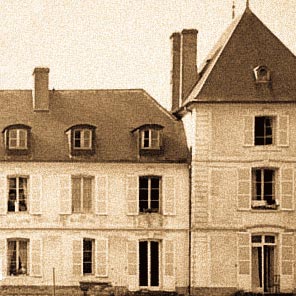
The 1930s ushers in a new climate of expansion. Ouspensky publishes A New Model of the Universe in 1931, restrictions are removed which allows more students to join the school, and larger properties are secured where they can live and work together. The farm at Lyne Place is purchased in 1935, and Colet Gardens in London in 1938, which prompts the establishment of the school’s outer form, the ‘Historico-Psychological Society’.
The society’s constitution outlines the chief aims of the Ouspensky school:
The study of problems of the evolution of man and particularly of the idea of psycho-transformism.
The study of psychological schools in different historical periods and in different countries, and the study of their influence on the moral and intellectual development of humanity.
Practical investigation of methods of self-study and self-development according to principles and methods of psychological schools.
Research work in the history of religions, of philosophy, of science, and of art with the object of establishing their common origin when it can be found and different psychological levels in each of them.ix
At the same time that a momentum is building in the school with more activities and more ambitious plans – his students now numbering over one thousand – there is also an escalation of the war in Europe, which by 1939 forces Ouspensky to bring all the school’s work to an abrupt halt and make the decision to move to the United States. By 1941, he begins holding meetings in New York, and Franklin Farms, a large house and estate in New Jersey, is acquired the following year to serve as his new home and a teaching center for the students who followed him from England and for the American students he will attract.
To be continued…


SOURCES
- Psychological Commentaries by Maurice Nicoll
- Conversation of Ouspensky with Gerald Palmer (1946)
- Autobiographical Note
- In Search of the Miraculous by Peter Deminaovich Ouspensky
- P. D. Ouspensky Memorial Collection, Sterling Memorial Library, Yale University
- A Further Record by Peter Deminaovich Ouspensky
- Witness by John Godolphin Bennett
- Fragments of an Unknown Teaching (1926 manuscript) by Peter Deminaovich Ouspensky
- The Constitution, Objects, and Organization of the Historico-Psychological Society
IN 2022/3, BEPERIOD WILL BE CREATING A FULL-LENGTH DOCUMENTARY ON GEORGE GURDJIEFF
Part I:
Gurdjieff
Part II:
Teaching
Part III:
School
Part IV:
Initiation
Part V:
Fourth Way
(ggurdjieff.com)