
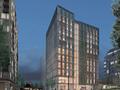
It’s not out of the ground yet, but a proposed 12-story high rise in the Pearl District made out of Cross-Laminated Timber is moving forward into its next phase of design, development and testing.
A project from Portland-based LEVER Architecture and project^, Framework would rise from the corner of Northwest 10th Avenue and Glisan Street on a quarter block that is currently home to Albina Community Bank.

The property owner is Beneficial State Bancorp, which acquired 90 percent of Albina’s stock in 2013. Also part of the project is Home Forward, a Portland-based affordable housing investor and developer.
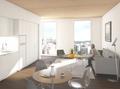
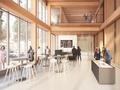
The building will be home to 60 units of workforce housing and office space for socially minded businesses. When the building is completed, it will include ground-level retail — likely including space for Albina Bank — five floors of office space for B Corp businesses and social enterprises and five floors of workforce housing, which slides in somewhere between affordable and market rate housing.
According to information from the project leaders, the initial phase of the project included research and design development into using CLT in a high-rise mass timber building, something that’s not been done much in the U.S. Last September, the teams won a $1.5 million prize in the Tall Wood Building Prize Competition, money that was put toward that initial research.
The project now moves into a second phase of research, which will focus on seismic and fire testing that could pave the way for the city and the state to issue building permits. The testing is expected to wrap up by October, which had initially been a tentative groundbreaking for the project.
Texas-based Southwest Research Institute will conduct the fire testing and Portland State University and Oregon State University will conduct the seismic tests.
The latest designs have also incorporated features designed to help the building better withstand a seismic event.
In addition, Framework’s residential units were initially geared toward households earning up to 80 percent of the annual median income. That benchmark has been adjusted to 60 percent, which could make the units more accessible to more residents.
“This adjustment further demonstrates the project’s commitment to being an innovative contribution to the promotion of social equity while contributing to the vitality of rural and urban economies,” the project team wrote in a statement.
Other consultants who have joined the team include landscape architects 2.ink Studio, TCC & Associates Civil Engineers and StructureCraft Builders, the latter of which is working on constructability, value engineering and sourcing of the wood for the project.
The hope is that at least 50 percent of the wood in the project will come from Oregon.
Click through the gallery for a look at the latest renderings of Framework.
Jon covers real estate for the Portland Business Journal. Sign up for his daily newsletter to hear about new projects and get behind-the-scenes looks at Portland’s rapidly changing built environment.