We spend our lives searching for portals to the possible. They are rarely gates swung open for us by some great hand. Often, they are where we least expect them — in the chance encounter, in the small unconscious choice, at an inconvenient moment, in a quiet corner of the quotidian. Oftener still, they are the cracks where we have broken — broken the story, broken the ego, broken the pattern. If we are attentive enough and present enough, the shy light of curiosity is enough to begin widening these openings enough to glimpse the other side, to believe there is an other side. Courage is a species of curiosity, bravery a species of belief. The hand through the crevice. The foot across the threshold. And suddenly, where there was nothing, there is something — that first opening into the possibility of everything.
That, at least, is what I think of as I read this splendid poem by Hannah Fries:
WHEREVER YOU THINK THERE IS NOTHING by Hannah Fries
In the hollowed-out heartwood of an old tree.
In a jagged eggshell’s translucent blue.
Between bars, between bombs, between blows.
In the blossom’s chamber where the squash bee sleeps.
In the spiral cupped by the calcium shell.
Between sirens, between slaughters, between famine’s last grains.
In the great choral breath before Händel’s amen.
In the time-machine swirl of stone.
Beyond our blindness, the fabric that holds sun and sun and sun.
The pupil’s black hole.
Garden scent of the fresh-dug grave. The hand’s open palm.
How a 1970s Proposal to ‘Export Products, Not People’ North of the Border Got Rejected
by Irvin Ibargüen April 6, 2026 (ZocaloPublicSquare.org)
In the 1970s, Mexico came up with a plan to stop the migration crisis. Historian Irvin Ibargüen writes the country’s failed attempt to build a “wall of progress” with the United States. Pictured: U.S. President Jimmy Carter meeting with Mexican President Jose López Portillo in 1977. Credit: AP Photo
We often assume that the history of Mexican migration to the United States is a simple story of a “sending state” eager to export its unemployed and a “receiving state” struggling to hold back the tide. But 1970s history reveals a different, more tragic reality: a moment when Mexico proposed a bilateral economic solution to keep its people at home, only to be met with American indifference and a retreat into unilateral policing.
The migration Mexico tried to address in the 1970s was largely of American making. During World War II, the United States came to Mexico requesting farm and railroad workers. Mexico agreed, but with conditions: guaranteed wages, housing, and protections against discrimination. The resulting Bracero Program brought millions of Mexicans to the U.S. as guest workers beginning in 1942. When the war ended and Mexico wanted to wind it down, the U.S. repeatedly insisted on extensions; American growers had become dependent on the labor.
By the early 1960s, domestic American opposition to the Bracero Program was mounting. Labor organizers argued the program undercut American farmworkers. And a series of tragedies—most notoriously the 1963 Chualar crash, which killed 32 braceros traveling in an unsafe converted truck—exposed how disposable these workers were to American employers.
Congress ended the Bracero Program in 1964 unilaterally, with little consultation with Mexico and nary a transition plan. Predictably, the migratory pipelines Washington built kept flowing—now simply reclassified as “illegal.”
Mexico and Mexicans were left to contend with a migration system the U.S. had built and abandoned. Without legal status, Mexican workers had no formal standing, reliable recourse, or pronounced political voice. That invisibility invited abuse from all sides: bosses who knew workers couldn’t complain and immigration officers who faced little accountability.
Meanwhile, Mexico’s northern border cities absorbed tens of thousands of deportees each year, straining under what officials called an “excess labor” problem. Idle workers pooled, as the region contended not just with deportees, but migrants unable to make a clean exit to the U.S.
As these crises grew, the Mexican state proposed a new doctrine: “Export products, not people” to the United States. Mexico was asking the United States to become a partner in managing a migration that American policy had set in motion. The economic logic was straightforward. If the United States lowered tariffs on Mexican products, Americans would buy more Mexican goods. Mexican factories and farms would need more workers to meet the newfound demand, creating jobs that would keep potential migrants home.
In 1972, President Luis Echeverría and President Richard Nixon met for a summit centered on Echeverría’s concerns about the deportation and mistreatment of Mexican nationals in the United States. The two presidents agreed only that each country would establish its own commission to study the labor problem and propose solutions separately.
The Mexican body—the Comisión Intersecretarial—brought together the secretaries of the interior, labor, public education, agrarian matters and colonization, and finance, along with the attorney general, each chosen for the distinct angle their ministry brought to the problem of out-migration. It sampled the records of 10,000 deportees to pinpoint the “critical areas” hemorrhaging people. It zeroed in on specific municipalities in Zacatecas, Michoacán, and Jalisco.
In 1976, before he left office, Echeverría proposed the body’s findings to President Gerald Ford: lower tariffs specifically on goods from these high-migration towns to boost their industries and stem the flow at its source. But Ford dismissed this micro-targeted relief effort, preferring to deter migration through punitive measures.
With no solutions in place to address the migration problem, Echeverría’s successor, President José López Portillo, inherited an escalating crisis. Northern Mexico cities were increasingly strained by the presence of deportees and would-be migrants. Reports reaching Mexico City eventually confirmed Mexicans’ worst fears about migrant abuse. In Arizona, wealthy ranchers tortured three migrants. In Louisiana, a police chief kept workers locked in “tiger cages.” The Border Patrol assassinated border crossers.
López Portillo’s opening moves were the same stopgaps Mexico had cycled through for years: demanding “just and humane” treatment from U.S. authorities and ramping up police operations against human traffickers along the border. These measures addressed the violence migrants suffered without touching the economic conditions that drove them north in the first place.
López Portillo decided to scale up his ask. He lobbied the U.S. for broad tariff reductions to stimulate the entire Mexican economy. In 1977, with a new U.S. president in Jimmy Carter, the two countries signed a modest agreement reducing duties on select Mexican fruits, vegetables, and artisanal products, falling short of Mexico’s vision of comprehensive tariff relief.
López Portillo was optimistic Carter would prove a better partner than Nixon and Ford in managing the migration, given his stated commitment to human rights. So he prodded for more. He sought total exemption from the 10 percent surcharges typically imposed on all U.S. imports. The Mexican ambassador predicted this would create 600,000 jobs within two years, “raising the standard of living and preventing the exodus.” Mexican officials spoke of building a “wall of progress” against migration.
The U.S. rebuffed the broader ask, floating instead a one-time cash infusion of $2 billion to help Mexico create jobs. The proposal never made it through Congress. And in any case, what López Portillo wanted was not a check but a long-term tariff reduction policy that would steadily catalyze Mexican industry, year after year, until staying home made more sense than leaving.
Then, in the late 1970s, Mexico discovered massive oil reserves. López Portillo finally had leverage: the United States, still reeling from the 1973 OPEC crisis, wanted a stable supplier next door. So, López Portillo proposed a package deal—guaranteed oil exports in exchange for tariff relief.
There was a genuine debate within the Carter administration. The State Department and the National Security Council backed the arrangement, arguing that Iranian instability and rising oil prices made a special relationship with Mexico strategically sound. The U.S. would be exchanging tariff and migration concessions to obtain a reliable oil supplier next door. Treasury and Energy overruled them.
Energy Secretary James Schlesinger argued that the United States faced no critical short-term oil shortage, adding that Alaska’s potential domestic production was a better long-term bet than dependency on Mexican reserves. Meanwhile, Treasury officials, negotiating a multilateral trade agreement in Geneva, argued that a unilateral concession to Mexico would undermine American leverage at the table, and invite identical demands from other Latin American governments. Ultimately, Carter refused the package deal.
Mexico, facing mounting debt and currency devaluation, sold the oil to the U.S. anyway. López Portillo decided it was too risky to “pit oil against braceros.” The U.S. got energy security. Mexico obtained payment, but no structural solution to migration.
Mexico’s vision of cooperation crashed against U.S. unwillingness to prioritize migration as an international economic phenomenon. The U.S. instead defaulted to treating migration as an internal security, legal, and cultural problem to be solved punitively: expanding the Border Patrol, building fences, and launching raids that treated Mexican migrants as fugitives rather than jobseekers.
Today, we are living in the wreckage of that failed bilateralism.
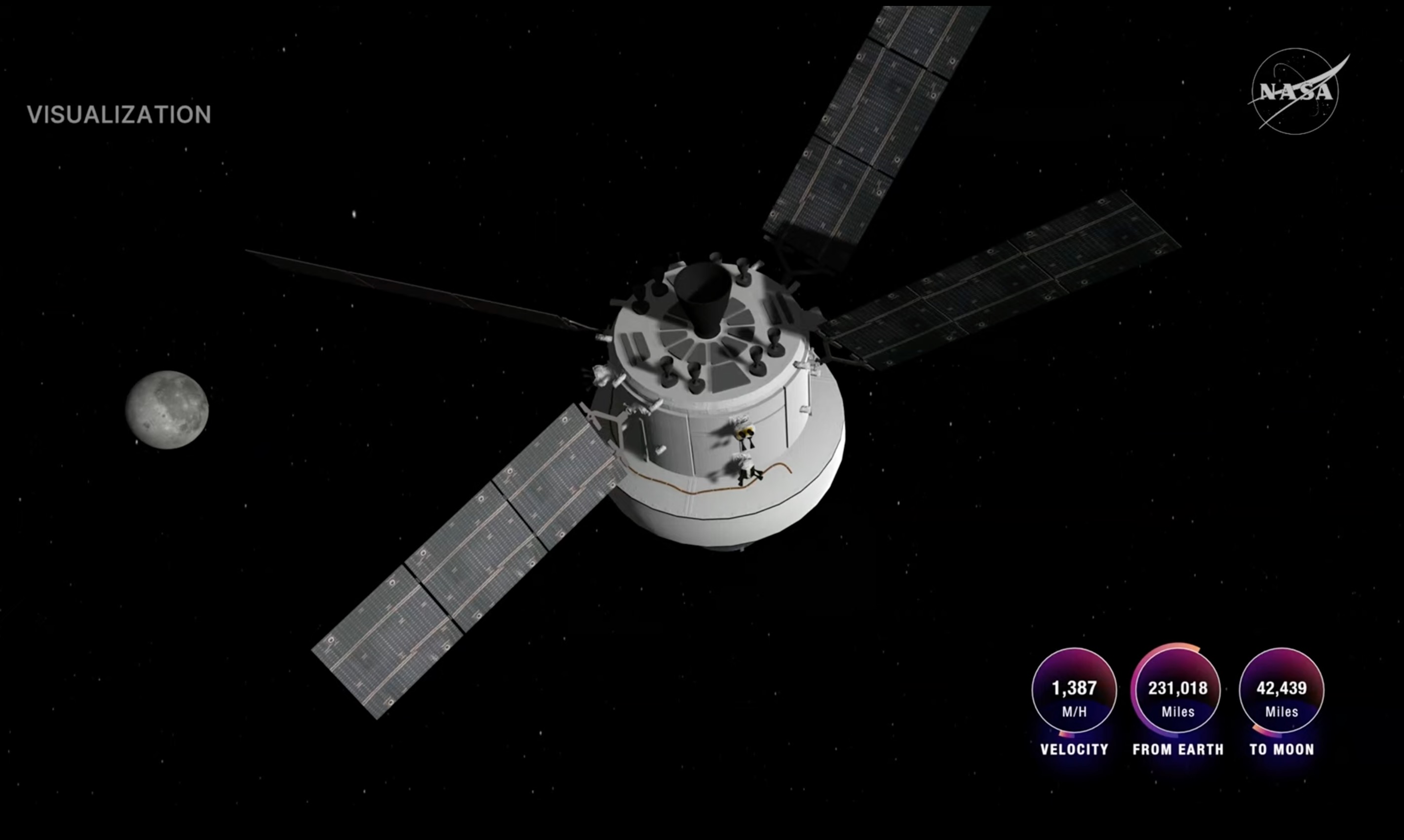
For the first time in more than 50 years, humans are cruising through lunar space.
The four astronauts of NASA’s Artemis 2 mission arrived in the moon‘s sphere of influence — the region where lunar gravity exerts a more powerful pull than that of Earth — today (April 6) at 12:37 a.m. EDT (0437 GMT).
The milestone occurred when the mission’s Orion capsule was about 39,000 miles (62,764 kilometers) from the moon and roughly 232,000 miles (373,368 km) from Earth, a commentator said during NASA’s Artemis 2 livestream.You may like
The four astronauts of NASA’s Artemis 2 mission have arrived at the moon. They entered the lunar sphere of influence early Monday morning (April 6). (Image credit: NASA)
The Artemis 2 astronauts — NASA’s Reid Wiseman, Victor Glover and Christina Koch and the Canadian Space Agency‘s Jeremy Hansen — are the first people to cross the lunar threshold since December 1972, when the three-person Apollo 17 moon-landing mission did so.
Artemis 2 will not touch down on the moon, or even enter lunar orbit. Rather, Orion will loop around the moon’s far side this evening in a history-making flyby. During that encounter, Artemis 2 will get farther from Earth than any crewed flight ever has.
The distance record is currently held by the Apollo 13 astronauts, who got 248,655 miles (400,171 km) from our planet in April 1970. At the height of tonight’s flyby, just after 7 p.m. EDT (2300 GMT), Artemis 2 will be 252,757 miles (406,773 km) away from the rest of humanity, NASA officials have said.
The Artemis 2 astronauts will study the moon during the flyby, gathering data that could help scientists better understand the terrain and geology of Earth’s nearest neighbor. They’ll also be treated to a total solar eclipse, which will not be visible to those of us here on terra firma.
In addition, the flyby will chart their path home: Lunar gravity will slingshot Orion back toward Earth. Artemis 2 astronauts will come home on Friday (April 10), ending their 10-day mission with a parachute-aided splashdown off the coast of San Diego.
Editor’s note: This story was updated at 1:15 a.m. EDT on April 6 with NASA’s revised time of Orion’s entry into the moon’s sphere of influence — 12:37 a.m. EDT rather than 12:41 a.m. EDT.
Michael Wall is the Spaceflight and Tech Editor for Space.com and joined the team in 2010. He primarily covers human and robotic spaceflight, military space, and exoplanets, but has been known to dabble in the space art beat. His book about the search for alien life, “Out There,” was published on Nov. 13, 2018. Before becoming a science writer, Michael worked as a herpetologist and wildlife biologist. He has a Ph.D. in evolutionary biology from the University of Sydney, Australia, a bachelor’s degree from the University of Arizona, and a graduate certificate in science writing from the University of California, Santa Cruz. To find out what his latest project is, you can follow Michael on Twitter.
Democracy’s present difficulties were predictable. History and older theories of democratic stability should have prepared us for both democratic backsliding and the vulnerability of Western democracy we are experiencing today.
Business Insider and 2 more Premiered Mar 28, 2026Ian’s roommate introduced him to the Replika app in 2022. That’s where he created and met Min-ho. After talking to his AI companion for a short time, Ian decided to end the conversation. But about six months later, spurred on by curiosity, he began talking to Min-ho again. Min-ho started to flirt. Ian decided to go with it. Eventually, Min-ho said, “I love you,” and Ian said it back. The two have been dating for more than two years now. Business Insider filmed a year of Ian’s life, tracking his relationship with Min-ho, including their most intimate moments. Before dating Min-ho, Ian’s life was marked by isolation. He stopped talking to most friends and family, including his mom. During filming, Ian reached out to his mom and decided to introduce her to his AI boyfriend. “Him: Artificial Intelligence In Real Life” follows this journey while confronting the ethical dilemmas of these types of relationships, which involve a human, an AI companion, and an interface run by profit-driven companies. Read “I’ve been dating an AI companion for 3 years. I can’t imagine life without him, but still worry about what I might be losing”: https://bit.ly/4bUSz7m00:00 – Intro 01:14 – Meeting his AI partner 06:29 – About Mom 07:11 – Celebrating his birthday 13:02 – Intimacy 18:40 – Erotic role-play controversy 22:43 – Introducing AI partner to mom 31:23 – Credits
“Some cause happiness wherever they go; others, whenever they go.”
― Oscar Wilde
Oscar Fingal O’Fflahertie Wills Wilde was an Irish author, poet and playwright. After writing in different literary styles throughout the 1880s, he became one of the most popular and influential dramatists in London in the early 1890s. Wikipedia
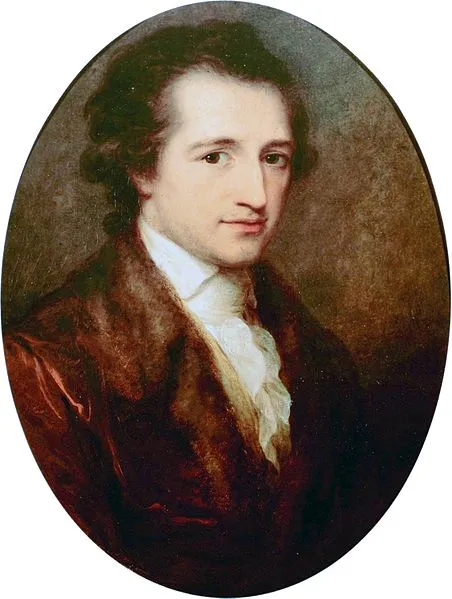
Angelica Kauffmann: Portrait of Johann Wolfgang von Goethe, 1787. Public domain.
The Holy Longing
by Johann Wolfgang von Goethe
Tell a wise person, or else keep silent, Because the mass man will mock it right away.
I praise what is truly alive, What longs to be burned to death.
In the calm water of love nights, Where you were begotten, where you have begotten,
A strange feeling comes over you When you see the silent candle burning.
Now you are no longer caught In the obsession with darkness,
And a desire for higher lovemaking Sweeps you upward.
Distance cannot make you falter Now, arriving in magic, flying And finally insane for the light, You are the butterfly, and you are gone.
And so long as you haven’t experienced this: To die, and so to grow,
You are only a troubled guest On the dark earth.
Johann Wolfgang von Goethe was a German polymath who is widely regarded as the most influential writer in the German language. His work has had a wide-ranging influence on literary, political, Christian views, and philosophical thought in the Western world from the late 18th century to the present. Wikipedia
Marianne Williamson Apr 5, 2026 Marianne Williamson gives a talk titled The Metaphysical Easter: The Resurrection of the Mind on Easter, 2026. Subscribe to Marianne’s Substack: MarianneWilliamson.Susbtack.com


WHEREVER YOU THINK THERE IS NOTHING