These passages appear on pages 126-127 of Traversal in the context of Mary Shelley’s life.
Where does love go when it goes?
It is a common question, contrived in its commonness yet savagely sincere, bellowing in the bosom of every brokenhearted lover, reverberating through the body of every civilization’s love songs and sonnets, radiating from cave drawings and dive bar graffiti. It is also a peculiar question, lexically and syntactically, for it presupposes two things about the life of the heart: a movement and a destination, as if love rose to its feet one day and headed for an elsewhere, left without a map, got lost, lost to seasons and cycles, lost like the mammoth and the human dorsal fin and the surnames of millennia of daughters. It feels like nothing less than a violation of the universe—how love alone can defy the first law of thermodynamics, how this most immense energy of being can simply dissipate into the oceanic austerity of time.
We build the sandcastles of our loves and fancy them fortresses of granite, then watch bewildered as the waves of our inconstancy lap them away, along with the footprints of the builder. Each love we love and unlove alters the way we walk through life, alters the trajectory of our traversal along the shoreline of the self. The only constant is that we go on walking, that we remain pilgrims of possibility. We would not walk if we had already arrived. We would not write if we had already arrived. Out of our incompleteness and our disorientation, out of our longing and our wanderlust, arises the motive force of every love and every revolution, of our science and our art, of our creation and our self-creation. Every creative act is an act of traversal.
They are so far out of sight for us, creatures of the upper world, that we don’t readily think of them. But as soon as we do, as soon as we plunge the mind into the cold dark humus to which the body will one day return, they become a spell against despair and a consecration of all that is alive.
Beneath our feet, roots spread fractal and pulmonary, veining the biosphere with the bloodstream of life. The word itself shares its root with “radical” and “race” in the Latin radix — the origin point from which all things centripetally grow.
Just as I was contemplating the logical language of roots — the exposed fragments of them across the trail like a message in Morse code, a poem in Braille, a code language of fractals and Fibonacci sequences and mathematics we are yet to discover — I came upon botanist and prairie ecologist John Weaver’s marvelously illustrated century-old book The Ecological Relations of Roots.
Schematic bisect showing the root stem relations of important prairie plants: hu, Heuchera glabella; a, Astragalus arrectus; s, Sidalcea oregana; h, Helianthella douglasii; ag, Agropirum spicatum. (Available as a print and a field notebook, benefitting The Nature Conservancy.)
In the first year of the First World War, Weaver set out to understand how life anchors itself to the substrate of living. He spent four years studying 1,150 individual root systems of about 140 different species of shrubs, grasses, and herbs across Nebraska, Washington, and Colorado’s Rocky Mountains.
Belonging to the last generation of scientists who were not yet schooled out of art and its power to magnify thought, he illustrated the book himself, drawing the root systems as he excavated them, always to exact measurements, and later retracing them in India ink.
Schematic bisect: h, Hieracium scouleri; k, Keleria cristata; b, Balsamorhiza sagittata; f, Festuca ovina ingrata; g, Geranium oviscosissimum; p, Poa sandbergit; ho, Hoorebekia racemosa; po, Potentilla blaschheana. (Available as a print and a field notebook, benefitting The Nature Conservancy.)
Schematic bisect: s, Sieversia ciliata; w, Wyethia amoplezicaulis; ll, Lupinus leucophyllus; lo, Lupinus ornatus; p, Poa sandbergii; e, Leptotenia multifida; a, Agropyrum spicatum. (Available as a print and a field notebook, benefitting The Nature Conservancy.)
Looking back on the discoveries, he observes:
The general characters of the root systems of a species are often as marked and distinctive as the above-ground vegetative characters. But the root systems of different species of the same genus, while often somewhat similar, may be of entirely different types.
It is not hard to see ourselves in them — how much of our essential character dwells beneath the surface of the self, how seemingly similar people may differ profoundly in their subterranean essence. It helps to remember that the visible self is fed by an invisible counterpart at least as intricate and extensive; that the two are so tightly stemmed together that we are always interacting with both the visible person and their invisible root system.
Root system relations. (Available as a print, benefitting The Nature Conservancy.)
As it happens, my friend Hannah Fries has just the right poem to reverence this existential dimension of roots and their relations, found in her altogether wonderful collection Little Terrarium (public library):
EPITHALAMION by Hannah Fries
The elm weaves the field’s late light, this hill hanging from the tree’s roots like the moon from its shadow and the whole world beneath suspended.
Roots knead the earth’s thick sorrow. Still, leaves from this. From this unshackling, birdsong.
I am a blade of corn where you kneel, wind and quaking stalk. The elm’s body a vase of poured sky.
The tree will die. Someday, the tree will die.
For now, this axis — what we choose to compass by.
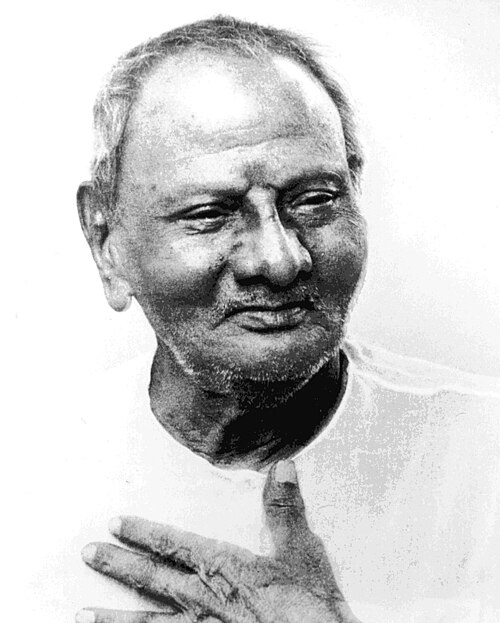
“There is no such thing as a person. There are only restrictions and limitations.The sum total of these defines the person. (…) The person merely appears to be, like the space within the pot appears to have the shape and volume and smell of the pot.”
~ Nisargadatta
Nisargadatta Maharaj was an Indian guru of nondualism, belonging to the Inchagiri Sampradaya, a lineage of teachers from the Navnath Sampradaya. Wikipedia
“Can the planet be rescued from the psychopaths? The persistent concern of engaged artists, of cultural workers, in this country and certainly within my community, is, What role can, should, or must the film practitioner, for example, play in producing a desirable vision of the future? And the challenge that the cultural worker faces, myself for example, as a writer and as a media activist, is that the tools of my trade are colonized. The creative imagination has been colonized. The global screen has been colonized. And the audience—readers and viewers—is in bondage to an industry. It has the money, the will, the muscle, and the propaganda machine oiled up to keep us all locked up in a delusional system—as to even what America is. We are taught to believe, for example, that there is an American literature, that there is an American cinema, that there is an American reality.”
–TONI CADE BAMBARA
Toni Cade Bambara, born Miltona Mirkin Cade, was an African-American author, documentary film-maker, social activist and college professor. Wikipedia
DALLAS—Saying the decision had been reached following an extensive internal review of the company’s boarding procedures, Southwest Airlines confirmed Tuesday that passengers would now be assigned chores ahead of time. “There has always been a degree of chaos around passengers having to choose right as they’re boarding how they’re going to help keep the plane tidy,” said Southwest representative Martin Nieman, explaining that the airline hoped to streamline the task allocation process by randomly appointing responsibilities at the time of check-in. “For instance, everyone in row 18 might now be in charge of trash on this flight, while those in the fire exit rows will push the beverage cart. Chore assignments will be clearly printed on all boarding passes for ticketed travelers 2 years old and above. Those flying standby may refer to the chore wheels posted at fore and aft of the plane. Of course, you will have the option to pay extra if you want a more comfortable job.” Nieman asked flyers frustrated about being on bathroom duty to be patient, stressing that everyone who flew with Southwest would have to take on the unpleasant task eventually.
Tom Campbell Mar 22, 2026 This comment is from the video on Tom’s channel: AI Potential: What are the Possibilities? AI Potential: • Tom Campbell on AI Art and Creativity Tom discusses how an artist may work well with AI to develop a new kind of art that can preserve both the style and creativity of the artist. We would like to honor the comments you make on topics important to you! We will be looking for comments to answer your questions. They can also be submitted to MBTEvents.com contact form, or through Tom’s website contact form my-big-TOE.com
Award Winner in the Science category of the 2020 Best Book Awards sponsored by American Book Fest Award-winning author and thought leader Dawson Church, Ph.D., blends cutting-edge neuroscience with intense firsthand experience to show you how you can rewire your brain for happiness-starting right now.Neural plasticity-the discovery that the brain is capable of rewiring itself-is now widely understood. But what few people have grasped yet is how quickly this is happening, how extensive brain changes can be, and how much control each of us has over the process.In Bliss Brain, famed researcher Dawson Church digs deep into leading-edge science, and finds stunning evidence of rapid and radical brain change. In just eight weeks of practice, 12 minutes a day, using the right techniques, we can produce measurable changes in our brains. These make us calmer, happier, and more resilient.When we cultivate these pleasurable states over time, they become traits. We don’t just feel more blissful as a temporary state; the changes are literally hard-wired into our brains, becoming stable and enduring personality traits.The startling conclusions of Church’s research show that neural remodeling goes much farther than scientists have previously understood, with stress circuits shriveling over time. Simultaneously, “The Enlightenment Circuit”-associated with happiness, compassion, productivity, creativity, and resilience-expands.During deep meditation, Church shows how “the 7 neurochemicals of ecstasy” are released in our brains. These include anandamide, a neurotransmitter that’s been named “the bliss molecule” because it mimics the effects of THC, the active ingredient in cannabis. It boosts serotonin and dopamine; the first is an analog of psilocybin, the second of cocaine. He shows how cultivating these elevated emotional states literally produces a self-induced high.While writing Bliss Brain, Church went through a series of disasters, including escaping seconds ahead of a California wildfire that consumed his home and office and claimed 22 lives. The fire triggered a painful medical condition and a financial disaster. Through it all, Church steadily practiced the techniques of Bliss Brain while teaching them to thousands of other people. This book weaves his story of resilience into the fabric of neuroscience, producing a fascinating picture of just how happy we can make our brains, no matter what the odds.
The academy’s oversight board records show leaders dismantling DEI to align with Trump directives. Critics warn the military is becoming “a Christian nationalist praetorian guard.”
Erika Kirk sits for a town hall event moderated by CBS News editor-in-chief Bari Weiss in New York City, which broadcast on Dec. 13, 2025. Photo: Michele Crowe/CBS News via Getty Images
Records from the United States Air Force Academy’s oversight board show leaders dismantling diversity programs and reviewing curriculum as the board embraces what critics call a concerning ideological turn toward Christian nationalism and prepares to seat conservative activist Erika Kirk.
The communications, revealed in December 2025 meeting minutes reviewed by The Intercept, come as the administration has employed religious rhetoric in its military policies. Amid the U.S. and Israel’s war on Iran, some service members and political supporters have framed the war in religious terms, including describing it as part of “God’s divine plan.” Other federal agencies have also openly embraced white nationalist rhetoric and imagery, including a Department of Homeland Security recruitment post that used a neo-Nazi-associated anthem days after the fatal ICE shooting of Renee Good in Minneapolis.
When the White House announced Kirk’s appointment to fill her late husband’s seat on the board, it highlighted Charlie Kirk’s “bold Christian faith,” language critics say suggests religion was treated as a qualification for the role.
“The appointment of Erika Kirk to the U.S. Air Force Academy Board of Visitors goes hand in hand with Christian nationalist incursions into our armed forces, such as Pete Hegseth’s actions and statements promoting his fervent brand of evangelical Christianity at the Pentagon,” said Annie Laurie Gaylor, co-president of the Freedom From Religion Foundation.
Critics warn the changes could reshape how the military’s premier officer training institution educates future leaders as it aligns with the administration’s “Restoring America’s Fighting Force” initiative, President Donald Trump and Defense Secretary Pete Hegseth’s marquee plan to reverse the military’s diversity efforts and emphasize “lethality.”
“The appointment of Erika Kirk goes hand in hand with Christian nationalist incursions into our armed forces.”
Minutes from the meeting describe academy leaders briefing the board on steps taken to implement those directives, including removing DEI elements from the admissions process and reviewing curriculum and academy facilities for compliance with presidential executive orders.
In public comments submitted to the Board of Visitors, included in the meeting materials, Doug Truax, CEO of the conservative Restoration of America Foundation, urged the board to review faculty and programs he said were aligned with “social justice” agendas. He also singled out Col. Candice Pipes, the academy’s admissions chief, for commenting on racial disparities in the Air Force, and claimed she said she pays a “diversity tax” as a Black woman.
The Air Force Academy has established four task forces to ensure compliance with the “Restoring America’s Fighting Force” plan, according to the minutes. One of them, focused on admissions, found that “with the changes being implemented, the Academy’s admissions process is merit-based and that diversity, equity, and inclusion (DEI) elements have been removed.”
The Board of Visitors is a congressionally mandated oversight body that reviews cadet life, curriculum, faculty, finances, and discipline at the Air Force Academy, which commissions roughly half of the service’s new officers each year and plays a central role in shaping the culture of future military leadership. The board’s findings and recommendations are delivered to the secretary of the Air Force and forwarded to Hegseth and Congress. While the board cannot directly set policy, its oversight can shape Pentagon scrutiny and congressional funding decisions.
“The Board can influence congressional funding of the academy, so there’s definitely some power there,” said William J. Astore, a retired Air Force lieutenant colonel who taught at the academy for six years. “More than anything, the appointment of Kirk to the board demonstrates the ongoing politicization of the service academies.”
“More than anything, the appointment of Kirk to the board demonstrates the ongoing politicization of the service academies.”
Unlike earlier political appointments to the board, Kirk’s selection reflects a specific political and religious alignment rather than expertise in military affairs, said retired Air Force Lt. Col. Rachel VanLandingham, a graduate and former instructor at the academy. She warned the move could encourage academy officials who share those views to shape internal reporting or programs in ways that reinforce them.
“The BOV only makes recommendations to the secretary of defense through the secretary of the Air Force, so its influence is typically quite indirect,” VanLandingham said. “However, given Secretary Hegseth’s alignment with Kirk’s group and connections to Ms. Kirk, this appointment could provide a backdoor directly to the secretary of defense, thus elevating its power.”
The changes revive long-standing concerns about religion and ideology at the academy. The Colorado Springs institution has faced repeated allegations over the past two decades that Christian beliefs are favored within cadet culture and leadership structures. In 2005, the Air Force launched a major investigation after cadets reported pressure to attend chapel services and adopt evangelical Christian beliefs. The review found that academy leaders had struggled to fully accommodate the religious needs of non-Christian cadets and had blurred the line between permissible religious expression and coercion.
Later climate surveys continued to highlight the issue. One 2010 survey found that 41 percent of cadets who identified as non-Christian said they had experienced unwanted religious proselytizing at least once or twice in a year.
“USAFA has long struggled with unlawful religious viewpoint discrimination, institutionally favoring Christianity over other religions,” said VanLandingham. “This appointment is not helpful in that regard.”
Federal law governing the Air Force Academy’s Board of Visitors divides appointment authority among the White House and congressional leadership. The panel’s members are selected by the president, the House speaker and House minority leader, the Senate majority and minority leaders, and the chairs and ranking members of the House and Senate armed services committees.
Of the board’s 14 currently filled seats, 10 are held by members of Congress, including seven Republicans and three Democrats, compared to five Democrats and three Republicans in December 2022. The remaining four members are presidential appointees. Only a small minority of the board’s members have prior military experience.
Minutes from a December 2022 meeting during the Biden administration show that academy leaders briefed members on cadet welfare programs, admissions, and sexual violence prevention initiatives, a stark contrast to the priorities under Trump.
We’re independent of corporate interests — and powered by members. Join us.
Astore, the retired Air Force lieutenant colonel, said the board historically drew little attention from faculty focused on cadet education. But he said recent meetings and Kirk’s appointment suggest a growing focus on ideological priorities rather than professional military education.
“I don’t think Erika Kirk is going to question why cadets aren’t learning their Clausewitz and Sun Tzu,” he said.
“It is telling and highly inappropriate that the White House, in announcing Kirk’s appointment, brought up Charlie Kirk’s ‘bold Christian faith,’” Gaylor, of Freedom From Religion Foundation, said, “as if that were a qualification for his widow serving on it. The Constitution still bars any religious test for public office, but apparently the White House isn’t aware of that.”
The White House did not respond to questions from The Intercept asking why Kirk was selected for the position.
Turning Point USA, the conservative activist organization founded by Charlie Kirk where his wife is now CEO and board chair, also did not respond to questions about what role she is expected to play on the board.
A spokesperson for the academy said the institution “thanks all members of the Board of Visitors for their service and commitment to our mission,” and that according to federal law, “the institution does not influence or take a position on the selection of individual Board of Visitors members.”
But critics and former academy officials warned the changes could shape a generation of officers more loyal to political ideology than to the military’s traditional commitment to constitutional, nonpartisan service.
“They aren’t serious about developing officers of character at USAFA who can critically think and defend our nation most effectively through wise leadership,” VanLandingham said. “They are interested in turning the military into a Christian nationalist praetorian guard.”
The Intercept has long covered authoritarian governments, billionaire oligarchs, and backsliding democracies around the world. We understand the challenge we face in Trump and the vital importance of press freedom in defending democracy.
There was a time when meadow, grove, and stream, The earth, and every common sight To me did seem Apparelled in celestial light, The glory and the freshness of a dream. It is not now as it hath been of yore;— Turn wheresoe’er I may, By night or day, The things which I have seen I now can see no more.
The rainbow comes and goes, And lovely is the rose; The moon doth with delight Look round her when the heavens are bare; Waters on a starry night Are beautiful and fair; The sunshine is a glorious birth; But yet I know, where’er I go, That there hath past away a glory from the earth.
Now, while the birds thus sing a joyous song, And while the young lambs bound As to the tabor’s sound, To me alone there came a thought of grief: A timely utterance gave that thought relief, And I again am strong. The cataracts blow their trumpets from the steep,— No more shall grief of mine the season wrong: I hear the echoes through the mountains throng. The winds come to me from the fields of sleep, And all the earth is gay; Land and sea Give themselves up to jollity, And with the heart of May Doth every beast keep holiday;— Thou child of joy, Shout round me, let me hear thy shouts, thou happy Shepherd-boy! Ye blesséd Creatures, I have heard the call Ye to each other make; I see The heavens laugh with you in your jubilee; My heart is at your festival, My head hath its coronal, The fulness of your bliss, I feel—I feel it all. O evil day! if I were sullen While Earth herself is adorning This sweet May-morning; And the children are culling On every side In a thousand valleys far and wide Fresh flowers; while the sun shines warm, And the babe leaps up on his mother’s arm:— I hear, I hear, with joy I hear! —But there’s a tree, of many, one, A single field which I have look’d upon, Both of them speak of something that is gone: The pansy at my feet Doth the same tale repeat: Whither is fled the visionary gleam? Where is it now, the glory and the dream?
Our birth is but a sleep and a forgetting; The Soul that rises with us, our life’s Star, Hath had elsewhere its setting And cometh from afar; Not in entire forgetfulness, And not in utter nakedness, But trailing clouds of glory do we come From God, who is our home: Heaven lies about us in our infancy! Shades of the prison-house begin to close Upon the growing Boy, But he beholds the light, and whence it flows, He sees it in his joy; The Youth, who daily farther from the east Must travel, still is Nature’s priest, And by the vision splendid Is on his way attended; At length the Man perceives it die away, And fade into the light of common day.
Earth fills her lap with pleasures of her own; Yearnings she hath in her own natural kind, And, even with something of a mother’s mind, And no unworthy aim, The homely nurse doth all she can To make her foster-child, her inmate, Man, Forget the glories he hath known, And that imperial palace whence he came.
Behold the Child among his new-born blisses, A six years’ darling of a pigmy size! See, where ’mid work of his own hand he lies, Fretted by sallies of his mother’s kisses, With light upon him from his father’s eyes! See, at his feet, some little plan or chart, Some fragment from his dream of human life, Shaped by himself with newly-learned art; A wedding or a festival, A mourning or a funeral; And this hath now his heart, And unto this he frames his song: Then will he fit his tongue To dialogues of business, love, or strife; But it will not be long Ere this be thrown aside, And with new joy and pride The little actor cons another part; Filling from time to time his ‘humorous stage’ With all the Persons, down to palsied Age, That life brings with her in her equipage; As if his whole vocation Were endless imitation.
Thou, whose exterior semblance doth belie Thy soul’s immensity; Thou best philosopher, who yet dost keep Thy heritage, thou eye among the blind, That, deaf and silent, read’st the eternal deep, Haunted for ever by the eternal Mind,— Mighty Prophet! Seer blest! On whom those truths rest Which we are toiling all our lives to find, In darkness lost, the darkness of the grave; Thou, over whom thy Immortality Broods like the day, a master o’er a slave, A Presence which is not to be put by; To whom the grave Is but a lonely bed, without the sense of sight Of day or the warm light, A place of thoughts where we in waiting lie; Thou little child, yet glorious in the might Of heaven-born freedom on thy being’s height, Why with such earnest pains dost thou provoke The years to bring the inevitable yoke, Thus blindly with thy blessedness at strife? Full soon thy soul shall have her earthly freight, And custom lie upon thee with a weight Heavy as frost, and deep almost as life! O joy! that in our embers Is something that doth live, That Nature yet remembers What was so fugitive! The thought of our past years in me doth breed Perpetual benediction: not indeed For that which is most worthy to be blest, Delight and liberty, the simple creed Of Childhood, whether busy or at rest, With new-fledged hope still fluttering in his breast:— —Not for these I raise The song of thanks and praise; But for those obstinate questionings Of sense and outward things, Fallings from us, vanishings, Blank misgivings of a creature Moving about in worlds not realized, High instincts, before which our mortal nature Did tremble like a guilty thing surprised: But for those first affections, Those shadowy recollections, Which, be they what they may, Are yet the fountain-light of all our day, Are yet a master-light of all our seeing; Uphold us—cherish—and have power to make Our noisy years seem moments in the being Of the eternal Silence: truths that wake, To perish never; Which neither listlessness, nor mad endeavour, Nor man nor boy, Nor all that is at enmity with joy, Can utterly abolish or destroy! Hence, in a season of calm weather Though inland far we be, Our souls have sight of that immortal sea Which brought us hither; Can in a moment travel thither— And see the children sport upon the shore, And hear the mighty waters rolling evermore.
Then, sing, ye birds, sing, sing a joyous song! And let the young lambs bound As to the tabor’s sound! We, in thought, will join your throng, Ye that pipe and ye that play, Ye that through your hearts to-day Feel the gladness of the May! What though the radiance which was once so bright Be now for ever taken from my sight, Though nothing can bring back the hour Of splendour in the grass, of glory in the flower; We will grieve not, rather find Strength in what remains behind; In the primal sympathy Which having been must ever be; In the soothing thoughts that spring Out of human suffering; In the faith that looks through death, In years that bring the philosophic mind.
And O, ye Fountains, Meadows, Hills, and Groves, Forebode not any severing of our loves! Yet in my heart of hearts I feel your might; I only have relinquish’d one delight To live beneath your more habitual sway; I love the brooks which down their channels fret Even more than when I tripp’d lightly as they; The innocent brightness of a new-born day Is lovely yet; The clouds that gather round the setting sun Do take a sober colouring from an eye That hath kept watch o’er man’s mortality; Another race hath been, and other palms are won. Thanks to the human heart by which we live, Thanks to its tenderness, its joys, and fears, To me the meanest flower that blows can give Thoughts that do often lie too deep for tears.
This poem is in the public domain.
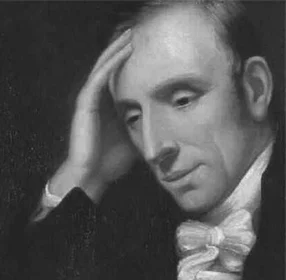
William Wordsworth, who rallied for “common speech” within poems and argued against the poetic biases of the period, wrote some of the most influential poetry in Western literature, including his most famous work, The Prelude, which is often considered to be the crowning achievement of English romanticism.
Consciousness, sexuality, androgyny, futurism, space, the arts, science, astrology, democracy, humor, books, movies and more


 The general characters of the root systems of a species are often as marked and distinctive as the above-ground vegetative characters. But the root systems of different species of the same genus, while often somewhat similar, may be of entirely different types.