Anamnesis comes from the Greek word anamnēsis, meaning “recollection” or “remembering.” The meaning depends on the field where it’s used.
1. In philosophy
In the philosophy of Plato, anamnesis is the idea that learning is really remembering. Plato argued that the soul already knows eternal truths (like mathematical or moral truths) from before birth, and what we call learning is simply recollecting that knowledge.
He discusses this especially in works like:
Meno
Phaedo
2. In medicine
In medicine, anamnesis means taking a patient’s medical history—the doctor asking questions about symptoms, past illnesses, medications, and family history. It’s essentially the history part of a clinical examination.
3. In religion/theology
In Christian liturgy, anamnesis refers to the ritual remembering of sacred events, especially recalling the life, death, and resurrection of **Jesus Christ during the Eucharist.
Short summary
Philosophy: recollection of knowledge already in the soul
Medicine: the patient’s medical history
Religion: ritual remembering of sacred events
If you want, I can also explain why Plato thought a slave boy solving a geometry problem proved anamnesis—it’s one of the most famous examples in philosophy.
“Time is a river that sweeps me along, but I am a river,” Borges wrote. “Time is a fire that consumes me, but I am the fire.”
Most of us are not Borges. Most of us are drowning in bewilderment at where the time goes, burning with the urgency of being alive while waiting to start living, wandering the labyrinth of life with wayward presence, wishing that time ran differently as the cult of productivity turns each minute into a blade pressed against the vein of our transience.
And all the while, our time is nested within our times — the epoch we are living through together, born into it with no more choice in the matter than the body and brain and family we have been born into. In his magnificent essay on Shakespeare, James Baldwin countered the commonplace lament of every epoch: “It is said that his time was easier than ours, but I doubt it — no time can be easy if one is living through it.” A century before him — a century of unrest and transformation — Emerson issued the ultimate antilamentation: “This time, like all times, is a very good one, if we but know what to do with it.”
Discus chronologicus — a German depiction of time from the early 1720s. (Available as a print and as a wall clock.)
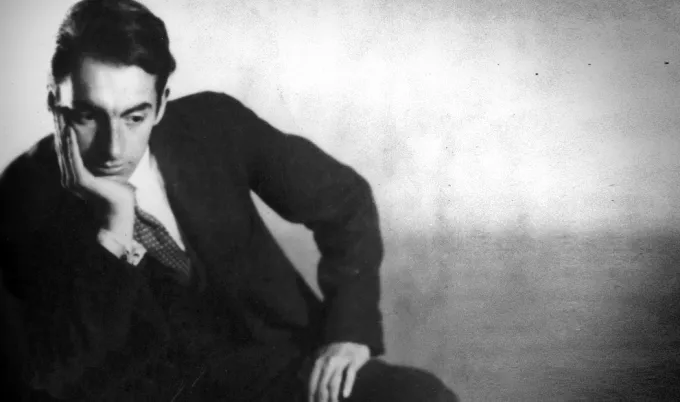
Not knowing what to do with the time we have been given, not knowing how to hold time in our personal and political lives, is at bottom an act of forgetting how time hold us. Pablo Neruda (July 12, 1904–September 23, 1973) casts a spell against forgetting in the fourth canto of his long poem “Morning,”:
You will remember that whimsical ravine where the vibrant aromas rose, and from time to time a bird dressed in water and languor: winter’s garment.
You will remember those gifts from the earth: piquing fragrance, gold clay, thickets of herbs, wild roots, bewitching thorns like swords.
You will remember the bouquet you brought, a bouquet of shadow and silent water, a bouquet like foam-covered stone.
And that time was like never and always: We go where nothing is expected and find everything waiting there.
Pablo Neruda
If time is the fundamental problem of human life and poetry is our most precise technology for parsing the aching astonishment of being alive, then time is the prime subject of poetry. Neruda knew this — time is the subterranean current coursing beneath his vast and varied body of work, the substrate upon which all of his stunning love poems and his meditations on the inner life grow. He reverenced the stones for how they have “touched time,” reverenced the minute for how it is “bound to join the river of time that bears us,” reverenced “the inexhaustible springs of time,” longed for “a time complete as an ocean,” then made that ocean with his poetry.
In his poem “The Enigmas,” composed during WWII, he writes:
You’ve asked me what the crustacean spins between its gold claws and I reply: the sea knows.
You wonder what the sea squirt waits for in its transparent bell? What does it wait for?
I’ll tell you: it’s waiting for time like you.
A decade later, in one of his “Elemental Odes,” Neruda laid out his most explicit instruction for how to hold time:
Listen and learn. Time is divided into two rivers: one flows backward, devouring life already lived; the other moves forward with you exposing your life. For a single second they may be joined. Now. This is that moment, the drop of an instant that washes away the past. It is the present. It is in your hands. Racing, slipping, tumbling like a waterfall. But it is yours. Help it grow with love, with firmness, with stone and flight, with resounding rectitude, with purest grains, the most brilliant metal from your heart, walking in the full light of day without fear of truth, goodness, justice, companions of song, time that flows will have the shape and sound of a guitar, and when you want to bow to the past, the singing spring of transparent time will reveal your wholeness. Time is joy.
We feel first and think second, then spend our lives contorting to invert the order, sublimating emotion to reason, only to find ourselves made smaller and less alive by the flight from feeling.
The mind has peculiar way of protecting the heedless heart from breaking, a way of damming an impossible love from flooding in through a bramble of reasons and rationalizations, persuading the possessed person that the ebullient joy of the other’s company, the creative and intellectual invigoration, the ecstasy of understanding flowing between the two, must be an undiscovered species of friendship or admiration or some other unhazardous substance of affection.
But against a force of joy strong enough, against an invigoration ecstatic enough, the dam eventually gives way, and the uncontrollable rapids of eros rush in. That is how people of high intelligence and sensitivity, people of otherwise exceptional self-awareness, often fail to realize — refuse to let themselves realize — that they are falling in love with someone unavailable or inadvisable until they wake up one day suffused with an all-pervading love, suffocated by the impossibility of its actualization… too late to press the gauze of reason against the exit wound of love.
And still, and still, to have given love in all of its confusions and complexities and possible catastrophes a real chance is the only antidote to the greater wound, the pain that so poisons a life — the melancholy of the chance not taken.
In the aftermath of it all, it takes a superhuman sobriety of spirit to look back on any genuine but unrealized love without the revisionist, survivalist impulse to dismiss it as a hallucination of the heart, for there is no greater hallucination than the rationalization we mistake for reason.
In August 1905, while Mina Hubbard was mapping Labrador in her pioneering expedition, the Brooklyn Eagle reported one of the most “remarkable exploits in Arctic work” — a relief expedition to rescue the American explorer Anthony Fiala and his crew, who had been stranded in the icy expanse for nearly two years, attempting to reach the North Pole.
Bankrolled by the American industrialist William Ziegler, who had made his fortune on baking powder and vowed to spend it on funding as many efforts as it takes to reach the North Pole, Fiala’s three-masted ship was crushed by polar ice just four months after sailing from Norway. Although the America could no longer sail, the ice was so think that the ship didn’t sink but froze in place.
The America in its icy clench.
The men scrambled to salvage the cargo, but when another storm finally swallowed the wreck in January, most of their provisions and coal vanished with it.
They fled onto the ice cap, built a camp, and undertook the daily task of survival, but not before erecting an observatory and setting up all of their scientific instruments.
The days bled into weeks, into months, into seasons as they kept hoping for rescue. The few remaining provisions ran out. They subsisted on walrus and bear. All the while, they kept making observations. It kept their spirits from sinking, this stubborn, steadfast work of painting a portrait of that alien world in numbers and figures in order to reveal the full face of this one.
In what seems like a miracle in the history of polar exploration, only one of the thirty-five men would die in the twenty months they spent as captives of the ice.
The Ziegler expedition at latitude 82°N, March 1905
Although their time in the Arctic was relegated to the sidelines of history as a failed expedition by the measure of its patron’s stated goal of reaching the North Pole, I see it as a triumph of both science and the human spirit. While conquest is a finite game, played for the pleasure of the win, curiosity is an infinite game, played for the pleasure of finding things out, in Richard Feynman’s lovely phrase. Exploration in the service of learning is always far greater and more enduring than exploration in the service of at staking a flag in the name of a potentate, for the task of knowledge is unfinishable and endlessly rewarding. (“The world of learning is so broad, and the human soul is so limited in power!” wrote the pioneering astronomer Maria Mitchell the year Anthony Fiala was born. “We reach forth and strain every nerve, but we seize only a bit of the curtain that hides the infinite from us.”)
Two years after their rescue, the expedition’s chief scientist — William J. Peters, whose groundbreaking studies of geomagnetism shaped the present understanding of Earth’s magnetosphere — published a 630-page report of their scientific findings. Fiala himself wrote the introduction, urging the reader to imagine the conditions, unimaginable to most of us, under which the work was done — a beckoning that feels like a miniature manifesto for the animating spirit of science:
The difficulties encountered in the execution of work in the Polar Regions must be experienced in order to be properly appreciated. Storms are frequent in the winter, and observers, in going to and from observatories and instrument shelters, have often to crawl upon hands and knees in the face of high winds, whirling snow particles, low temperatures, and in the darkness of winter. The hearty and unselfish cooperation of all concerned is amply indicated by the execution of the great amount of detail work that is reported upon in this volume.
Among the endless tables of astronomical, meteorological, and tidal data is a series of meticulous observations of the aurora borealis spanning several months — a landmark contribution to the poetic science of our planet’s most magical phenomenon. Three of the nights — December 23, 1903, January 2, 1904, and January 23, 1904 — appear as a series of breathtaking plates that capture both the drama and its subtlety of the Northern Lights.
Stephan: While Trump is focused on bullying the world and imposing his imperialism on other countries, he is paying no attention whatever to climate change which, as it turns out, is happening faster and is worse than even climate scientists realized until just weeks ago when a new analysis of the data was carried out.
The island of Toruar in eastern Papua New Guinea is threatened by rising sea levels. Credit: Kalolaine Fainu / The Guardian
Sea levels around the world have been underestimated due to inaccurate modelling, with research suggesting ocean levels are far higher than previously understood.
The finding could significantly affect assessments of the future impacts of global heating and the effects on coastal settlements.
Globally, the research found ocean levels are an average of 30cm higher than previously believed, but in some areas of the global south, including south-east Asia and the Indo-Pacific, they may be 100-150cm higher than previously thought.
Rising sea levels are a major threat to coastal communities across the world, and the UN Intergovernmental Panel on Climate Change (IPCC) estimates that by 2100 levels may rise by 28-100cm.
The latest research, published in Nature, combined the analysis of 385 pieces of peer-reviewed scientific literature released between 2009 and 2025 with calculations of the difference between the commonly assumed and actual measured coastal sea levels.
Authors Dr Philip Minderhoud of Wageningen University in the Netherlands and PhD […]
New Thinking Allowed with Jeffrey Mishlove Mar 6, 2026 Psychology and Psychotherapy This video is a special release from the original Thinking Allowed series that ran on public television from 1986 until 2002. It was recorded in about 1996. It will remain public for only one week. Stephen A. Diamond, PhD, is an American clinical and forensic psychologist, a former pupil and protégé of Dr. Rollo May, and notable author of Anger, Madness, and the Daimonic: The Psychological Genesis of Violence, Evil and Creativity. His work focuses on the psychological topics of anger, violence, evil, mental illness, and the daimonic. In this second part of the conversation, Stephen Diamond explores the daimonic as a fundamental life force that is neither good nor evil, but morally shaped by how we consciously engage it. Drawing on psychology, theology, creativity, and psychotherapy, he examines anger, rage, shadow, and possession as expressions of this archetypal energy in everyday life. The discussion emphasizes responsibility, conscious integration, and the possibility of channeling destructive impulses into creative and spiritual growth. 00:00:00 Introduction 00:02:44 Demonic versus daimonic 00:05:48 Projection and scapegoating 00:07:09 The shadow within 00:09:42 Beyond good and evil 00:11:35 Anger as life force 00:14:30 The myth of transcendence 00:16:07 Psychotherapy and rage 00:20:20 Choice and responsibility 00:26:19 Conclusion
America’s Next Great Awakening tells fascinating stories from within the American soul—stories from our past, our myths, and our optimal futures, charting our way to resolving our current crises, preserving the American republic, and evolving into something more, towards a “more perfect union.”
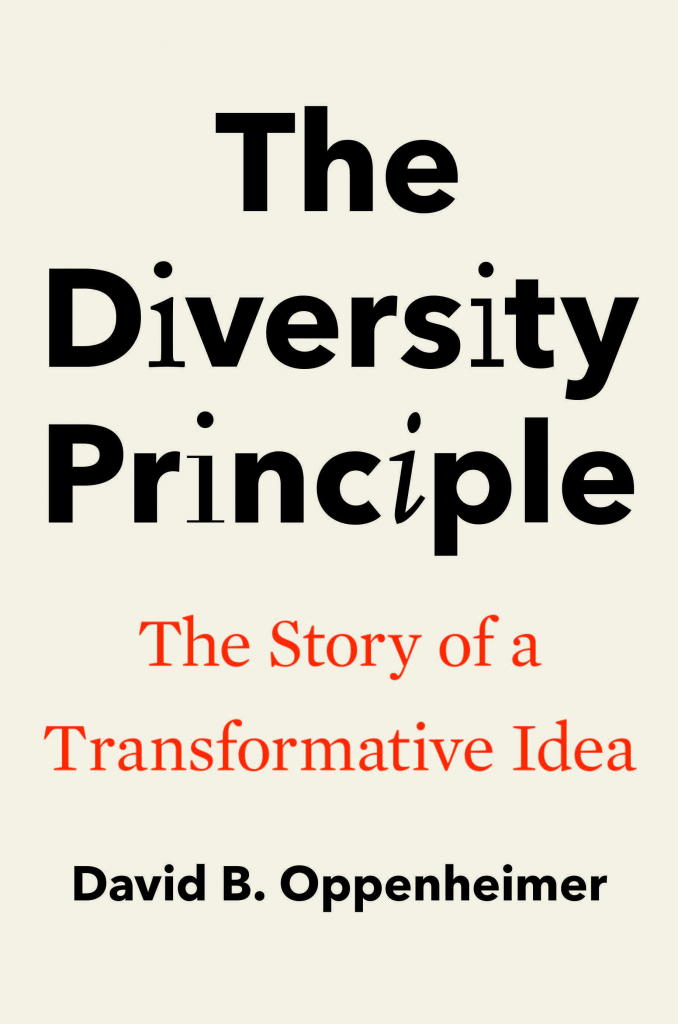
As a war on diversity upends government, corporate, and education policies, the history of the idea of diversity has never been more important. In this contrarian book, David B. Oppenheimer, a diversity skeptic turned admirer, chronicles how diversity became a foundational value of higher education over the last two hundred years, how it evolved as it was adopted in commerce and science, and the implications of the current backlash.
Many people around the world accept the possibility of telepathy or clairvoyance. Very rarely, however, has anyone been able to demonstrate these psychic faculties with enough accuracy and reliability to produce significant results in repeated experimentation. An exception to this was the Polish engineer and industrialist Stefan Ossowiecki.
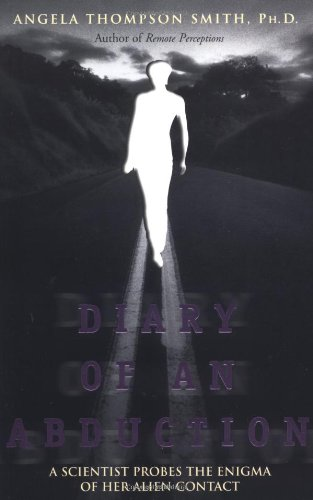
A scientist documents the gradual return of memories connected to extraordinary abduction experiences, as ordinary life intertwines with recurring anomalies, vivid dreams, and physical evidence. Written as a disciplined yet deeply personal journal, the account raises profound questions about time, memory, dreams, and how anomalous experiences might be understood within a scientific framework.
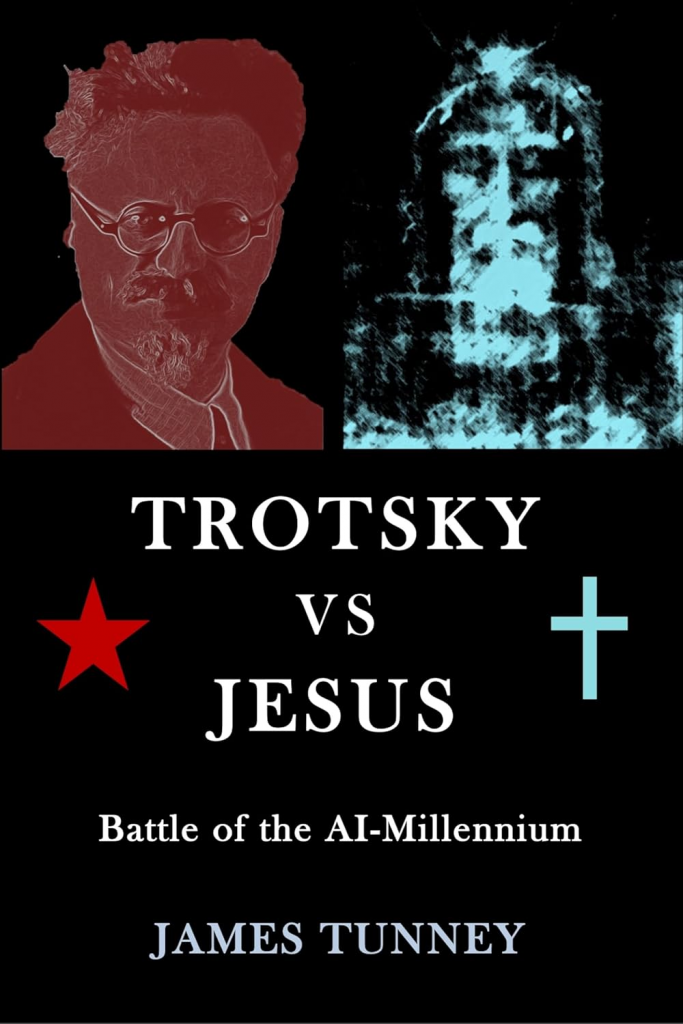
Leon Trotsky is one of the most significant figures in the last century. He was one of the most influential, active and theoretical forces in Marxism and world socialist revolution. Exiled by his arch-enemy Stalin, and hated by people like Churchill, Trotsky was arguably the greatest promoter of revolutionary activity we have known.
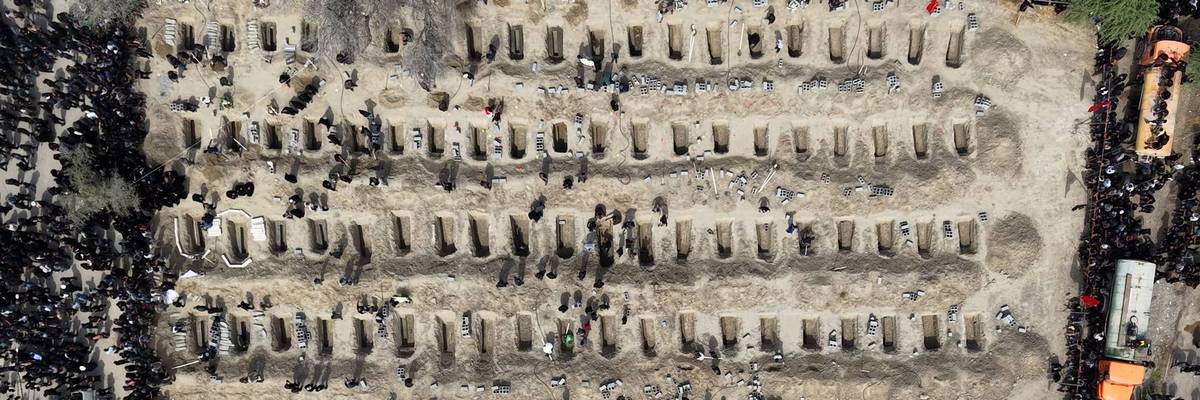
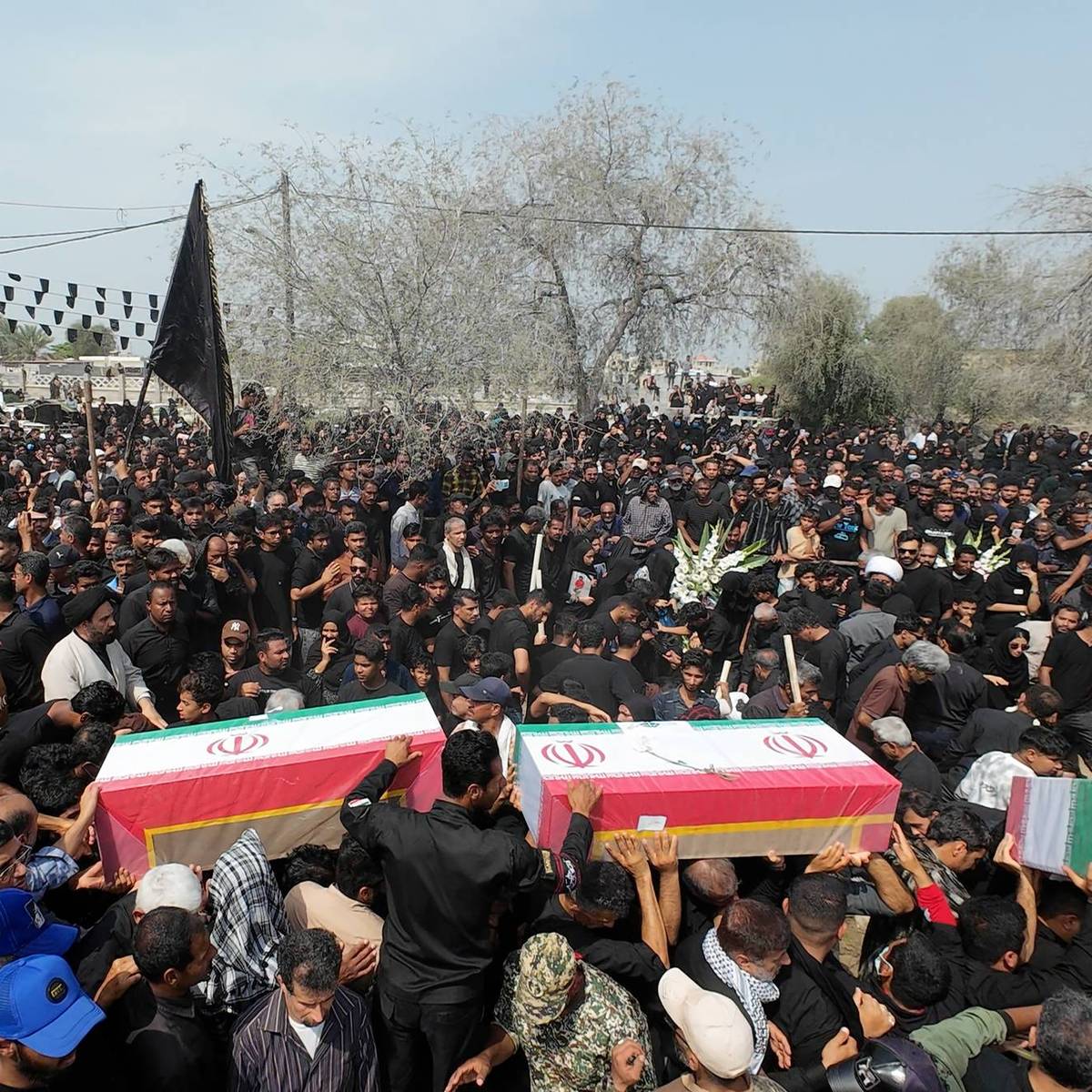
An aerial view of a graveyard as funerals are held for students and staff from a girls’ school killed in a likely US strike on March 3, 2026 in Minab, Iran.
(Photo: Handout/Getty Images)
“If a US role were to be confirmed, the strike would rank among the worst cases of civilian casualties in decades of US conflicts in the Middle East.”
US investigators reportedly believe that American forces were behind the bombing of an Iranian girls’ school that killed more than 160 people—mostly young children—during the initial wave of attacks launched Saturday by President Donald Trump in coordination with the Israeli military.
Citing two unnamed officials, Reutersreported Thursday that US military investigators have found it is “likely” that American forces were responsible for the deadly strike on the school in the southern Iranian town of Minab, though the investigation has not yet been completed. Schools are protected under international law, and targeting them is a war crime.
“Reuters was unable to determine more details about the investigation, including what evidence contributed to the tentative assessment, what type of munition was used, who was responsible, or why the U.S. might have struck the school,” the outlet noted. “The officials, who spoke on condition of anonymity to discuss sensitive military matters, did not rule out the possibility that new evidence could emerge that absolves the U.S. of responsibility and points to another responsible party in the incident.”
“If a US role were to be confirmed,” Reuters added, “the strike would rank among the worst cases of civilian casualties in decades of US conflicts in the Middle East.”
HuffPost‘s Akbar Shahid Ahmed echoedReuters’ reporting, writing that Pentagon officials “told Congress in multiple briefings this week that they believed the US was most likely responsible (though probe ongoing).”
The reporting came on the heels of a New York Times analysis that concluded the US was “most likely to have carried out the strike,” given that American forces were simultaneously bombarding an adjacent Iranian naval base. The Times also rejected the claim that an Iranian missile hit the elementary school.
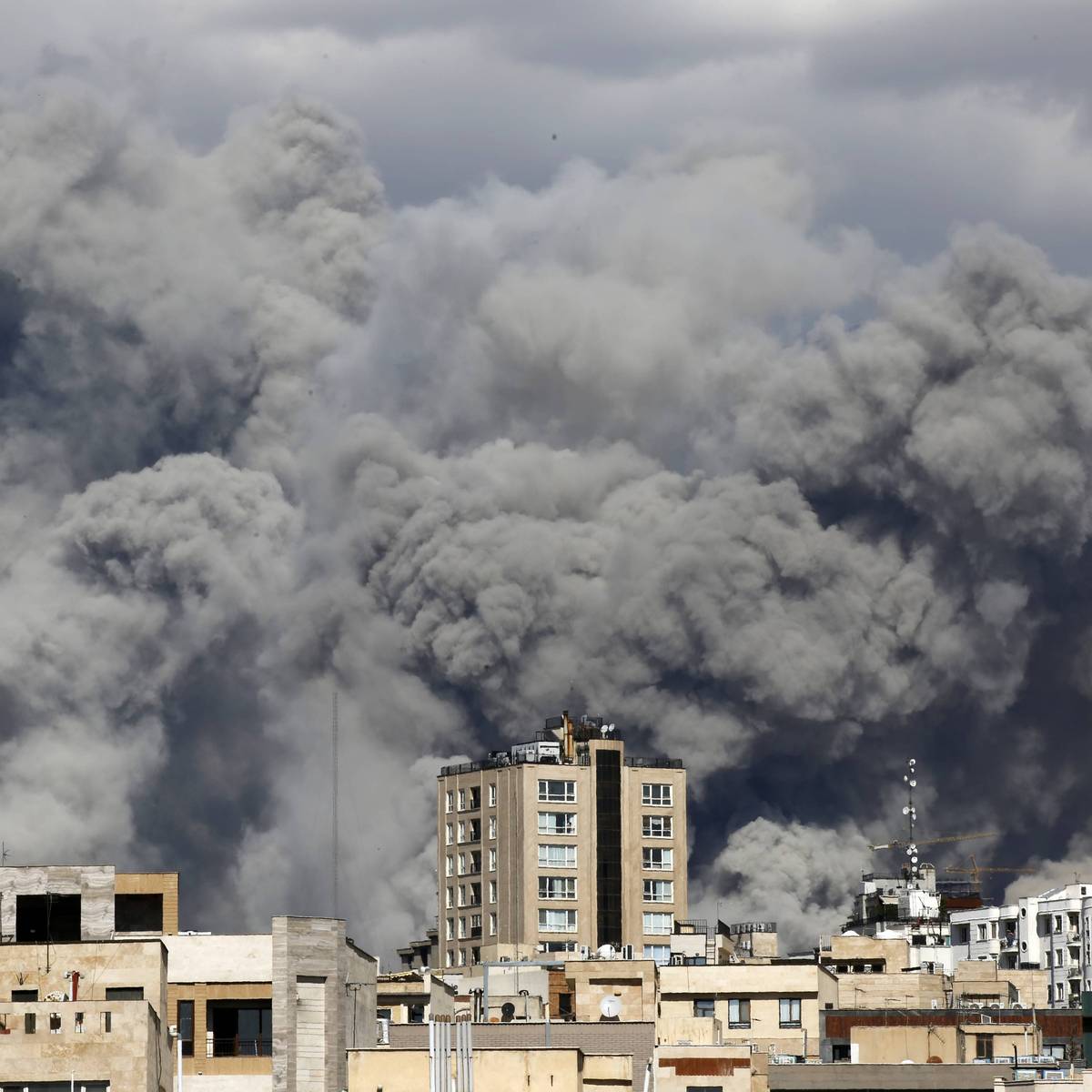
“The strikes were first reported on social media shortly after 11:30 am local time,” the Times reported. “An analysis of those posts—as well as bystander photos and videos captured within an hour of the strikes—helps corroborate that the school was hit at the same time as the naval base. One video, pinpointed by geolocation experts, showed several large plumes of smoke billowing from the area of the base and the school.”
Beth Van Schaack, a former State Department official who currently teaches at Stanford University’s Center for Human Rights and International Justice, told the Times that “given the US’ intelligence capabilities, they should have known that a school was in the vicinity.”
Trump administration officials have said very little about the Iranian school strike in their triumphant rhetoric about the war, which Pentagon Secretary Pete Hegseth hailed as the “most lethal, most complex, and most precise aerial operation in history.” Hegseth has also openly dismissed what he’s called “stupid rules of engagement,” rejecting constraints on US forces that are designed to prevent the killing of civilians.
Asked about the school strike during a March 4 press conference, Hegseth responded: “All I know—all I can say is that we’re investigating that. We, of course, never target civilian targets, but we’re taking a look and investigating that.”
US Secretary of State Marco Rubio referred reporters to the Pentagon when asked about the attack, but added that “the United States would not target, deliberately target, a school,” in purported contrast to the Iranian government, which Rubio claimed is “deliberately targeting civilians” because “they are a terroristic regime.”
Two first responders to the scene of the attack, as well as a parent of one of the killed children, told Middle East Eye earlier this week that the school was hit by two strikes, a possible “double-tap” attack. An Al Jazeerainvestigation concluded the attack on the school was likely deliberate.
Jeremy Konyndyk, president of Refugees International, called the school attack “a horrific US war crime, up there with My Lai,” referring to US soldiers’ massacre of Vietnamese civilians in 1968. The US military initially covered up the massacre.
“In a sane world, Hegseth would resign, Congress would hold immediate hearings and establish an investigation, and the US would come clean,” Konyndyk wrote on social media. “None of that is likely, so international mechanisms should kick in, including the [International Criminal Court]. And Hegseth should probably talk to a lawyer.”
On Thursday, as US and Israeli officials vowed to ramp up their assault on Iran, two boys’ schools southwest of Tehran were reportedly bombed.
“The targeting of civilians, educational facilities, and medical institutions constitutes a grave violation of international humanitarian law and human rights law,” a group of United Nations experts said earlier this week.
Our work is licensed under Creative Commons (CC BY-NC-ND 3.0). Feel free to republish and share widely.
“Remedy, your medicine, is in you, and you do not observe it. Your ailment is from yourself, and you do not register it.”
~ Hazrat Ali
Hazrat Ali ibn Abi Talib (c. 600–661 CE) was a central figure in early Islam, serving as the fourth Rashidun Caliph (656–661), the first Shia Imam, and a cousin and son-in-law to Prophet Muhammad. Renowned for his bravery, wisdom, and piety, he was raised by the Prophet, was an early convert to Islam, and is deeply revered for his commitment to justice and spiritual teachings. Wikipedia
Consciousness, sexuality, androgyny, futurism, space, the arts, science, astrology, democracy, humor, books, movies and more


 You will remember that whimsical ravine