Erasmus on thinking about what you want to do or want to happen

“‎If you keep thinking about what you want to do or what you hope will happen, you don’t do it, and it won’t happen.”

― Desiderius Erasmus Roterodamus

Desiderius Erasmus Roterodamus (c. 1469-1536), also known as Erasmus of Rotterdam, was a Dutch humanist, priest, scholar, and writer who lived during the Renaissance. He’s considered a founder of Renaissance humanism and a key figure of the Northern Renaissance. Erasmus’s writings on theology, education, philosophy, and religious issues influenced the Enlightenment’s ideas of peace, liberty, and rationality.  Wikipedia.org

Tom Campbell Answers More of Your Toughest Questions

New Thinking Aug 1, 2025 Tom Campbell, a physicist, is author of the three volume set, My Big TOE, describing a meta-theory that offers an account of the paranormal, as well as other scientific mysteries. He is also the founder of the Center for Unification of Science and Consciousness. His websites are https://www.my-big-toe.com/ and https://cusac.org Here he answers questions remaining from the Live Stream Event held on June 26, 2025. 00:00:00 Introduction 00:03:41 How to stop fear? 00:19:03 Does mass consensus shape reality? 00:28:58 Ethics around money? 00:54:56 Is information conscious? 01:09:44 How does one “log on” to an avatar? 01:19:43 Do the past and the future exist in the present? 01:29:51 What to do when AI takes jobs away? 01:39:32 Are we trapped inside our minds? 02:02:25 Final thoughts and conclusion New Thinking Allowed host, Jeffrey Mishlove, PhD, is author of The Roots of Consciousness, Psi Development Systems, and The PK Man. Between 1986 and 2002 he hosted and co-produced the original Thinking Allowed public television series. He is the recipient of the only doctoral diploma in “parapsychology” ever awarded by an accredited university (University of California, Berkeley, 1980). He is also the Grand Prize winner of the 2021 Bigelow Institute essay competition regarding the best evidence for survival of human consciousness after permanent bodily death. He is Co-Director of Parapsychology Education at the California Institute for Human Science. (Recorded on July 4, 2025)

Possible Human, Possible World with Jean Houston

New Thinking Aug 1, 2025 This video is a special release from the original Thinking Allowed series that ran on public television from 1986 until 2002. It was recorded in about 1992. It will remain public for only one week.  Jean Houston, founder and director of The Mystery School, is author of The Hero and the Goddess and The Possible Human. She describes the range of capacities that are found in different cultures, focusing on language. We are living at a unique historic moment when the cultures of the entire world are available to us. Now you can watch all of the programs from the original Thinking Allowed Video Collection, hosted by Jeffrey Mishlove. Subscribe to the new Streaming Channel (https://thinkingallowed.vhx.tv/) and watch more than 350 programs now, with more, previously unreleased titles added weekly. Free month of the classic Thinking Allowed streaming channel for New Thinking Allowed subscribers only. Use code THINKFREELY.

The God of Spinoza

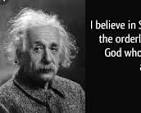
Albert Einstein famously stated, “I believe in Spinoza’s God.”

Google AI Overview

Spinoza’s God is not the traditional, personal God of Abrahamic religions. Instead, Spinoza identifies God with nature or substance, encompassing the entirety of existence. This God is not a separate, transcendent being but rather the immanent cause and underlying reality of everything that exists. 

Here’s a more detailed explanation:

  • Monism:Spinoza’s philosophy is monistic, meaning he believes there is only one substance, which is God or Nature. 
  • Immanence:God is not transcendent, separate from the world, but immanent within it, meaning God is present in and through all things. 
  • Attributes:God has infinite attributes, but humans can only perceive two: thought and extension (physical matter). 
  • Modes:Everything in the universe, including individual things and events, are “modes” or finite expressions of God’s attributes. 
  • No Anthropomorphism:Spinoza’s God has no personal will, emotions, or intentions. It’s not a being that acts or intervenes in the world. 
  • Determinism:Everything that happens is a necessary consequence of God’s nature and the laws of nature, which are also expressions of God. 
  • Pantheism:Spinoza’s view is often described as pantheistic, meaning God is everything and everything is God. 

In essence, Spinoza’s God is not a supernatural entity but the fundamental, underlying reality of the universe, expressed through the laws of nature and all existing things. This view was revolutionary for its time and continues to be a source of fascination and debate. Albert Einstein famously embraced Spinoza’s concept of God, seeing it as a way to understand the universe’s order and harmony according to wasmormon.org

Baruch Spinoza, also known under his Latinized pen name Benedictus de Spinoza (November 24, 1632 – February 21, 1677), was a philosopher of Portuguese-Jewish origin, who was born in the Dutch Republic. Wikipedia

Advice from Auschwitz

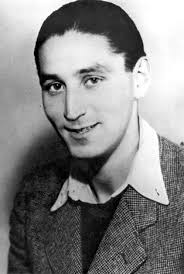
(Image of Fredy Hirsch from film.claimscon.0rg)

“Only the srong will survive. Alfred . . . . your work is just beginning . . . . as you teach, you learn. As you learn, you teach. Remember that!”

–Dying man to Alfred (Fredy) Hirsch

G.B. Shaw on angels in heaven

(Image from nobelprize.org)

“In heaven an angel is no one in particular.”

~ G.B. Shaw

George Bernard Shaw, known at his insistence as Bernard Shaw (July 26, 1856 – November 2, 1950), was an Irish playwright, critic, polemicist and political activist. His influence on Western theatre, culture and politics extended from the 1880s to his death and beyond. Wikipedia

‘Superintelligence is now in sight’

Business Insider

July 31, 2025 (businessinsider.com)

They’re calling it a “massive quarter.” With a revenue of $47.52 billion compared to expectations of $44.83 billion, analysts were thrilled with Meta’s second-quarter earnings results.”The company is demonstrating that it can profitably scale the business while making massive capital investments,” William Blair analysts wrote. In other words, Mark Zuckerberg’s spending spree is paying off. In recent months, he’s been offering sign-on bonuses worth millions of dollars to poach top talent, investing billions into building data centers the size of Manhattan, and acquiring an AI startup for an eye-watering sum. All of that made some investors nervousWhy is Zuck spending so much on his AI ambitions, when there’s a perfectly robust ad-based businessNow, they’re doing just fine. Meta’s share price soared 12% in after-hours trading — a signal that Wall Street is getting excited. But perhaps not as excited as Zuckerberg, who set the stage for Meta’s earnings with an announcement: “Superintelligence is now in sight.”

Rolf Vennenbernd/picture alliance via Getty Images

It may help you achieve your goals. Create what you want to see. Experience any adventure. Be a better friend. Grow into the person you aspire to be. According to Zuckerberg, that is — and no, he wasn’t delivering a motivational TED Talk.On Wednesday, the Meta CEO published a letter outlining his vision for “personal superintelligence” (read it here). The term “superintelligence” is generally used to define a yet-to-be-reached breakthrough in AI, when it becomes more capable than human intelligence. As AI advancements have grown, so has the klaxon call of warnings against superintelligence. These tend to carry a distinctly dystopian flavour: If AI is smarter than you, it can manipulate you. Proponents may tell you the biggest risk comes from misuse, not from superintelligence itself. Zuckerberg is betting that this technology is the future, saying that it will “help humanity accelerate our pace of progress.”Even then, a question remains: toward what?

Carl Jung on making the unconscious conscious

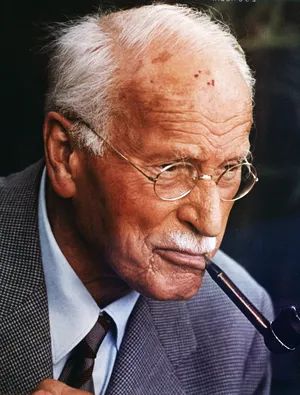
(Image from Britannica.com)

“Until you make the unconscious conscious, it will direct your life and you will call it fate.”

~ Carl Jung

Carl Gustav Jung (July 26, 1875 – June 6, 1961 ) was a Swiss psychiatrist and psychologist who founded analytical psychology. He was a prolific author and illustrator who studied many cultures to understand the human psyche. Jung’s theories and concepts, like “introversion” and “extroversion”, have influenced psychology, psychiatry, art, literature, religion, and more. Jung’s ideas differed from his mentor and later rival, Sigmund Freud. 

Weekly Invitational Translation: If I am a child of God, therefore God is my parent.

Translation is a 5-step process of “straight thinking in the abstract” comparing and contrasting what seems to be truth with what you can syllogistically, axiomatically and mathematically (using word equations) prove is the truth. It is not an effort to change, alter or heal anything.

The claims in a Translation may seem outrageous, but they are always (or should always be) based on self-evident syllogistic reasoning. Here is one Translation from this week. 

1)    Truth is that which is so.  That which is not truth is not so.  Therefore Truth is all that is.  Truth being all is therefore total, therefore whole, therefore complete, therefore sole, therefore one.  Truth being true is therefore real, therefore right, therefore correct, therefore perfect, therefore ideal.  I think therefore I am.  Since I am and since Truth is all that is, therefore I, being, am Truth.  Since I, being, am Truth, therefore I, being, have all the attributes of Truth.  Therefore I, being, am total, whole, complete, sole, one, real, right, correct, perfect, ideal.  Since I am mind (self-evident) and since I (being) am Truth, therefore Truth is Mind.  (Two things being equal to a third thing are equal to each other.)  Since Truth is Mind, therefore Mind has all the attributes of Truth.  Therefore Mind is total, whole, complete, sole, one, real, right, correct, perfect,

2)    If I am a child of God, therefore God is my parent.

Word-tracking:
parent:  keeps me safe, loves me, provides for me, nurtures me, to procure, to prepare, origin of something else
safe:  healthy, whole
nurture:  preserve
provide:  attend to, care for, love
child:  womb, offspring, consequence, sequence
sequence:  order of things
God:  supreme being, that which is invoked
invoke:  to call, to name

3)    Truth being total in itself does not beget something else.  Therefore Truth is sufficient unto Itself.  Truth being one cannot at the same time be divided into greater and lesser beings, Therefore Truth is equality.  Since a parent keeps me safe, provides for me, nurtures me and loves me and since Truth is sufficient unto Itself, therefore Truth keeps Itself safe, provides for Itself, nurtures Itself and loves Itself.

4)    Truth is sufficient unto Itself. 
        Truth is equality.  
        Truth keeps Itself safe, provides for Itself, nurtures Itself and loves Itself.

5)    The order of things is that Truth keeps Itself safe, provides for Itself, preserves Itself and loves Itself.

Weekly Invitational Translation Group invites your participation.  If you would like to submit a Translation on any subject, feel free to send your weekly Translation to  zonta1111@aol.com and we will anonymously post it on the Bathtub Bulletin on Friday.

For information about Translation or other Prosperos classes go to: https://www.theprosperos.org/teaching.