Not like the brazen giant of Greek fame, With conquering limbs astride from land to land; Here at our sea-washed, sunset gates shall stand A mighty woman with a torch, whose flame Is the imprisoned lightning, and her name Mother of Exiles. From her beacon-hand Glows world-wide welcome; her mild eyes command The air-bridged harbor that twin cities frame. “Keep, ancient lands, your storied pomp!” cries she With silent lips. “Give me your tired, your poor, Your huddled masses yearning to breathe free, The wretched refuse of your teeming shore. Send these, the homeless, tempest-tost to me, I lift my lamp beside the golden door!”
This poem is in the public domain.
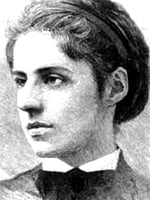
Photo credit: Engraving by T. Johnson, 1872. Courtesy of the New-York Historical Society.
A descendant of Sephardic Jews who immigrated to the United States from Portugal around the time of the American Revolution, Emma Lazarus was a Jewish American poet and translator. Her sonnet, “The New Colossus,” is inscribed on a plaque on the pedestal of the Statue of Liberty monument.
“It was a dark and stormy night.” You’ve heard it a million times, seen it used in seriousness and in jest; it is the quintessential and cliché opening to a gothic novel or a ghost story, or as Zachary Petit once put it in Writer’s Digest, “the literary poster child for bad story starters.” But where, exactly, does it come from?
Common internet wisdom points to the opening line of Edward Bulwer-Lytton’s 1830 novel Paul Clifford, which is now otherwise rarely read. The full line goes like this:
It was a dark and stormy night; the rain fell in torrents—except at occasional intervals, when it was checked by a violent gust of wind which swept up the streets (for it is in London that our scene lies), rattling along the housetops, and fiercely agitating the scanty flame of the lamps that struggled against the darkness.
Holy adjectives, Edward. But in fact, Bulwer-Lytton didn’t invent the phrase—he only made it what it is today: a textbook example of melodramatic, overwritten prose. (And you can see why.) According to English professor Scott Rice (more on him below), “the line had been around for donkey’s years before Lytton decided to have fun with it.” It was at the very least used by Washington Irving in his 1809 satirical book A History of New York, though not as an opening line: “It was a dark and stormy night when the good Antony arrived at the creek (sagely denominated Haerlem river) which separates the island of Manna-hata from the mainland.” Whether Irving was actually the first person to string those seven words together, we don’t know, but we can only assume that it was somehow in the literary ether in the first half of the 19th century.
Since then, of course, it has been used for both good and for ill. It is the way that Madeleine L’Engle opens A Wrinkle in Time (it’s even on the back of the book as a teaser—though apparently early UK editions revised it to “It was a dark and stormy night in a small village in the United States,” which is much less catchy), and the way Ray Bradbury begins Let’s All Kill Constance, though not without an attendant wink:
It was a dark and stormy night.
Is that one way to catch your reader?
Well, then, it was a stormy night with dark rain pouring in drenches on Venice, California, the sky shattered by lightning at midnight.”
Edgar Allan Poe uses it in his 1832 short story “The Bargain Lost,” like this:
It was a dark and stormy night. The rain fell in cataracts; and drowsy citizens started, from dreams of the deluge, to gaze upon the boisterous sea, which foamed and bellowed for admittance into the proud towers and marble palaces.
It should have been, but there’s the weather for you. For every mad scientist who’s had a convenient thunderstorm just on the night his Great Work is complete and lying on the slab, there have been dozens who’ve sat around aimlessly under the peaceful stars while Igor clocks up the overtime.
The internet has it that the phrase opens “some translations” of Andre Dumas’ 1844 swashbuckler The Three Musketeers, but I could only find a version toward the end, at the beginning of Chapter 65 (Trial). The original French is “C’était une nuit orageuse et sombre, de gros nuages couraient au ciel, voilant la clarté des étoiles; la lune ne devait se lever qu’à minuit.” My translation reads “It was a stormy and dark night; vast clouds covered the heavens, concealing the stars; the moon would not rise much before midnight.”
The point is, it’s everywhere, played both straight and—more often, these days—not so straight. In 1982, an English professor at San Jose State University named Scott Rice founded the Bulwer-Lytton Fiction Contest, in which entrants are challenged “to write an atrocious opening sentence to the worst novel never written.”
The 2021 winner, written by Stu Duval of Auckland, New Zealand, was chosen from about 4,500 entries. It goes like this: “A lecherous sunrise flaunted itself over a flatulent sea, ripping the obsidian bodice of night asunder with its rapacious fingers of gold, thus exposing her dusky bosom to the dawn’s ogling stare.” (But don’t miss the winners in the other categories, which include Vile Puns, Odious Outliers, and Western.)
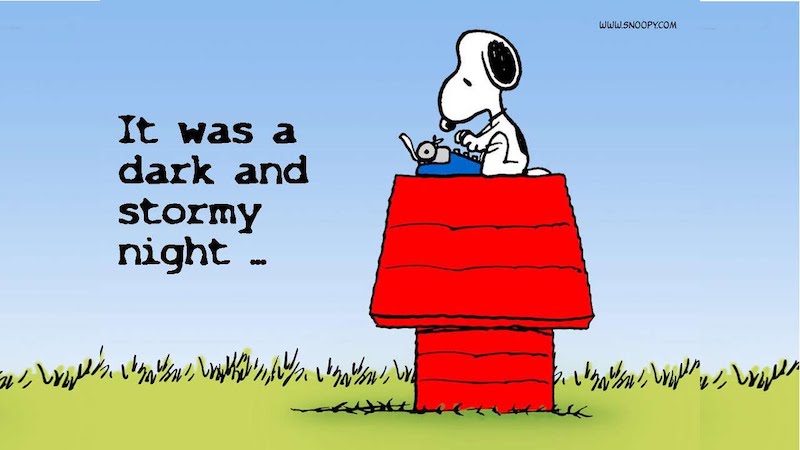
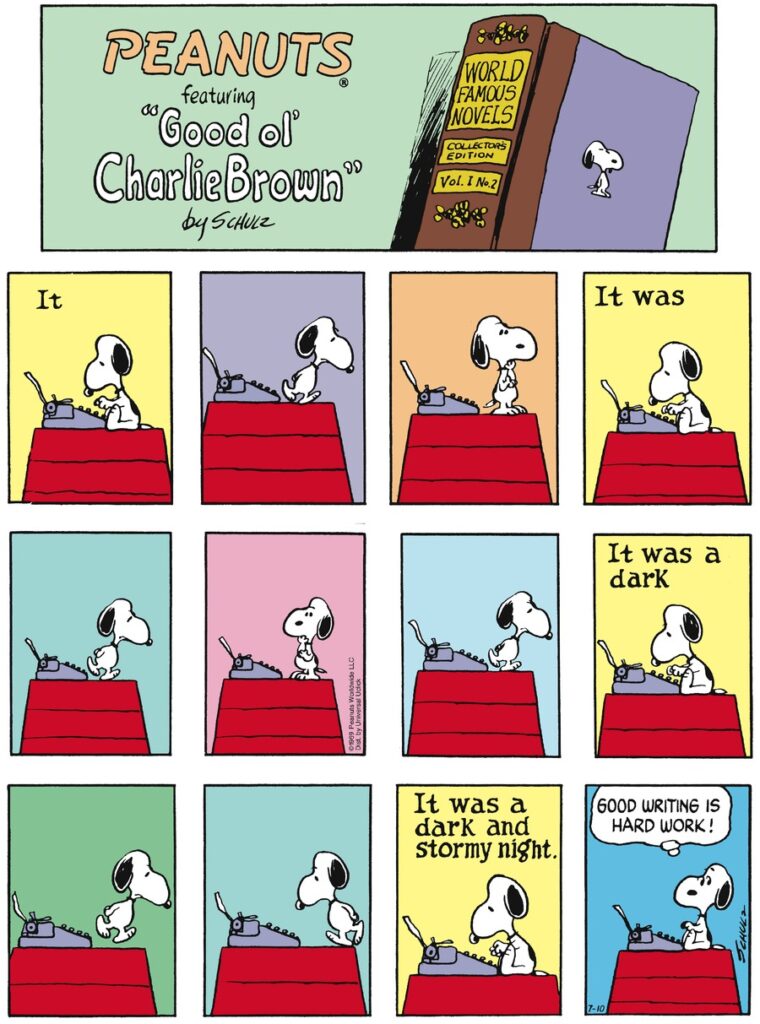
Perhaps most famously, “It was a dark and stormy night” is the first sentence of every novel that World-Famous Author Snoopy tries to write in Charles Schultz’s Peanuts. It first popped up in July 1965, and became such a popular running gag, with so many permutations, that he turned it into its own book in 1971, and the strips have been separately collected into a mini-anthology as well.
Here’s the text of Snoopy’s magnum opus, for the record:
Part I
It was a dark and stormy night. Suddenly, a shot rang out! A door slammed. The maid screamed.
Suddenly, a pirate ship appeared on the horizon! While millions of people were starving, the king lived in luxury. Meanwhile, on a small farm in Kansas, a boy was growing up.
Part II
A light snow was falling, and the little girl with the tattered shawl had not sold a violet all day.
At that very moment, a young intern at City Hospital was making an important discovery. The mysterious patient in Room 213 had finally awakened. She moaned softly. Could it be that she was the sister of the boy in Kansas who loved the girl with the tattered shawl who was the daughter of the maid who had escaped from the pirates?
According to Susan Campbell, writing for the Chicago Tribune, Rice contacted Schultz to ask him about his use of the phrase, and Schultz explained “that he didn’t know the phrase he appropriated for Snoopy’s thwarted attempts at literature was specific to any one author; he used it only because it was a standard pot-boiler opener that was always out there.”
In 2008, Bulwer-Lytton’s great-great-great grandson Henry Lytton Cobbold stepped up to defend his ancestor’s honor against Rice. “Bulwer-Lytton was a remarkable man and it’s rather unfair that Professor Rice decided to name the competition after him for entirely the wrong reasons,” he told The Guardian. “He was a great champion of the arts, and made such a huge difference to people in all walks of life . . . he was politician, writer, playwright and philosopher.” And as for the line itself? “To have been the first person to have penned a cliché was a mark of genius,” said Lytton Cobbold.
Rice was not impressed.”The ironic thing is: If Bulwer had a phobia, it was being made fun of,” Rice told Campbell. “He thought he was an ‘artiste,’ capital A. Artistes have special privileges. They don’t have to follow the rules like the rest of us.” Oh well.
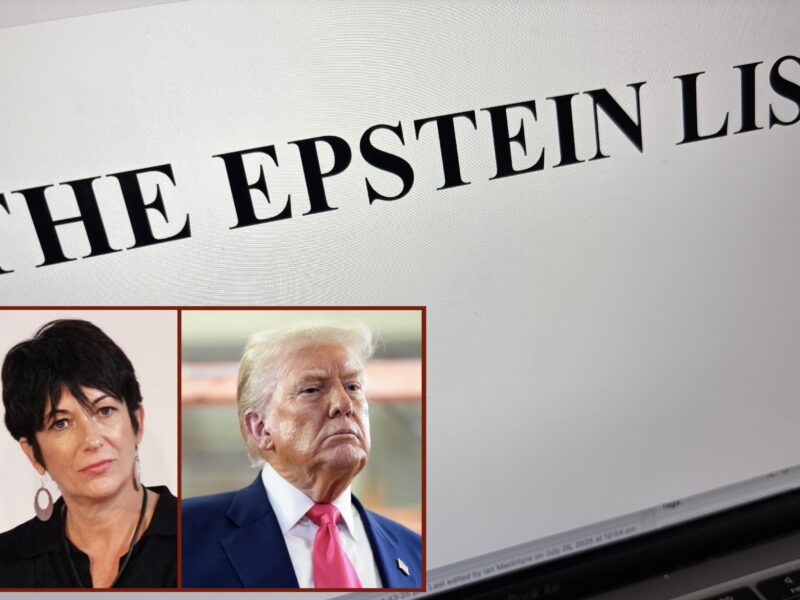
July 27, 2025 by IAN MACINTYRE (subscriptions@thebeaverton.com)
TALLAHASSEE, FL – Ghislaine Maxwell, former girlfriend of financier and convicted sex offender Jeffrey Epstein, has reportedly offered up a list of 100 names of individuals who are connected to the crimes of disgraced financier and convicted sex offender Jeffrey Epstein.
During a meeting with Deputy Attorney General and former Donald Trump personal attorney Todd Blanche, Maxwell reportedly volunteered the 100 names as part of a bid for a new trial or possibly a presidential pardon.
While Maxwell remains in custody, The Beaverton has obtained the list of 100 names whom she claims may be implicated in the crimes of Jeffrey Epstein:
1. Barack Obama 2. Definitely NOT Donald Trump, of whom Jeffrey Epstein often said “I wish Donald Trump would stop foiling my plans to do pedophile crimes!” 3. Bill Clinton 4. Hillary Clinton 5. Chelsea Clinton 6. Socks the cat 7. Rosie O’Donnell 8. Stephen Colbert 9. Rachel Maddow 10. Barack Hussein Obama 11. Joe Biden 12. Hunter Biden 13. Joe Biden’s wife 14. Justin Trudeau 15. Mark Carney 16. Trey Parker 17. Matt Stone 18. Cartman from South Park 19-30. the starting lineup of the 2018 Philadelphia Eagles who refused to come to the White House 31. Barack Obama 32. Liz Cheney 33. Robert Mueller 34. everyone that works at NPR 35. Kamala Harris 36. woke Superman 37. Nancy Pelosi 38. Jack Smith 39. Mark Milley 40. Letitia James 41. Adam Schiff 42. Anderson Cooper 43. you guessed it… Barack Obama 44. Elmo 45. John Bolton 46. Anthony Fauci 47. Seth Meyers 48. Jimmy Kimmel 49. Michelle Obama 50. also Barack Obama 51. Kristen Stewart 52. George W. Bush 53. Dick Cheney 54. the woke Pope 55. Alexandria Ocasio-Cortez was a major Epstein co-conspirator from 1995-99 56. Bruce Springsteen 57. Taylor Swift 58. Beyoncé 59. Chris Christie 60. Bono 61. Oprah Winfrey 62. “Barry O”, aka, Barack Obama 63. James Comey 64. Warionald Trump, evil twin of Donald Trump who is often mistaken for him in photographs 65. Sonia Sotomayor 66. that nerd Ezra Klein 67. Prince Andrew (some of these have to be real) 68. Whoever discontinued St. Tropez Orange Spray Tan No. 4 69. Central Park Five #1 70. Central Park Five #2 71. Central Park Five #3 72. Central Park Five #4 73. Central Park Five #5 74. Leona Helmsley 75. Stephen King 76. Stormy Daniels 77. E. Jean Carroll 78. Tony Schwartz 79. Alec Baldwin 80. the guy who played Biff Tannen in Back To The Future Part II 81. Ivana Trump 82. the cast of Saturday Night Live circa 2016-2025 83. Jon Leibowitz, aka “Jon Stewart” 84. Bill Gates 85. Anthony Blinken 86. Mike Pompeo 87. Adam Kinzinger 88. everyone who ever attended Harvard University 89. Kilmar Abrego Garcia 90. Barack Obama 91. Barack Obama 92. Barack Obama 93. Barack Obama 94. Barack Obama 95. Barack Obama 96. Barack Obama 97. Barack Obama 98. Barack Obama 99. Barack Obama 100. Alan Dershowitz, but actually
THE HEAVENS—Lamenting that the mass extinction event wiped out the reptiles too soon, God, Our Lord and Heavenly Father, confirmed Monday that He has recently been getting a strong desire to bring back the dinosaurs. “I’m starting to think getting rid of them was a huge mistake, because dinosaurs were fucking awesome,” said the Divine Creator, fondly recalling how He would often spend five or 10 centuries just watching all the different kinds of theropods run, hunt, and fight with each other. “The planet is running pretty low on animals anyway, so now might be a great time to reintroduce them, maybe even make them bigger and more badass. Plus, I’ve always wanted to see how dinosaurs would interact with humans.” God added that if He got bored of the dinosaurs, He could very easily exterminate them a second time.
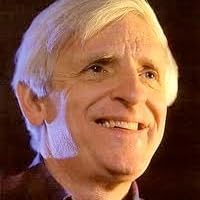
Timothy James “Matthew ” Fox is an American priest and theologian. Formerly a member of the Dominican Order within the Catholic Church, he became a member of the Episcopal Church following his expulsion from the order in 1993. Fox has written 35 books that have been translated into 68 languages and have sold millions of copies and by the mid-1990s had attracted a “huge and diverse following”
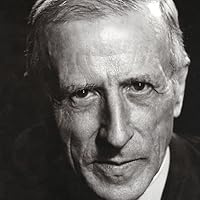
“The day will come when, after harnessing the ether, the winds, the tides, gravitation, we shall harness for God the energies of love. And, on that day, for the second time in the history of the world, man will have discovered fire.” ― Pierre Teilhard de Chardin, Toward the Future
Pierre Teilhard de Chardin, S.J., (May 1, 1881 – April 10, 1955) was a French Jesuit, Catholic priest, scientist, paleontologist, philosopher, mystic, and teacher. Wikipedia
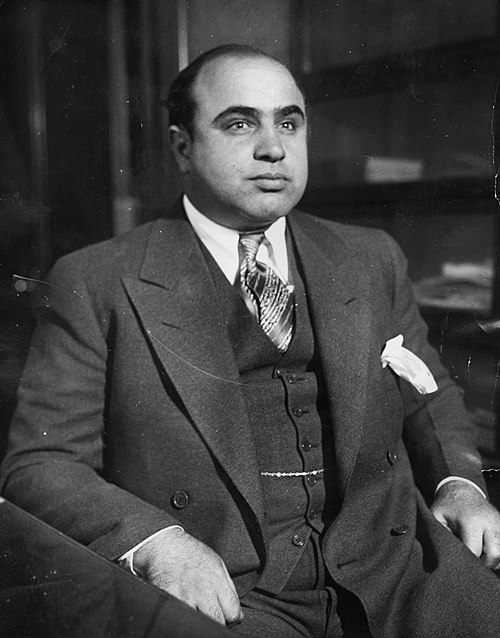
“I have spent the best years of my life giving people the lighter pleasures, helping them have a good time, and all I get is abuse, the existence of a hunted man”
–Al Capone
Alphonse Gabriel “Al” Capone (January 17, 1899 – January 25, 1947 ) was a notorious Chicago gangster and businessman during Prohibition (1920-1933). He led the Chicago Outfit from 1925–1931, and was known for his ruthlessness and violence, particularly the St. Valentine’s Day Massacre of 1929. Capone’s mob influenced Chicago politics through intimidation and violence, and worked with aldermen to control the city’s political machine. Wikipedio.org
New Thinking Jul 27, 2025 Scott Barry Kaufman is a professor of psychology at Columbia University and director of the Center for Human Potential. He hosts The Psychology Podcast which has received over 30 million downloads. He is the author and editor of 11 books. His most recent book is Rise Above: Overcome a Victim Mindset, Empower Yourself, and Realize Your Full Potential. This discussion focuses on his book Transcend: The New Science of Self-Actualization, about the life and work of Abraham Maslow, whose theories of human potential have been updated and revised by Dr. Kaufman. His website is https://scottbarrykaufman.com/bio/ Here he shares his appreciation for the work of Abraham Maslow and the various movements in psychology of which he was an acknowledged pioneer: humanistic, transpersonal, and positive psychology. The conversation also addresses the role of the dark side of human behavior. 00:00 Introduction 06:47 Maslow’s impact 16:10 The dark and light triads 22:03 Self-actualization coaching 27:01 Positive Psychology 31:05 Maslow’s confrontation with death 37:48 Correlations with intelligence 42:32 Community actualization 51:26 Updating Maslow’s work 59:32 Conclusion New Thinking Allowed host, Jeffrey Mishlove, PhD, is author of The Roots of Consciousness, Psi Development Systems, and The PK Man. Between 1986 and 2002 he hosted and co-produced the original Thinking Allowed public television series. He is the recipient of the only doctoral diploma in “parapsychology” ever awarded by an accredited university (University of California, Berkeley, 1980). He is also the Grand Prize winner of the 2021 Bigelow Institute essay competition regarding the best evidence for survival of human consciousness after permanent bodily death. He is Co-Director of Parapsychology Education at the California Institute for Human Science. (Recorded on July 3, 2025)
Consciousness, spirituality, biography, sexuality, androgyny, futurism, space, the arts, science, astrology, democracy, humor, books, movies and more