
Monthly Archives: March 2025

Tarot Card for March 4: The Emperor
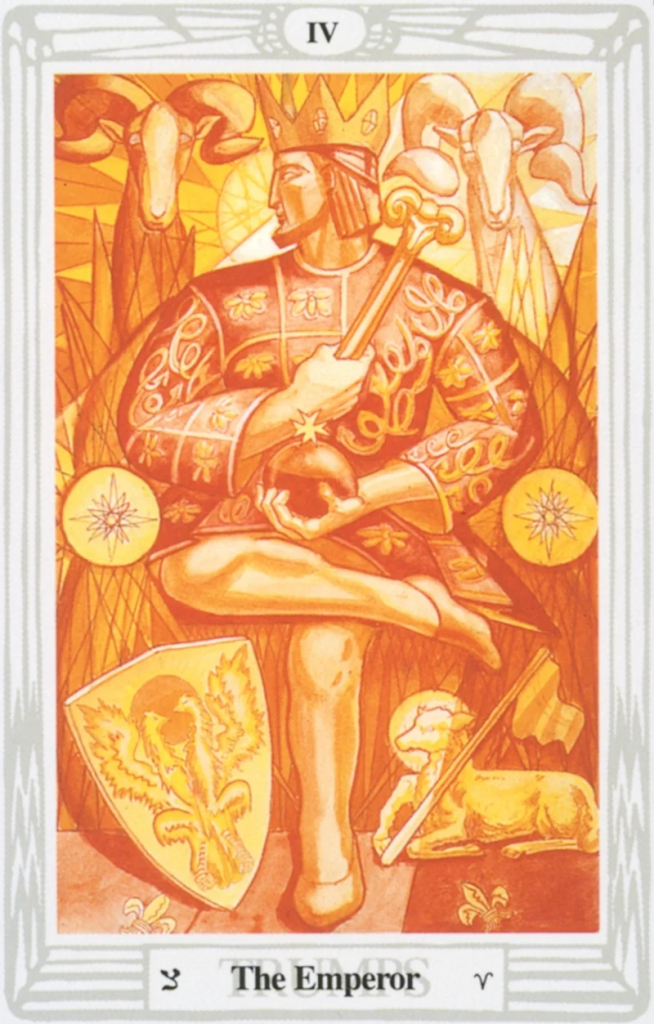
| The Emperor Just as the Empress embodies the female power and force, the Emperor encapsulates the male dynamic force in life. Here we find action, decisiveness and high energy.There are also many connections with fatherhood and kingship for the Emperor. This is a card that indicates responsibility, a sense of commitment, protection and strong leadership.On a day ruled by the Emperor, we need to engage all our energies in order to take dynamic steps forward in life. This is a day which offers us terrific opportunities to forge ahead in important areas.Spiritually, we can often make big realisations, and receive clear divine guidance which resolves difficult or troublesome issues. So if your spirit is troubled by ethical issues, use this day to offer up these problems to the high powers, and await omens or directive.Remember also, that on a day ruled by the Emperor, there’s a special type of strength in the air. So, if you are feeling vulnerable or frail, reach out for the power of the Emperor’s influence, and be renewed! Affirmation: “I trust and depend upon my own power.” |
(Angelpaths.com)
Vilayat Inayat Khan on understanding with your mind

Hitler reacts to the Trump-Zelenskyy argument
Hitler Rants Parodies • Mar 1, 2025 • Hitler reacts to the fiery clash between Trump and Zelenskyy at their Oval Office meeting.
Nietzsche and transhumanism
Has Nietzsche Become Mainstream? by Uberboyo
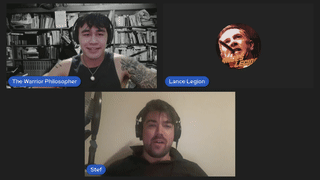
Interview with the Warrior Philosopher and Lance’s Legion
See video and Read on Substack
“Masters Of War”
Come you masters of war
You that build the big guns
You that build the death planes
You that build all the bombs
You that hide behind desks
I just want you to know
I can see through your masks
You that never done nothin’
But build to destroy
You play with my world
Like it’s your little toy
You put a gun in my hand
And you hide from my eyes
And you turn and run farther
When the fast bullets fly
Like Judas of old
You lie and deceive
A world war can be won
You want me to believe
But I see through your eyes
And I see through your brain
Like I see through the water
That runs down my drain
You fasten all the triggers
For the others to fire
Then you set back and watch
When the death count gets higher
You hide in your mansion’
As young people’s blood
Flows out of their bodies
And is buried in the mud
You’ve thrown the worst fear
That can ever be hurled
Fear to bring children
Into the world
For threatening my baby
Unborn and unnamed
You ain’t worth the blood
That runs in your veins
How much do I know
To talk out of turn
You might say that I’m young
You might say I’m unlearned
But there’s one thing I know
Though I’m younger than you
That even Jesus would never
Forgive what you do
Let me ask you one question
Is your money that good
Will it buy you forgiveness
Do you think that it could
I think you will find
When your death takes its toll
All the money you made
Will never buy back your soul
And I hope that you die
And your death’ll come soon
I will follow your casket
In the pale afternoon
And I’ll watch while you’re lowered
Down to your deathbed
And I’ll stand over your grave
‘Til I’m sure that you’re dead

(Courtesy of Steve Hines)
The Souls of Animals
By Maria Popova (themarginalian.org)

“They do not sweat and whine about their condition,” Walt Whitman wrote of the other animals, “they do not lie awake in the dark and weep for their sins, they do not make me sick discussing their duty to God, not one is dissatisfied, not one is demented with the mania of owning things.”
Here was “the poet of the body and the poet of the soul” holding up a mirror to us creatures inhabiting an animal body complicated by a soul — that organ of want and worry which we ourselves invented to explain why we make art, why we fall in love, why we yearn to converse with reality in prayers and postulates.
It is daring enough to ask what a soul actually is. Carl Jung knew that it defies the substance we are made of: “The soul is partly in eternity and partly in time.” Virginia Woolf knew that it defies our best technology of thought: “One can’t write directly about the soul. Looked at, it vanishes.” It is doubly daring to question the age-old dogma that the soul is the province of the human animal alone. Even as we have incrementally and reluctantly admitted other creatures into the temple of consciousness, we have denied them souls — denied them, because our tools of communication and computation have failed to probe it, an inner life capable of imagination and play, of love and grief, of dreams and wonder. And yet our very language defies our denial: the word animal comes from the Latin for soul.
Art by Jackie Morris from The Lost Words by Robert Macfarlane
In 1991, long before we came to consider the soul of an octopus, long before fMRI and EEG studies revealed not only that birds dream but what they dream about, Gary Kowalski took up this daring question in The Souls of Animals (public library) — an inquiry into the “spiritual lives” (and into what that means) of whooping cranes, elephants, jackdaws, gorillas, songbirds, horses, dogs, and cats. At its center is the idea that spirituality — which he defines as “the development of a moral sense, the appreciation of beauty, the capacity for creativity, and the awareness of one’s self within a larger universe as well as a sense of mystery and wonder about it all” — is a natural byproduct of “the biological order and in the ecology shared by all life.” (There are in this view echoes of Kepler, who believed that the Earth itself is an ensouled body, and of myriad native cosmogonies that regard other animals as sources of more-than-human wisdom and emissaries of the numinous.)
Kowalski — a parish minister by vocation, who spends his days praying with the dying, blessing bonds of love, and helping people navigate moral quandaries — celebrates the soul as “the magic of life,” as that which “gives life its sublimity and grandeur,” and reflects:
For ancient peoples, the soul was located in the breath or the blood. For me, soul resides at the point where our lives intersect with the timeless, in our love of goodness, our passion for beauty, our quest for meaning and truth. In asking whether animals have souls, we are inquiring whether they share in the qualities that make life more than a mere struggle for survival, endowing existence with dignity and élan.
[…]
Many people think of soul as the element of personality that survives bodily death, but for me it refers to something much more down-to-earth. Soul is the marrow of our existence as sentient, sensitive beings. It’s soul that’s revealed in great works of art, and soul that’s lifted up in awe when we stand in silence under a night sky burning with billions of stars. When we speak of a soulful piece of music, we mean one that comes out of infinite depths of feeling. When we speak of the soul of a nation, we mean its capacity for valor and visionary change… Soul is present wherever our lives intersect the dimension of the holy: in moments of intimacy, in flights of fancy, and in rituals that hallow the evanescent events of our lives with enduring significance. Soul is what makes each of our lives a microcosm — not merely a meaningless fragment of the universe, but at some level a reflection of the whole.
Half a century after Henry Beston insisted that “we need another and a wiser and perhaps a more mystical concept of animals,” for they are “gifted with extensions of the senses we have lost or never attained, living by voices we shall never hear,” Kowalski writes:
By investigating the inner lives of other creatures, Kowalski argues, we are invariably deepening our own:
[…]
There is an inwardness in other living beings that awakens what is innermost in ourselves. I have often marveled, for instance, watching a flock of shore birds. On an invisible cue, they simultaneously rise off the beach and into the air, then turn and bank seawards in tight formation. They are so finely coordinated and attuned in their aeronautics it is as though they share a common thought, or even a group mind, guiding their ascent. At such moments, I feel there are depths of “inner space” in nature that can never be sounded. And it is out of those same depths, in me, that awe arises as I contemplate the synchronicity of their flight. To contain such depths is to participate in the realm of spirit.
We have invented no greater expression of our inwardness than music — the language of the soul, with its eternal translation between mathematics and mystery. We know that other animals partake of that language — each spring birds sing the world back to life, each summer cicadas serenade the sun with their living mandolin, and when we set out to tell the cosmos who we are, a whale song joined Bulgarian folk music and Bach on The Golden Record.
Art by Sophie Blackall from If You Come to Earth
Birds, Kowalski observes, sing for reasons beyond the pragmatic — their song is “far from a mechanical performance” and “much more complex than a simple cry of self-assertion.” It is music, which is distinguished from noise by an organizing principle of creative intent, and creativity may be the purest evidence of soul. Kowalski writes:
Greatly influenced by philosopher Martin Buber’s I-Thou model of relating, Kowalski admonishes against relying on our own frames of reference in assaying what other creatures are expressing and how it is being expressed:
Examining another subset of the creative impulse — visual art — Kowalski cites Desmond Morris’s famous 1950s studies, which found that non-human primates given pens and paints not only became adept at using them with “a distinct feel for symmetry and balance,” but developed individual styles of drawing. He considers what that indicates:
Insisting that such spiritual longings do not belong to human beings alone, he cites an astonishing case study:
“These drawings are very lyrical, very, very beautiful,” the professor said when he saw the portfolio. “They are so positive and affirmative and tense, the energy is so compact and controlled, it’s just incredible.”
“This piece is so graceful, so delicate,” he said of one drawing. “I can’t get most of my students to fill a page like this.”
Only after he had finished his professional evaluation did Witkin learn the identity of the artist: a fourteen-year-old, 8,400-pound Asian elephant named Siri who lived in Syracuse’s Burnet Park Zoo. Siri’s keeper, David Gucwa, had seen her tracing lines with sticks and stones in the dust of her cage. Against the wishes of the zoo’s superintendent, who scoffed at the notion of an artistic elephant, Gucwa had given her pads of paper and charcoal, permitting her to express herself more freely.
When Witkin showed Siri’s drawings to a colleague without context — an expert on children’s drawings charing the university’s art education department — she firmly concluded that they were not done by a child. Witkin himself readily likened them to the work of Willem de Kooning, wishing the painter himself could see Siri’s art.
It was this report of Siri that inspired May Sarton — one of my favorite poets and favorite thinkers — to reimagine these reckonings in a poem. (The footnote of credit in Sarton’s collection is how I discovered Kowalski’s book.)
by May SartonThe drawings were abstract,
Delicate,
Like Japanese calligraphy.
When the painter de Kooning
Was shown them, he said,
“Interesting.
Not done by a child, I think,
Or if so, an extraordinary child.”
“The artist is an elephant, Sir,
Named Siri.”It had once come about
That the keeper noticed
Her sensitive trunk
Drawing designs in the dust.
After an argument
With the head of the zoo
Who laughed at him,
The keeper himself
Brought large sheets of paper
And boxes of charcoal
And laid them at Siri’s feet.
For an hour at a time
In happy concentration
The elephant created designs.
Like Japanese calligraphy.
What artist’s hand
As skillful
As that sensuous, sensitive trunk?

Elephant by Utagawa Yoshimori, 1863
Two decades after Iris Murdoch found psychological symmetry between art and morality, locating in both “an occasion for unselfing,” Kowlaski turns to the acts of selflessness and compassion that evince a moral faculty — that fundament of a soul. Pelicans and crows, he notes, have been known to care for blind comrades. Darwin himself reported of a band of monkeys coming to the aid of member seized by an eagle, at the risk of their own lives. But nothing renders such morally tinted actions more vivid and more moving than one nineteenth-century naturalist’s account of a misfire.
Working in an era when “collecting specimens” meant killing creatures, he aimed at a tern but only wounded the bird, which fell helplessly into the sea. Immediately, other terns began circling above “manifesting much apparent solicitude,” until two of them dove down toward their wounded comrade. They lifted him up, one at each wing, carried him several yards, and gently put him down before another two picked him up, and so the group took turns carrying him the entire distance to the shore. The naturalist was so moved by this display of compassion and solidarity that, although he was within shot of the rock on which the wounded tern had been rested, he couldn’t bring himself to finish what he had set out to do.
Tern divination from An Almanac of Birds: 100 Divinations for Uncertain Days, also available as a stand-alone print and as stationery cards.
To witness such a scene is to be stilled with wonder and with humility — which, as Rachel Carson so poignantly wrote, “are wholesome emotions, and they do not exist side by side with a lust for destruction.” A generation after her, and well ahead of our still dawning awakening to the ecological and ethical dignity of other species, Kowalaski reflects:
[…]
We are kin to, and must be kind to, all creation. Overcoming speciesism — the illusion of human superiority — will be the next step in our moral and spiritual evolution.

Art by Jackie Morris from The Lost Spells by Robert Macfarlane
To behold such a display of moral feeling with our own eyes is stirring enough, but to be witnessed back by another creature’s eyes is nothing short of a spiritual experience. In a passage that calls to mind Alan Lightman’s transcendent account of looking into the eyes of an osprey, Kowalski writes:
[…]
The act of making eye contact with another being presupposes a conscious self behind either pair of peepers: I see you seeing me, and I am aware that you are aware that we are looking at each other.
Perhaps in the end it is not we who have the power to acknowledge or deny the souls of other creatures but other creatures who confer soul-ness upon us. Kowalski writes:
[…]
We are rather unsure of ourselves. What distinguishes our species may be this inward anxiety. While other animals may be endowed with special gifts—acute hearing, keen eyesight, incredible speed — human beings are nothing special. This is both a biological and a moral judgment. Lack of specialization makes us highly adaptable, but it also means we have no fixed form or definite identity. Without many inborn instincts to guide us, we as human beings need models for how to live. We need a sense of our own possibilities and limits, and we find them not only in the artificial rules and restraints imposed by human society but in the lessons for living suggested by biology and the earth itself. We are the younger siblings in life’s family — the perpetual neonates of the animal world. In a fundamental way we need other creatures to tell us who we are.
Out of this arises an urgency more than ethical, more than ecological, but existential — nothing less than examining what we are and why we are here at all:
[…]
There is a glimmering of eternity about our lives. In the vastness of time and space, our lives are indeed small and ephemeral, yet not utterly insignificant. Our lives do matter. Because we care for one another and have feelings, because we can dream and imagine, because we are the kinds of creatures who make music and create art, we are not merely disconnected fragments of the universe but at some level reflect the beauty and splendor of the whole. And because all life shares in One Spirit, we can recognize this indwelling beauty in other creatures.
Animals, like us, are microcosms.
Couple The Souls of Animals with John James Audubon — who was both a visionary ahead of his time and, like the tern-shooting naturalist, a product of its blind spots — on other minds and the secret knowledge of animals, then revisit Loren Eiseley on the wonder of being alive lensed through a bouquet of warblers and a reflection on signs vs. omens and our search for meaning lensed through a great blue heron.
10 Great Works of Historical Fiction to Ease Your Thomas Cromwell Withdrawal
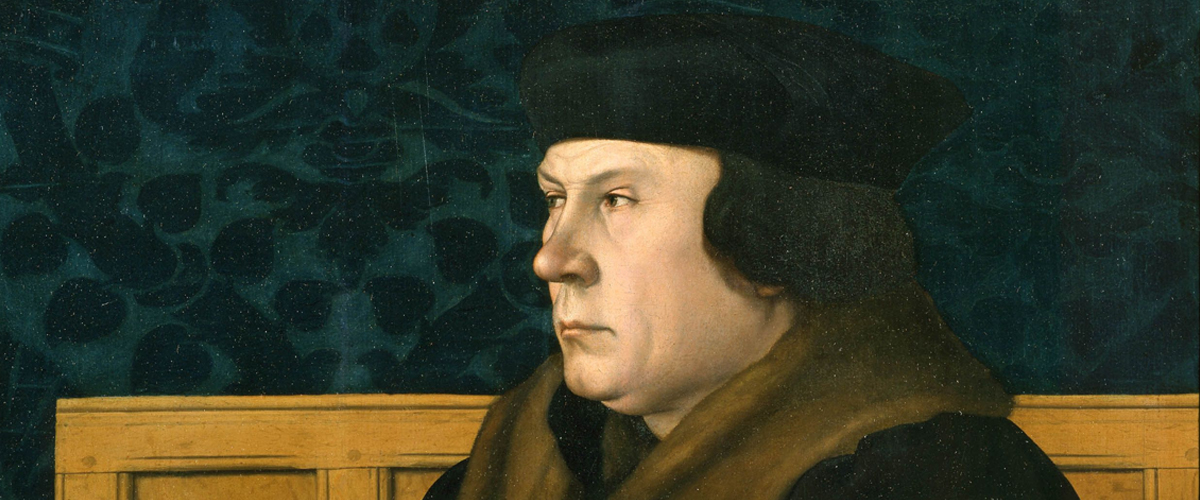
At Least History Isn’t Going Anywhere
By Emily Temple
It’s been a day since the publication of The Mirror and the Light—the final installment of Hilary Mantel’s celebrated trilogy about Tudor England, starring the enigmatic Thomas Cromwell—so you’ve already blazed through it, right? Well, whether you have already or you’re about to, once you’ve closed the book on Cromwell, you may be looking to fill the void. (Especially if you are quarantined.) It may not be as easy as it seems, at least if you agree with James Wood, who in a review of Mantel’s second Cromwell novel, Bring Up the Bodies, wrote that hers “are mysteriously successful historical novels, a somewhat gimcrack genre not exactly jammed with greatness.”
Maybe yes, maybe no, but there are certainly a few great ones worthy of picking up next. Required caveat: this is an enormous category to distill into a list of ten—there are thousands of great historical novels that pick up on the themes or forms of Mantel’s work in some way; these are a few of my own personal favorites. Feel free to add your own in the comments below.
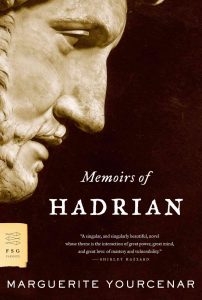
Marguerite Yourcenar, trans. Grace Frick, Memoirs of Hadrian
If what you liked best about Mantel’s novels was their exquisite prose, I strongly recommend you pick up Yourcenar’s fictionalized autobiography of the Roman emperor Hadrian, which is also a book about time, a philosophical treatise, and a blazing evocation of ancient Rome. Also, not for nothing, but Yourcenar is extremely cool: for instance, even her close friends called her “Madame,” which is, let me tell you, the dream. We stan.
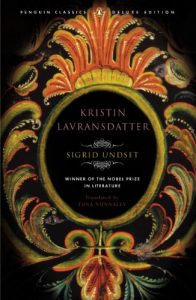
Sigrid Undset, tr. Tiina Nunnally, Kristin Lavransdatter
If you want to recreate the depth and breadth of Mantel’s series—and its length—I recommend this masterpiece by Nobel laureate Sigrid Undset. It is also a trilogy, though it is sometimes published as a single volume, but more importantly, it is an enduring cult classic, a complex and affecting medieval epic, spanning decades in the life of the eponymous Kristin. Don’t let the fact that it’s set in 14th-century Norway put you off—I promise it is extremely cool.
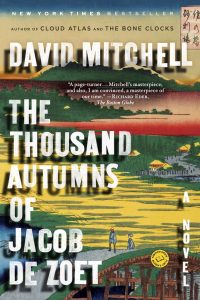
David Mitchell, The Thousand Autumns of Jacob de Zoet
Another book to pick up if you love gorgeous prose and being dunked into an immersive narrative in a far flung land (and time). I remember reading this one, which begins in a Dutch trading post in 1799 Nagasaki and is packed to the gills both with detail and with emotion, on the sidewalk on my way to work when it first came out, unable to pause even to look where I was going. Also one of our favorite novels of the decade.
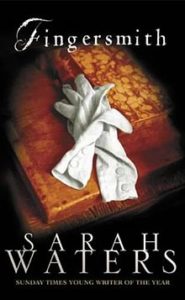
Sarah Waters, Fingersmith
If your major issue with the Cromwell novels was how light they were on (lesbian) sex, and your major issue with Dickens is all the moralizing, may I present the immersive and delightful Sarah Waters, whose Fingersmith was once described by Mantel herself as “a book which, when it was new, I read as if I were a child, utterly thrilled and beguiled by it.” (Reader, I felt the same.) The only thing that’s ever caused my appreciation of Waters’ excellent Victorian era crime novel to flicker is Park Chan-wook’s The Handmaiden, because he performed the feat of improving a nearly perfect thing. But guess what? We get to have both.
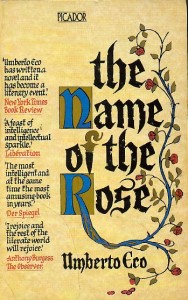
Umberto Eco, tr. William Weaver, The Name of the Rose
In the Cromwell trilogy, we more or less know what’s going to happen to everyone (at least if you were paying attention in history class). Not so in Eco’s historical murder mystery, set in a Benedictine abbey in 1327, a mega-bestselling, difficult, labyrinthine novel that is also an ode to libraries—in its way.

Danielle Dutton, Margaret the First
I get it, you’ve been doing a lot of reading. Maybe you’re open to a new and intriguing historical figure, but considering that relationship with Cromwell is only newly over, you don’t want to make a huge commitment, page-wise. There are other kinds of books out there, after all. What you need is Danielle Dutton’s glorious, elliptical Margaret the First, which dramatizes the life of Margaret Cavendish, the 17th-century duchess who also happened to be one of the first famous female writers. You will be fully charmed; I expect in the end you will wish it were longer (as I did).
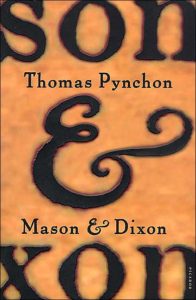
Thomas Pynchon, Mason & Dixon
But if you are looking for another big commitment, and if you also have a yen for the postmodern epic, Pynchon’s massive American picaresque would be an out-of-the-box option. It’s not for everybody, and it’s really nothing like Mantel’s trilogy, but I can’t quite justify a list of great historical novels that doesn’t mention it.

Octavia Butler, Kindred
Admittedly, this is about as different a historical novel from Mantel’s trilogy as you could get, but Butler is just so good that I think everyone should read it. Butler’s classic is a historical novel via accidental time travel, in which a black woman just living her life in Los Angeles in the late 70s finds herself plucked up and plopped onto an antebellum Maryland plantation. If you read historical fiction to immerse yourself in how other people lived at other times, consider this a meta exploration: you’re watching a modern woman (or modern at the time of writing, at least) actually immerse herself in the past—turns out it’s a lot different when you have to live through it.

Ford Madox Ford, The Fifth Queen
If what you really want is much more of Hilary Mantel’s Cromwell trilogy . . . well it doesn’t exist, sorry, and don’t be so greedy! You may, however, enjoy Ford’s odd, archaic, impressionistic Tudor novel (or three novellas, to be precise), which focuses on Katharine Howard, with whom you might be familiar. Ford “uses Tudor language,” writes A. S. Byatt in the introduction to the Vintage Classics edition, with “a pleasure in accuracy and sharpness, not a distant strangeness. . . . Ford’s prose has the flexibility and elegance of a good Latinist and the roughness and brilliance of a writer interested in the quiddities of the vernacular.” Which doesn’t sound too unlike Mantel herself.

Philippa Gregory, The Other Boleyn Girl
Wolf Hall, but make it fashion.
See also: Shusaku Endo, Silence, Penelope Fitzgerald, The Blue Flower, Amitav Ghosh, the Ibis trilogy, Robert Graves, I, Claudius, Elizabeth Kostova, The Historian, Irving Stone, The Agony and the Ecstasy, Ken Follett, The Pillars of the Earth, Eleanor Catton, The Luminaries and many more.

Emily Temple
Emily Temple is the managing editor at Lit Hub. Her first novel, The Lightness, was published by William Morrow/HarperCollins in June 2020. You can buy it here.
In Search of Mature Masculinity in a World of Wounded BoyMen: Part 4
February 24, 2025 (menalive.com)
By Jed Diamond

Long Live Men: Emerging Communities Supporting Mature Masculinity
In Part 1, I discussed the origin of my own search for masculinity growing up with an absent father. I also introduced you to Michael Gurian and Sean Kullman and their book, Boys, A Rescue Plan: Moving Beyond the Politics of Masculinity to Health Male Development. In Part 2, I expanded the discussion to draw on the work of other colleagues who are recognizing that healthy masculinity, like healthy femininity, are opposite sides of the same coin and must be supported together for the good of all. In Part 3, I described the work of Jungian psychologist Robert Moore and mythologist Douglas Gillette and their exploration of the four archetypes of mature masculinity they wrote about in their book, King, Warrior, Magician, and Lover: Rediscovering The Archetypes of the Mature Masculine.
In this final part of the series I want to talk about three archetypes of masculinity currently being expressed in the world today and why only one of them offers real hope for the future of men, women, children, humanity, and the community of life on planet Earth.
Since I turned 81 years old in December 2024, I have been reflecting on what I’ve learned in my life as a man. I try to describe my own evolution from a life based on what Moore and Gillette call “boy psychology” to one based on a healthy, balanced, mature male psychology. We see examples of boy psychology all around us. Here are a few examples from Moore and Gillette’s book:
- The ducking and diving political leader.
- The wife beater.
- The company “yes man.”
- The “holier than thou” minister.
- The gang member.
- The father who can never find the time to attend his daughter’s school program.
- The therapist who unconsciously attacks a clients’ “shining” and seeks a kind of gray normalcy for them.
“All these men have something in common,” say Moore and Gillette. “They are all boys pretending to be men. They got that way honestly, because nobody showed them what a mature man is like. Their kind of ‘manhood’ is a pretense to manhood that goes largely undetected as such by most of us. We are continually mistaking this man’s controlling, threatening, and hostile behavior for strength. In reality, he is showing an underlying extreme vulnerability and weakness, the vulnerability of the wounded boy.”
The Two Archetypes of Wounded Boys Pretending to Be Men
Reflecting on my experiences in my own life, what I see with the thousands of boys and men I have counseled over the years, and what is reflected in our current government in the U.S., I see two dominant archetypes that underlie the behavior of Wounded Boys Pretending to Me Men:
First is what Moore and Gillette describe as The Highchair Tyrant.
“The Highchair Tyrant,” say Moore and Gillette, “is epitomized by the image of Little Lord Fauntleroy sitting in his highchair, banging on the tray, and screaming for his mother to feed him, kiss him, and attend to him.”
As an only child being raised by a single mom, I developed a lot of these tendencies in my own childhood. They also extended into my adult life in my relationships with women and contributed to my two failed marriages. I was fortunate to get support to heal and grow up and have now been joyfully married to my wife, Carlin, for forty-five years.
“The Highchair Tyrant,” says Moore and Gillette, “hurts himself with his grandiosity—the limitlessness of his demands—because he rejects the very things that he needs for life: food and love.”
Moore and Gillette summarize the following characteristics of The Highchair Tyrant:
- Arrogance (what the Greeks called hubris, or overwhelming pride).
- Childishness (in the negative sense).
- Irresponsibility, even to himself as a mortal being who has to meet his biological and psychological needs.
- The Highchair Tyrant needs to learn that he is not the center of the universe and that the universe does not exist to fulfill his every need, or better put, his limitless needs, his pretentions to godhood.
I suspect we can all recognize many of these characteristics in boys and men we know–from the centers of power in government to business leaders and males in our own families and communities.
The second archetype of boy psychology described by Moore and Gillette is The Weakling Prince.
“The boy (and later the man) who is possessed by the Weakling Prince, needs to be coddled, who dictates to those around him by his silent or his whining and complaining helplessness.”
As adults, those possessed by the Weakling Prince archetype often become “Mr. Nice Guys.” Dr. Robert Glover, author of the book No More Mr. Nice Guy says,
“A Nice Guy is a man who believes he is not okay, just as he is. Due to both societal and familial conditioning, the Nice Guy is convinced he must become what he thinks others want him to be in order to be liked, loved, and get his needs met. He also believes that he must hide anything about himself that might trigger a negative response in others.”
He goes on to say, “This inauthentic and chameleon-like approach to life causes Nice Guys to feel frustrated, confused, and resentful. Subsequently, these men are often anything but nice. In fact, Nice Guys are generally, dishonest, secretive, manipulative, controlling, self-centered, and passive-aggressive.”
The historian, Ruth Ben-Giat, describes political leaders driven by boy psychology in her book, Strongmen: Mussolini to the Present.
“For ours is the age of authoritarian rulers: self-proclaimed saviors of the nation who evade accountability while robing their people of truth, treasure, and the protections of democracy. They use masculinity as a symbol of strength and a political weapon. Taking what you want, and getting away with it, becomes proof of male authority. They use propaganda, corruption, and violence to stay in power.”
The Rise of Communities of Mature Masculinity
In my book, 12 Rules for Good Men, I describe my own journey leading to mature masculinity, MenAlive, the organization I founded, and other organizations I collaborate with. I describe our work in an article, “MenAlive Now: Taking Action in Support of Our Children.”
In introducing the archetypes of mature masculinity Moore and Gillette say,
“Those of us who have been influenced by the thinking of the great Swiss psychologist Carl Jung have great reason to hope that the external deficiencies we have encountered in the world as would-be men (the absent father, the immature father, the lack of meaningful ritual process, the scarcity of ritual elders) can be corrected.”
They go on to say, “It is our experience that deep within every man are blueprints, what we can also call ‘hard wiring’ for the calm and positive mature masculine. Jungians refer to these masculine potentials as archetypes or ‘primordial images.’ Jung and his successors have found that on the level of the deep unconscious the psyche of every person is grounded in what Jung called the ‘collective unconscious,’ made up of instinctual patterns and energy configurations probably inherited genetically throughout the generations of our species.”
Moore and Gillette describe four archetypes of mature masculinity—The King, The Warrior, The Magician, and The Lover. The mature man embodies all four of these primal energies.
“The King energy is primal in all men,” say Moore and Gillette. “Two functions of King energy make the transition from Boy psychology to Man psychology possible. The first of these is ordering; the second is providing fertility and blessing.”
The King Energy Brings Order to His People
“The King is the central archetype,” say Moore and Gillette. “The good King is at the Center of the World. He sits on his throne on the central mountain, or on the Primeval Hill, as the ancient Egyptians called it.”
(Remember—Don’t confuse the archetype of the King with the worldly kings who have been High Chair tyrants, rather than mature male leaders. Also, remember that there are female counterparts to these archetypes).
Moore and Gillette offers the example of the Sioux medicine man Black Elk who John Neihardt describes in his book, Black Elk Speaks. Black Elk speaks of the world as a great “hoop” divided by two paths, a “red path” and a “black path,” which intersect. Where they intersect is the central mountain of the world. It is on that mountain that the great Father God—the King energy—speaks and gives Black Elk a series of revelations for his people.
The mature male leader tunes in and receive the guidance from the “great Father God” and gives his people rules and laws to follow for the good of the people and the communities of life that all humans depend upon.
The King Energy Brings Abundance and Blessings to His People
“In conjunction with his ordering function, the second vital good that the King energy manifests is fertility and blessing.”
The mature male leader sees the good in all creation and supports the creation of new life both for humans, as well as the animal and plant kingdoms and recognizes that all life is connected.
The mature male leader accomplishes this by being an exemplar in his own life of what he gives to others. Like all humans, he makes mistakes, but he is able to acknowledge them when they occur and does not blame others. He is not a God separate from his people, but a human being drawing on the gifts of the Gods and the archetypal legacies from millions of years of human history.
Do Not Lose Hope. We Were Made for These Times
These are challenging times. We are living in a country where Boy Psychology seems to be running rampant and the human species is living in ways that are not sustainable. There are times I feel like giving up and just want to give in and let go. But, I have had the good fortune of connecting with more and more men who aspire to lives of mature masculinity and see mature masculinity as not only possible but is the hope for our collective future.
As Czech statesman, Václav Havel, observed,
“Today, many things indicate that we are going through a transitional period when it seems that something is on the way out and something else is painfully being born. It is as if something were crumbling, decaying, and exhausting itself, while something else, still indistinct, were arising from the rubble.”
I wrote about this in a recent article, “Free At Last: Overcoming Our Addiction to the Sinking Ship of Civilization.”
As my friend and colleague Clarissa Pinkola Estes says,
“Do not lose heart. We were made for these times… For years we have been learning, practicing, been in training for… and just waiting to meet on this exact plain of engagement.”
If you would like to learn more drop me a note to: Jed@MenAlive.com and put “Mature Masculinity” in the subject line.

Jed Diamond
Founder and VHS (Visionary Healer Scholar) of MenAlive
SF Author Kate Folk’s ‘Sky Daddy’ Explores Objectophilia, Takes Place Largely At SFO
1 MARCH 2025/ARTS & ENTERTAINMENT/LEANNE MAXWELL
(SFist.com)
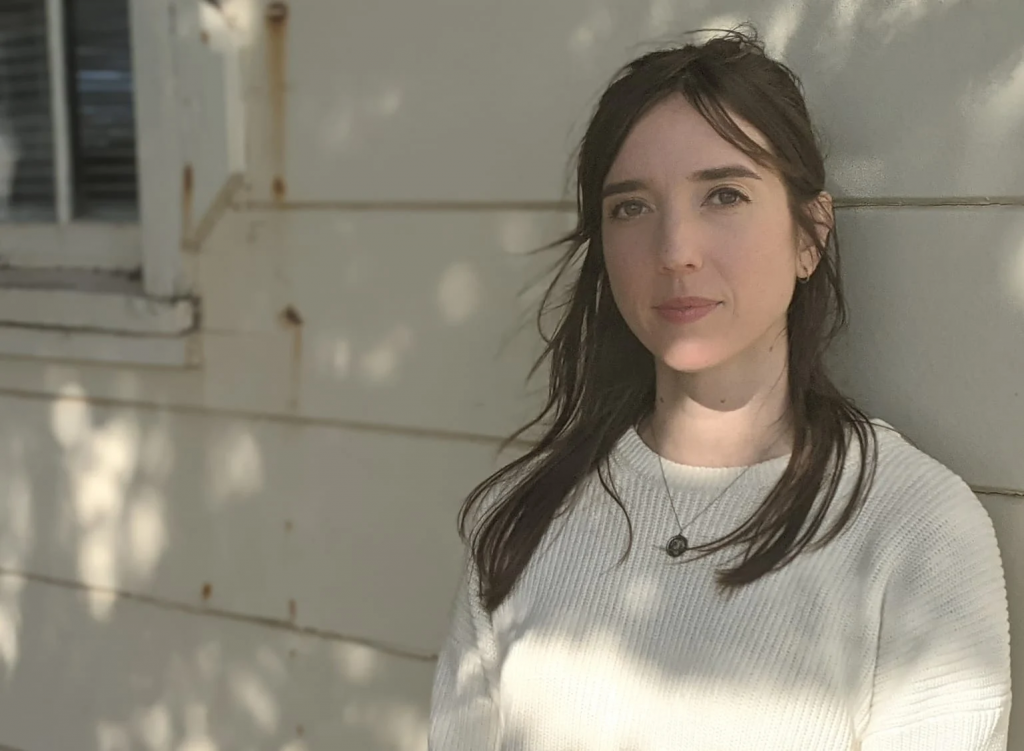
San Francisco author Kate Folk is releasing a new book, Sky Daddy, which deals with the taboo subject of objectophilia set against the backdrop of SFO and Silicon Valley.
The main character, an online content moderator, gets her thrills via AirTrain rides around SFO, fantasizing about encounters with aircraft.
KQED notes that Sky Daddy balances dark humor with an empathetic look at objectophila, an obsessive-compulsive disorder in which someone forms a romantic or sexual attraction to inanimate objects, such as buildings, vehicles, or furniture.
Its unique premise, as detailed by Kirkus Reviews, provides a deeper look into a rare mental health disorder and how it intersects with the under-appreciated job of online content moderation, in which underpaid workers are exposed to relentless traumatic online content.
Sky Daddy is scheduled for release on April 8 through Random House.
Update: This post was revised to include information about objectophilia.
Image: Good Reads