P. L. Travers, student of Gurdjieff, author of “Mary Poppins”

From Wikipedia, the free encyclopedia

P. L. Travers
OBE
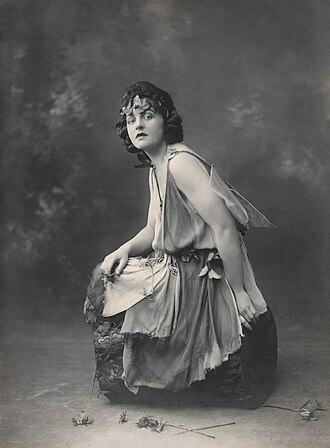
Travers in the role of Titania in a production of A Midsummer Night’s Dreamc. 1924
BornHelen Lyndon Goff
9 August 1899
MaryboroughColony of Queensland
Died23 April 1996 (aged 96)
Chelsea, London, England
Resting placeSt Mary the Virgin’s Church, Twickenham, London
Pen namePamela Lyndon Travers
OccupationWriteractressjournalist
NationalityAustralian-British
GenreChildren’s literature, fantasy
Notable worksMary Poppins book series
Children1

Pamela Lyndon Travers OBE (/ˈtrævərs/; born Helen Lyndon Goff; 9 August 1899 – 23 April 1996) was an Australian-British writer who spent most of her career in England.[1] She is best known for the Mary Poppins series of books,[2] which feature the eponymous magical nanny.

Goff was born in Maryborough, Queensland, and grew up in the Australian bush before being sent to boarding school in Sydney. Her writing was first published when she was a teenager, and she also worked briefly as a professional Shakespearean actress. Upon emigrating to England at the age of 24, she took the name “Pamela Lyndon Travers” and adopted the pen name P. L. Travers in 1933 while writing the first of eight Mary Poppins books.

Travers travelled to New York City during World War II while working for the British Ministry of Information. At that time, Walt Disney contacted her about selling to Walt Disney Productions the rights for a film adaptation of Mary Poppins. After years of contact, which included visits to Travers at her home in London, Walt Disney obtained the rights and the film Mary Poppins premiered in 1964.

In 2004, a stage musical adaptation of the books and the film opened in the West End; it premiered on Broadway in 2006. A film based on Disney’s efforts to persuade Travers to sell him the Mary Poppins film rights was released in 2013, Saving Mr. Banks, in which Travers is portrayed by Emma Thompson. In a 2018 sequel to the original film, Mary Poppins Returns, Poppins, played by Emily Blunt, returns to help the Banks family once again.

Early life

Helen Lyndon Goff, also known as Lyndon, was born on 9 August 1899 in Maryborough, Queensland, Australia, at her family’s home.[3] Her mother, Margaret Agnes Goff (née Morehead), was Australian and the niece of Boyd Dunlop MoreheadPremier of Queensland from 1888 to 1890.[citation needed] Her father, Travers Robert Goff, was unsuccessful as a bank manager owing to his alcoholism, and was eventually demoted to the position of bank clerk.[4] The two had been married on 9 November 1898, nine months before Helen was born.[3] The name Helen came from a maternal great-grandmother and great-aunt. Although she was born in Australia, Goff considered herself Irish and later expressed the sentiment that her birth had been “misplaced”.[5]

As a baby she visited her great aunt Ellie in Sydney for the first time; Ellie would figure prominently in her early life,[5] as Goff often stayed with her.[6] Goff lived a simple life as a child, given a penny a week by her parents as well as occasional other gifts. Her mother was known for giving Goff maxims and instructions and she loved “the memory of her father” and his stories of life in Ireland. Goff was also an avid reader, later stating that she could read at three years old, and particularly enjoying fairy tales.[7]

The family lived in a large home in Maryborough until Lyndon was three years old, when they relocated to Brisbane in 1902. Goff recalled an idealized version of her childhood in Maryborough as an adult. In Brisbane, Goff’s sister was born.[8] In mid-1905 Goff went to spend time with Ellie in Sydney.[9] Later that year, Lyndon returned and the family moved to Allora, Queensland.[10] In part because Goff was often left alone as a child by parents who were “caught up in their own importance”, she developed a “form of self-sufficiency and […had an] idiosyncratic form of fantasy life”, according to her biographer Valerie Lawson, often pretending to be a mother hen—at times for hours.[11] Goff also wrote poetry, which her family paid little attention to. In 1906 Lyndon attended the Allora Public School.[12] Travers Goff died at home in January 1907. Lyndon would struggle to come to terms with this fact for the next six years.[13]

Mary Poppins statue in Ashfield Park in honour of Goff (Travers) who lived nearby from 1918 to 1924

Following her father’s death, Goff, along with her mother and sisters, moved to Bowral, New South Wales, in 1907, and she attended the local branch of the Sydney Church of England Grammar School.[14] She boarded at the now-defunct Normanhurst School in Ashfield, a suburb of Sydney, from 1912. At Normanhurst, she began to love theatre. In 1914 she published an article in the Normanhurst School Magazine, her first, and later that year directed a school concert. The following year, Goff played the role of Bottom in a production of A Midsummer Night’s Dream. She became a prefect and sought to have a successful career as an actress.[15][16] Goff’s first employment was at the Australian Gas Light Company as a cashier.[17] Between 1918 and 1924 she resided at 40 Pembroke Street, Ashfield.[18] In 1920 Goff appeared in her first pantomime.[19] The following year she was hired to work in a Shakespearean Company run by Allan Wilkie based in Sydney.[20]

Career

Goff had her first role in the troupe as Anne Page in a March 1921 performance of The Merry Wives of Windsor. She decided to go by the stage name of “Pamela Lyndon Travers”, taking Travers from her father’s name and Pamela because she thought it a “pretty” name that “flowed” with Travers.[21] Travers toured New South Wales beginning in early 1921 and returned to Wilkie’s troupe in Sydney by April 1922. That month, in a review of her performance as Titania in A Midsummer Night’s Dream, a critic for Frank Morton‘s Triad wrote that her performance was ‘all too human’.[22]

The troupe travelled to New Zealand, where Travers met and fell in love with a journalist for The Sun. The journalist took one of Travers’ poems to his editor and it was published in the Sun. Even after she left New Zealand Travers continued to submit works to the Sun, eventually having her own column called “Pamela Passes: the Sun’s Sydney Letter”. Travers also had work accepted and published by publications including the Shakespeare Quarterly, Vision, and The Green Room. She was told to not make a career out of journalism and turned to poetry. The Triad published “Mother Song”, one of her poems, in March 1922, under the name “Pamela Young Travers”. The Bulletin published Travers’ poem, “Keening”, on March 20, 1923, and she became a frequent contributor. In May 1923 she found employment at the Triad, where she was given the discretion to fill at least four pages of a women’s section—titled “A Woman Hits Back”—every issue. Travers wrote poetry, journalism, and prose for her section; Lawson notes that “erotic verse and coquetry” figured prominently.[23] She published a book of poetry, Bitter Sweet.[24]

In England

Travers’ second London home in 50 Smith Street, Chelsea, London

Blue plaque at the address

On 9 February 1924, Travers left Australia for England, settling in London.[25] She only revisited Australia once, in the 1960s. For four years she wrote poetry for the Irish Statesman,[17] beginning while in Ireland in 1925 when Travers met the poet George William Russell (who wrote under the name “Æ”) who, as editor of the Statesman, accepted some of her poems for publication. Through Russell, whose kindness towards younger writers was legendary, Travers met W. B. YeatsOliver St. John Gogarty and other Irish poets who fostered her interest in and knowledge of world mythology.[26]

After visiting Fontainebleau in France, Travers met George Ivanovich Gurdjieff, an occultist, of whom she became a “disciple”. Around the same time she was taught by Carl Gustav Jung in Switzerland.[17] In 1931, she moved with her friend Madge Burnand from their rented flat in London to a thatched cottage in Sussex.[4] There, in the winter of 1933, she began to write Mary Poppins.[4] During the 1930s, Travers reviewed drama for The New English Weekly and published the book Moscow Excursion (1934). Mary Poppins was published that year with great success. Many sequels followed.[17]

During the Second World War, Travers worked for the British Ministry of Information, spending five years in the US, publishing I Go by Sea, I Go by Land in 1941.[17] At the invitation of her friend John Collier, the US Commissioner of Indian Affairs, Travers spent two summers living among the NavajoHopi and Pueblo peoples, studying their mythology and folklore.[27][28] Travers moved back to England at the end of the war, where she continued writing.[17] She moved into 50 Smith Street, Chelsea, London, which is commemorated with an English Heritage blue plaque. She returned to the US in 1965 and became writer-in-residence at Radcliffe College from 1965 to 1966 and at Smith College in 1966 and lecturing at Scripps College in 1970.[17][29] She published various works and edited Parabola: the Magazine of Myth and Tradition from 1976 to her death.[17]

Mary Poppins

As early as 1926, Travers published a short story, “Mary Poppins and the Match Man”, which introduced the nanny character of Mary Poppins and Bert the street artist.[30][31] Published in London in 1934, Mary Poppins, the children’s book, was Travers’ first literary success. Seven sequels followed, the last in 1988, when Travers was 89.[32]

While appearing as a guest on BBC Radio 4‘s radio programme Desert Island Discs in May 1977, Travers revealed that the name “M. Poppins” originated from childhood stories that she contrived for her sisters, and that she was still in possession of a book from that era with this name inscribed within.[33] Travers’s great aunt, Helen Morehead, who lived in WoollahraSydney, and used to say “Spit spot, into bed,” is a likely inspiration for the character.[34][35]

Disney version

Main article: Mary Poppins (film)

The musical film adaptation Mary Poppins was released by Walt Disney Pictures in 1964. Primarily based on the original 1934 novel of the same name, it also lifted elements from the 1935 sequel Mary Poppins Comes Back. The novels were loved by Disney’s daughters when they were children, and Disney spent 20 years trying to purchase the film rights to Mary Poppins, which included visits to Travers at her home in London.[36] In 1961, Travers arrived in Los Angeles on a flight from London, her first-class ticket having been paid for by Disney, and finally agreed to sell the rights, in no small part because she was financially in dire straits.[37] Travers was an adviser in the production, but she disapproved of the Poppins character in its Disney version; with harsher aspects diluted, she felt ambivalent about the music and she so hated the use of animation that she ruled out any further adaptations of the series.[38] She received no invitation to the film’s star-studded première until she “embarrassed a Disney executive into extending one”. At the after-party, she said loudly, “Well. The first thing that has to go is the animation sequence.” Disney replied, “Pamela, the ship has sailed”.

Travers so disliked the Disney adaptation and the way she felt she had been treated during the production that when producer Cameron Mackintosh approached her years later about making the British stage musical, she acquiesced only on conditions that British writers alone and no one from the original film production were to be directly involved.[39][40] That specifically excluded the Sherman Brothers from writing additional songs for the production. However, original songs and other aspects from the 1964 film were allowed to be incorporated into the production.[41] Those points were even stipulated in her last will and testament.[42][43]

In the 1977 interview on the BBC’s Desert Island Discs, Travers remarked about the film, “I’ve seen it once or twice, and I’ve learned to live with it. It’s glamorous and it’s a good film on its own level, but I don’t think it is very like my books.”[44][45]

Later films

The 2013 film Saving Mr. Banks is a dramatised retelling of both the working process during the planning of Mary Poppins and of Travers’s early life, drawing parallels with Mary Poppins and that of the author’s childhood. The film stars Emma Thompson as P. L. Travers and Tom Hanks as Walt Disney. Thompson considered it the most challenging of her career because she had “never really played anyone quite so contradictory or difficult before”,[46] but found the complicated character “a blissful joy to embody”.[47]

In 2018, 54 years after the release of the original Mary Poppins film, a sequel was released titled Mary Poppins Returns, with Emily Blunt starring as Mary Poppins. The film, in which Mary Poppins returns to help Jane and Michael one year after a family tragedy, is set 25 years after the events of the first film.

Personal life

Travers was reluctant to share details about her personal life, saying she “most identified with Anonymous as a writer” and asked whether “biographies are of any use at all”. Patricia Demers was allowed to interview her in 1988 but not to ask about her personal life.[17]

Bust of P. L. Travers, c. 1944, by Gertrude HermesNational Portrait Gallery, London

Travers never married.[17] Though she had numerous fleeting relationships with men throughout her life, she lived for more than a decade with Madge Burnand, daughter of Sir Francis Burnand, a playwright and the former editor of Punch. They shared a London flat from 1927 to 1934, then moved to Pound Cottage near Mayfield, East Sussex, where Travers published the first of the Mary Poppins books. Their relationship, in the words of one biographer[who?], was “intense”, but equally ambiguous.

At the age of 40, two years after moving out on her own, Travers adopted a baby boy from Ireland whom she named Camillus Travers. He was the grandchild of Joseph Hone, the first biographer of George Moore and W. B. Yeats, who was raising his seven grandchildren with his wife. Camillus was unaware of his true parentage or the existence of any siblings until the age of 17, when Anthony Hone, his twin brother, came to London and knocked on the door of Travers’s house at 50 Smith Street, Chelsea. He had been drinking and demanded to see his brother. Travers refused and threatened to call the police. Anthony left but, soon after, following an argument with Travers, Camillus went looking for his brother and found him in a pub on King’s Road.[48][49] Anthony had been fostered and raised by the family of the essayist Hubert Butler in Ireland. Through Camillus, Travers had three grandchildren.[50]

Travers was appointed Officer of the Order of the British Empire (OBE) in the 1977 New Year Honours. The investiture ceremony took place later that year at Buckingham Palace, with the Duke of Kent standing in for Queen Elizabeth II. She died in London on 23 April 1996 at the age of 96.[51] She is buried at St Mary the Virgin’s Church, Twickenham, London.[52] Although Travers never fully accepted the way the Disney film version of Mary Poppins had portrayed her nanny figure, the film did make her rich.[53] Her estate was valued for probate in September 1996 at £2,044,708.[54]

More at: https://en.wikipedia.org/wiki/P._L._Travers

WHAT’S THE DNA OF AN EFFECTIVE PROTEST?

Scholars and Practitioners Discussed What It Takes to Create a Sustained, Successful Movement at Last Night’s Event “When Does Protest Make a Difference?”

Clockwise from top left: Saul Gonzalez, Danielle K. Brown, Matt Coles, Eugene Volokh, Victor Narro, Sandy Jo MacArthur, and Pablo Alvarado.

by JACKIE MANSKY | AUGUST 23, 2024 (ZocaloPublicSquare.org)

With the new school year starting, universities across the country anticipate a new wave of protests around the war in Gaza, now in its 10th month. To offer broad perspective, Zócalo brought a panel of scholars and practitioners to the ASU California Center Broadway last night to discuss the history, legality, and art of American protest.

The Zócalo event—which asked “When Does Protest Make a Difference?”—took the form of two back-to-back panels, both moderated by KQED correspondent and “The California Report” co-host Saul Gonzalez.

The first panel was made up of academics: urban journalism professor Danielle K. Brown, former director of the ACLU LGBT Project Matt Coles, and First Amendment scholar Eugene Volokh. They discussed what makes an effective protest movement, the media’s role in legitimizing protest in the eyes of the public, and what forms of protest the First Amendment allows.

Coles, known for his work in the LGBT rights movement—notably, authoring San Francisco’s first sexual orientation nondiscrimination law—shared his thoughts on what it takes for protesters to make real change.

First, he said, think about what you want to achieve: Are you trying to energize your constituency? To persuade people generally of something? To change policy?

Reflecting on the anti-war movement of the ’60s and ’70s, ACT UP’s AIDS demonstrations of the ’80s and ’90s, and LGBT protests more broadly, Coles pointed to successful strategies. Particularly at the start of a protest, he said, it’s important to catch public attention with an action “that feels arresting, whether that’s norm-defying or convention-defying.”

To make change you also need “concrete articulated goals” which allow “you to make change over time,” Coles said. One more key thing? Organization “to keep a movement sustained.”

Sometimes protests are “simply there to signal their capacity to other people,” added Brown, the journalism professor. The goal could be getting a politician to recognize that an overlooked issue matters to their constituency. Or it could be to impact “the hearts and minds of other people” more broadly, she said.

Brown’s research focuses on media representations of protests and social movements—particularly, Black Lives Matter. “Most people don’t go to protests, most people learn about protests through the media,” she said. That’s why the way media coverage approaches protests is important, she argued. What biases does the coverage reflect? Does it present protesters as a legitimate part of the electorate? Does it portray them as having an agenda with concrete goals and demands?

Volokh, the legal scholar, spoke about the limits of First Amendment protection. “Movements may be successful or not,” he said, “but they all have to comply with the law or else face both the risk of criminal punishment [and] the risk of civil liability.”

A great deal of protest is constitutionally protected, he said, but some conduct is not. “Many decades of litigation” established that officials cannot restrict protests based on the ideas they express. But authorities can crack down for other reasons: noise level (say, if people are protesting at night), or picketing in a residential area. Protesters who block highways illegally can be jailed or fined.

“Before you figure out what you’re going to do, you need to figure out what the lines are and what the risks are,” Coles affirmed.

The evening’s second panel featured activists and a law enforcement official: National Day Labor Organizing Network co-executive director Pablo Alvarado, Los Angeles Police Department former assistant chief Sandy Jo MacArthur, and immigrant rights and labor justice activist Victor Narro. They mused on responses to protests, what a “well-policed” protest might look like, and joy in protests.

Narro, who has engaged in activism for decades, said that witnessing police repression as a kid growing up in New York City was a formative experience. His friends and neighbors were unjustly targeted, he said, not just because of law enforcement attitudes but “because [the NYPD was given] the green light from the mayor.” It’s important to recognize how officials’ “perception and viewpoints” translate into law enforcement conduct, he said. “We have to hold them accountable as well.”

MacArthur, who is retired from LAPD, now works at the Los Angeles County District Attorney’s Office teaching law enforcement agencies de-escalation skills. There are things police can and should do to prevent needless violence, she said. “Our fundamental duty is to be out there to protect and to allow those people to have the right to assemble,” she said. Through training, experience, and working with organizers, officers can understand “at what point to engage.” If it’s too late, she said, “there’s too much going on.” If it’s too early, “then we create the storm.” Offering regular training to help officers know what to expect on protest days and placing seasoned supervisors in the field are tools that can de-escalate future situations, she said.

Alvarado, who came to the United States from El Salvador in 1990, near the end of that nation’s 12-year civil war, organizes low-wage workers. He spoke about finding joy in protests, including during a 2010 fight against an anti-immigration law in Arizona. Alvarado’s organization was protesting against a local business that had hired off-duty sheriff deputies to patrol neighborhoods and arrest workers. Armed counter-protesters showed up—”people with swastikas and really ugly messages against immigrants”—supported by then-sheriff Joe Arpaio.

Rather than escalate the situation, Alvarado’s group decided to infuse their protest with arts and culture. Bringing in mariachi bands, eloteros (people who sell corn on the street), and brass bands helped to dial down the hostility, he said, “not only on our side but on the other side.”

Martin Luther King taught us how to fight with “peaceful tension,” he added.

Both conversations concluded with audience Q&A. One person asked about “keyboard warriors.” Are digital protesters effective?

“There’s nothing more powerful than physically holding up that protest sign, that picket sign, or that banner,” Narro said. But digital media can feed into how we physically come together. “You can never go wrong when you get activists together in solidarity to make their message heard.”

What Would America Be Like if Fostering Wellbeing Were the First Priority | Schwartz Report EP48

Schwartz Rep • Premiered Aug 23, 2024 Imagine a society where wellbeing is the top priority. In this episode, we explore how America could transform if policies and practices centered on health, happiness, and community welfare. We’ll discuss potential changes in healthcare, education, work-life balance, and social equity, envisioning a nation built around the true flourishing of its people.

SEEKERS VERSUS PRACTITIONERS

(beperiod.com)

A person in search of self-knowledge is called a Seeker. A seeker who puts self-knowledge into practice is called a Practitioner. Most seekers are reluctant to adopt a definite and grounded approach to their search, which means they continue seeking without ever finding…

“My aim is to find a higher purpose and lead a life attuned to that purpose,” said a woman who encountered this teaching.

This aim is noble but impractical. There are too many preconditions before it can be actualized. Might she get lucky and be given a higher purpose by someone else? Or might she find it herself, in which case how exactly, and how will she be able to recognize that the purpose she finds is the right one for her? This is not to say that her aim doesn’t represent a genuine desire coming from her Essence. Essence delights in being helpful and as we uncover the talents of our Essence, they naturally seek to put themselves in the service of a higher cause. However, the prospect of serving a higher cause may just as easily reinforce our Personality with a sense of being chosen, of being more worthy than others. This seeker assumes she can discern whether her Essence, Physical Body, or Personality is driving her aim. She also assumes that once she does, she will be able to loosen her Essence from the grip of her Physical Body and Personality by merely wishing to do so.

Stay Informed

We will email you new videos and posts

Subscribe

The consequences of her misconception became evident as she continued:

“Although I have been harboring this aim for years, it has always run into competition from my lifestyle of drinking and pursuing sexual pleasure. I have never been able to master these powerful physical urges and this has made my search seem futile. How can I ever pursue a higher purpose if the dominant part in me is always bent on fulfilling these desires?”

Any attempt at inner work that glosses over the reality that we are made of different parts, or that pretends we can follow the whims and fancies of one part at the expense of the other two, is bound to fail. It will only lead to a greater imbalance. Our Physical Body is hard-coded to seek food, rest, and sex. These are its aims. As long as we inhabit a Physical Body, we always fall under their sway. Setting a noble aim cannot eliminate these desires. The Body either remains indifferent to our aim, or actively resists it. Therefore, the labor of January calls us to break down our noble aim into small and actionable steps that can be subtly introduced in between our many other urges.

In the case of this seeker, long before finding a higher purpose, she will need to learn to observe herself impartially. She will need to learn to distinguish the flavors of her Essence, Physical Body, and Personality, as they manifest in real time. In other words, in her long journey towards purpose, her first step will have to be self-observation. Understandably, we are reluctant to take a small step that only vaguely promotes our larger aim. This challenge will determine whether we remain Seekers or become Practitioners.

A person in search of self-knowledge is called a Seeker. A seeker who puts self-knowledge into practice is called a Practitioner. Most seekers are reluctant to adopt a definite and grounded approach to their search, which means they continue seeking without ever finding. Consequently, while few people ever become seekers, even fewer become practitioners.

“I am” by Fia


Fia
Mar 12, 2017

Lyrics:

You′ve been trying to put me in a box

Saying this is it, you’ll never be enough

Take those dreams and put them on a shelf

And for many years I was holding back

Thinking I should be more like this and that

But then I saw the real truth of it all

No, I am not who you think I am

I am so much more, I am one with source

I am limitless, infinite, powerful

Abundant, complete from the start, creator of all

I am that I am

Oh yes, I am that I am

And I′ve been stuck in thoughts, doing it their way

Didn’t listen to the things my heart would say

Letting fear take over and decide

But when I realized that the choice was mine

Oh I could feel a shift and I began to shine

Living an empowered, beautiful life

No, I am not who you think I am

I am so much more, I am one with source

I am limitless, infinite, powerful

Abundant, complete from the start, creator of all

I am that I am

Oh I am that I am

And therefore

Everything around could fall apart

And I would still have love in my heart

Open eyes, now I see

That there is nothing to do, just be

No, I am not who you think I am

I am so much more, I am one with source

I am limitless, infinite, powerful

Abundant, complete from the start, creator of all

(Contributed by Steve HInes)

Financial planner recommends having more money

AUGUST 17, 2018  (thebeaverton.com)

by CALLUM WRATTEN ( @CALLUMWRATTEN )

HALIFAX – Financial planner Marlene Singh has earnestly told her clients that, in order to be financially secure, they should have a lot more money.

“In my professional opinion, I can not stress how important it is to have a lot of money” said Singh. “The best way to get it, is to have your parents give it to you, because you pay less tax then if you earn it yourself.”

“The first question I ask clients is, where do you want to be in 40 years? The second question I always ask is, are you a Rail Baron, a Shipping Heiress, or Bill Gates?” she added.

Singh listed several advantages of having lots of money, including: not having to pay interest on debt, investing the money to earn even more money, paying for non-essential medical care that prevents more invasive procedures in the future, a constant feeling of superiority, and buying stuff.

“I work as a nurse, and my wife is a support worker, so our potential income is capped, but Marlene gave us lots of great ideas!” stated one of Singh’s clients, Partick McGuiness, “like saving the life of a millionaire or owning the Dutch East India company in the 19th century.”

Most financial institutions estimate the average Canadian will need about a million dollars to retire comfortably. People can accrue this wealth by putting their money into real estate, registered retirement saving plans or mutual funds, but experts agree the best way to have a million dollars for future retirement is to already have a million dollars in the present. If managed well, you might then have even more than a million dollars for retirement.

“I know that there is a lot of fancy terms thrown around such as “bonds”, “annuity” or “bank”, but I can say plain and simple it is amazing to have a large amount of wealth.” said Singh. “Especially since financial planner fees can really add up.”

Governor Wes Moore on skepticism

Maryland Gov. Wes Moore speaks during the Democratic National Convention Wednesday, Aug. 21, 2024, in Chicago. (J. Scott Applewhite/AP)

“I just want skepticism to be your companion and not your captor,”
–Maryland Govenrnor Wes Moore

Westley Watende Omari Moore (born October 15, 1978) is an American politician, businessman, author, and veteran, serving as the 63rd governor of Maryland since 2023. Moore was born in Maryland and raised primarily in New York. Wikipedia

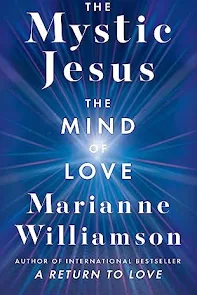
More Quotes from “Mystic Jesus”

Compiled by Mike Zonta, BB editor

“The peace of heaven is entered two by two.” (p. 127)

The ego’s directive: “Seek but do not find.” (p.135)

“We have more faith in the power of cancer to kill us than we have in God to heal us.” (p. 159)

“If Jesus [i.e., Truth] is real, if he is alive and his power is available to us, then basically everything we’ve been taught about the world is untrue.” (p. 160)

“God cannot do for us that which he cannot do through us.” (p. 185)

“[Jesus] doesn’t just talk about peace. He wages peace.” (p. 198)

Freud on intelligence and neurosis

“Intelligence will be used in the service of the neurosis.”

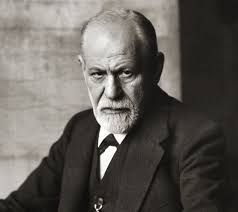
Sigmund Freud

Sigmund Freud (May 6, 1856 – September 23, 1939) was an Austrian neurologist and the founder of psychoanalysis, a clinical method for evaluating and treating pathologies seen as originating from conflicts in the psyche, through dialogue between patient and psychoanalyst, and the distinctive theory of mind and human agency derived from it. Wikipedia