Free Will Astrology: Week of August 29, 2024

BY ROB BREZSNY | AUGUST 27, 2024 (NewCity.com)
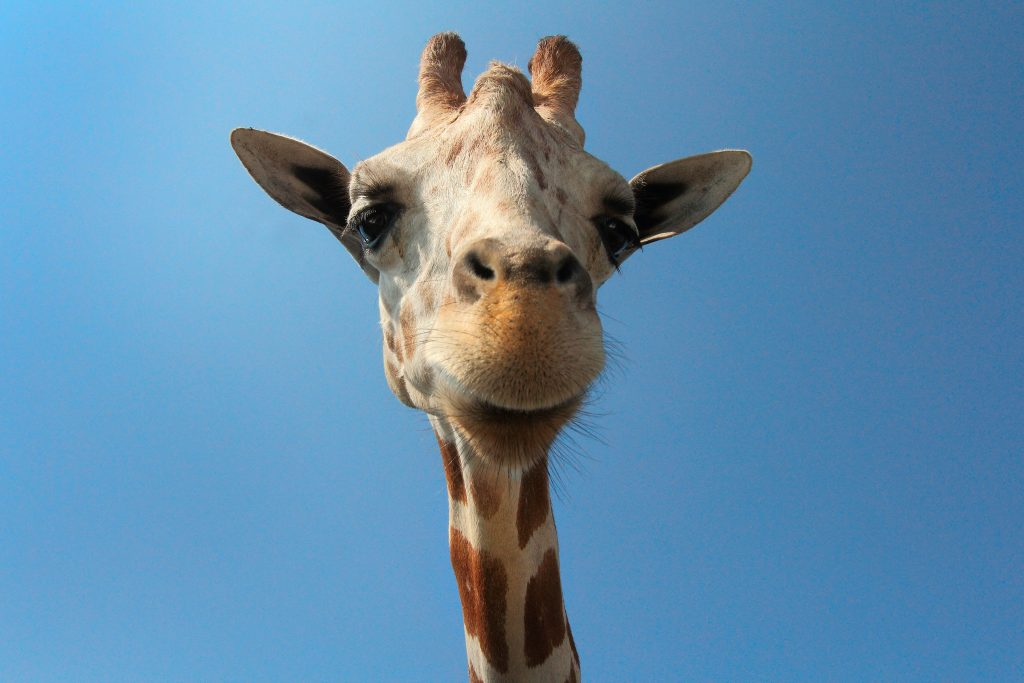
Photo: Gary Bendig

ARIES (March 21-April 19): Although there are over 7,000 varieties of apples, your grocery store probably offers no more than fifteen. But you shouldn’t feel deprived. Having fifteen alternatives is magnificent. In fact, most of us do better in dealing with a modicum of choices rather than an extravagant abundance. This is true not just about apples but also about most things. I mention this, Aries, because now is an excellent time to pare down your options in regard to all your resources and influences. You will function best if you’re not overwhelmed with possibilities. You will thrive as you experiment with the principle that less is more.

TAURUS (April 20-May 20): Taurus comedian Jerry Seinfeld, now seventy years old, has testified, “As a child, the only clear thought I had was ‘get candy.’” I encourage you to be equally single-minded in the near future, Taurus. Not necessarily about candy—but about goodies that appeal to your inner child as well as your inner teenager and inner adult. You are authorized by cosmic forces to go in quest of experiences that tickle your bliss.

GEMINI (May 21-June 20): I’m not saying I would refuse to hire a Gemini person to housesit while I’m on vacation. You folks probably wouldn’t let my houseplants die, allow raccoons to sneak in and steal food, or leave piles of unwashed dishes in the sink. On the other hand, I’m not entirely confident you would take impeccable care of my home in every little way. But wait! Everything I just said does not apply to you now. My analysis of the omens suggests you will have a high aptitude for the domestic arts in the coming weeks. You will be more likely than usual to take good care of my home—and your own home, too. It’s a good time to redecorate and freshen up the vibe.

CANCER (June 21-July 22): These days, you are even smarter and more perceptive than usual. The deep intelligence of your higher self is pouring into your conscious awareness with extra intensity. That’s a good thing, right? Yes, mostly. But there may be a downside: You could be hyper-aware of people whose thinking is mediocre and whose discernment is substandard. That could be frustrating, though it also puts you in a good position to correct mistakes those people make. As you wield the healing power of your wisdom, heed these words from Johann Wolfgang von Goethe: “Misunderstandings and lethargy produce more wrong in the world than deceit and malice do.”

LEO (July 23-Aug. 22): Wolfgang Amadeus Mozart had an older sister, born under the sign of Leo. Her nickname was Nannerl. During their childhoods, she was as much a musical prodigy as he. Supervised by their father, they toured Europe performing together, playing harpsichord and piano. Nannerl periodically got top billing, and some critics regarded her as the superior talent. But misfortune struck when her parents decided it was unseemly for her, as a female, to continue her development as a genius. She was forcibly retired so she could learn the arts of housekeeping and prepare for marriage and children. Your assignment in the coming months, Leo, is to rebel against any influence that tempts you to tamp down your gifts and specialties. Assert your sovereignty. Identify what you do best, and do it more and better than you ever have before.

VIRGO (Aug. 23-Sept. 22): When an infant giraffe leaves its mother’s womb, it falls six feet to the ground. I suspect that when you are reborn sometime soon, Virgo, a milder and more genial jolt will occur. It may even be quite rousing and inspirational—not rudely bumpy at all. By the way, the plunge of the baby giraffe snaps its umbilical cord and stimulates the creature to take its initial breaths—getting it ready to begin its life journey. I suspect your genial jolt will bring comparable benefits.

LIBRA (Sept. 23-Oct. 22): Many people living in the Napo province of Ecuador enjoy eating a dish called ukuy, which is a Kichwa word for large ants. This is not an exotic meal for them. They may cook the ukuy or simply eat the creatures alive. If you travel to Napo anytime soon, Libra, I urge you to sample the ukuy. According to my reading of the astrological omens, such an experiment is in alignment with the kinds of experiences you Libras should be seeking: outside your usual habits, beyond your typical expectations, and in amused rebellion against your customary way of doing things.

SCORPIO (Oct. 23-Nov. 21): The theory of karma suggests that all our actions, good and bad and in-between, send ripples out into the world. These ripples eventually circle back to us, ensuring we experience events that mirror our original actions. If we lie and cheat, we will be lied to and cheated on. If we give generously and speak kindly about other people, we will be the recipient of generosity and kind words. I bring this up, Scorpio, because I believe you will soon harvest a slew of good karma that you have set in motion through your generosity and kindness. It may sometimes seem as if you’re getting more benevolence than you deserve, but in my estimation, it’s all well-earned.

SAGITTARIUS (Nov. 22-Dec. 21): I encourage you to buy yourself fun presents that give you a feisty boost. Why? Because I want you to bring an innovative, starting-fresh spirit into the ripening projects you are working on. Your attitude and approach could become too serious unless you infuse them with the spunky energy of an excitable kid. Gift suggestions: new music that makes you feel wild; new jewelry or clothes that make you feel daring; new tools that raise your confidence; and new information that stirs your creativity.

CAPRICORN (Dec. 22-Jan. 19): On a Tuesday in August in 2012—one full Jupiter cycle ago—a Capricorn friend of mine called in sick to his job as a marketing specialist. He never returned. Instead, after enjoying a week off to relax, he began working to become a dance instructor. After six months, he was teaching novice students. Three years later, he was proficient enough to teach advanced students, and five years later, he was an expert. I am not advising you, Capricorn, to quit your job and launch your own quixotic quest for supremely gratifying work. But if you were ever going to start taking small steps toward that goal, now would be a good time. It’s also a favorable phase to improve the way your current job works for you.

AQUARIUS (Jan. 20-Feb. 18): Three years ago, an Indonesian man celebrated his marriage to a rice cooker, which is a kitchen accessory. Khoirul Anam wore his finest clothes while his new spouse donned a white veil. In photos posted on social media, the happy couple are shown hugging and kissing. Now might also be a favorable time for you to wed your fortunes more closely with a valuable resource—though there’s no need to perform literal nuptials. What material thing helps bring out the best in you? If there is no such thing, now would be a good time to get it.

PISCES (Feb. 19-March 20): For many years, I didn’t earn enough money to pay taxes. I was indigent. Fortunately, social programs provided me with food and some medical care. In recent years, though, I have had a better cash flow. I regularly send the U.S. government a share of my income. I wish they would spend all my tax contributions to help people in need. Alas, just forty-two percent of my taxes pay for acts of kindness to my fellow humans, while twenty-four percent goes to funding the biggest military machine on earth. Maybe someday, there will be an option to allocate my tax donations exactly as I want. In this spirit, Pisces, I invite you to take inventory of the gifts and blessings you dole out. Now is a good time to correct any dubious priorities. Take steps to ensure that your generosity is going where it’s most needed and appreciated. What kind of giving makes you feel best?

Homework: What supposedly forbidden thing do you want that maybe isn’t so forbidden? Newsletter.FreeWillAstrology.com

Panpsychism: The Universe Isn’t Dead—It’s Conscious!

This vision is both humbling and empowering, offering a new way to understand our place in the universe and the profound mystery of existence itself.

THOM HARTMANN

AUG 28, 2024 (wisdomschool.com)

Image by Stefan Keller from Pixabay

In the vast tapestry of existence, where galaxies swirl in cosmic dance and subatomic particles hum in the quantum fields, one of the most profound questions remains unanswered: What is the actual nature of consciousness?

For centuries, consciousness has been viewed as a mysterious byproduct of complex biological processes, emerging only when matter reaches a certain level of complexity, as in the human brain.

However, an ancient and increasingly revived philosophical idea—panpsychism—proposes a radical shift in perspective: the universe is not just a collection of mindless matter but is fundamentally imbued with consciousness at every level.

This idea suggests that consciousness is not an emergent property but a fundamental aspect of reality itself, permeating all of existence.

The Limits of the Traditional View

The dominant and historic scientific worldview, rooted in materialism, posits that the universe is made up of inert matter governed by the laws of physics, and that consciousness somehow arises when this matter organizes itself in particularly complex ways, such as in a brain.

This essentially mechanical/Cartesian perspective, while successful in explaining many aspects of the physical world, has struggled to account for the subjective experience—the qualia—that defines consciousness.

The “hard problem” of consciousness, as coined by philosopher David Chalmers, asks how and why physical processes in the brain give rise to the rich tapestry of experiences, emotions, and thoughts that characterize conscious life. Despite advances in neuroscience, this question remains largely unanswered.

Panpsychism offers a solution to this dilemma by flipping the problem on its head: rather than trying to explain how consciousness arises from non-conscious matter, it suggests that consciousness was there all along.

According to this view, all matter, from the smallest subatomic particle to the largest galaxy, possesses a form of consciousness, albeit in much simpler forms than what we experience as humans.

Consciousness All the Way Down

The core idea of panpsychism is elegantly simple: consciousness is a fundamental feature of the universe, much like mass, charge, or spin. Just as every particle has mass and charge, it also has a tiny element of consciousness.

This doesn’t mean that electrons have thoughts or feelings, but rather that they have a basic form of subjective experience, a “proto-consciousness” that is vastly simpler than human awareness.

The richness of human consciousness, then, is not a sudden emergence but a complex arrangement of simpler conscious elements that have been present throughout the history of the universe.

In this view, the universe is like a vast, interconnected web of consciousness, with every node—every particle, atom, and molecule—contributing its own minute form of awareness.

This interconnectedness could explain why consciousness feels so unified and holistic to us; our minds are not isolated phenomena but part of a grander, cosmic consciousness that is woven into the very fabric of reality.

Understanding consciousness

This conversation has been going on for over 400 years, since Galileo Galilei made a groundbreaking discovery: many everyday phenomena, such as a ball rolling down an incline or a chandelier gently swaying, adhere to precise mathematical laws. This insight laid the foundation for modern science, and Galileo is celebrated as one of its founding figures.

However, Galileo himself recognized that not everything could be quantified or understood through mathematics. What we think are “real” are actually constructs of our own consciousness acting on input from our senses.

“Thus,” Galileo wrote, “I think that tastes, odors, colors, and so on are no more than mere names so far as the object in which we place them is concerned, and that they reside only in the consciousness. Hence if the living creature were removed, all these qualities would be wiped away and annihilated.”

In other words, they’re only “real” if there is a conscious observer of them. I explored this in some detail here last December, asking what it would mean if everything was actually imbued with consciousness, so instead of us simply perceiving a cold, dead reality we’re actually continually interacting, even at the level of cells and even atoms and subatomic particles, with an entirely conscious universe?

Since Galileo’s time, physical sciences have advanced remarkably, explaining the workings of everything from the smallest subatomic particles to the vastness of galaxy clusters. Yet, the challenge of explaining consciousness — how we experience seemingly subjective things like colors and tastes that different people (and species) experience in different ways — remains unsolved.

Neuroscientists have identified neural correlates of consciousness, or brain states that align with specific mental experiences, but they have not unraveled how physical matter, like the brain, gives rise to conscious experience in the first place. As philosopher Colin McGinn poignantly observed:

“How could the aggregation of millions of individually insentient neurons generate subjective awareness? We know that brains are the de facto causal basis of consciousness, but we have, it seems, no understanding whatever of how this can be so. It strikes us as miraculous, eerie, even faintly comic.

“Somehow, we feel, the water of the physical brain is turned into the wine of consciousness, but we draw a total blank on the nature of this conversion. Neural transmissions just seem like the wrong kind of materials with which to bring consciousness into the world, but it appears that in some way they perform this mysterious feat.”

The Philosophical Appeal of Panpsychism

Panpsychism offers several advantages over traditional materialist views. First, it dissolves the hard problem of consciousness by removing the need to explain how non-conscious matter gives rise to consciousness. If consciousness is already present in all matter, the question becomes not one of emergence, but of combination: how do simpler forms of consciousness combine to form the rich, complex experiences we associate with higher organisms like humans?

This perspective also aligns with certain intuitive and spiritual notions that many people have about the universe. The idea that the universe is alive, conscious, and interconnected resonates with various religious and philosophical traditions that see mind and matter as inseparable. In this way, panpsychism bridges the gap between science and spirituality, offering a worldview that is both scientifically plausible and deeply meaningful.

Furthermore, panpsychism offers a fresh perspective on the nature of life and the ethical considerations that arise from it. If all matter is conscious, then the distinction between living and non-living, sentient and non-sentient, becomes less clear-cut. This could lead to a more compassionate and holistic approach to the natural world, where the rights and dignity of all forms of matter are recognized, not just those that exhibit complex behaviors.

Challenges and the Path Forward

Despite its appeal, panpsychism is not without its challenges. One of the primary objections is the so-called “combination problem”: how do tiny, simple forms of consciousness combine to create the rich, unified experiences that we are familiar with? Critics argue that without a clear explanation of this process, panpsychism remains speculative.

However, proponents of panpsychism, like philosopher Philip Goff, argue that this problem, while significant, is no more mysterious than the hard problem of consciousness in materialism. In fact, the combination problem might be more tractable than explaining how consciousness could emerge from entirely non-conscious matter.

Moreover, panpsychism pushes the boundaries of what we consider “scientific.” Consciousness, by its very nature, is subjective, making it difficult to study using traditional scientific methods, which rely on objective observation and measurement. However, this does not necessarily invalidate panpsychism; instead, it calls for an expansion of our scientific paradigms to include methods that can account for subjective experience.

Conclusion: A Conscious Universe

Panpsychism invites us to see the universe not as a cold, lifeless machine but as a living, conscious entity. This perspective does not diminish the achievements of science but, I believe, enriches our understanding of the cosmos by reintroducing consciousness into the very fabric of reality.

In a panpsychist universe, we are not isolated minds in a sea of matter; we are participants in a vast, interconnected web of consciousness that spans the entire cosmos.

This vision is both humbling and empowering, offering a new way to understand our place in the universe and the profound mystery of existence itself.

Word-Built World: malodorous

Illustration: Anu Garg

A.Word.A.Daywith Anu Garg

malodorous

PRONUNCIATION:

(mal-OH-duhr-uhs) 

MEANING:

adjective:
1. Having a foul smell.
2. Highly improper.

ETYMOLOGY:

From Old French mal- (bad) + odorous (having a smell), from Latin odor (smell). Earliest documented use: 1850.

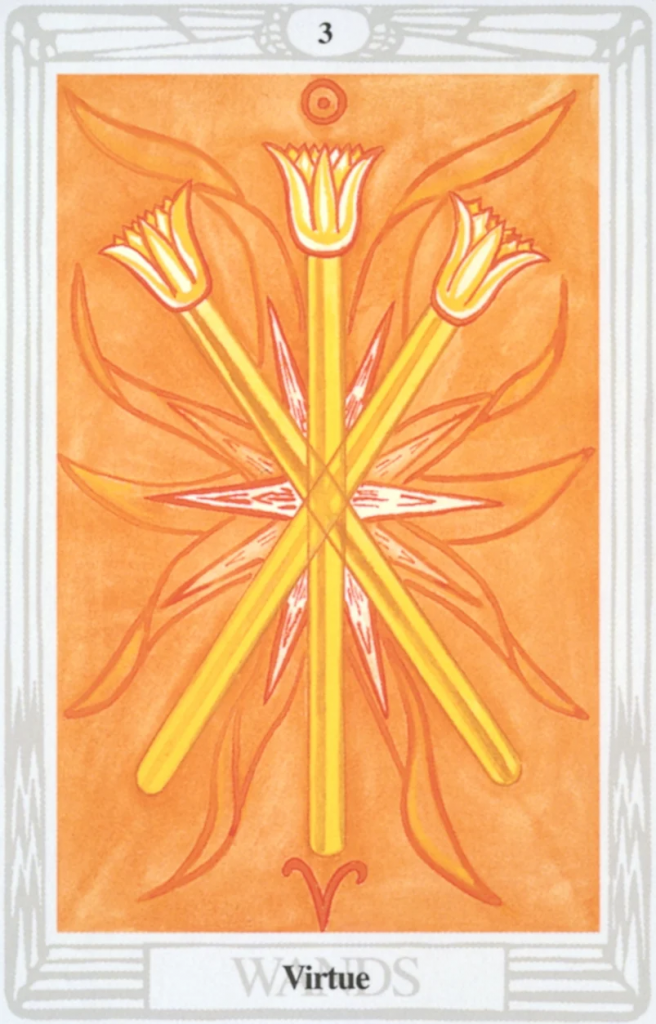
Tarot Card for August 28: Lord of Virtue

The Three of Wands

This card – Lord of Virtue – represents our trueness to our own inner needs and inspirations. It represents a point of inner balance where we are clear about the things we want to create in our lives, and confident in our ability to make our dreams come true. Out of this clarity and confidence arises a new quality of self-reliance and happiness.We develop a new understanding of our virtues, our skills, our talents; we have a better view of what we have to offer and what we need in return. We become more aware of ourselves, and more in harmony with the Powers of Light.When this card comes up in your reading, it is important that you cast aside doubts and fears, refusing to fall back into old habits. Instead you must turn your face to the future, trusting in your own power, making no compromises. Trust yourself, and everything else will fall into place.

Bigfoot Revealed: Finding Beauty in the Beast with Film Director Brett Eichenberger

New Thinking • Aug 13, 2024 Brett Eichenberger is an award-winning filmmaker with over twenty-five years of experience. His work includes the feature films Light of Mine and Pretty Broken, commercials, short films, music videos, and documentary shorts. Brett’s work has been featured on A&E, Discovery Channel, ABC Australia, and PBS. In this interview Brett is challenged to dispel misperceptions of Bigfoot, revealing that in addition to being a physical flesh and blood entity, Big Foot may be an interdimensional traveler and an even more mysterious, mystical, compassionate, and intelligent creature than most would imagine. 00:00 Introduction 04:33 Two films: flesh & blood or paranormal 13:26 Changing the perception of bigfoot 20:33 Bigfoot gender differences & gifting 25:26 Signs & synchronicities 30:00 Unusual sounds 34:00 Regional variations of Bigfoot 41:02 Best evidence and research 45:07 Native American perspective 49:30 Shapeshifting Bigfoot & high strangeness 55:43 Bigfoot disclosure Edited subtitles for this video are available in English, French, German, Spanish, Italian, Portuguese, Russian, Polish, and Swedish. New Thinking Allowed Guest Host, Debra Lynn Katz, PhD, is author of You Are Psychic: The Art of Clairvoyant Reading and Healing, Extraordinary Psychic: Proven Techniques to Master Your Natural Psychic Abilities, and Freeing the Genie Within: Manifesting Abundance, Creativity, and Success in Your Life. She is coauthor, with Jon Knowles, of Associative Remote Viewing: The Art and Science of Predicting Outcomes for Sports, Politics, Finances, and the Lottery. Debra currently serves as President of the International Remote Viewing Association. (Recorded on June 18, 2024)

A Flash Of Beauty: Bigfoot Revealed • May 10, 2024 • ✪ Members first on March 30, 2024Is the paranormal normal? We ask that question and many more in this follow-up to our first film, A Flash of Beauty: Bigfoot Revealed. Join us as we journey into the controversial world of the “woo”. What have people actually seen? Can it be explained by science? It all culminates in a stunning finale that you have to see to believe.

How Tim Walz and the Democrats can redefine masculinity and win back young, white male voters

OPINION//OPEN FORUM

By Jos Joseph

Aug 27, 2024 (SFChronicle.com)

Professional entertainer and wrestler Hulk Hogan speaks at the Republican National Convention on July 18 in Milwaukee. Democrats can appeal to young men and give them another option besides the Hulk Hogan Republican.Chip Somodevilla/Getty Images

Let’s talk about a football coach. A championship-winning football coach. A coach who demanded excellence on the field and off. A coach who championed civil rights. A coach who threatened to toss any players who showed racial prejudice off the team. A coach who fought for representation of Black people in coaching and the front office. 

Let’s also talk about a coach that was an ally to the LGTBQ+ community. Who threatened to cut players if they were homophobic to each other. One who would talk to gay players and tell them they had nothing to fear when playing for him. A coach who promised to protect those players, no matter what.

You might be thinking of Minnesota Gov. Tim Walz, the Democratic vice presidential nominee. But I am talking about Vince Lombardi. Yes, that Vince Lombardi. The legendary Green Bay Packers coach who throughout the 1960s led the small-town team to championships and Super Bowl victories. The man whose name is now engraved on the trophy that the winners of said Super Bowl hoist. The taciturn, hard as nails, perfectionist who raged against mistakes, demanded toughness and instilled a winning attitude. The coach who has been emulated by coaching giants like Bill Belichick to just about every high school coach in the country, including Walz.

Walz and the Democrats have a great opportunity to appeal to young men across this country and give them another option besides the Hulk Hogan Republican. The Vince Lombardi Democrat.

Republicans long tried to associate their party with masculinity. Ronald Reagan riding a horse, George W. Bush chopping wood on the ranch and untold photo ops with camouflage, guns, steaks and more guns. But in trying to lock in men, especially young men in the Donald Trump era, we have seen a rise in comparative masculinity. There is a whole industry of political opportunists, influencers, fitness junkies and others who sell young men on a checklist of how men are supposed to act, think, eat, (not) feel and treat others. Young men are told to compare themselves to others and feel good about the masculine choices they make.

“Look, I am drinking black coffee while he is drinking a latte.”

“Look, I drive a truck (that I don’t use for truck things) but he drives a Civic.” 

“Look, I eat my steak rare while he eats fish only.”

This constant comparison might make you look good to the guys who have the same mindset. But comparing yourselves to other men over things that don’t really matter is called by another name. Insecurity. And if there is one thing that women hate, it is an insecure man.

In this Trump age, comparative (insecure) masculinity has morphed into a caricature that is laughable at this point. Enter Hulk Hogan. The 71-year-old man born Terry Bollea, who became famous by pretending to fight, showed up at the Republican National Convention and did the old song and dance of ripping his shirt and pretending to be hulked (juiced) up. Hogan then took it a step further and joked that he wanted to body slam Kamala Harris. Weird behavior indeed.

But while Democrats have typically looked on in bemusement or condescension toward the hyper-masculine push of the Republicans, they need to understand that it has worked. An increasingly lonely, angry and insecure male population has turned more toward Trump, and Democrats struggled to reverse that.

But the coach from Minnesota can change that. Walz can lead the charge for Democrats to redefine masculinity and move those younger males toward the Democrats. They can create a new demographic of men — those Vince Lombardi Democrats. 

Yeah, they like football, meat, hunting and doing guy things. But there are two marked differences. 

They really don’t care how other people live their lives because they know it doesn’t affect theirs. And they are strong enough to stand up for people that need support. 

If Walz and the left can show young men the Vince Lombardi way of winning and caring, then maybe they won’t just win more elections, but can also finally serve as an antidote to insecure masculinity.

Jos Joseph is a master’s candidate at the Harvard Extension School at Harvard University. He is a Marine veteran who served in Iraq and lives in Anaheim. 

Aug 27, 2024

Word-Built World: effervescent

Illustration: Anu Garg + AI

A.Word.A.Daywith Anu Garg

Much happens in history. Sure, it can be passed down orally, but when put in writing, it becomes a snapshot of those moments. Language is the safekeeper of time’s faded photographs and memories. It allows us to capture and convey meaning in multiple dimensions.

This week we’ve picked five words from our word repository. These are words that work both literally and figuratively. Can you use any of these words in a sentence that illustrates both senses of the word? Share on our website or email us at words@wordsmith.org. As always, include your location (city, state).

effervescent

PRONUNCIATION:

(ef-uhr-VES-uhnt) 

MEANING:

adjective:
1. Lively; animated; vivacious.
2. Bubbling.

ETYMOLOGY:

From Latin effervescere (to foam up), from ex- (out, up) + fervescere (to start boiling), from fervere (to be hot or to boil). Ultimately from the Indo-European root bhreu- (to boil or to bubble), which also gave us brew, bread, broth, braise, brood, breed, barmy, defervescence, and perfervid. Earliest documented use: 1684.

Is “Othering” Human Nature’s Deadliest Instinct?

Now we have an opportunity to bring Americans together, to embrace a collective and inclusive “us,” and to repudiate hate and “othering” as a political strategy…

THOM HARTMANN

AUG 26, 2024 (hartmannreport.com)

Image by Peter Schmidt from Pixabay

The song that was inspired by this article is available here.
My reading this article as an audio podcast is available here.

Share

“Identity politics” can be either helpful to society or destructive of social cohesion and democracy itself. When used to bring people of different races, religions, and gender identities into the larger structure of society — to empower and lift up those who’ve traditionally been oppressed — identity politics becomes a platform for ultimately ending itself; once everybody has equal opportunity, it’s no longer needed.

The dark side of identity politics occurs when the dominant race/religion/gender (in today’s America that’s white Christian men) identifies people who aren’t part of their group as an “other” and uses this otherness as a rallying cry to enlist members of the powerful in-group against the “outsiders.”

This is what the GOP has been doing ever since 1968, when Richard Nixon picked up the white racist vote that Democrats abandoned in 1964/1965 when LBJ pushed the Civil Rights Act and the Voting Rights Act through Congress.

Nixon talked about his white “silent majority.” Reagan emphasized “states’ rights” to suppress the civil and voting rights of minorities. GHW Bush used Willie Horton to scare white voters in 1988 the same way his son vilified Muslims to win re-election in 2004. And, of course, Trump has been “othering” nonwhite people and women ever since he started his notoriously racist and hateful birther movement in 2008.

Science, however, is catching up with the Republican’s strategy, and showing us both how powerful it can be and also how to defeat it.

Rob Henderson’s excellent Newsletter turned me onto the new book The Goodness Paradox: The Strange Relationship Between Virtue and Violence in Human Evolution by Richard Wrangham, who does a deep dive into the past 600,000 years of our species and its immediate predecessors.

Wrangham points out how violent our chimp cousins are: female chimps are routinely beaten into submission before being raped and impregnated by the most powerful of the male chimps. He notes, “One hundred percent of wild adult female chimpanzees experience regular serious beatings from males.”

The consequence of this is that over generations genes for aggression have come to dominate that species; chimp society very much operates along the lines Thomas Hobbes argued human society would without “the iron fist of church or state.” Chimp life is nasty, brutish, and short.

But at some point in our prehistory, as humanity was evolving into its modern form, we developed language. Using that new ability to communicate, we developed complex societies.

Citing biologist Richard Alexander, Wrangham writes:

“In his 1979 Darwinism and Human Affairs, Alexander argues that at some unknown point in our evolution, language skills developed to the point where gossip became possible. Once that happened, reputations would become important.

“Being known as a helpful individual would be expected to have a big effect on someone’s success in life. Good behavior would be rewarded. Virtue would become adaptive.”

For human societies to survive and prosper in the face of an often-hostile natural world, cooperation became more important than dominance. We left behind the violence of alpha male chimps and instead embraced human teamwork and social harmony.

In my most recent book, The Hidden History of American Democracy: Rediscovering Humanity’s Ancient Way of LivingI document how Native Americans had, at the time of first contact in the 15th through 17th centuries, shared with Europeans how they’d developed highly democratic systems of governance. To a large extent, our Constitution was based on things learned directly from native people.

As I showed from that era, and Wrangham does with hunter/gatherer tribes across the world while examining anthropological evidence of early humanity, psychopathic and hoarding alpha males were consistently brought under control by the rules of human society itself.

Wrangham shows how, in multiple ancient and modern hunter/gatherer societies, when what we’d today call sociopathic or psychopathic alpha males would begin hoarding wealth or asserting dominance over others, they were simply killed.

Over thousands of generations, he posits, this altered our gene pool in a way that only a very small percentage of us — psychologists estimate between one and five percent — still carry and can act out the alpha male role in a way that involves high-level hoarding and social dominance. We call them sociopaths, billionaire hoarders, and violent psychopaths.

The good news is that they’re very much in the minority; the majority of us are not psychopaths, and are deeply wired for cooperation and social cohesion.

This evolutionary process, which I also document in American Democracy, makes societies more stable, enhances a culture’s or nation’s chances for survival in the face of crises, and improves the quality of life for the largest number of members of a society.

But, as both Wrangham and I point out, when societies are taken over by hoarding, violent, psychopathic men (Hitler, Saddam, Mussolini, Putin, Trump, Iran’s Ayatollahs, etc.) they become top-heavy and brittle, and thus more vulnerable to disruption by both external and internal events (including the death of the leader).

While the evolutionary basis of this, which Wrangham brings to us in his book, is new, the idea of a society or nation being most resilient when it’s most democratic is not; it’s been the subject of speculation, documentation, and scientific and social inquiry from the time of Socrates through the Enlightenment and the creation of the United States (as I detail in American Democracy).

What struck me from Wrangham’s book as most relevant to this moment, though, was his assertion that we humans are, both genetically and socially, vulnerable to psychopathic alpha males taking over when they use one particular strategy to gain and hold power: identifying an “other” who they can successfully characterize as a threat.

On the one hand, Wrangham points out how we’re capable of great tenderness and compassion. In his book’s introduction, he writes:

“In short, a great oddity about humanity is our moral range, from unspeakable viciousness to heartbreaking generosity. From a biological perspective, such diversity presents an unsolved problem. If we evolved to be good, why are we also so vile? Or if we evolved to be wicked, how come we can also be so benign?”

The answer, in short, is that we’re tender and loving to our own group, but perfectly willing to be astonishingly violent toward any “other” group that we see as substantially different from us and believe is a threat to us.

This, on the other hand, is a key part of preparing soldiers to fight in wars and violate that core human imperative of not killing: First, we must “other” the enemy. My dad, who volunteered to fight in World War II straight out of high school in 1945, referred to Germans and Japanese as “krauts” and “japs” to his dying days. Such a racist “other” perspective was pounded into our soldiers throughout basic training, just like veterans of George W. Bush’s Middle Eastern wars often refer to Arab people as “ragheads” and other slurs.

This “othering” of members and supporters of violent dictatorships we must go to war against is arguably a useful or even necessary tool to prepare our young men and women to kill or be killed on the field of battle.

Because it’s grounded in genetically-mediated survival instincts and strategies as ancient as humanity, it’s relatively easy to intentionally program into people, and, once they come to believe there is a real threat from an “other,” very hard to defy. During both WWI and WWII in America, for example, those who protested against those wars were vilified, ostracized, and, in some cases, even imprisoned, all with popular support for that separation from society.

It becomes particularly dangerous, though, when violent psychopathic alpha males in a political leadership position turn that same strategy against members of their own society, turning average citizens into monsters. As Wrangham writes:

“The killers who committed genocide in World War II, Cambodia, and Rwanda were caught up in societies where moral boundaries became excessively crystallized. Yet most were not sadistic monsters or ideological fanatics. They were unremarkable individuals who loved their families and countrymen in conventional moral ways.

“When the anthropologist Alexander Hinton investigated the Cambodian genocide of 1975–79, he met a man called Lor who had admitted to having killed many men, women, and children. ‘I imagined Lor as a heinous person who exuded evil from head to toe….I saw before me a poor farmer in his late thirties, who greeted me with the broad smile and polite manner that one so often encounters in Cambodia.’ The combination of horror and ordinariness is routine.

“According to the anthropologists Alan Fiske and Tage Rai, ‘When people hurt or kill someone, they usually do so because they feel…that it is morally right or even obligatory to be violent.’ Fiske and Rai considered every type of violence they could think of, including genocide, witch killings, lynchings, gang rapes, war rape, war killings, homicides, revenge, hazing, and suicide.”

Like Pol Pot, Adolf Hitler used this “othering” strategy against Jews, Gypsies, and homosexuals so successfully that “good Germans” largely went along with the Holocaust, often enthusiastically. Stalin did the same against Ukrainians who were part of his Soviet Union, starving to death over four million human beings — men women, and children — in the Holodomor.

And now Donald Trump and his followers and enablers in the Republican Party — and thirty or so almost certainly psychopathic alpha male billionaires — are using this “othering” strategy against American citizens and immigrants to gain and hold political power.

In doing so, they’re playing with the most deadly form of fire known to humanity.

Because our instinctual willingness — or even enthusiasm — for dominating, destroying, and killing any “other” we see as a threat is deeply rooted in  our genetic code, it’s damn near impossible for people who’ve been inculcated with a clear identification and deep fear of an “other” to resist embracing forms of violence ranging from discrimination to excessive policing and imprisonment to outright extermination.

It’s so archetypal that it’s the essence and message of every Bruce Willis-type movie: “Use violence to destroy the bad people.” As we watch that story play out on the screen, and we cheer the murder of the bad guys, we feel a release and exhilaration that keeps bringing people back to the theater.

We didn’t “learn” to love this violence: it’s wired into our DNA. All of us. We are all vulnerable to this type of emotional manipulation.

Trump’s open embrace of rounding up 12 million “other” immigrants and putting them into concentration camps prior to deportation seems unspeakably cruel, but we forget the brutality of his family separations and caging of young Hispanic children at our own peril.

He and his acolytes are fully capable of committing horrors like the world sees in various places every few generations when an alpha male psychopath uses “othering” to gain and hold wealth and political power.

In both Wrangham’s book and mine, we find the way to combat this: shatter the “othering” meme by converting the “them” Republicans identify (queer people, racial and religious minorities, “liberals,” and women) into a massive, collectively diverse “us.”

This fracturing of the GOP “othering” efforts was hugely on display last week during the Democratic National Convention, as people of all races, religions, gender identities, and disabilities were featured as part of a grand, collective “us.” Increasingly, we’re also seeing it in our media, from commercials featuring queer and multiracial couples to movies and TV programs with diverse casts.

To restore to our society the kind of resilient culture that has helped humanity survive to this point, we must defeat Donald Trump, JD Vance, and the psychopathic hoarder billionaires funding their attempt to take over America.

We must stop their effort to convert us into a fractured society with rich white Christian men in charge and everybody else subservient for another generation or more. As President Dwight Eisenhower warned in his prescient farewell address:

“…America knows that this world of ours, ever growing smaller, must avoid becoming a community of dreadful fear and hate, and be, instead, a proud confederation of mutual trust and respect.” He added: “We pray … that, in the goodness of time, all peoples will come to live together in a peace guaranteed by the binding force of mutual respect and love.”

America defeated fascists who had used “othering” to seize and assert power eighty years ago; they forced us to do it on the battlefield. Here at home, we fought back against and thwarted the psychopathic alpha male Robber Barons of the 1880-1930 era with antitrust law, union organizing, and heavy taxation of the morbidly rich.

Now we have an opportunity to bring Americans together, to embrace a collective and inclusive “us,” and to repudiate hate and “othering” as a political strategy.

If successful, we’ll usher in a new and beautiful America, and a grand example for the rest of the world. This could quite literally be a positive turning point for humanity for generations.

If only enough of us show up at the polls this November, and then stay engaged for at least a few years thereafter. As Tim Walz said, “We can sleep when we’re dead.”