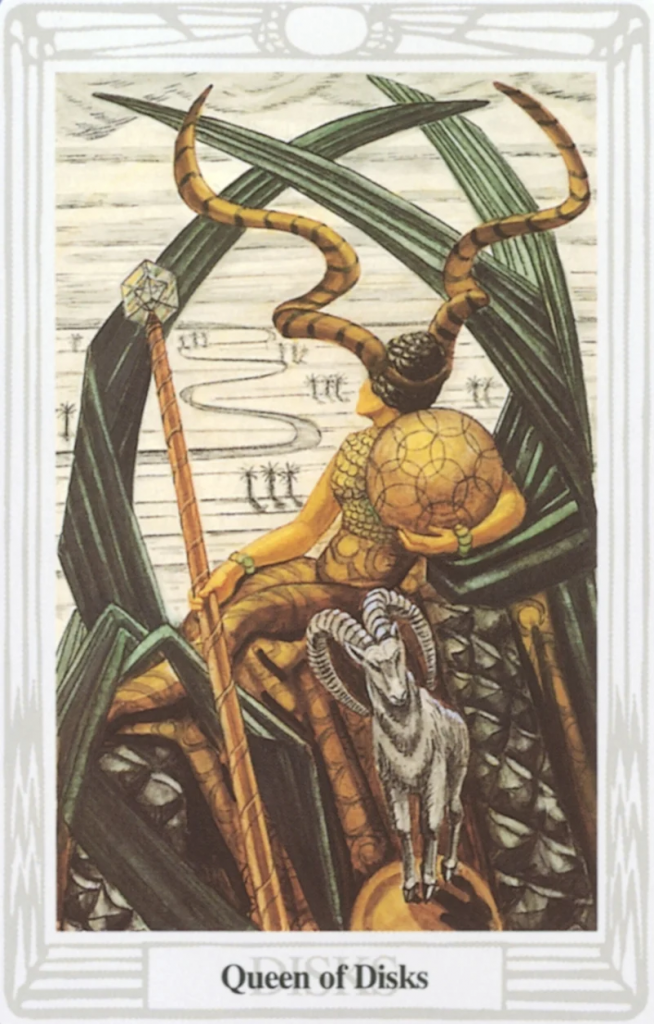
Tarot Card for August 16: Queen of Disks

The Queen of Disks

As the Queen of the Suit most connected to the home environment, families, materiality and fecundity, the woman represented by the Queen of Disks will most likely be a person whose attention centres upon the family environment. Here, she will excel, gaining a great deal of pleasure from providing a secure haven where she and others can feel cosseted and cared for.In modern times the qualities for which this Queen stands have tended to be devalued and downgraded (‘I’m only a housewife’). This causes difficulties for the woman who feels most fulfilled expending her energies in a home situation, working with her family and a close circle of friends.Yet the contribution that this sort of work makes to the lives of anyone who comes into contact with it cannot be underestimated. We all want to feel welcome and warm in our own homes. We want to feel nurtured and secure. So perhaps it’s time to re-instate the Queen of Disks to her rightful place – Regent to the Empress, and important to everybody. Furthermore, maybe we need to invoke our own caring qualities more readily so that we all pour our unique energies into our domestic surroundings.If the Queen of Disks is ill-dignified in a reading, she will generally have lost sight of her position – or, perhaps, is being taken for granted by others. At that point the weaker side of her personality will show through. She may become dependent and clingy, believing herself to be unable to stand alone. She might manipulate by adopting a passive victim’s role.Though usually the type of woman indicated by the Queen of Disks is a gentle soul, when angered she can become a fierce enemy, particularly where she sees injustice done to her family and friends. She’s loyal and willing to help, rooted in the practical aspects of life.Her concept of spirituality centres on the nourishing aspects of her personality – she is therefor a facilitator, quietly assisting others on their journey, though often her contribution will go unnoticed.She is often interested in, and involved with, the healing arts, being a willing and generous healer. When she is ambitious it is usually for others, again in her facilitator role. She maintains a strong link with Nature, loving plants, trees and animals.

Sunday Meeting with John Atwater, H.W.


SUNDAY MEETING AUGUST 18


John Atwater, H.W.

Methods of Empowerment for Change

Come join John Atwater, H.W., for this introduction to several easy-to-learn and widely used methods for changing and empowering the state of your body and consciousness. 

Click here for further information 

SUNDAY MEETING August 18, 2024

11:00 am Pacific/Noon Mountain/1:00 Central/2:00 Eastern


Join Sunday Meeting

By contribution.  Please click here to contribute:

Contribute!

Weekly Invitational Translation: Pain can either be structural or guilt-driven.

Translation is a 5-step process of “straight thinking in the abstract” comparing and contrasting what you think is the truth with what you can syllogistically, axiomatically and mathematically (using word equations) prove is the truth.

The claims in a Translation may seem outrageous, but they are always (or should always be) based on self-evident syllogistic reasoning. Here is one Translation from this week. 

1)    Truth is that which is so.  That which is not truth is not so.  Therefore Truth is all that is.  Truth being all is therefore total, therefore whole, therefore complete, therefore otherless, therefore one, therefore united, therefore harmonious, therefore orderly.  I think, therefore I am.  Since I am and since Truth is all that is, therefore I am Truth.  Since I, being, am Truth therefore I, being, have all the attributes of Truth.  Therefore I, being, am all, total, whole, complete, otherless, one, united, harmonious, orderly.  Since I am Truth and since I am mind, therefore Truth is Mind/Consciousness.  (Two things being equal to a third thing are equal to each other).

2)    Pain can either be structural or guilt-driven.

Word-tracking:
pain:  indication of stress or disharmony, penalty, punishment
structure:  that which is built, a building
build:  construct, dwelling, to dwell
construct:  to pile or build together
mental:  mind, to think, consciousness, awareness
guilt:  crime, sin, fault, fine, debt

3)    Truth being Mind/Consciousness and there being nothing other than Truth, therefore there is nothing other than Mind/Consciousness.  Therefore All is Mind/Consciousness.  Truth being all that is is therefore all that be’s, all that lives, all that abides, all that dwells.  Therefore Truth is the only dwelling, the only building, the only structure.  Truth being true is therefore right, therefore correct, therefore flawless, therefore perfect cannot at the same time be wrong.  Since Tiruth is perfect and since pain or penalty or punishment can only arise out of wrong-doing or wrong-being, therefore there is no pain in Truth AND there is no guilt in Truth.

4)    All is Mind/Consciousness.
        Truth is the only dwelling, the only building, the only structure.
        There is no pain in Truth AND there is no guilt in Truth.

5)     The structure of Truth is painless, guiltless Consciousness.

For information about Translation or other Prosperos classes go to: https://www.theprosperos.org/teaching

American Calvinism – the Deep Theology of US Culture

Wes Cecil • Aug 13, 2024 An exploration of the influence of Calvinism on contemporary American Culture. Note – The Catholic church has a history of attacking witches and others, notably Jews, who they perceived to threaten their communities. There were theological differences in the attacks from Protestantism, but this seemed of little comfort to those threatened by religious authorities. www.wescecil.com

Book: “THE WONDERS OF THE INVISIBLE WORLD”

THE WONDERS OF THE INVISIBLE WORLD

Cotton Mather

Wonders of the Invisible World was a book published in 1693 by Cotton Mather, defending Mather’s role in the witchhunt conducted in Salem, Massachusetts, and espousing the belief that witchcraft was an evil magical power. Mather saw witches as tools of the devil in Satan’s battle to “overturn this poor plantation, the Puritan colony”, and prosecution of witches as a way to secure God’s blessings for the colony.

I. Some Accounts of the Grievous Molestations, by DÆMONS and WITCHCRAFTS, which have lately annoy’d the Countrey; and the Trials of some eminent Malefactors Executed upon occasion thereof; with several Remarkable Curiosities therein occurring.
II. Some Counsils, Directing a due Improvement of the terrible things, lately done, by the Unusual & Amazing Range of EVIL SPIRITS, in Our & the methods to prevent the Wrongs which those Evil Angels may intend against all sorts of people among us; especially in Accusations of the Innocent.
III. Some Conjectures upon the great EVENTS, likely to befall, the WORLD in General, and NEW-ENGLAND in Particular; as also upon the Advances of the TIME, when we shall see BETTER DAYES.
IV. A short Narrative of a late Outrage committed by a knot of WITCHES in Swedeland, very much Resembling, and so far Explaining, That under which our parts of America have laboured!
V. THE DEVIL In a Brief Discourse upon the TEMPTATIONS, which are the more Ordinary Devices of the Wicked One.

About the author

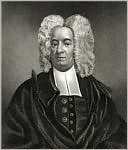
Profile Image for Cotton Mather.

Cotton Mather

Cotton Mather A.B. 1678 (Harvard College), A.M. 1681; honorary doctorate 1710 (University of Glasgow), was a socially and politically influential New England Puritan minister, prolific author, and pamphleteer. Cotton Mather was the son of influential minister Increase Mather. He is often remembered for his connection to the Salem witch trials.

Mather was named after his grandfathers, both paternal (Richard Mather) and maternal (John Cotton). He attended Boston Latin School, and graduated from Harvard in 1678, at only 16 years of age. After completing his post-graduate work, he joined his father as assistant Pastor of Boston’s original North Church (not to be confused with the Anglican/Episcopal Old North Church). It was not until his father’s death, in 1723, that Mather assumed full responsibilities as Pastor at the Church.

Author of more than 450 books and pamphlets, Cotton Mather’s ubiquitous literary works made him one of the most influential religious leaders in America. Mather set the nation’s “moral tone,” and sounded the call for second and third generation Puritans, whose parents had left England for the New England colonies of North America to return to the theological roots of Puritanism.

(Goodreads.com)

Book: “The Perennial Philosophy”

The Perennial Philosophy

Aldous Huxley

The Perennial Philosophy is defined by its author as “The metaphysic that recognizes a divine Reality substantial to the world of things and lives and minds.” With great wit and stunning intellect, Aldous Huxley examines the spiritual beliefs of various religious traditions and explains them in terms that are personally meaningful.

An inspired gathering of religious writings that reveals the “divine reality” common to all faiths, collected by Aldous Huxley

“The Perennial Philosophy,” Aldous Huxley writes, “may be found among the traditional lore of peoples in every region of the world, and in its fully developed forms it has a place in every one of the higher religions.”

With great wit and stunning intellect—drawing on a diverse array of faiths, including Zen Buddhism, Hinduism, Taoism, Christian mysticism, and Islam—Huxley examines the spiritual beliefs of various religious traditions and explains how they are united by a common human yearning to experience the divine. The Perennial Philosophy includes selections from Meister Eckhart, Rumi, and Lao Tzu, as well as the Bhagavad Gita, Tibetan Book of the Dead, Diamond Sutra, and Upanishads, among many others.

About the author

Profile Image for Aldous Huxley.

Aldous Huxley

Brave New World (1932), best-known work of British writer Aldous Leonard Huxley, paints a grim picture of a scientifically organized utopia.

This most prominent member of the famous Huxley family of England spent the part of his life from 1937 in Los Angeles in the United States until his death. Best known for his novels and wide-ranging output of essays, he also published short stories, poetry, travel writing, and film stories and scripts. Through novels and essays, Huxley functioned as an examiner and sometimes critic of social mores, norms and ideals. Spiritual subjects, such as parapsychology and philosophical mysticism, interested Huxley, a humanist, towards the end of his life. People widely acknowledged him as one of the pre-eminent intellectuals of his time before the end of his life.

(Goodreads.com)

Play called “My Friend Hitler”

Mishima in 1955 (photo from Wikipedia.org)

From Wikipedia, the free encyclopedia

My Friend Hitler
Written byYukio Mishima
Date premiered1969
Original languageJapanese
Genreneoclassical drama

My Friend Hitler (わが友ヒットラー, Waga Tomo Hittorā) is a 1968 neoclassical drama[1] written and produced by Japanese writer Yukio Mishima.[2] The play depicts the historical figures Adolf HitlerGustav KruppGregor Strasser, and Ernst Röhm, and uses them as mouthpieces to express Mishima’s own views on fascism and beauty.[3] Published in book form on October 13, 1968, the play was first produced on stage the following year and ran January 18–31, 1969. In one of these productions, Mishima himself played Adolf Hitler.

Meaning and symbolism

Mishima was inspired by the assassination of Ernst Röhm in the Night of the Long Knives, and was intrigued by Hitler. Since Mishima’s earlier play Madame de Sade (Sado Koshaku fujin) featured an all-female cast, he wanted My Friend Hitler to have an all-male cast, stating that he wanted to refute criticism claiming that he could not portray both genders.[4]

The play takes place over the summer of 1934 at the Berlin chancellery. The reviews and critiques of the play vary, with some calling it anti-fascist[5] while others claim that it preaches fascism.[6]

A major theme is “madness disguised as sanity,” in other words, the notion that “even among the most calm and sane human beings, there is more ruthlessness than the madmen”, whereby Mishima aimed to convey that history was the most inhuman product of humanity: “You want to turn Hitler into an ‘other’ who has nothing to do with you and settle down in humanism, but Hitler lives in you. You, too, may be ‘Hitler’s friend’ yourself.”[citation needed]

In his Memorandum on Marquis de Sade and My Friend Hitler, Mishima made clear his personal opinion on Hitler:

Hitler was a political genius, but not a hero. He was completely lacking in the freshness and radiance needed for a hero. Hitler was a dark figure as the twentieth century was a dark century.[7][full citation needed]

Plot

The play begins with Hitler giving a speech to the people of Germany, during which his two friends Krupp and Röhm come in to watch the speech. They talk to each other and discuss the “iron bouquet” Krupp metaphorically used to set into motion great advancements in human history, including shaping Hitler into a better leader.

Later in the play, Strasser enters the scene. He has a bad relationship with Röhm. Krupp describes their relationship as that of a “cat and dog”. Strasser then argues that the war profits need to be returned to the country. Röhm gets mad, calling him a socialist. After the speech is finished, Hitler returns to the group awaiting him and gets their reports about the peoples’ reaction to the speech, all of them telling him it was outstanding, even calling Hitler an artist.

Hitler then talks to Röhm alone about how they were so close to each other, but now that he is so busy running the country and doesn’t have the time anymore to talk about the “good old days” with one of his trusted friends. Hitler then decides to get away from his political life for the day. And so Röhm decides to train Hitler on everything he needs to know about being a military leader.

More at: https://en.wikipedia.org/wiki/My_Friend_Hitler

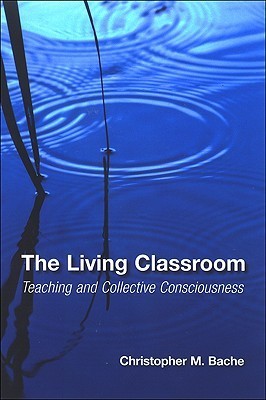
Book: “The Living Classroom: Teaching and Collective Consciousness”

The Living Classroom: Teaching and Collective Consciousness

Christopher M. Bache

This pioneering work in teaching and transpersonal psychology explores the dynamics of collective consciousness in the classroom. Combining scientific research with personal accounts collected over thirty years, Christopher M. Bache examines the subtle influences that radiate invisibly around teachers as they work—unintended, cognitive resonances that spring up between teachers and students in the classroom. While these kinds of synchronistic connections are often overlooked by traditional academics, Bache demonstrates that they occur too frequently and are too pointed to be dismissed as mere coincidence. Drawing upon Rupert Sheldrake’s theory of morphic fields, Bache proposes that well-taught courses generate “learning fields” around them, forms of collective consciousness that can trigger new insights and startling personal transformations. Moving beyond theory, this book is rich with student stories and offers practical, hands-on strategies for teachers who want to begin working with these learning fields to take their teaching to a more conscious level.

About the author

Christopher M. Bache

Christopher Bache is professor emeritus in the department of Philosophy and Religious Studies at Youngstown State University, adjunct faculty at the California Institute of Integral Studies, Emeritus Fellow at the Institute of Noetic Sciences, and on the Advisory Council of Grof Legacy Training.

(Goodreads.com)

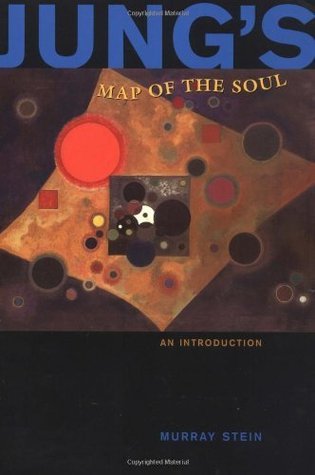
Book: “Jung’s Map of the Soul: An Introduction”

Jung’s Map of the Soul: An Introduction

Murray B. Stein

More than a mere overview, the book offers readers a strong grounding in the basic principles of Jung’s analytical psychology in addition to illuminating insights.

Probably the best one-volume English language summary of Jung’s thought. . . Stein develops the cartographical metaphor of the title by beginning with the “surface” (ego) of the psyche and exploring successively more complex areas, including complexes, libido thoery, shadow, “anima/us,” the self, individuation, and synchronicity. The map soon resembles the multidisciplinary chart of a solar system more than it does a flat map. In each subject area, Stein draws heavily on papers that Jung wrote late in his life, but he sets these in the context of Jung’s earlier developing thought. This method allows the author to demonstrate the interconnectedness and coherence of Jung’s mature work. — Choice, 10/15/98

Stein could just as aptly have named his introductory guide “Jung’s Art of the Soul,” for the course the founder of analytical psychology charted also has the intuitive sweep of an artist on an inner journey integrated within a systematic framework of techniques. Though acknowledging Jung’s creative, intuitive approach to fathoming the mysteries of the individual and collective human psyche, the author presents a solid case for the basic coherency and empirical underpinnings of the great psychoanalyst’s theory-counter to those who viewed him as more of a mystic or philosopher who espoused: “As within, so without.” Territory consciously omitted from this psychic map concern his analytic practice and interpretation of culture, history, and religion. Organized like a graduate thesis, all the major concepts that evolved over Jung’s lengthy career are lucidly summarized with some contextual details: ego-consciousness, complexes, libido theory, archetypes, persona/shadow, anima/animus, the self, individuation, and synchronicity. While this presentation is eminently more accessible than most Jungian texts-and Stein does preface it with personal remarks about his long-time attraction to Jung-those who seek a sense of Jung’s own voice and personal development in his quest for answers to many of life’s enigmas will have their appetites whet to explore further. — From Independent Publisher

About the author

Murray B. Stein

Not to be confused with other Analytical/Jungian Psychologist Murray Stein

Jungian psychoanalyst, author, lecturer

Murray Stein, Ph.D.is a training analyst at the International School for Analytical Psychology in Zurich, Switzerland. His most recent publications include The Principle of Individuation, Jung’s Map of the Soul, and The Edinburgh International Encyclopaedia of Psychoanalysis (Editor of the Jungian sections, with Ross Skelton as General Editor). He lectures internationally on topics related to Analytical Psychology and its applications in the contemporary world.

Dr. Stein is a graduate of Yale University (B.A. and M.Div.), the University of Chicago (Ph.D., in Religion and Psychological Studies), and the C.G. Jung Institut-Zurich. He is a founding member of the Inter-Regional Society of Jungian Analysts and Chicago Society of Jungian Analysts. He has been the president of the International Association for Analytical Psychology (2001-4), and is presently a member of the Swiss Society for Analytical Psychology and President of the International School of Analytical Psychology, Zurich.

Book: “The Religion of Tomorrow: A Vision for the Future of the Great Traditions-More Inclusive, More Comprehensive, More Complete”

The Religion of Tomorrow: A Vision for the Future of the Great Traditions-More Inclusive, More Comprehensive, More Complete

Ken Wilber

A provocative examination of how the great religious traditions can remain relevant in modern times by incorporating scientific truths learned about human nature over the last century.
A single purpose lies at the heart of all the great religious traditions: awakening to the astonishing reality of the true nature of ourselves and the universe. At the same time, through centuries of cultural accretion and focus on myth and ritual as ends in themselves, this core insight has become obscured. Here Ken Wilber provides a path for reenvisioning a religion of the future that acknowledges the evolution of humanity in every realm while remaining faithful to that original spiritual vision. For the traditions to attract modern men and women, Wilber asserts, they must incorporate the extraordinary number of scientific truths learned about human nature in just the past hundred years–for example, about the mind and brain, emotions, and the growth of consciousness–that the ancients were simply unaware of and thus were unable to include in their meditative systems. Taking Buddhism as an example, Wilber demonstrates how his comprehensive Integral Approach–which is already being applied to several world religions by some of their adherents–can avert a -cultural disaster of unparalleled proportions- the utter neglect of the glorious upper reaches of human potential by the materialistic postmodern worldview. Moreover, he shows how we can apply this approach to our own spiritual practice. This, his most sweeping work since Sex, Ecology, Spirituality, is a thrilling call for wholeness, inclusiveness, and unity in the religions of tomorrow.

About the author

Profile Image for Ken Wilber.

Ken Wilber

Kenneth Earl Wilber II is an American philosopher and writer on transpersonal psychology and his own integral theory, a systematic philosophy which suggests the synthesis of all human knowledge and experience.

(Goodreads.com)