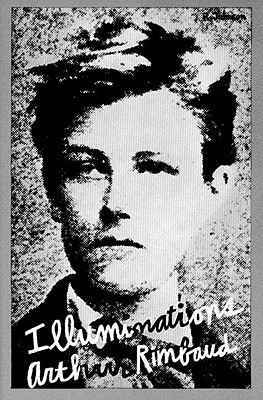
Book: “Illuminations”

Illuminations

Arthur RimbaudLouise Varèse (Translator)

The prose poems of the great French Symbolist, Arthur Rimbaud (1854-1891), have acquired enormous prestige among readers everywhere and have been a revolutionary influence on poetry in the twentieth century. They are offered here both in their original texts and in superb English translations by Louise Varèse. Mrs. Varèse first published her versions of Rimbaud’s Illuminations in 1946. Since then she has revised her work and has included two poems which in the interim have been reclassified as part of Illuminations. This edition also contains two other series of prose poems, which include two poems only recently discovered in France, together with an introduction in which Miss Varèse discusses the complicated ins and outs of Rimbaldien scholarship and the special qualities of Rimbaud’s writing. Rimbaud was indeed the most astonishing of French geniuses. Fired in childhood with an ambition to write, he gave up poetry before he was twenty-one. Yet he had already produced some of the finest examples of French verse. He is best known for A Season in Hell, but his other prose poems are no less remarkable. While he was working on them he spoke of his interest in hallucinations––”des vertiges, des silences, des nuits.” These perceptions were caught by the poet in a beam of pellucid, and strangely active language which still lights up––now here, now there––unexplored aspects of experience and thought.

About the author

Profile Image for Arthur Rimbaud.

Arthur Rimbaud

Hallucinatory work of French poet Jean Nicolas Arthur Rimbaud strongly influenced the surrealists.

With known transgressive themes, he influenced modern literature and arts, prefiguring. He started writing at a very young age and excelled as a student but abandoned his formal education in his teenage years to run away to Paris amidst the Franco-Prussian war. During his late adolescence and early adulthood, he produced the bulk of his literary output. After assembling his last major work, Illuminations , Rimbaud completely stopped writing literature at age 20 years in 1874.

A hectic, violent romantic relationship, which lasted nearly two years at times, with fellow poet Paul Verlaine engaged Rimbaud, a libertine, restless soul. After his retirement as a writer, he traveled extensively on three continents as a merchant and explorer until his death from cancer. As a poet, Rimbaud is well known for his contributions to symbolism and, among other works, for A Season in Hell , a precursor to modernist literature.

(Goodreads.com)

Book: “Duino Elegies”

Duino Elegies

Rainer Maria RilkeDavid Young (Translator)

We have a marvelous, almost legendary image of the circumstances in which the composition of this great poem began. Rainer Maria Rilke was staying at Duino Castle, on a rocky headland of the Adriatic Sea near Trieste. One morning he walked out onto the battlements and climbed down to where the cliffs dropped sharply to the sea. From out of the fierce wind, Rilke seemed to hear a voice: Wer, wenn ich schriee, horte mich denn aus der Engel Ordnungen? (If I cried out, who would hear me up there, among the angelic orders?). He wrote these words, the opening of the first Duino Elegy, in his notebook, then went inside to continue what was to be his major opus—completely only after another ten, tormented years of effort—and one of the literary masterpieces of the century. Duino Elegies speaks in a voice that is both intimate and majestic on the mysteries of human life and our attempt, in the words of the translator David Young, “to use our self-consciousness to some advantage: to transcend, through art and the imagination, our self-deception and our fear.”

About the author

Profile Image for Rainer Maria Rilke.

Rainer Maria Rilke

A mystic lyricism and precise imagery often marked verse of German poet Rainer Maria Rilke, whose collections profoundly influenced 20th-century German literature and include The Book of Hours (1905) and The Duino Elegies (1923).

People consider him of the greatest 20th century users of the language.

His haunting images tend to focus on the difficulty of communion with the ineffable in an age of disbelief, solitude, and profound anxiety — themes that tend to position him as a transitional figure between the traditional and the modernist poets.

His two most famous sequences include the Sonnets to Orpheus , and his most famous prose works include the Letters to a Young Poet and the semi-autobiographical The Notebooks of Malte Laurids Brigge .

He also wrote more than four hundred poems in French, dedicated to the canton of Valais in Switzerland, his homeland of choice.

(Goodreads.com)

The implications of morphic resonance for Translators and RHSers

Morphic resonance is a theory by biologist Rupert Sheldrake that suggests that similar forms, or “fields of information”, exchange information and reverberate within a universal life force. The theory is based on the idea that similarity from the past influences the present, and that the more similar an organism is to previous organisms, the greater their influence on it. Sheldrake’s theory has many implications in many areas of science and life, including: 

  • Inheritance: For example, a developing foxglove seedling is influenced by morphic resonance from all the foxgloves that came before it, which shapes and stabilizes its morphogenetic fields. 
  • Memories: Sheldrake suggests that memory is a relationship in time, and that morphic resonance is a direct connection across time. This could explain how people have a sense of when they are being stared at, or how dogs know when their owners are coming home. 
  • Physical phenomena: Morphic resonance could lead to new understandings of physical phenomena, such as why crystals get easier to crystallize, or why their melting points increase over time. 

(Generative AI on Google.com)

So what are the implications for a Translator or an RHSer? Does this mean that any breakthrough or metanoia in consciousness through Translation or Releasing the Hidden Splendour is not just an individual breakthrough, but affects the entire universe of consciousness?

–Mike Zonta, BB editor

For more information on Translation or Releasing the Hidden Splendour, please go to: https://www.theprosperos.org/teaching

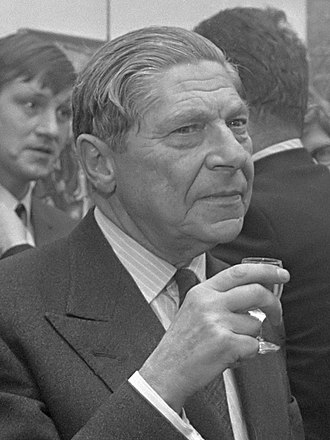
Meeting with remarkable men: Arnold Toynbee and Arthur Koestler

Arnold Joseph Toynbee (April 14, 1889 – October 22, 1975) was an English historian, a philosopher of history, an author of numerous books and a research professor of international history at the London School of Economics and King’s College London. Wikipedia

“Toynbee has recorded how he once experienced a sudden flash of the whole of history, ‘all that had been, and was, and was to come.’ And Arthur Koestler has described how, sentenced to death in a Spanish jail, he tried to work out Euclid’s proof that there is no prime number, and, as he succeeded, was swept into a kind of mystical ecstasy, a sense of floating on his back ‘in a river of peace, under bridges of silence,’ at the thought that man has succeeded in saying something concrete about the infinite. Troubled by some faint sense of annoyance at the back of his mind, he remembered suddenly that he was due to be shot the next day, then brushed it aside with the thought, ‘So what? Have you nothing more serious to worry about/'”

–Colin Wilson in The Misfits: A Study of Sexual Outsiders”

Arthur Koestler (September 5, 1905 – March 1, 1983) was a Hungarian-born author and journalist. Koestler was born in Budapest, and apart from his early school years, was educated in Austria. In 1931, Koestler joined the Communist Party of Germany, but he resigned in 1938 after becoming disillusioned with Stalinism. Wikipedia

Sin-eater

From Wikipedia, the free encyclopedia

For other uses, see Sin-eater (disambiguation).

sin-eater is a person who consumes a ritual meal in order to spiritually take on the sins of a deceased person. The food was believed to absorb the sins of a recently dead person, thus absolving the soul of the person.

Cultural anthropologists and folklorists classify sin-eating as a form of ritual. It is most commonly associated with Scotland, Ireland, Wales, English counties bordering Wales, and Welsh culture.[1]

Attestations

History

While there have been analogous instances of sin-eaters throughout history, the questions of how common the practice was, when it was practiced, and what the interactions between sin-eaters, common people, and religious authorities remain largely unstudied by folklore academics.[citation needed]

In Meso-American civilisation, Tlazolteotl, the Aztec goddess of vice, purification, steam baths, lust and filth, and a patroness of adulterers (her name literally means ‘Sacred Filth’), had a redemptive role in religious practices. At the end of an individual’s life, they were allowed to confess misdeeds to this deity, and according to legend she would cleanse the soul by “eating its filth”.

The 1911 Encyclopædia Britannica states in its article on sin-eaters:

A symbolic survival of [sin-eating] was witnessed as recently as 1893 at Market DraytonShropshire. After a preliminary service had been held over the coffin in the house, a woman poured out a glass of wine for each bearer and handed it to him across the coffin with a ‘funeral biscuit.’ In Upper Bavaria sin-eating still survives: a corpse cake is placed on the breast of the dead and then eaten by the nearest relative, while in the Balkan peninsula a small bread image of the deceased is made and eaten by the survivors of the family. The Dutch doed-koecks or ‘dead-cakes‘, marked with the initials of the deceased, introduced into America in the 17th century, were long given to the attendants at funerals in old New York. The ‘burial-cakes’ which are still made in parts of rural England, for example Lincolnshire and Cumberland, are almost certainly a relic of sin-eating.[2]

In Wales and the Welsh Marches

The term “Sin-eater” appears to derive from Welsh culture and is most often associated with Wales itself and in the English counties bordering Wales.

Seventeenth-century diarist John Aubrey, in the earliest source on the practice, wrote that “an old Custome” in Herefordshire had been

at funerals to hire poor people, who were to take upon them all the sins of the party deceased. One of them I remember lived in a Cottage on Rosse-high way. (He was a long, lean, ugly, lamentable Raskel.) The manner was that when the corpse was brought out of the house, and laid on the Bière; a Loaf of bread was brought out, and delivered to the Sine-eater over the corpse, and also a Mazar-bowl of maple (Gossips bowl) full of beer, which he was to drink up, and sixpence in money, in consideration whereof he took upon him (ipso facto) all the Sinnes of the Defunct, and freed him (or her) from walking after they were dead.[3]

John Bagford (c. 1650–1716) includes the following description of the sin-eating ritual in his Letter on Leland’s Collectanea, i. 76. (as cited in Brewer’s Dictionary of Phrase and Fable, 1898)

Notice was given to an old sire before the door of the house, when some of the family came out and furnished him with a cricket [low stool], on which he sat down facing the door; then they gave him a groat which he put in his pocket, a crust of bread which he ate, and a bowl of ale which he drank off at a draught. After this he got up from the cricket and pronounced the case and rest of the soul departed, for which he would pawn his own soul.

By 1838, Catherine Sinclair noted the practice was in decline but that it continued in the locality:

A strange popish custom prevailed in Monmouthshire and other Western counties until recently. Many funerals were attended by a professed “sin-eater,” hired to take upon him the sins of the deceased. By swallowing bread and beer, with a suitable ceremony before the corpse, he was supposed to free it from every penalty for past offences, appropriating the punishment to himself. Men who undertook so daring an imposture must all have been infidels, willing, apparently, like Esau, to sell their birthright for a mess of pottage.[4]

A local legend in Shropshire, England, concerns the grave of Richard Munslow, who died in 1906, said to be the last sin-eater of the area. Unusually, Munslow was not poor or an outcast, instead being a wealthy farmer from an established family. Munslow may have revived the custom after the deaths of three of his children in a week 1870 due to scarlet fever.[5] In the words of local Reverend Norman Morris of Ratlinghope, “It was a very odd practice and would not have been approved of by the church but I suspect the vicar often turned a blind eye to the practice.”[6] At the funeral of anyone who had died without confessing their sins, a sin-eater would take on the sins of the deceased by eating a loaf of bread and drinking ale out of a wooden bowl passed over the coffin, and make a short speech:[5][6]

I give easement and rest now to thee, dear man, that ye walk not down the lanes or in our meadows. And for thy peace I pawn my own soul. Amen.[5]

The 1926 book Funeral Customs by Bertram S. Puckle mentions the sin-eater:

Professor Evans of the Presbyterian College, Carmarthen, allegedly saw a sin-eater about the year 1825, who was then living near Llanwenog, Cardiganshire. Abhorred by the superstitious villagers as a thing unclean, the sin-eater cut himself off from all social intercourse with his fellow creatures by reason of the life he had chosen; he lived as a rule in a remote place by himself, and those who chanced to meet him avoided him as they would a leper. This unfortunate was held to be the associate of evil spirits, and given to witchcraft, incantations and unholy practices; only when a death took place did they seek him out, and when his purpose was accomplished they burned the wooden bowl and platter from which he had eaten the food handed across, or placed on the corpse for his consumption.[7]

William Sharp, writing as Fiona Macleod, published a weird tale entitled “The Sin Eater” in 1895.[8]

“The Sin Eater” is an episode of Suspense (radio drama) which originally aired on July 8, 1962. The setting is rural Appalachia, with characters of Welsh heritage.

“The Sins of the Fathers”, a 1972 episode of the American television series Night Gallery, features Richard Thomas as a sin-eater in medieval Wales.

Published in 1977 by Duckworth BooksThe Sin Eater was the first of British writer Alice Thomas Ellis‘s many novels. It “exposed the hidden rancours of Irish, Welsh and English,” in the words of journalist and writer Clare Colvin.[9] Writing for the Los Angeles Review of Books, Abby Geni comments, “The story orbits around the Captain, a failing patriarch, and the family who have gathered at his bedside. There are no ghosts or disembodied voices here. Instead, lovely Rose organises meals and cricket matches. Angela, visiting from out of town, vies with Rose for control of the proceedings. Awkward Ermyn searches for her place in the group. Servants lurk on the sidelines. The story is ripe with shadows and terror. An unclassifiable menace seeps through the book like a fog.”[10]

The 1978 TV miniseries The Dark Secret of Harvest Home features a funeral scene wherein all the mourners in attendance avert their faces as a repudiated fellow designated the sin-eater dines upon a symbolic meal, which includes a coin pressed into a cheese, thereby taking the deceased’s transgressions in life upon himself.

Sin-Eater is the name of a Marvel Comics villain.

Margaret Atwood wrote a short story titled “The Sin-Eater”. It was dramatised by the Canadian Broadcasting Corporation in their radio series Anthology in 1981.[11]

Sin Eater is the title of a 2020 mystery novel by Megan Campisi set in an alternate Elizabethan England.[12]

In Patrick O’Brian’s novel Master and Commander, set aboard a 19th-century British navy ship, the crew learns that a new shipmate was once a sin-eater, and immediately begin to shun and persecute him. To protect him, the ship’s doctor, Stephen Maturin, gives him a post as his assistant.

The 2003 movie The Order is a fictional horror story revolving around the investigation of the suspicious death of an excommunicated priest and the discovery of a sin-eater headquartered in Rome.

The 2004 movie The Final Cut is set in a world where memories are recorded, and then “cut” into positive hagiographies on the person’s death; the “cutters” are referred to as sin-eaters.

The 2007 film The Last Sin Eater tells the story of a community of Welsh immigrants in Appalachia, 1850. The sin-eater of the community is seen through the eyes of ten-year-old Cadi Forbes.

In the film The Bourne Legacy (2012), a central character who leads a US government black ops program describes himself and his team as sin-eaters, doing the “morally indefensible” but absolutely necessary thing, “so that the rest of our cause can stay pure.”[13]

The American TV show Sleepy Hollow used the term Sin-Eater as the title of Season 1, episode 6, as a way to introduce another character on the show that is a sin-eater.

The American TV show Lucifer used the term Sin-Eater as the title of season 2, episode 3, to refer to the content moderation employees of a fictional social media company. The American TV show Arrow did so too in the season 5, episode 14, referring to a flash-back story of Anatoli Knyazev telling Oliver Queen he acts as a sin-eater.

In the American TV show Succession, Gerri, Waystar Royco’s general counsel, suggests to Tom Wambsgans that he become the family sin-eater and destroy evidence of illegal activities aboard the company’s cruise lines, “Have you ever heard of the sin cake eater? He would come to the funeral and he would eat all the little cakes they’d lay out on the corpse. He ate up all the sins. And you know what? The sin cake eater was very well paid. And so long as there was another one who came along after he died, it all worked out. So this might not be the best situation, but there are harder jobs and you get to eat [an amazing amount] of cake.”[14]

The White Wolf publishing company’s role-playing game Geist: The Sin-Eaters is named for the concept, though it never directly references the actual ritual practice.

The comic series Finder features a main character who is a sin-eater, and thus despised by his mother’s culture as the lowest member of their society.

In the MMORPG Final Fantasy XIV: Shadowbringers, sin-eaters are recurring hostile entities that aim to devour all living beings in The First, mindless monsters driven by insatiable hunger for living aether. The stronger sin-eaters are capable of “forgiving” the creatures they attack, gruesomely and permanently mutating them into newborn sin-eaters. Most of these creatures tend to be named as “forgiven” sins (Forgiven Cowardice, Forgiven Cruelty, Forgiven Hypocrisy, etc.). The strongest sin-eaters are known as Lightwardens.

In A Breath of Snow and Ashes, the sixth book in the Outlander series of novels by Diana Gabaldon, Roger Wakefield presides over the funeral of Hiram Crombie’s mother-in-law, Mrs. Wilson, where a sin-eater makes an appearance.

The Sin Eater’s Daughter is a YA fantasy novel written by Melinda Salisbury which includes a version of the practice and was published on February 24, 2015.

“My Soul’s Demise”, a song by Blackbriar, is about the dread of a sin-eater.

In the American TV anthology Fargo season 5, episode 3, a flashback portrays a possible sixteenth century incarnation of the character Ole Munch as being a sin-eater, definitively confirmed by his further declarations in the finale, episode 10, entitled “Bisquik“.

“Sin Eater”, a song by Penelope Scott from the “Mysteries For Rats” music album published in 2023.

“SIN-EATER”, a 2023 work for choir and string quartet by American composer David T. Little, draws on historical accounts of sin-eating as a way to explore inequity in contemporary culture.

More at: https://en.wikipedia.org/wiki/Sin-eater

Full Moon In Aquarius – The Truth Will Set You Free

(Astrobutterfly.com)

The truth will set you free. 

But first, it will piss you off. 

At the Full Moon in Aquarius on Monday, August 19th, 2024, unexpected events, insights or revelations will challenge our comfort zones. 

And that’s not only because the Full Moon is in the rebellious, breakthrough-oriented sign of Aquarius… but also because the Full Moon is exactly squaring its ruler, Uranus. That’s an Aquarius double whammy, and a double dose of breakthrough and change. 

We have:

  • Sun at 27° Leo
  • Moon at 27° Aquarius
  • Squaring Uranus, at 27° Taurus 

The Full Moon in Aquarius forms a fixed T-square with Uranus at the apex. This Full Moon ‘screams’ Uranus. 

Unexpected outcomes might take us by surprise. Sudden developments may ask us to rethink our approach or adapt quickly to new circumstances. Newfound clarity may help us understand the reality of a matter that we previously overlooked. 

A word about Uranus

Uranus is almost synonymous with the tagline “expect the unexpected” because Uranus rules change, disruption of the status quo, and radical breakthroughs. 

But what often happens when we have a Uranus transit is that while the changes may feel sudden, deep down, we kind of knew it all along.

Somehow, our higher self knew the truth.

It’s our material, 3D Self that hasn’t quite caught up with Uranus’s message.

Uranus is the first planet that is invisible to the naked eye. This means that its influence is subtle, invisible, and operates on a different plane of awareness. Uranus works differently. We might not ‘see’ the signs, even with our glasses on. That’s because with Uranus, we need to look beyond the obvious.

We need to tap into a subtler reality that is not governed by our physical senses and ordinary perception.

In Uranus’ realm, concepts and ideas are formed and seeded long before they manifest. This is where the blueprint for change begins.

In astrology, Uranus is the father sky. When Uranus’ lightning strikes the earth, electricity is sparked, and life is formed. 

Uranus, the higher octave of Mercury, is like the higher brain of the Universe. Uranus has a meta perspective and the ability to ‘see’ beyond the mundane. 

Whatever happens during a Uranus transit comes from the higher realms of existence. What occurs during a Uranus transit is always the right thing, even if it doesn’t seem that way.

First, It Will Piss You Off

So if Uranus is guiding us toward the right thing, why do we resist it? Why does it piss us off at first? 

It’s because there’s a gap between how we make sense of the world (through the planets up to Saturn), what we think things should be, and what truly makes sense from a higher perspective (Uranus).

Saturn teaches us to ‘follow the plan’, ‘set objectives’, ‘work our way to success’, and ‘try harder’. To achieve our objectives, we follow a script, a plan, and we hold onto a specific outcome we hope will play out.

But things rarely work out the way we plan.

Why? Because in life there are simply too many variables at play, and what makes sense to us as individuals does not necessarily align with the higher perspective of the universe.

When things don’t go as expected, we get frustrated. We get pissed off. We blame the world. We blame Uranus, the planet of the “unexpected.”

This resistance is an absolutely normal part of the process of growth and change, and a natural progression from living our lives on Saturn’s terms, to inviting Uranus’ higher perspective. 

The Truth Will Set You Free

Yet, after the dust settles, when we look back, we often see that Uranus’ intervention was a blessing in disguise. It was the right thing, the natural thing, even if it wasn’t what we initially wanted. 

Uranus’s strange serendipities and disruptions eventually lead us closer to the truth and further along our path. 

The crisis we experienced, however unsettling, was the catalyst for much-needed change. 

You may be familiar with the ancient Chinese character for “crisis,” which is composed of two parts: one that means “danger” or “threat” and the other that means “opportunity” or “crucial point.”

This means that a threat contains, within its DNA, the seed of an opportunity.

A crisis has a way of making us fully connect with ourselves and the world. And from that place of aliveness and alignment, we see things more clearly. A “Eureka” moment emerges, and from that higher perspective, we understand the bigger picture. Things just ‘click’. 

At the Full Moon in Aquarius, connect yourself with that part of you that is attuned to the energy of Uranus and Aquarius.

And ask yourself:

What am I resisting, and why? 

What is Uranus trying to show me? What is the higher perspective? What opportunities are hidden within the challenges I’m facing?

Former Google CEO does damage control over remote work comments

Billionaire Eric Schmidt had shared choice words for Google’s policies on work-life balance

By Stephen Council,Tech Reporter Updated Aug 14, 2024 (SFGate.com)

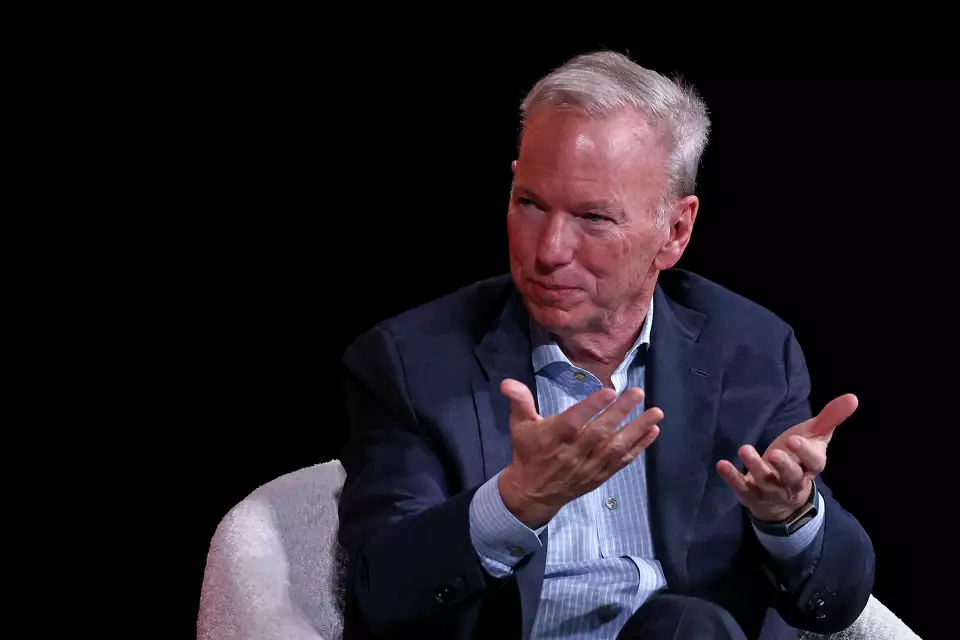
FILE: Eric Schmidt speaks onstage during the TIME100 Summit on April 24, 2024 in New York City. Jemal Countess/Getty Images for TIME

LATEST Aug. 14, 4:10 p.m. After former Google CEO Eric Schmidt made headlines this week for criticizing the tech giant’s work policies, he offered a mea culpa. 

“I misspoke about Google and their work hours,” Schmidt told the Wall Street Journal in an email, per a story the outlet published Wednesday. “I regret my error.”

The wave of news coverage was sparked by a classroom video posted on Tuesday by Stanford’s School of Engineering. In the video, Schmidt answered a question about Google’s lag in artificial intelligence development by complaining, “Google decided that work-life balance and going home early, and working from home, was more important than winning.” (His full comments are below.)

According to the Wall Street Journal’s story, Schmidt asked Stanford to take down the video. As of Wednesday afternoon, it was no longer available on the school’s YouTube page.

Aug. 13, 5:30 p.m. Former Google CEO Eric Schmidt has a complaint about his old company, and it’s one that employees across America are increasingly hearing from executives: Workers aren’t coming into the office enough. 

The former billionaire investor, who led Google from 2001 to 2011 and remained on as its executive chairman until 2015, made his feelings on remote work clear before a class at Stanford, a video posted Tuesday by the university’s School of Engineering shows. In the video, professor Erik Brynjolfsson asked Schmidt questions, then students got a turn. 

It was one of Brynjolfsson’s queries that got Schmidt going about remote work. The professor brought up Google’s breakthrough artificial intelligence discovery from 2017, the creation of the “transformer.” (The technology helps power much of the AI research behind today’s products; it’s the “T” in ChatGPT.) Then, Brynjolfsson parroted a common refrain: the idea that despite that early lead, the Mountain View tech giant has fallen behind in AI development.

“They’ve kind of lost the initiative to OpenAI, and even the last leaderboard I saw, Anthropic’s Claude was at the top of the list,” Brynjolfsson said. “I asked [Google CEO] Sundar [Pichai] this, he didn’t really give me a very sharp answer. Maybe you have a sharper or a more objective explanation for what’s going on there.”

Schmidt, after noting that he’s no longer an employee of the company, got on his soapbox.

“Google decided that work-life balance and going home early, and working from home, was more important than winning,” he said, prompting titters from the crowd. “And the startups, the reason startups work is the people work like hell.”

“I’m sorry to be so blunt,” Schmidt continued. “But the fact of the matter is, if you all leave the university and go found a company, you’re not gonna let people work from home and only come in one day a week if you want to compete against the other startups.”

It’s worth noting that one day a week is an exaggeration on Schmidt’s part; Google required workers to come into offices three days a week back in 2022, SFGATE reported. 

Schmidt then said that there’s a history in tech of dominant companies missing out on the next wave of the industry, and he played up the importance of “crazy ideas” and hard-charging founders like Elon Musk. He also praised Taiwan Semiconductor Manufacturing Company, and said that the massive chipmaker has a rule that new PhD hires have to work “in the factory, on the basement floor.”

“Now, can you imagine getting American physicists to do that?” Schmidt asked. “The PhDs? Highly unlikely. Different work ethic.”

Hear of anything happening at Google or another Bay Area tech company? Contact tech reporter Stephen Council securely at stephen.council@sfgate.com or on Signal at 628-204-5452.

More News

— Tragic death raises troubling questions about safety on Half Dome
— Calif. family’s mysterious disappearance may lead to Mount Shasta
— Billionaire MLB owner accused of stealing sand from Calif. beach
— Lauded SF chef’s first Paris restaurant has already closed

Aug 13, 2024|Updated Aug 14, 2024 4:13 p.m.

Photo of Stephen Council

Stephen Council

TECH REPORTER

Stephen Council is the tech reporter at SFGATE. He has covered technology and business for The Information, The Wall Street Journal, CNBC and CalMatters, where his reporting won a San Francisco Press Club award.Signal: 628-204-5452
Email: stephen.council@sfgate.com

Ursula K. Le Guin on Growing Older and What Beauty Really Means

By Maria Popova (themarginalian.org )

“A Dog is, on the whole, what you would call a simple soul,” T.S. Eliot simpered in his beloved 1930s poem “The Ad-dressing of Cats,” proclaiming that “Cats are much like you and me.” Indeed, cats have a long history of being anthropomorphized in dissecting the human condition — but, then again, so do dogs. We’ve always used our feline and canine companions to better understand ourselves, but nowhere have Cat and Dog served a more poignant metaphorical purpose than in the 1992 essay “Dogs, Cats, and Dancers: Thoughts about Beauty” by Ursula K. Le Guin (October 21, 1929–January 22, 2018), found in the altogether spectacular volume The Wave in the Mind: Talks and Essays on the Writer, the Reader, and the Imagination (public library), which also gave us Le Guin, at her finest and sharpest, unsexing the universal pronoun.

Le Guin contrasts the archetypal temperaments of our favorite pets:

Dogs don’t know what they look like. Dogs don’t even know what size they are. No doubt it’s our fault, for breeding them into such weird shapes and sizes. My brother’s dachshund, standing tall at eight inches, would attack a Great Dane in the full conviction that she could tear it apart. When a little dog is assaulting its ankles the big dog often stands there looking confused — “Should I eat it? Will it eat me? I am bigger than it, aren’t I?” But then the Great Dane will come and try to sit in your lap and mash you flat, under the impression that it is a Peke-a-poo.

Artwork by Mark Ulriksen from ‘The Big New Yorker Book of Dogs.’ Click image for more.

Cats, on the other hand, have a wholly different scope of self-awareness:

Cats know exactly where they begin and end. When they walk slowly out the door that you are holding open for them, and pause, leaving their tail just an inch or two inside the door, they know it. They know you have to keep holding the door open. That is why their tail is there. It is a cat’s way of maintaining a relationship.

Housecats know that they are small, and that it matters. When a cat meets a threatening dog and can’t make either a horizontal or a vertical escape, it’ll suddenly triple its size, inflating itself into a sort of weird fur blowfish, and it may work, because the dog gets confused again — “I thought that was a cat. Aren’t I bigger than cats? Will it eat me?”

Illustration by Wendy MacNaughton based on Gay Talese’s taxonomy of cats. Click image for details.

More than that, Le Guin notes, cats are aesthetes, vain and manipulative in their vanity. In a passage that takes on whole new layers of meaning twenty years later, in the heyday of the photographic cat meme, she writes:

Cats have a sense of appearance. Even when they’re sitting doing the wash in that silly position with one leg behind the other ear, they know what you’re sniggering at. They simply choose not to notice. I knew a pair of Persian cats once; the black one always reclined on a white cushion on the couch, and the white one on the black cushion next to it. It wasn’t just that they wanted to leave cat hair where it showed up best, though cats are always thoughtful about that. They knew where they looked best. The lady who provided their pillows called them her Decorator Cats.

Artwork by Ronald Searle from ‘The Big New Yorker Book of Cats.’ Click image for more.

A master of bridging the playful and the poignant, Le Guin returns to the human condition:

A lot of us humans are like dogs: we really don’t know what size we are, how we’re shaped, what we look like. The most extreme example of this ignorance must be the people who design the seats on airplanes. At the other extreme, the people who have the most accurate, vivid sense of their own appearance may be dancers. What dancers look like is, after all, what they do.

Echoing legendary choreographer Merce Cunningham’s contemplation of dance as “the human body moving in time-space,” Le Guin considers the dancers she knows and their extraordinary lack of “illusions or confusions about what space they occupy.” Recounting the anecdote of one young dancer who upon scraping his ankle exclaimed, “I have an owie on my almost perfect body!” Le Guin writes:

It was endearingly funny, but it was also simply true: his body is almost perfect. He knows it is, and knows where it isn’t. He keeps it as nearly perfect as he can, because his body is his instrument, his medium, how he makes a living, and what he makes art with. He inhabits his body as fully as a child does, but much more knowingly. And he’s happy about it.

Photograph from Helen Keller’s life-changing visit to Martha Graham’s dance studio. Click image for details.

What dance does, above all, is offer the promise of precisely such bodily happiness — not of perfection, but of satisfaction. Dancers, Le Guin argues, are “so much happier than dieters and exercisers.” She considers the impossible ideals of the latter, which cripple them in the same way that perfectionism cripples creativity in writing and art:

Perfection is “lean” and “taut” and “hard” — like a boy athlete of twenty, a girl gymnast of twelve. What kind of body is that for a man of fifty or a woman of any age? “Perfect”? What’s perfect? A black cat on a white cushion, a white cat on a black one . . . A soft brown woman in a flowery dress . . . There are a whole lot of ways to be perfect, and not one of them is attained through punishment.

Photograph by Zed Nelson from his project ‘Love Me.’ Click image for more.

And just like that, Le Guin pirouettes, elegantly but imperceptibly, from the lighthearted to the serious. Reflecting on various cultures’ impossible and often painful ideals of human beauty, “especially of female beauty,” she writes:

I think of when I was in high school in the 1940s: the white girls got their hair crinkled up by chemicals and heat so it would curl, and the black girls got their hair mashed flat by chemicals and heat so it wouldn’t curl. Home perms hadn’t been invented yet, and a lot of kids couldn’t afford these expensive treatments, so they were wretched because they couldn’t follow the rules, the rules of beauty.

Beauty always has rules. It’s a game. I resent the beauty game when I see it controlled by people who grab fortunes from it and don’t care who they hurt. I hate it when I see it making people so self-dissatisfied that they starve and deform and poison themselves. Most of the time I just play the game myself in a very small way, buying a new lipstick, feeling happy about a pretty new silk shirt.

Ursula K. Le Guin

Le Guin, who writes about aging with more grace, humor, and dignity than any other writer I’ve read, turns to the particularly stifling ideal of eternal youth:

One rule of the game, in most times and places, is that it’s the young who are beautiful. The beauty ideal is always a youthful one. This is partly simple realism. The young are beautiful. The whole lot of ’em. The older I get, the more clearly I see that and enjoy it.

[…]

And yet I look at men and women my age and older, and their scalps and knuckles and spots and bulges, though various and interesting, don’t affect what I think of them. Some of these people I consider to be very beautiful, and others I don’t. For old people, beauty doesn’t come free with the hormones, the way it does for the young. It has to do with bones. It has to do with who the person is. More and more clearly it has to do with what shines through those gnarly faces and bodies.

But what makes the transformations of aging so anguishing, Le Guin poignantly observes, isn’t the loss of beauty — it’s the loss of identity, a frustratingly elusive phenomenon to begin with. She writes:

I know what worries me most when I look in the mirror and see the old woman with no waist. It’s not that I’ve lost my beauty — I never had enough to carry on about. It’s that that woman doesn’t look like me. She isn’t who I thought I was.

[…]

We’re like dogs, maybe: we don’t really know where we begin and end. In space, yes; but in time, no.

[…]

A child’s body is very easy to live in. An adult body isn’t. The change is hard. And it’s such a tremendous change that it’s no wonder a lot of adolescents don’t know who they are. They look in the mirror — that is me? Who’s me?

And then it happens again, when you’re sixty or seventy.

Artwork by Mark Ulriksen from ‘The Big New Yorker Book of Dogs.’ Click image for more.

In a sentiment that calls Rilke to mind — “I am not one of those who neglect the body in order to make of it a sacrificial offering for the soul,” he memorably wrote“since my soul would thoroughly dislike being served in such a fashion.” — Le Guin admonishes against our impulse to intellectualize out of the body, away from it:

Who I am is certainly part of how I look and vice versa. I want to know where I begin and end, what size I am, and what suits me… I am not “in” this body, I am this body. Waist or no waist.

But all the same, there’s something about me that doesn’t change, hasn’t changed, through all the remarkable, exciting, alarming, and disappointing transformations my body has gone through. There is a person there who isn’t only what she looks like, and to find her and know her I have to look through, look in, look deep. Not only in space, but in time.

[…]

There’s the ideal beauty of youth and health, which never really changes, and is always true. There’s the ideal beauty of movie stars and advertising models, the beauty-game ideal, which changes its rules all the time and from place to place, and is never entirely true. And there’s an ideal beauty that is harder to define or understand, because it occurs not just in the body but where the body and the spirit meet and define each other.

And yet for all the ideals we impose on our earthy embodiments, Le Guin argues in her most poignant but, strangely, most liberating point, it is death that ultimately illuminates the full spectrum of our beauty — death, the ultimate equalizer of time and space; death, the great clarifier that makes us see that, as Rebecca Goldstein put it, “a person whom one loves is a world, just as one knows oneself to be a world.” With this long-view lens, Le Guin remembers her own mother and the many dimensions of her beauty:

My mother died at eighty-three, of cancer, in pain, her spleen enlarged so that her body was misshapen. Is that the person I see when I think of her? Sometimes. I wish it were not. It is a true image, yet it blurs, it clouds, a truer image. It is one memory among fifty years of memories of my mother. It is the last in time. Beneath it, behind it is a deeper, complex, ever-changing image, made from imagination, hearsay, photographs, memories. I see a little red-haired child in the mountains of Colorado, a sad-faced, delicate college girl, a kind, smiling young mother, a brilliantly intellectual woman, a peerless flirt, a serious artist, a splendid cook—I see her rocking, weeding, writing, laughing — I see the turquoise bracelets on her delicate, freckled arm — I see, for a moment, all that at once, I glimpse what no mirror can reflect, the spirit flashing out across the years, beautiful.

That must be what the great artists see and paint. That must be why the tired, aged faces in Rembrandt’s portraits give us such delight: they show us beauty not skin-deep but life-deep.

The Wave in the Mind remains the kind of book that stays with you for life — the kind of book that is life.

Newly Sober God Admits He Has No Recollection Of Creating Universe

Published: August 13, 2024 (TheOnion.com)

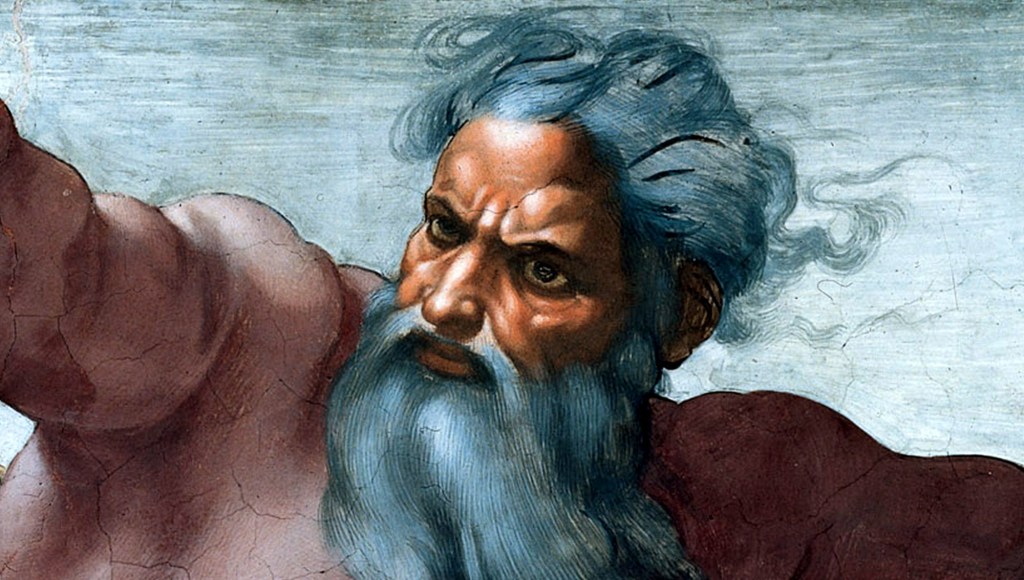
THE HEAVENS—Sipping on a Diet Coke as He described the mix of alcohol and pills He had lived off of for years, a newly sober God admitted Tuesday that He had no recollection of creating the universe. “Everyone tells Me I made light and darkness, sea and sky, but to be honest, I was blacked out for most of that millennium,” said the Lord Thy God, telling reporters that while He was happy so many people liked the universe, it was strange to be worshipped by billions of strangers for something He had no memory of doing. “I don’t really think of it as My creation, because to Me it feels like some other God did all that stuff. When people thank Me for things I created—horses, trees, or whatever—I just try to smile and nod and be polite. I was pretty into coke at the time, and some angels who were around Me back then say I was always dialed in and barking orders. I guess I must have been if I made all the birds and fish one day and made all the humans and beasts of the earth the next. It’s no wonder I passed out on the seventh day.” At press time God had reportedly relapsed after finding out He had a son He’d never spoken to.

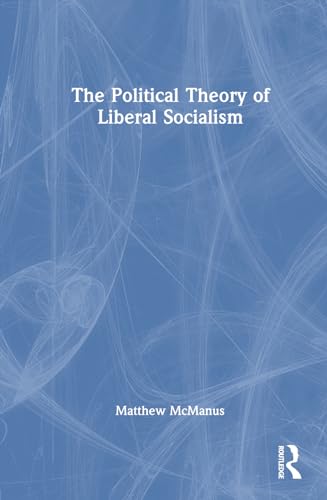
Book: “The Political Theory of Liberal Socialism”

The Political Theory of Liberal Socialism

Matthew McManus

McManus presents a comprehensive guide to the liberal socialist tradition, stretching from Mary Wollstonecraft and Thomas Paine through John Stuart Mill to Irving Howe, John Rawls and Charles Mills.

Providing a comprehensive critical genealogy of liberal socialism from a sympathetic but critical standpoint, McManus traces its core to the Revolutionary period that catalysed major divisions in liberal political theory to the French Revolution that saw the emergence of writers like Mary Wollstonecraft and Thomas Paine who argued that liberal principles could only be inadequately instantiated in a society with high levels of material and social inequality to John Stuart Mill, the first major thinker who declared himself a liberal and a socialist and who made major contributions to both traditions through his efforts to synthesize and conciliate them. McManus argues for liberal socialism as a political theory which could truly secure equality and liberty for all.

An essential book on the tradition of liberal socialism for students, researchers and scholars of political science and humanities.

(Goodreads.com)