FREE WILL ASTROLOGY: Week of December 29, 2022

Rob Brezsny’s outlook for your week ahead

Free Will Astro Header Logo

By ROB BREZSNY Thursday December 29, 2022 (creativeloading.com)

ARIES (March 21-April 19): “Perfectionism is the voice of the oppressor,” writes Aries author Anne Lamott. “It will keep you cramped and insane.” I think that’s a key theme for you to embrace in 2023. Let’s express the idea more positively, too. In Navajo culture, rug weavers intentionally create small imperfections in their work, like odd-colored beads or stray pieces of yarn. This rebellion against unattainable exactitude makes the art more soulful. Relieved of the unrealistic mandate to be flawless, the rug can relax into its beauty.

TAURUS (April 20-May 20): Here are my four decrees for you in 2023, Taurus. 1. You are cleared to be greedy if it’s in service to a holy cause that fosters others’ well-being as well as yours. 2. It’s permissible to be stubborn if doing so nourishes versions of truth and goodness that uplift and inspire your community. 3. It’s proper to be slow and gradual if that’s the best way to keep collaborative projects from becoming slipshod. 4. It’s righteous to be zealous in upholding high standards, even if that causes less diligent people to bail out.

GEMINI (May 21-June 20): In 2023, many interesting lessons will arrive via your close relationships and collaborations. You will have the potential to learn more about the art of togetherness than you have in a long time. On occasion, these lessons may initially agitate you. But they will ultimately provide more pleasure and healing than you can imagine right now. Bonus prediction: You will have an enhanced talent for interweaving your destiny together with the fates of your allies.

CANCER (June 21-July 22): Here are some projects I’d love to see you pursue in 2023: 1. Teach your allies the fine points of how to cherish you but not smother you. 2. Cultivate your natural talent for appreciating the joys of watching and helping things grow: a child, a creative project, a tree, a friendship, or your bank account. 3. If you don’t feel close to the family members that fate provided you with, find others you like better. 4. As you explore territories that are further out or deeper within, make sure your Cancerian shell is expandable. 5. Avoid being friends with people who are shallow or callous or way too cool. 6. Cultivate your attraction to people who share your deepest feelings and highest ideals.

LEO (July 23-Aug. 22): Mystic teacher Terence McKenna said, “You have to take seriously the notion that understanding the universe is your responsibility, because the only understanding of the universe that will be useful to you is your own understanding.” This will be key advice for you in 2023. You will be wise to craft an updated version of your personal philosophy. I suggest you read a lot of smart people’s ideas about the game of life. Make it your quest to commune with interesting minds who stimulate your deep thoughts. Pluck out the parts that ring true as you create a new vision that is uniquely your own.

VIRGO (Aug. 23-Sept. 22): How should we refer to your romantic adventures in 2023? We could be whimsical and call them “Ritual Mating Dances on the Outskirts of History.” We could be melodramatic and call them “Diving into the Deep Dark Mysteries in Search of Sexy Treasures.” Or we could be hopeful and call them “A Sacred Pilgrimage to the Frontiers of Intimacy.” I think there’s a good chance that all three titles will turn out to be apt descriptors of the interesting stories ahead of you—especially if you’re brave as you explore the possibilities.

LIBRA (Sept. 23-Oct. 22): “Coddiwomple” is an English slang word that means to travel resolutely and dynamically toward an as-yet unknown destination. It’s not the same as wandering aimlessly. The prevailing mood is not passivity and vagueness. Rather, one who coddiwomples has a sense of purpose about what’s enjoyable and meaningful. They may not have a predetermined goal, but they know what they need and like. According to my analysis of the astrological omens, the next six months will be an excellent time for you Libras to experiment with coddiwompling.

SCORPIO (Oct. 23-Nov. 21): In the theater of ancient Greece, the term anagnorisis referred to a pivotal moment when a character discovered a big truth they had previously been unaware of. Another Greek word, peripeteia, meant a reversal of circumstances: “a change by which the action veers round to its opposite.” I bring these fun ideas to your attention, dear Scorpio, because I think 2023 could bring you several instances of an anagnorisis leading to a peripeteia. How would you like them to unfold? Start making plans. You will have uncanny power to determine which precise parts of your life are gifted with these blessings.

SAGITTARIUS (Nov. 22-Dec. 21): Winters are cold in Olds, a town in Alberta, Canada. Temperatures plunge as low as 24 degrees below zero Fahrenheit. But an agronomist named Dong Jianyi has built a giant greenhouse there that enables him to grow vegetables year-round. He spends no money on heat, but relies on innovative insulation to keep the inside warm. In 2021, he grew 29,000 pounds of tomatoes. I propose we make him your inspirational role model for 2023, Sagittarius. My guess is, that like him, you will be a wellspring of imaginative resourcefulness. What creative new developments could you generate? How might you bring greater abundance into your life by drawing extra energy from existing sources? How could you harness nature to serve you even better?

CAPRICORN (Dec. 22-Jan. 19): In accordance with your astrological omens in 2023, I’ve chosen a quote from Capricorn storyteller Michael Meade. I hope you will make it one of your core meditations in the coming months. He writes, “All meaningful change requires a genuine surrender. Yet, to surrender does not simply mean to give up; more to give up one’s usual self and allow something other to enter and redeem the lesser sense of self. In surrendering, we fall to the bottom of our arguments and seek to touch the origin of our lives again. Only then can we see as we were meant to see, from the depth of the psyche where the genius resides, where the seeds of wisdom and purpose were planted before we were born.” (The quote is from Meade’s book Fate and Destiny, The Two Agreements of the Soul.)

AQUARIUS (Jan. 20-Feb. 18): In addition to my career as a horoscope columnist, I have written novels and other books. I have worked as a singer-songwriter in rock bands and performed a one-person show in theaters. As I survey my history, I always break into sardonic laughter as I contemplate how many businesspeople have advised me, “First, you’ve got to sell out. You’ve got to dumb down your creative efforts so as to make yourself salable. Only later, after you have become successful, can you afford to be true to your deepest artistic principles.” I am very glad I never heeded that terrible counsel, because it would have made me insane and unhappy. How are you doing with this central problem of human life, Aquarius? Are you serving the gods of making money or the gods of doing what you love? The coming year will, I suspect, bring you prime opportunities to emphasize the latter goal.

PISCES (Feb. 19-March 20): I’ve chosen a sweet taste of advice for you to keep referring back to in 2023. It’s in rapt alignment with upcoming astrological omens. I suggest you copy my counsel out in longhand on a piece of paper and keep it in your wallet or under your pillow. Here it is, courtesy of author Martha Beck: “The important thing is to tell yourself a life story in which you, the hero, are primarily a problem solver rather than a helpless victim. This is well within your power, whatever fate might have dealt you.”
The Pagan Christ

Timeline – World History Documentaries • Jul 25, 2020 There are 2.1 billion Christians on the planet—roughly one third of the entire human population. At the heart of their religion is the New Testament and the birth, life, death, and resurrection of Jesus of Nazareth. To Christianity, the written word is the glue that binds the faith of its followers. So, what if it could be proven that Jesus never existed? What if there was evidence that every word of the New Testament—the cornerstone of Christianity—is based on myth and metaphor? The Pagan Christ investigates these very questions. It’s like Netflix for history… Sign up to History Hit, the world’s best history documentary service, at a huge discount using the code ‘TIMELINE’ —ᐳ http://bit.ly/3a7ambu

Our deepest hunger

The deepest hunger of the human soul is to be understood, to feel heard, and to feel validated. The deepest hunger of the human body is for air. If you can listen to another person, in depth, until they feel understood, it’s the equivalent of giving them air.

~ Steven Covey via Iris Brewster and Larry Lawhorn

What makes a good life? Lessons from the longest study on happiness | TED

TED Jan 25, 2016 What keeps us happy and healthy as we go through life? If you think it’s fame and money, you’re not alone – but, according to psychiatrist Robert Waldinger, you’re mistaken. As the director of 75-year-old study on adult development, Waldinger has unprecedented access to data on true happiness and satisfaction. In this talk, he shares three important lessons learned from the study as well as some practical, old-as-the-hills wisdom on how to build a fulfilling, long life. Visit http://TED.com to get our entire library of TED Talks, transcripts, translations, personalized talk recommendations and more.

(Courtesy of William P. Chiles)

Word-Built World: limerence

limerence

/ˈlimər(ə)ns/

Learn to pronounce

noun

PSYCHOLOGY

noun: limerence; plural noun: limerences

  1. the state of being infatuated or obsessed with another person, typically experienced involuntarily and characterized by a strong desire for reciprocation of one’s feelings but not primarily for a sexual relationship.

Origin

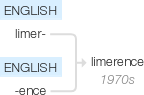
1970s: from limer- (apparently an arbitrary syllable) + -ence.

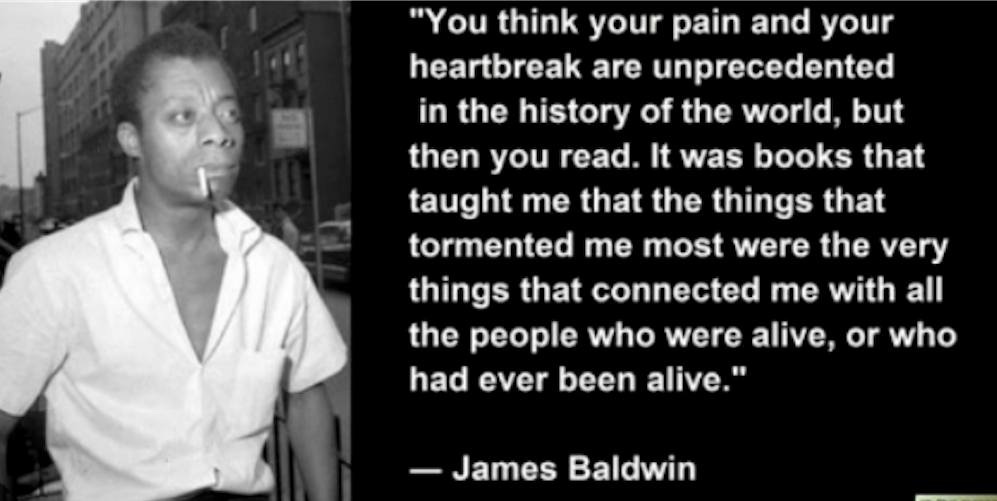
Carl Jung – How To Own Yourself

“The most terrifying thing is to accept oneself completely.”

–C.G. Jung

Philosophies for Life Dec 27, 2022 Carl Jung – How To Own Yourself (Jungian Philosophy) Skip the waitlist and invest in blue-chip art for the very first time by signing up for Masterworks: https://masterworks.art/philosophies Purchase shares in great masterpieces from artists like Pablo Picasso, Banksy, Andy Warhol, and more. ? See important Masterworks disclosures: http://masterworks.io/cd In this video we will be talking about how to own yourself from the philosophy of Carl Jung. He found his own school of psychology, called analytical psychology and his philosophy is dubbed as “Jungian philosophy”. Within the field of psychology, Jung is famously known for introducing the terms ‘introvert’ and ‘extravert,’ introducing archetypes of the psyche and classifying the boundary between the unconscious and conscious. Our consciousness includes everything that we know about ourselves; the unconsciousness entails everything that is part of us but that we are not aware of. Jung introduced ‘the ego’ and ‘the persona’ as our consciousness, and ‘the shadow’ and ‘the animus and anima’ as the parts that make up our unconsciousness. The shadow is one of the toughest, most intimidating parts to handle: it exists out of everything about ourselves that we dislike, which is why we often refuse to acknowledge it as a part of us. However, what many people don’t know is that not facing the shadow can be an even more intense blow on your self-esteem. But facing it is actually the only way to gain true control over yourself and who you are. Which is why in this video, we will teach you how you can truly own yourself by doing so-called shadow work in 3 easy steps, from the philosophy of Carl Jung. Step 1 – Meet Your Shadow Step 2 – Accept Your Shadow Step 3 – Integrate Your Shadow I hope you enjoyed watching the video and hope that this wisdom on owning yourself from the philosophy of Carl Jung will be helpful in your life. Carl Jung, together with Sigmund Freud and Alfred Adler, is one of the 3 founders of psychoanalysis which is a set of psychological theories and methods aiming to release repressed emotions and experiences – in other words, to make the unconscious conscious. Jung was born in Switzerland in 1875 and died in 1961, leaving behind great works in the fields of psychiatry, anthropology, archaeology, literature, philosophy, psychology and religious studies. Jung had Freud as a mentor for a good part of his career but later he departed from him. This division was painful for Jung and it led him to found his own school of psychology, called analytical psychology as a comprehensive system separate from psychoanalysis. If classical psychoanalysis focuses on the patient’s past, as early experiences are very important in personality development, analytical psychology primarily focuses on the present, on mythology, folklore, and cultural experiences, to try to understand human consciousness. One of the most important ideas of analytical psychology which Jung founded is the process of individuation, which is the process of finding the self – something Jung considered an important task in human development. While he did not formulate a systematic philosophy, he is nonetheless considered a sophisticated philosopher – his school of thought dubbed “Jungian philosophy”. Its concepts can apply to many topics covered in the humanities and the social sciences. A good part of his work was published after his death and indeed there are still some articles written by him that to this day have yet to be published. Some of his most important books are: “Psychology of the Unconscious”, “Man and His Symbols”, “The Archetypes and The Collective Unconscious”, “Modern Man In Search of a Soul”, “The Psychology of the Transference”, “Memories, Dreams, Thoughts”, and “The Relations Between the Ego and the Unconscious”. Besides being a great writer and a researcher, he was also an artist, a craftsman and even a builder. His contribution is enormous and there is a great deal we can learn from his works.

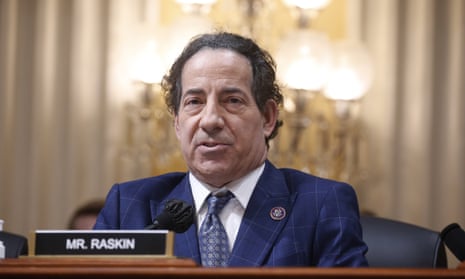
Pluto in Capricorn? Jamie Raskin: electoral college is a ‘danger to the American people’

Democratic congressman says recent changes to electoral college laws are unlikely to stop another January 6

‘We should elect the president the way we elect governors, senators, mayors, representatives, everybody else – whoever gets the most votes wins.’
Jamie Raskin: ‘We should elect the president the way we elect governors, senators, mayors, representatives, everybody else – whoever gets the most votes wins.’ Photograph: Michael Reynolds/EPA

Ramon Antonio Vargas Mon 26 Dec 2022 (TheGuardian.com)

Recent reforms to the laws governing the counting of electoral college votes for presidential races are “not remotely sufficient” to prevent another attack like the one carried out by Donald Trump supporters at the Capitol on January 6, a member of the congressional committee which investigated the uprising has warned.

January 6 report review: 845 pages, countless crimes, one simple truth – Trump did itRead more

In an interview on CBS’s Face the Nation, the Maryland House representative Jamie Raskin on Sunday renewed calls echoed by others – especially in the Democratic party to which he belongs – to let a popular vote determine the holder of the Oval Office.

“We should elect the president the way we elect governors, senators, mayors, representatives, everybody else – whoever gets the most votes wins,” Raskin said. “We spend hundreds of millions of dollars every year exporting American democracy to other countries, and the one thing they never come back to us with is the idea that, ‘Oh, that electoral college that you have, that’s so great, we think we will adopt that too’.”

After Trump served one term and lost the Oval Office to Joe Biden in 2020, he pressured his vice-president, Mike Pence, to use his ceremonial role as president of the session where both the Senate and House of Representatives met to certify the outcome of the race and interfere with the counting of the electoral college votes.

Pence refused, as supporters of the defeated Trump stormed the Capitol and threatened to hang the vice-president on the day of that joint congressional session in early 2021. The unsuccessful attack was linked to nine deaths, including the suicides of traumatized law enforcement officers who ultimately restored order.

Raskin was one of nine House representatives – including seven Democrats – who served on a panel investigating the January 6 uprising.

The committee recently released an 845-page report drawing from more than 1,000 interviews and 10 public hearings that, among other findings, concluded Trump provoked the Capitol attack by purposely disseminating false allegations of fraud pertaining to his defeat as part of a plot to overturn his loss. Committee members also recommended that federal prosecutors file criminal charges against Trump and certain associates of his.

Hundreds of Trump’s supporters who participated in the Capitol attack have been charged, with many already convicted.

Raskin said the US insistence on determining presidential winners through the electoral college facilitated the attempt by Trump supporters to keep him in power.

“There are so many curving byways and nooks and crannies in the electoral college that there are opportunities for a lot of strategic mischief,” Raskin told Face the Nation host Margaret Brennan, adding that the institutions which prevented the Trump-fueled Capitol attack “just barely” did so.

As part of a government spending package passed on Friday, Congress updated existing federal election laws to clarify that the vice-president’s role in the proceedings to certify the results of a race is just ceremonial and merely to count electoral votes. It also introduced a requirement for 20% of the members of both the House and Senate to object to a state’s electoral college vote outcome when it had previously taken just one legislator from each congressional chamber to do so.

Raskin on Sunday said those corrective measures were “necessary” yet “not remotely sufficient” because they don’t solve “the fundamental problem” of the electoral college vote, which in 2000 and 2016 allowed both George W Bush and Trump to win the presidency despite clear defeats in the popular vote.

Another House Democrat – Dan Goldman of New York – went on MSNBC’s the Sunday show and made a similar point, saying that US lawmakers “need to be thinking about ways that we can preserve and protect our democracy that lasts generations”.

Many Americans are taught in their high school civics classes that the electoral college prevents the handful of most populated areas in the US from determining the presidential winner because more voters live there than in the rest of the country combined.

Republican supporters stand outside the Maricopa County Recorder's Office to protest what they allege is an unfair election in Phoenix, Saturday, Nov. 12, 2022. Democratic Sen. Mark Kelly urged Arizonans to let go of “conspiracies of the past” on Saturday, calling for unity a day after he won re-election to a crucial Senate seat. (AP Photo/Alberto Mariani)

States generally determine their presidential electoral vote winner by the popular vote.

But most give 100% of their electoral vote allotment to the winner of the popular vote even if the outcome is razor-thin. Critics say that, as a result, votes for the losing candidate end up not counting in any meaningful way, allowing for situations where the president is supported by only a minority of the populace.

Meanwhile, such scenarios are preceded by a convoluted process that most people don’t understand and whose integrity can be assailed in the court of public opinion by partisans with agendas. That happened ahead of the Capitol attack even though Trump lost both the popular and electoral college votes to Biden handily.

“I think,” Raskin said, “that the electoral college … has become a danger not just to democracy, but to the American people.”

‘When the Lights of Health Go Down’- Virginia Woolf on Being Ill

Vanessa Able (thedewdrop.org)

“Considering how common illness is, how tremendous the spiritual change that it brings, how astonishing, when the lights of health go down, the undiscovered countries that are then disclosed…”

– Virginia WoolfTweet


In the middle of the course of winter, and this year (2022) in particular, many communities around the world have been subject to virulent strains of illness. We treat illness as an inconvenience, something pestilent and unwanted, and we pay the details of illness, and especially the spiritual currency of these periods of interruption, little attention in the context of what should be otherwise active and healthy lives. In her essay On Being Ill, Virginia Woolf reflected on our relationship to illness with her signature insight and humor, deploring the paucity of language we have at our command to describe the permutations of the body. Inviting us back into the intelligence of the body, she reminds us: ‘literature does its best to maintain that its concern is with the mind,’ while ‘all day, all night, the body intervenes.’


Considering how common illness is, how tremendous the spiritual change that it brings, how astonishing, when the lights of health go down, the undiscovered countries that are then disclosed, what wastes and deserts of the soul a slight attack of influenza brings to light, what precipices and lawns sprinkled with bright flowers a little rise of temperature reveals, what ancient and obdurate oaks are uprooted in us in the act of sickness, how we go down into the pit of death and feel the waters of annihilation close above our heads and wake thinking to find ourselves in the presence of the angels and the harpers when we have a tooth out and come to the surface in the dentist’s arm chair and confuse his ‘Rinse the mouth—rinse the mouth’ with the greeting of the Deity stooping from the floor of Heaven to welcome us—when we think of this and infinitely more, as we are so frequently forced to think of it, it becomes strange indeed that illness has not taken its place with love, battle, and jealousy among the prime themes of literature.

Novels, one would have thought, would have been devoted to influenza; epic poems to typhoid ; odes to pneumonia, lyrics to toothache. But no; with a few exceptions—De Quincey attempted something of the sort in The Opium Eater; there must be a volume or two about disease scattered through the pages of Proust—literature does its best to maintain that its concern is with the mind; that the body is a sheet of plain glass through which the soul looks straight and clear, and, save for one or two passions such as desire and greed, is null, negligible and nonexistent.

“Literature does its best to maintain that its concern is with the mind ; that the body is a sheet of plain glass through which the soul looks straight and clear, and, save for one or two passions such as desire and greed, is null, negligible and nonexistent.”

On the contrary, the very opposite is true. All day, all night the body intervenes; blunts or sharpens, colours or discolours, turns to wax in the warmth of June, hardens to tallow in the murk of February. The creature within can only gaze through the pane—smudged or rosy; it cannot separate off fro m the body like the sheath of a knife or the pod of a pea for a single instant; it must go through the whole unending procession of changes, heat and cold, comfort and discomfort, hunger and satisfaction, health and illness, until there comes the inevitable catastrophe; the body smashes itself to smithereens, and the soul (it is said) escapes. But of all this daily drama of the body there is no record.

People write always about the doings of the mind ; the thoughts that come to it ; its noble plans; how it has civilised the universe. They show it ignoring the body in the philosopher’s turret; or kicking the body, like an old leather football, across leagues of snow and desert in the pursuit of conquest or discovery. Those great wars which it wages by itself, with the mind a slave to it, in the solitude of the bedroom against the assault of fever or the oncome of melancholia, are neglected. Nor is the reason far to seek. To look these things squarely in the face would need the courage of a lion tamer; a robust philosophy; a reason rooted in the bowels of the earth. Short of these, this monster, the body, this miracle, its pain, will soon make us taper into mysticism, or rise, with rapid beats of the wings, into the raptures of transcendentalism.

“Illness often takes on the disguise of love, and plays the same odd tricks , investing certain faces with divinity, setting us to wait, hour after hour, with pricked ears for the creaking of a stair, and wreathing the faces of the absent (plain enough in health, Heaven knows) with a new significance.”

More practically speaking, the public would say that a novel devoted to influenza lacked plot; they would complain that there was no love in it—wrongly however, for illness often takes on the disguise of love, and plays the same odd tricks , investing certain faces with divinity, setting us to wait, hour after hour, with pricked ears for the creaking of a stair, and wreathing the faces of the absent (plain enough in health, Heaven knows) with a new significance, while the mind concocts a thousand legends and romances about them for which it has neither time nor liberty in health. Finally, among the drawbacks of illness as matter for literature there is the poverty of the language. English, which can express the thoughts of Hamlet and the tragedy of Lear, has no words for the shiver and the headache. It has all grown one way.

The merest schoolgirl, when she falls in love, has Shakespeare, Donne, Keats to speak her mind for her; but let a sufferer try to describe a pain in his head to a doctor and language at once runs dry. There is nothing ready made for him. He is forced to coin words himself, and, taking his pain in one hand, and a lump of pure sound in the other (as perhaps the inhabitants of Babel did in the beginning) so to crush them together that a brand new word in the end drops out. Probably it will be something laughable. For who of English birth can take liberties with the language? To us it is a sacred thing and therefore doomed to die, unless the Americans, whose genius is so much happier in the making of new words than in the disposition of the old, will come to our help and set the springs aflow. Yet it is not only a new language that we need, primitive, subtle, sensual, obscene, but a new hierarchy of the passions; love must be deposed in favour of a temperature of 104; jealousy give place to the pangs of sciatica; sleeplessness play the part of villain, and the hero become a white liquid with a sweet taste— that mighty Prince with the moths’ eyes and the feathered feet, one of whose names is Chloral.

Virginia Woolf (1882-1941)
From: Street Haunting

‘An Absolute F**king Disgrace’: Record 6,036 US Kids Killed, Injured by Gunfire in 2022

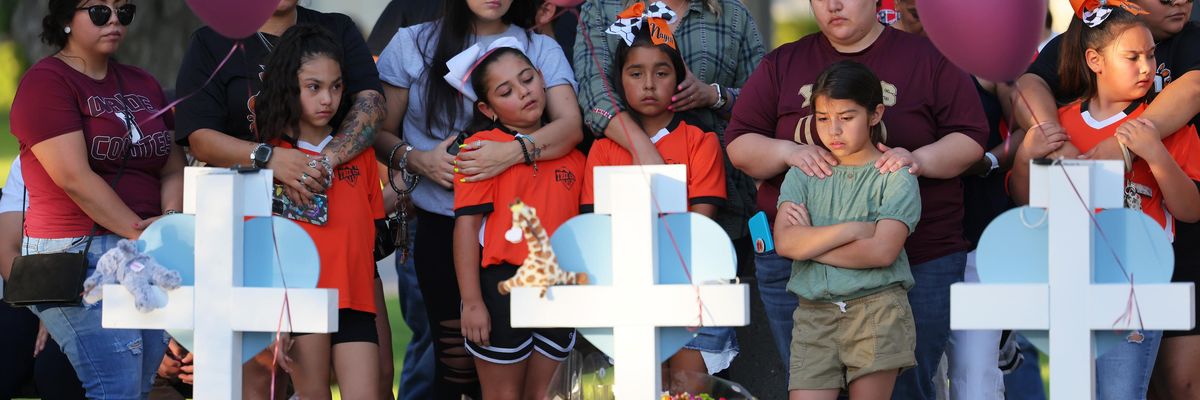
People visit memorials for victims of a mass shooting in Uvalde, Texas.

People visit memorials for victims of a mass shooting at an elementary school in Uvalde, Texas, on May 26, 2022.

(Photo: Michael M. Santiago/Getty Images)

As of Tuesday, 306 children under age 12 were killed by guns and another 668 were injured nationwide. For those ages 12-17, 1,328 were killed and 3,734 were injured.

JESSICA CORBETT

Dec 28, 2022 (CommonDreams.org)

With just a few days left until the new year, 2022 has already set a grim record: so far at least 6,036 children across the United States have been killed or injured by gunfire, according to the Gun Violence Archive.

As of Tuesday, 306 children under age 12 were killed by guns and another 668 were injured nationwide. For those ages 12-17, 1,328 were killed and 3,734 were injured.

Those figures include the 19 kids—but not the two adults—killed in the May 24 mass shooting at Robb Elementary School in Uvalde, Texas, and come just a few weeks after the nation marked the 10th anniversary of the massacre of 20 children and six adults at Sandy Hook Elementary School in Newtown, Connecticut.

Launched in 2013, the Gun Violence Archive (GVA) is an online project that aims “to document incidents of gun violence and gun crime nationally to provide independent, verified data to those who need to use it in their research, advocacy, or writing.”

GVA’s annual figures for child deaths and injuries go back to 2014. As the group highlighted in a tweet Monday, this year is the first in recorded history that the overall number has topped 6,000—which Project Unloaded called “heartbreaking and preventable.”

Jacob Sumner, who is pursuing a master’s degree in public administration at Arizona State University as a Sackton fellow, tweeted of GVA’s figures that “we should not and cannot allow that to be normal. We need lifesaving commonsense gun safety measures.”

Noting ABC News‘ reporting on the record, Brady PAC—a political action committee that supports candidates who champion policies to reduce gun violence—declared that “our children have the right to live.”

Another ABC reader described the development as “an absolute fucking disgrace.”

U.S. President Joe Biden—who signed some gun safety reforms into law after the Uvalde shooting—said on the Sandy Hook anniversary that “we have a moral obligation to pass and enforce laws that can prevent these things from happening again.” However, with the GOP set to take control of the U.S. House next week, progress on the issue over the next two years is unlikely.

Our work is licensed under Creative Commons (CC BY-NC-ND 3.0). Feel free to republish and share widely.

JESSICA CORBETT

Jessica Corbett is a staff writer for Common Dreams.