Gödel’s incompleteness theorems are two theorems of mathematical logic that demonstrate the inherent limitations of every formal axiomatic system capable of modelling basic arithmetic. These results, published by Kurt Gödel in 1931, are important both in mathematical logic and in the philosophy of mathematics. The theorems are widely, but not universally, interpreted as showing that Hilbert’s program to find a complete and consistent set of axioms for all mathematics is impossible.
The first incompleteness theorem states that no consistent system of axioms whose theorems can be listed by an effective procedure (i.e., an algorithm) is capable of proving all truths about the arithmetic of natural numbers. For any such consistent formal system, there will always be statements about natural numbers that are true, but that are unprovable within the system. The second incompleteness theorem, an extension of the first, shows that the system cannot demonstrate its own consistency.
Employing a diagonal argument, Gödel’s incompleteness theorems were the first of several closely related theorems on the limitations of formal systems. They were followed by Tarski’s undefinability theorem on the formal undefinability of truth, Church‘s proof that Hilbert’s Entscheidungsproblem is unsolvable, and Turing‘s theorem that there is no algorithm to solve the halting problem.
In this continuing series, you are invited to find insights that awaken from in-depth conversations with interesting and poignant guests and your host Calvin Harris H. W., M.
Meet my guest, Cheryl Charlesworth (aka – C. L. Charlesworth), who is a fictional writer, published author, and blogger who has written on the subjects of color, child abuse, molestation, rape, and yes, redemption through self-empowerment.
Cheryl writes so we can look at the narratives and once they are revealed, we see how they can be changed.
Cheryl will discuss tidbits about her life; about her artistry in coming up with and putting on paper, her stories and her blogs; and if we are lucky a glimpse about her new book in the works.
We want to look at the creative potential in each of us as a way to create more personal fulfillment and more meaningful life.
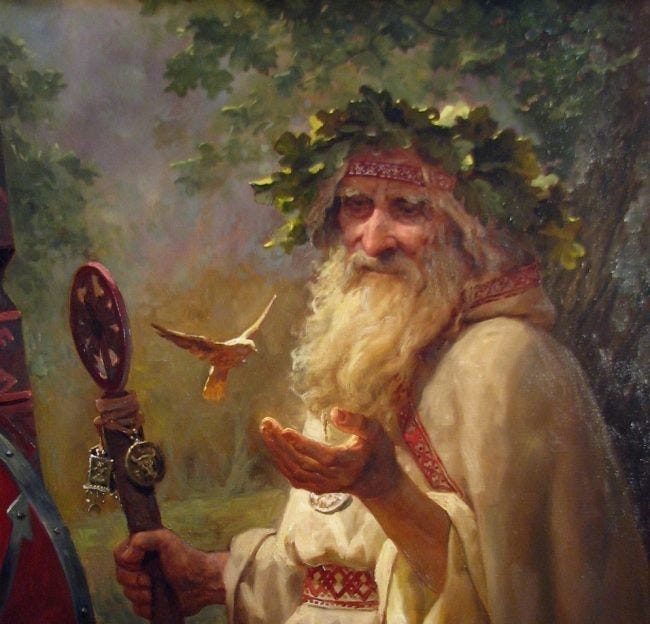
More than two millennia ago, in the year 335 Before the Common Era (BCE), Alexander the Great encountered a group of Celtic warriors with huge golden neck rings and brightly colored cloaks. As the story goes, he asked the so-called barbarians what they feared most in this world, hoping that they would say him. However, to his surprise, the noble knights just laughed at him and said they feared nothing at all. Unbeknownst to him, they understood the truth about reincarnation and this is what gave them such intense courage on the field of battle. That is to say, knowing that they would be reborn to live and fight again, they went to war with no concern of dying. They had learned this esoteric insight from the Druids, who were mystical Iron Age intellectuals that were part of the priestly caste of Celts among the islander Britons and mainlander Gauls, from about 600 BCE to 600 CE, give or take a century or two.
As pagan polytheists, the Celts worshiped many different deities, such as Tamesis the goddess of the River Thames. More importantly, Druids had to oversee every important ceremony in their society. In line with this, unlike other ancient civilizations that celebrated the solstices and equinoxes, the Celts observed the cross-quarter holidays instead. These are known as Imbolc, Beltaine, Lughnasa, and Samhain. They happen on January 31st to February 1st, April 30th to May 1st, July 31st to August 1st, and October 31st to November 1st, respectively. Moreover, this used to occur from sundown to sundown, as part of an eight-day, rather than a seven-day week. In addition to this, the Druids also supervised every religious practice in the Celtic world, including the sacrifices that were given to the gods and goddesses of regional pantheons. Plus, Druids were required to study everything from cosmology to theurgy. Unfortunately, understanding the precise history, philosophy, and theology of the Druids is rather difficult because, although they were highly literate polyglots and proficient polymaths, Druids were strictly forbidden from recording anything.
As part of this, it took a Celtic priest or priestess two decades of apprenticeship in order to master three levels of initiation, from Bard to Ovate to Druid. They progressed from storytellers to soothsayers to spellcasters. So, these were not separate professions as the ancient Greeks and Romans thought. Rather, the role of a Bard was to preserve the living memory of their heritage through native poetic songs. Then, after memorizing that, an Ovate would learn the art of extispicy, the divinatory practice of using anomalies in animal entrails, most often the liver, to predict future events. They also learned to use astrology to forecast the most auspicious days for different kinds of things to occur. After that, a Druid learned to use philosophical riddles, similar to the way koans are used. Finally, they would learn to superintend at sacrifices for more than two hundred different deities. They also learned about the fairies that inhabit the wilderness, as well as the sacredness of certain plants. So, rather than building temples, oak groves served as their sacred sites. Even the proto-Celtic word “druwides” meant “oak-knowers”. In this way, a fully trained Celtic priest or priestess could harness the power of “draiocht”, meaning both “magic” in general and “Druidry” specifically.
In line with this, according to the accounts of some of their Greek and Roman contemporaries, the Druids were religious leaders, legal authorities, lore keepers, medical professionals, political advisors, and more. Julius Caesar even claimed that the Druids burned prisoners alive in immense wicker man burnt offerings of public execution. They also occasionally performed willing human sacrifices, in three-fold ritual killings, that left behind bog bodies as gifts to the gods. That is to say, after the victim’s skull was smashed, their neck was garrotted, and their throat was slashed, then they were kicked face-first into the peat bogs, which were believed to be portals to the underworld. At the same time though, Druids were primarily peacekeeping pacifists who could step between warring tribes in the middle of a battle and call an end to the fighting. No Celtic warrior would have ever harmed a Druid or questioned their authority. Oddly enough, this same respect was even given to mistletoe, which Druids believed to have magical and medicinal properties. This was partly because in the winter when all the trees are bare, mistletoe stays green, as if by a miracle.
More to the point, if two enemies ever met beneath a tree on which mistletoe was growing, they would lay down their weapons, exchange greetings, and observe a truce until the following day. Regardless, in spite of the peacekeeping efforts of the Druids and the benevolent spirits of the mistletoe, the Celts were highly combative, with blood-thirsty chiefs constantly declaring war on each other. The problem was that when the Common Era began, the Celts had spread across Europe from Asia Minor in the east to Spain and the islands of Britain and Ireland in the west. However, they were strictly tribal, not imperial. So, they never formed an empire. As such, the Celts were very easy to conquer, and the Romans took full advantage of that fact. In the process, they massacred countless Druids and their followers, along with the sacred oak groves where they gathered. This long painful demise of classical Druidry first began in the year 43, and by the end of the 1st century, Ireland alone, far out at sea, remained unconquered. There, the ways of the ancient Celts survived untouched by the outside world long after the fall of Rome.
Unfortunately for the natives of the British Isles and western Europe, the Christians soon followed in the wake of the Romans, with devastating consequences for Celtic culture, even in Ireland. In the most famous instance of this, during the 5th century, Saint Patrick became partly responsible for the Christianization of the Picts and Anglo-Saxons. Simply put, the widespread violent conversion of the indigenous people was more or less pervasive throughout the lands. In fact, in the year 573, even the renowned Welsh Druid Merlin was forced to flee into the forest and hide from the militant monotheistic missionaries for the rest of his life. Ultimately, throughout the Middle Ages, the Church did all that it could to put an end to the sorcery of the Druids. Thus, over time, the spirituality and religiosity of France, England, Scotland, Wales, and Ireland were permanently altered by evangelical iconoclasts. Tragically, in the end, as the Christian conversion continued on, by the year 800, the ancient Druids were all dead and gone.
3VIEW ALL PHOTOSRep. Joyce Beatty, D-Ohio, center, listens as Rep. Sheila Jackson Lee, D-Tex., right, chair of the Subcommittee on Crime, Terrorism, and Homeland Security, attends a markup in the House Judiciary Committee of a bill to create a commission to study and address social disparities in the African American community today. Rep. Jackson-Lee is the sponsor of that legislation. (AP Photo/J. Scott Applewhite)
WASHINGTON (AP) – A House panel advanced a decades-long effort to pay reparations to the descendants of slaves by approving legislation Wednesday that would create a commission to study the issue.
It’s the first time the House Judiciary Committee has acted on the legislation. Still, prospects for final passage remain poor in such a closely divided Congress. The vote to advance the measure to the full House passed 25-17 after a lengthy and often passionate debate that stretched late into the night.
The legislation would establish a commission to examine slavery and discrimination in the United States from 1619 to the present. The commission would then recommend ways to educate Americans about its findings and appropriate remedies, including how the government would offer a formal apology and what form of compensation should be awarded.
The bill, commonly referred to as H.R. 40, was first introduced by Rep. John Conyers, D-Mich., in 1989. The 40 refers to the failed government effort to provide 40 acres (16 hectares) of land to newly freed slaves as the Civil War drew to a close.
“This legislation is long overdue,” said Rep. Jerrold Nadler, the Democratic chairman of the committee. “H.R. 40 is intended to begin a national conversation about how to confront the brutal mistreatment of African Americans during chattel slavery, Jim Crow segregation and the enduring structural racism that remains endemic to our society today.”
The momentum supporters have been able to generate for the bill this Congress follows the biggest reckoning on racism in a generation in the wake of George Floyd’s death while in police custody.FILE – In this Nov. 25, 2019 file photo, Alderman Robin Rue Simmons, 5th Ward, proposes a reparations fund during a City Council meeting in Evanston, lll. (Genevieve Bookwalter/Chicago Tribune via AP)
Still, the House bill has no Republicans among its 176 co-sponsors and would need 60 votes in the evenly divided Senate, 50-50, to overcome a filibuster. Republicans on the Judiciary Committee were unanimous in voting against the measure.
Rep. Jim Jordan of Ohio, the ranking Republican on the committee, said the commission’s makeup would lead to a foregone conclusion in support of reparations.
“Spend $20 million for a commission that’s already decided to take money from people who were never involved in the evil of slavery and give it to people who were never subject to the evil of slavery. That’s what Democrats on the Judiciary Committee are doing,” Jordan said.
Supporters said the bill is not about a check, but about developing a structured response to historical and ongoing wrongs.
“I ask my friends on the other side of the aisle, do not ignore the pain, the history and the reasonableness of this commission,” said the bill’s sponsor, Rep. Sheila Jackson Lee, D-Texas.
Other Republicans on the committee also spoke against the bill, including Rep. Burgess Owens, an African American lawmaker from Utah, who said he grew up in the Deep South where “we believe in commanding respect, not digging or asking for it.” The former professional football player noted that in the 1970s, Black men often weren’t allowed to play quarterback or, as he put it, other “thinking positions.”
“Forty years later, we’re now electing a president of the United States, a black man. Vice president of the United States, a black woman. And we say there’s no progress?” Owens said. “Those who say there’s no progress are those who do not want progress.”
But Democrats said the country’s history is replete with government-sponsored actions that have discriminated against African Americans well after slavery ended. Rep. David Cicilline, D-R.I., noted that the Federal Housing Administration at one time refused to insure mortgages in Black neighborhoods while some states prevented Black veterans of World War II from participating in the benefits of the GI Bill.
“This notion of, like, I wasn’t a slave owner. I’ve got nothing to do with it misses the point,” Cicilline said. “It’s about our country’s responsibility, to remedy this wrong and to respond to it in a thoughtful way. And this commission is our opportunity to do that.”
Last month, the Chicago suburb of Evanston, Illinois, became the first U.S. city to make reparations available to its Black residents for past discrimination and the lingering effects of slavery. The money will come from the sale of recreational marijuana and qualifying households would receive $25,000 for home repairs, down payments on property, and interest or late penalties on property in the city.
Other communities and organizations considering reparations range from the state of California to cities like Amherst, Massachusetts; Providence, Rhode Island; Asheville, North Carolina; and Iowa City, Iowa; religious denominations like the Episcopal Church; and prominent colleges like Georgetown University in Washington.FILE – In this Friday, Aug. 28, 2020, file photo, Yolanda Renee King, granddaughter of the Rev. Martin Luther King Jr., raises her fist as she speaks during the March on Washington, on the 57th anniversary of the Rev. Martin Luther King Jr.’s “I Have A Dream” speech.(Jonathan Ernst/Pool via AP, File)
Polling has found long-standing resistance in the U.S. to reparations to descendants of slaves, divided along racial lines. Only 29% of Americans voiced support for paying cash reparations, according to an Associated Press-NORC Center for Public Affairs Research poll taken in the fall of 2019. Most Black Americans favored reparations, 74%, compared with 15% of white Americans.
President Joe Biden captured the Democratic presidential nomination and ultimately the White House with the strong support of Black voters. The White House has said he supports the idea of studying reparations for the descendants of slaves. But it’s unclear how aggressively he would push for passage of the bill amid other pressing priorities.
Members of the Congressional Black Caucus brought up the bill during a meeting with Biden at the White House on Tuesday.
“We’re very comfortable with where President Biden is on H.R. 40,” Jackson Lee told reporters after the meeting.
The story of one man’s search for an uncharted, legendary island to which all navigators are said to go on the eve of their deaths. A tale of high adventure, ancient mystery and modern men and women rediscovering love, comradeship and tribal life, in the face of primal terrors.
The small man Builds cages for everyone He Knows. While the sage, Who has to duck his head When the moon is low, Keeps dropping keys all night long For the Beautiful Rowdy Prisoners.
David Haskell enters the intricate and generative soundscape of the world of birds, inviting us to join in a practice of cross-species listening as a bridge to kinship.
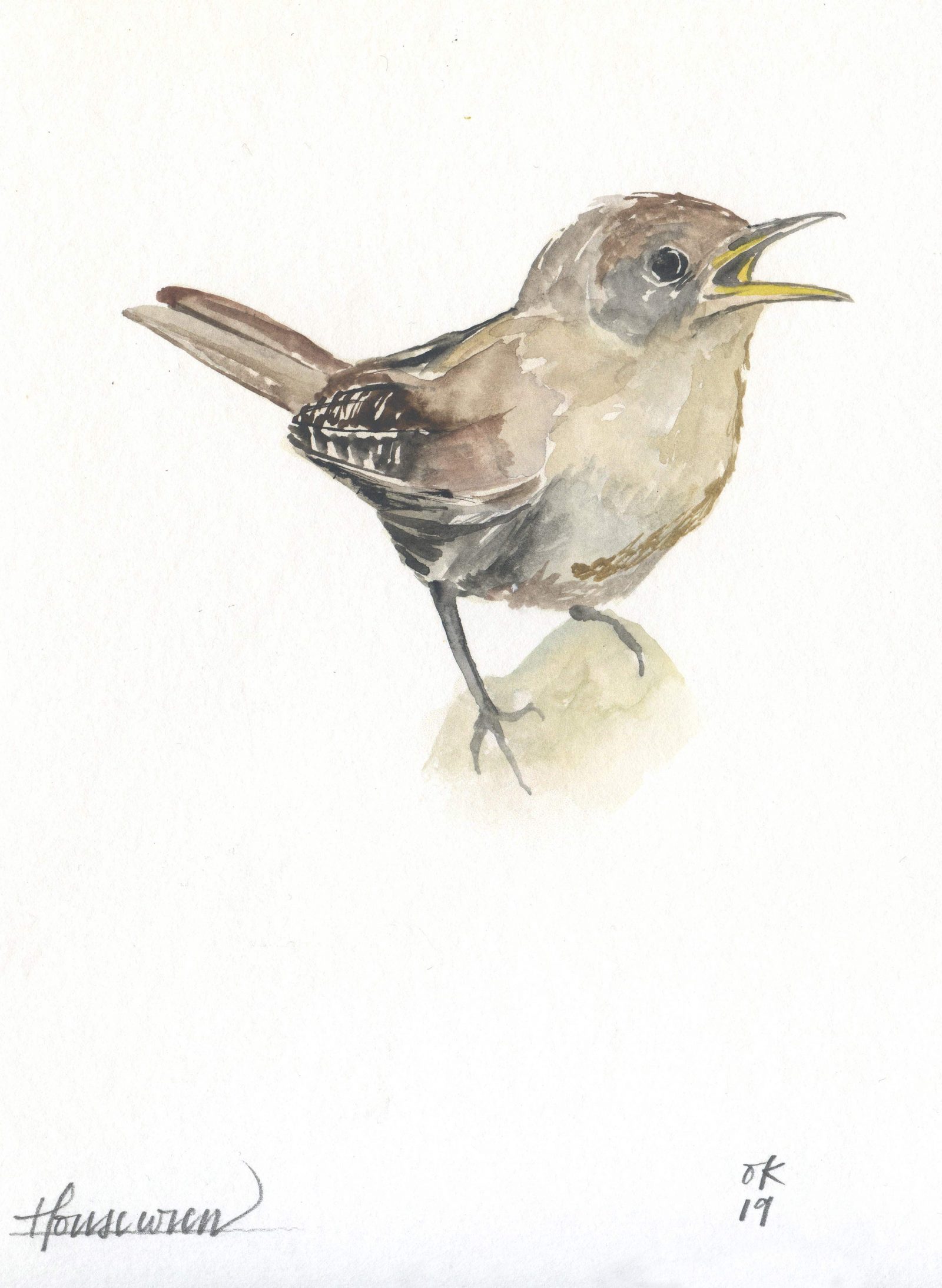
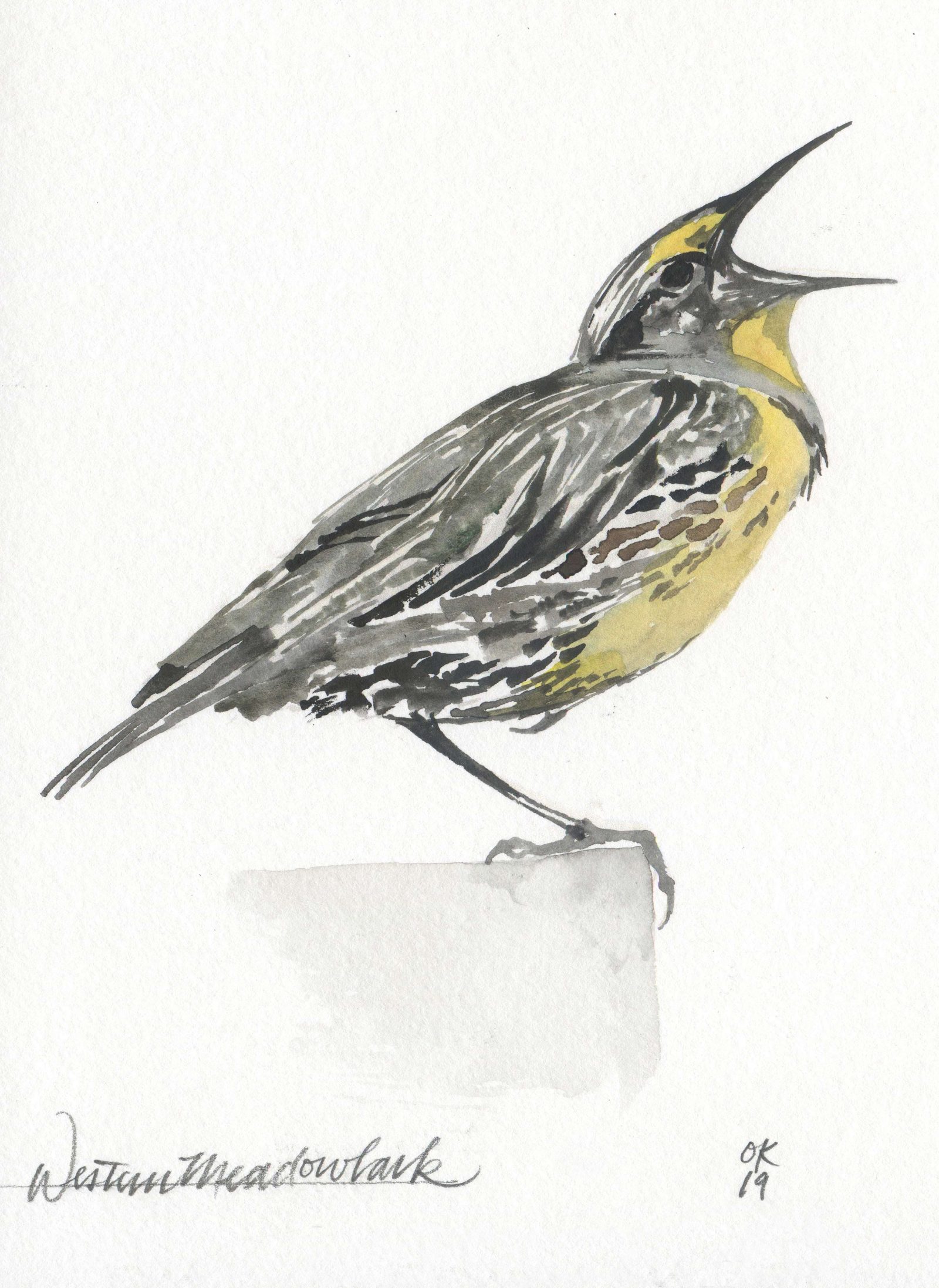
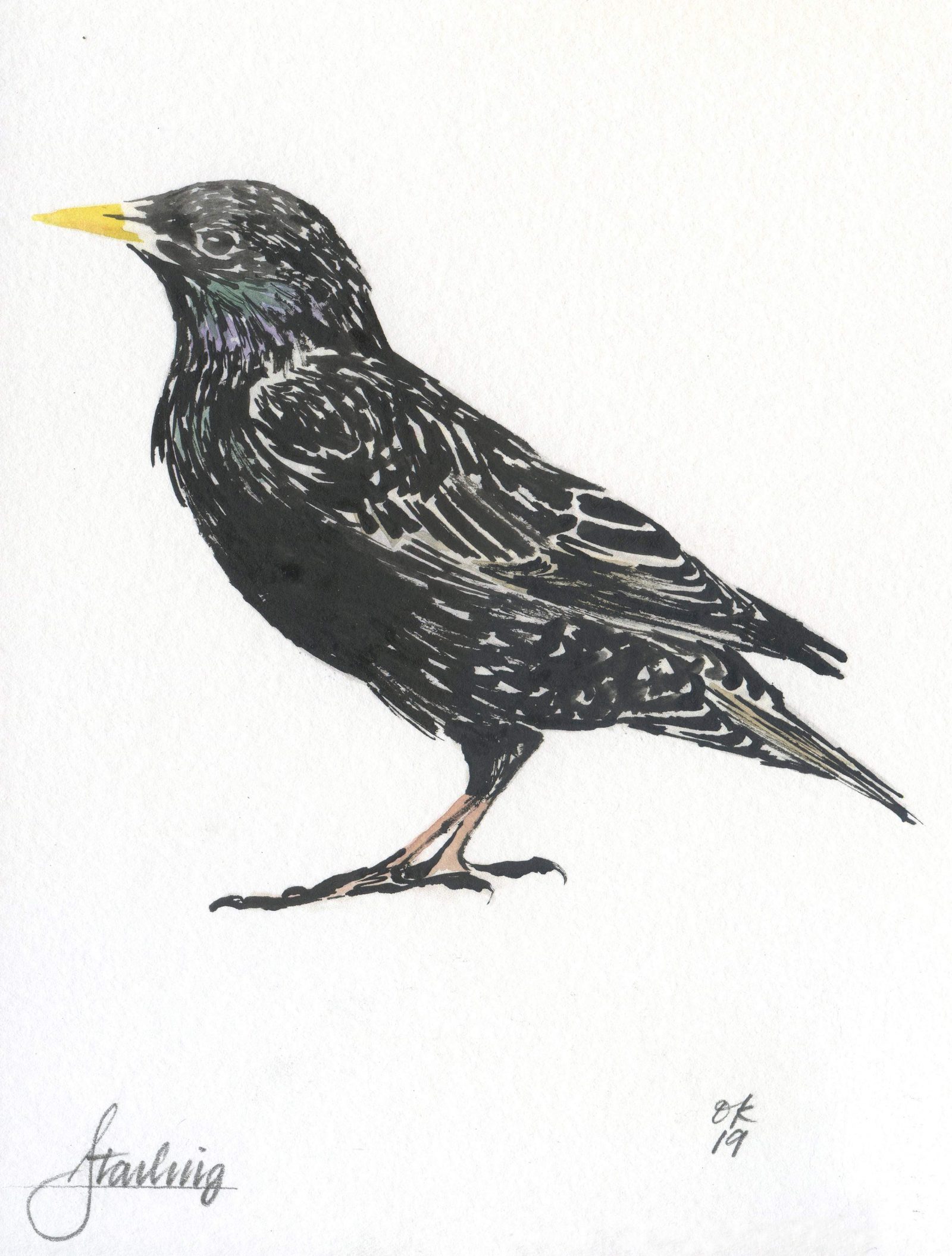
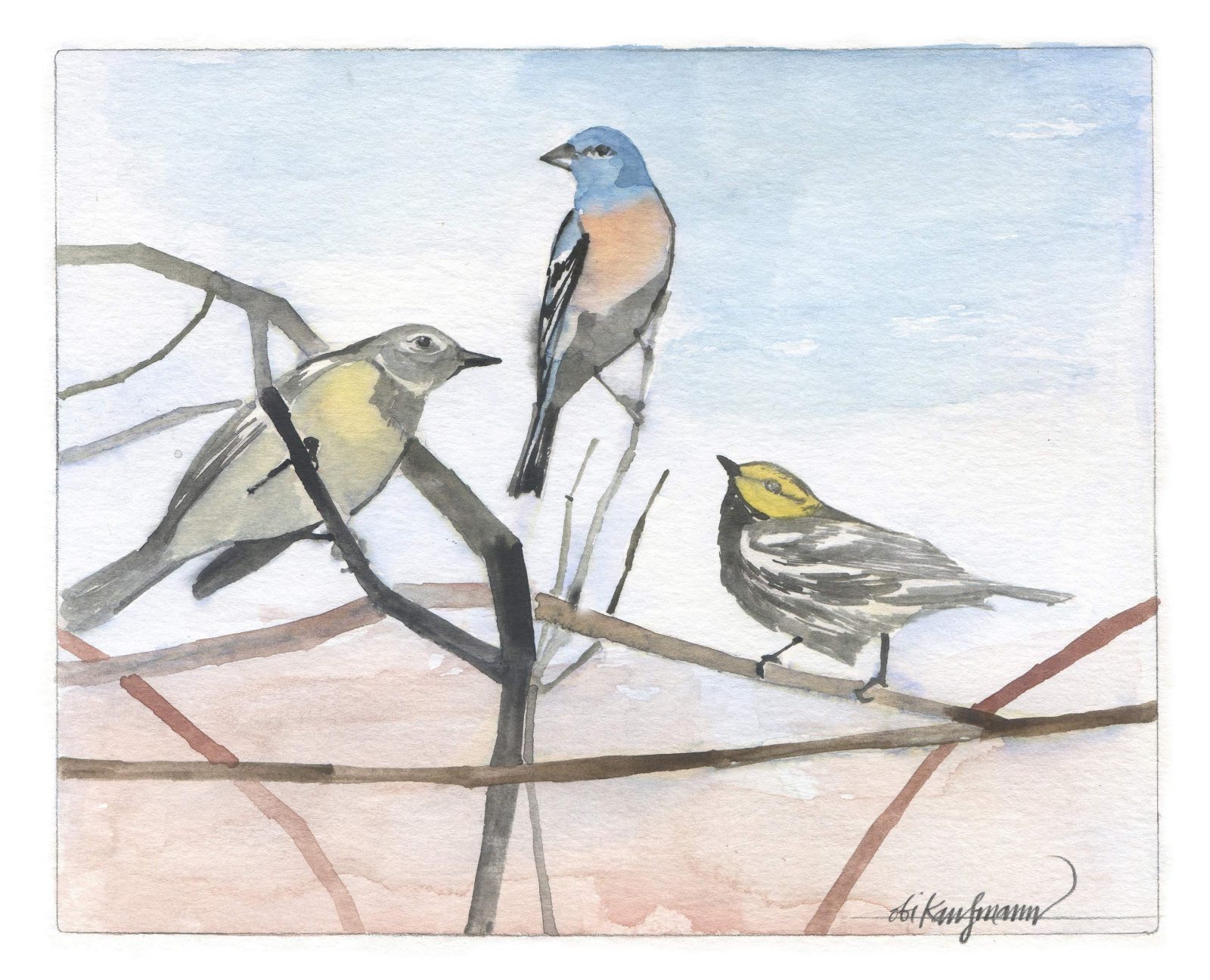
Illustrations by Obi Kaufmann
Listen to this StoryNarrated by David HaskellCONTRIBUTOR BIOS
FOR MILLENNIA, the language of birds has called us to cross divides. In the Qur’an, Solomon received a bounty and blessing when he was given the language of birds. Job exhorts us to hear the wisdom of the fowls of the air. News of the human world was carried into the divine ear by the speech of Norse Odin’s ravens and the bluebirds of the Taoist Queen of the West. In the voices of birds, we hear augury, portent, prophesy. We are drawn across boundaries into other places, other times.
Listen: an invitation. But it is hard to discern what is meant in this speech of our winged cousins. Birds inhabit flesh profoundly different from our own. Our inattention further muffles their language. We wall them out with bricks that keep us indoors, inside self-made worlds, and with presuppositions, closely guarded vaults of the mind. We’ve made ourselves a lonely place, so quiet.
Let in the sound.
Song spills from open beaks, flowing from the birds’ chests. There, at the confluence of windpipes, sitting directly over the heart, sits a sound-making organ of unique and marvelous design. This syrinx is only the size of a lentil or bean. Into this tiny space are interwoven a dozen rings of bone and two dozen muscles, all connected to membranes and lips of soft flesh. The muscles are among the fastest known, capable of contracting up to 200 times per second. As the exhale flows through, the syrinx’s lips squeeze and membranes tremble, imparting song to air. This sound is sculpted by precise tugs and tweaks from muscle and bone, on a timescale of milliseconds. Birds are quick-fingered jewelers of air, crafting dozens of ornamented gems every second. In their modulations of pitch, amplitude, and timbre we hear the vitality of their blood, muscle, and nerve.
But we do not hear as they do. For at least 300 million years, mammals and birds have been on separate evolutionary paths. Our common ancestors, amphibian-like creatures of swampy Paleozoic forests, had ears adapted to water. Their descendants, birds and mammals, each independently evolved ears adapted to air. Bird and mammal hearing, then, is grounded in two different architectures, more linear and direct in birds, segmented and coiled in mammals.
Bird and mammal brains also took divergent evolutionary tracks. Neurons are crammed into bird crania, giving their small brains as many nerve cells as much larger primates. The folds and layers of the forebrain have different geometries, hierarchically layered in mammals and clustered into nodes in birds. Avian brains and bodies also run several degrees warmer than mammals, stoking chemical reactions and thus speeding nerves.
All this manifests in different perceptions of sound. Birds are sensitive to rapid sonic changes and are tightly focused on the mid-registers. They attend not so much to relative pitches, but to the overall shape of the sound, the nuances among layers of sound frequencies. Or so it seems from the small number of studies that have sought to understand hearing from the birds’ perspective.
Here are parallel worlds of experience. The same sound vibration is received and understood in profoundly different ways by birds and mammals.
As we listen and seek to connect, we should remember and honor this difference. At the same time, let us not allow otherness to bar the door to kinship, curiosity, and imagination. There is a bridge. That bridge is made from the gift of our attention. Sometimes attention is focused into science, but mostly it is an opening to the languages of birds in the everyday.
What do we hear in the bird voices of our homes? Every species has a sonic signature, and individuals within species have their own unique voices. In this diversity of acoustic expression are embedded many meanings.
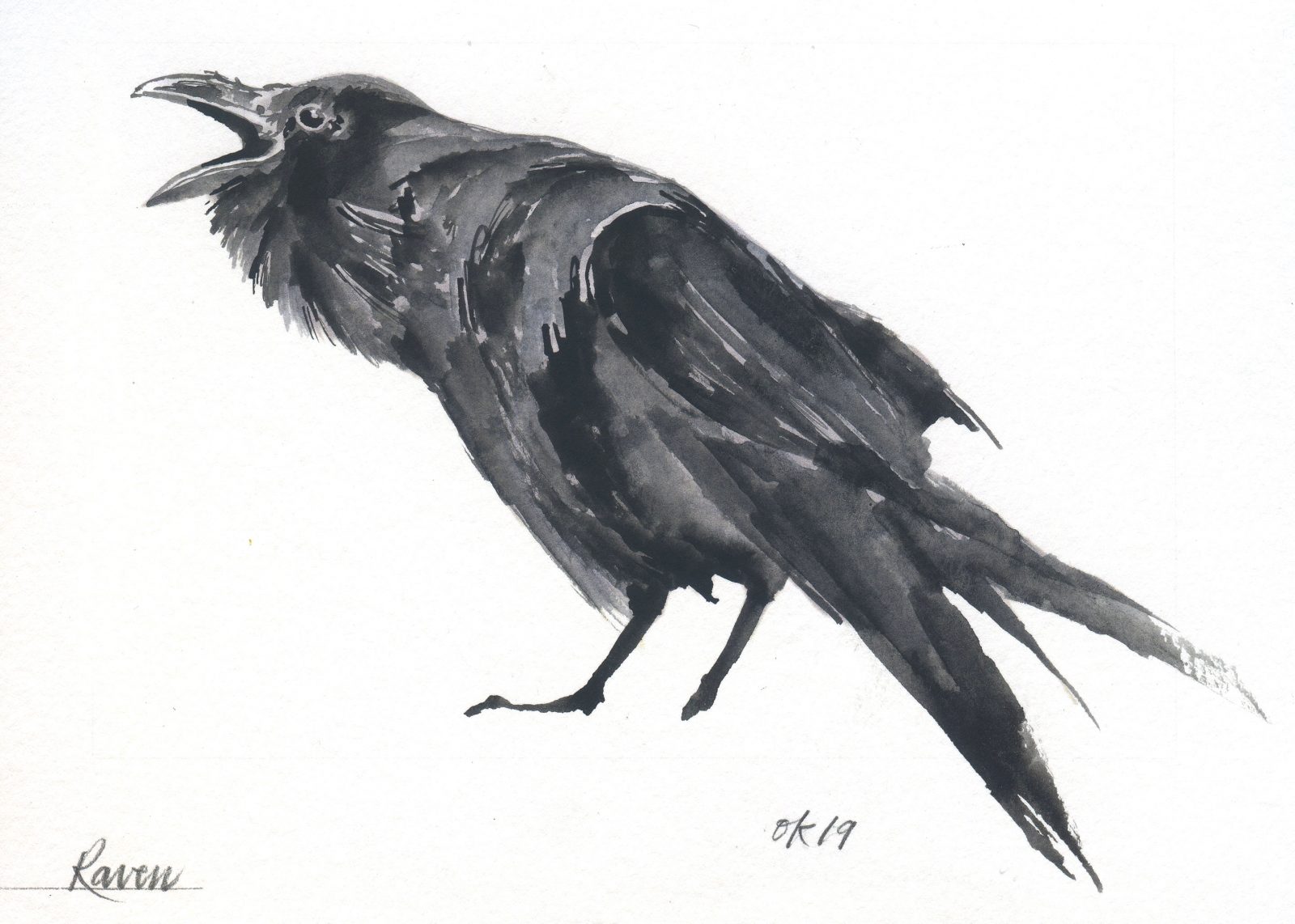
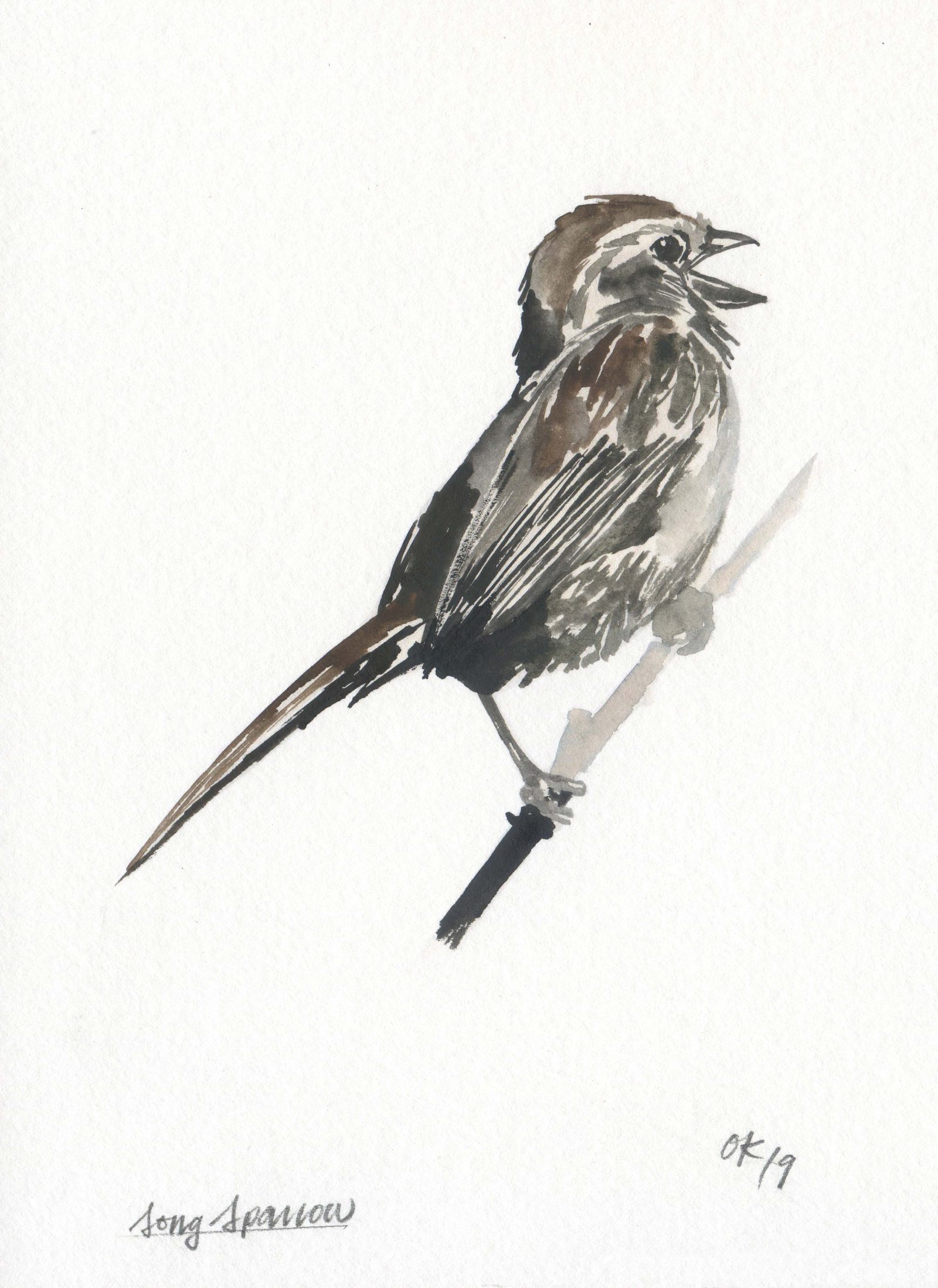
First, the particularities of species, each with its own cadence and tempo. House wren. Bald eagle. Song sparrow. Raven. By noticing and naming, we take the first step into friendship and understanding, crossing the gulf between species. Sound is a particularly powerful connector because it travels through and around barriers, finding us and calling us out of inattention. We walk across town and notice our avian cousins. Kinship and community are no longer just ideas, but are lived, sensual relationships.
Bird sounds reveal the polyrhythms of a living Earth.
Part of the language of birds, then, are the many meanings and messages that we hear in the community of avian voices. The rhythms of the year are scribed in air by ever-changing sounds. Arrivals and departures during migration: songbirds from the tropics, snow geese from the tundra, cranes from inland wetlands. In early summer, nestlings clamor at their parents. Chittering swallows signal their discovery of a hatch of river mayflies. From the winter underbrush, sparrows give quiet calls. Every species has its own tempo of sound-making through the year, tuned to the particularities of food plants and insects, refined by local weather. In these sounds we learn that there are not just four seasons, but dozens or hundreds. Bird sounds reveal the polyrhythms of a living Earth.
This language of bird species also discloses the physical diversity of the world. A gull’s call slices through the turbulent winds of the ocean shore. In a mossy forest, the ruffed grouse looses deep territorial calls that flow unimpeded by the dense vegetation. High in the mountains, bushtits call to one another with notes that cut through the whoosh of wind in spruce trees. On the open prairies, meadowlarks throw their lance-like song over the thick grasses. Every sound has its home.
Into these homes comes the fossiliferous racket of industrialized humanity. We spread low-frequency rumbles and throbs over the world. Birds closest to the engine-borne mire must sing louder, higher, or they are driven out. A few, European starlings and house sparrows especially, exult in this new world, finding opportunities for sonic and ecological exploration and improvisation.
In attending to the sounds of bird species, our senses learn the language of belonging. Over time, this embodied knowledge of place tells us what is changing, what is gained, and what is lost.
In coming years, our children, students, and friends will need our stories. In our listening to birds, we might gain something worth telling the future, tales whose meanings are now unforeseen: That ravens fell silent in the late summer heat, sandhill cranes passed in March but did not linger, orioles and flycatchers wove their summer songs into the tops of cottonwood trees, and warblers departed suburban fir boughs in December. These will be stories of continuity, of extinction, of blossoming, of changed tempo and texture. Coming generations depend on us to convey these living memories. We start in the present, by listening.
Within the stories told by the sounds of bird species are further riches. Every individual bird has its own acoustic signature. Listen and meet your locals. Some species reward our attention by quickly revealing sonic individuality. Over much of North America, the song sparrow is one such teacher. Every singing male has his own repertoire and style. Listen for a few minutes and the distinctiveness of their voices leaps into our consciousness.
The individuality of the voices of other species are harder for us to discern. Every flycatcher’s sneezy song seems the same to our untrained ears, but the birds know one another’s voices. Ravens, on the other hand, express themselves with such complexity that we’re overwhelmed. We’re tuned to the melodies of human music, and struggle with the multifarious shapes of raven croak and click and whistle. Unlike the song sparrow that sings in our human neighborhood day after day, schooling us with their whistled melodies, ravens range over huge territories, giving us only fleeting access to the internal dynamics of their speech.
Attentive bird-listeners hear the edges of meaning.
With some attention and perhaps the help of a recording device, we can hear the individuality of birds around our homes. But understanding the meanings embedded in these sounds is harder. In the human realm, I can learn the singular voices of people speaking in a foreign tongue, but I’ll completely fail to understand what they say and mean. How much more difficult is the task with creatures separated from us by hundreds of millions of years of evolution.
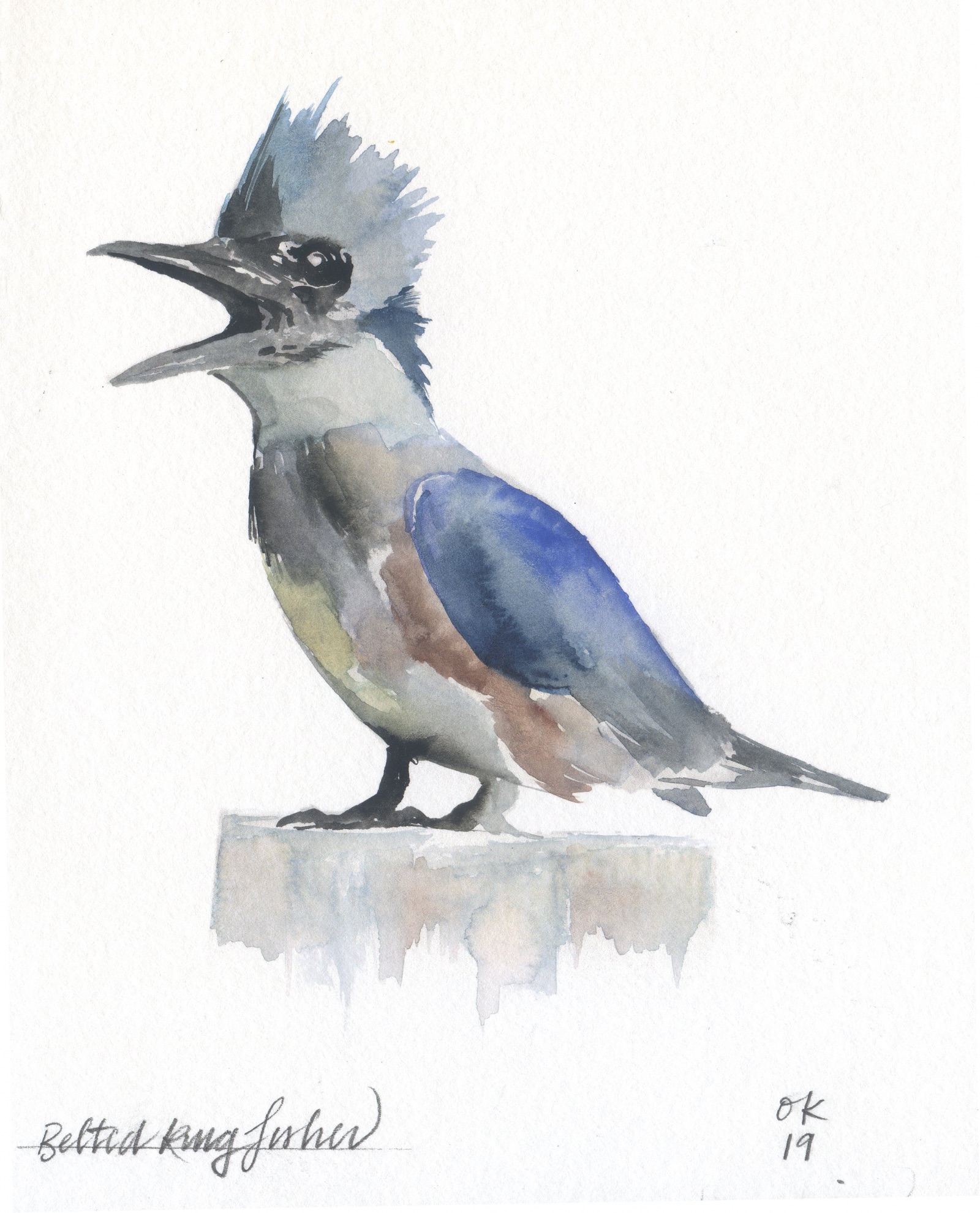
Yet, attentive bird-listeners hear the edges of meaning. Individuality in bird sounds is not random or accidental; it reveals the personality of each bird. In the society of chickadees, some birds have open and exploratory personalities, others are more careful and precise. The rattle of kingfishers and the wood thrushes’ evening song take on new inflections when birds court and pair. At the nest, we hear information flowing in a stream of sound between mated birds. No two phoebe nestlings beg for food in the same way. When sparrow youngsters babble and practice their songs, they explore acoustic spaces in ways that parallel human speech: improvisational, repetitive, refined by listening to elders. In the trees at dusk, crows warble softly to themselves as they preen. A raven’s call is filled with mocking irony as the bird mimics for its companions the call of a sandhill crane. Parrots laugh, causing those around them to frolic and play. As robins gather on a lawn, a blue jay screams a red-shouldered hawk call, a deception that the bird repeats with great gusto when humans walk under its tree. These are not the dead clankings of machines, nor are they the mere utilitarian grunts of feeding or social tokens of sexual union. These sounds are intricate, layered, responsive, generative, and humorous.
Laboratory studies reveal that bird utterances are imbued with understanding, full of representation, organized by rules, powered by creativity, and shaped by culture and context. Bird sound-making has internal grammatical rules. Their brains learn and innovate. Birds hear and remember nuances of sound, connecting abstract acoustic patterns to the physicality of their ecological and social worlds. They listen to the voices of other species and understand what is meant. Social interaction with kin and neighbors molds the shape of individual sounds and the organization of these parts into a whole.
These scientific studies, valuable as they are in expanding our understanding, have queried bird language in only a handful of species, often with the goal of testing whether specific rules of human grammar also manifest in birds. Thus far, science alone is insufficient to the task of hearing birds. A few dozen experiments conducted by a handful of researchers will not open the ears of the human species to the voices of our cousins. Language-learning is for everyone.
When we understand the meanings of a sound made by a bird, nerves in two different brains touch and signal. The link between nerve cells is made from vibrating air, a connection as strong and real as the chemical links among nerves in a single brain. Bird sounds, then, are sonic neurotransmitters that leap across species boundaries.
When we understand the meanings of a sound made by a bird, nerves in two different brains touch and signal.
This leap is creative. When bird and human minds connect, a new language is born. This expansive language weaves many species into a communicative whole, a web of listening and speech. Language-learning is indeed for everyone. It unites us. And so we return to the invitation offered to us by the birds around our homes. In their voices we hear the many rhythms of the seasons and the varied physicality of habitats. We learn the individual stories of each bird. We understand how our community is changing and what we should remember from this present moment. We hear and create Earth’s universal grammar.
Let’s answer the birds’ invitation, stepping outside to give them the simple gift of our attention. Listen. Wonder. Belong.
This recording includes a selection of sounds recorded by Gordon Hempton. For more information about Gordon Hempton and his library of sound recordings please visit www.soundtracker.com.
The vast majority of our mental, emotional, and spiritual suffering comes from the violent collision between our expectations and reality. As we dust ourselves off amid the rubble, bruised and indignant, we further pain ourselves with the exertion of staggering emotional energy on outrage at how reality dared defy what we demanded of it.
The remedy, of course, is not to bend the reality of an impartial universe to our will. The remedy is to calibrate our expectations — a remedy that might feel far too pragmatic to be within reach in the heat of the collision-moment, but also one with profound poetic undertones once put into practice.
Walt Whitman understood this when, felled by a paralytic stroke, he considered what makes life worth living and instructed himself: “Tone your wants and tastes low down enough, and make much of negatives, and of mere daylight and the skies.” He spared himself the additional self-inflicted suffering of outrage at how his body failed him — perhaps because, having proclaimed himself the poet of the Body and the poet of the Soul, he understood the two to be one. He squandered no emotional energy on the expectation that his suddenly disabled body perform a counterpossible feat against reality to let him enjoy his beloved tree workouts and daily excursions to the river. He simply edited his expectations to accord with his new reality and sought to find his joy there, within these new parameters of being.
What is true of the poetics of our own body-soul is as true of the poetics of relationship, that beautiful and terrifying interchange between separate body-souls. Little syphons the joy of life more surely than the wasted energy of indignation at how others have failed to behave in accordance with what we expected of them.
Two millennia before the outrage culture of the Internet, the lovesick queer teenager turned Roman emperor and Stoic philosopher Marcus Aurelius (April 26, 121–March 17, 180) addressed this curious self-mauling tendency of the human mind with his characteristic precision of insight and unsentimental problem-solving in the notebooks that became his Meditations (public library) — a timeless book, newly translated and annotated by the British classics scholar Robin Waterfield, which Marcus Aurelius wrote largely for and to himself, like Tolstoy wrote his Calendar of Wisdom and Bruce Lee calibrated his core values, yet a book that went on to stake the pillars of the philosophical system of Stoicism, equipping countless generations with tools for navigating the elemental existential challenges of being human and inspiring others to fill the gaps of its unaddressed questions with exquisite answers of their own.
Marcus Aurelius
Epochs before the birth of probability theory, Marcus Aurelius begins with a probabilistic-statistical consolation:
Whenever a person’s lack of shame offends you, you should immediately ask yourself, “So is it possible for there to be no shameless people in the world?” It isn’t, and you should therefore stop demanding the impossible. He’s just one of those shameless people who must necessarily exist in the world. You should keep the same thought readily available for when you’re faced with devious and untrustworthy people, and people who are flawed in any way. As soon as you remind yourself that it’s impossible for such people not to exist, you’ll be kinder to each and every one of them. It’s also helpful immediately to consider what virtue nature has granted us human beings to deal with any given offense — gentleness, for instance, to counter discourteous people…
From this follows a curious, infuriating fundament of our humanity: that no matter what another person does — to us or at us or near the self-membraned bubble of our being — our inner response to it lives in the realm of feeling, that sovereign source of light over which we alone have agency and dominion. Even more infuriatingly, Marcus Aurelius reminds us, our outrage at some entirely predictable misbehavior by a person known to misbehave is a failure not of the other but of our own powers of reason:
You’ll find that none of the people who make you lose your temper has done anything that might affect your mind for the worse; and outside of the mind there’s nothing that is truly detrimental or harmful for you… After all, you even had the resources, in the form of your ability to think rationally, to appreciate that he was likely to commit that fault, yet you forgot it and are now surprised that he did exactly that.
Observing that to explode with rage at the offender would make no positive difference to their conduct and would only further perturb your own soul, he instead offers a two-step process for dealing with the situation, telescoping into the broad existential perspective and then microscoping into your own innermost values:
First, don’t be upset. Nothing happens that isn’t in accord with universal nature, and before long you won’t exist at all, just like [your heroes]… Second, fix your gaze on the matter at hand and see it for what it is, and then, keeping in your mind your obligation to be a good man and the demands of your humanity, go right ahead and do it, in the way that seems to you to be most just. But do it with kindness and modesty, and without dissembling.
This is but one manifestation of the central preoccupation of the Meditations — the lifelong project of learning to see clearly as the greatest self-defense against mental anguish. So much of our disappointment and rage, after all, stem from the clash between our misperceptions of things and the reality of things — they are the pain of disillusionment, inflamed in those moments when the veil of illusion is lifted or violently pierced to let us, finally, see reality.
Reaching across space and time, across cultures and civilizations, Marcus Aurelius prescribes the antidote:
Always define or describe to yourself every impression that occurs to your mind, so that you can clearly see what the thing is like in its entirety, stripped to its essence, and tell yourself its proper name and the names of the elements of which it consists and into which it will be resolved. Nothing is more conducive to objectivity than the ability methodically and honestly to test everything that you come across in life, and always to look at things in such a way that you consider what kind of part each of them plays in what kind of universe, and what value it has for the universe as a whole.
Clarity of vision, he reminds us, is the basis of rightful action, and while our own rightful action may not be a guarantee of our contentment — or what the Romans shorthanded as “the good life” — it is our only assurance toward it:
If you carry out every present task by following right reason assiduously, resolutely, and with kindness; if rather than getting distracted by irrelevancies, you keep your guardian spirit unspoiled and steady, as though you had to surrender it at any moment; if you engage with the task not with expectations or evasions, but satisfied if your current performance is in accord with nature and if what you say and express is spoken with true Roman honesty, you’ll be living the good life. And there’s no one who can stop you doing so!
Complement with Seneca, another apostle of Stoicism, on the antidote to anxiety and Marcus Aurelius himself, in a different translation of his Meditations, on the key to living with presence, the most potent motivation for work, and how to begin each day, then revisit Ursula K. Le Guin’s magnificent more-than-translation of another ancient classic from the wisdom tradition of a different civilization, the Tao Te Ching. (One thing that has always troubled me about modern translations of ancient classics is that they present an opportunity to calibrate the inclusiveness of these teachings to our present hard-earned sphere of dignity without changing their message — an opportunity very few translators take, for it requires a formidably delicate balance between the rigors of scholarship and the responsibilities of a social conscience. Count on Le Guin, whose meditation on being “a man” remains the finest thing I have ever read on the history of gender in language, to leap at that opportunity and make something soaring.)
Consciousness is going to have this thing going on all the time of the exhilaration and the terror of going literally into the unknown where literally you don’t have concepts. All of your current concepts are inadequate.
–Donald Hoffman
Tom Bilyeu This episode is sponsored by Skillshare. The first 1000 people to use this link will get a free trial of Skillshare Premium Membership: https://skl.sh/tombilyeu03211 Come back this Saturday (4/3) for a special video covering the very best of how to improve your longevity! Imagine waking up from a simulated reality where everything you know is interpreted and never truly experienced. Is it possible the reality you’ve known for the last few decades is no reality at all? In this episode, Donald Hoffman returns and takes a deeper dive with Tom to discuss the complexities of consciousness perceived in and out of spacetime. Donald shares the possibilities of consciousness and the infinite nature of theories that exist outside of the virtual reality headset he uses to describe the version of reality you may still be experiencing. Take the plunge into this conversation and challenge the consciousness of what you call your true self. Order Donald’s latest book, ‘The Case Against Reality’: https://www.amazon.com/Case-Against-R… SHOW NOTES: Consciousness | The theory of reality beyond the physical space and time [1:24] Spacetime | Donald relates Grand Theft Auto to understanding reality beyond space time [7:48] Testing Reality | Testable predictions of reality outside of space time and the fundamental nature of consciousness [10:40] Conscious Agents | Donald introduces conscious agents using the Twitter model [16:00] Conscious Illusion | How consciousness is not bound to the laws of physics and is created as needed in a simulation [22:00] Evolution | Why evolutionary theory only exists in space and time within the VR experience [26:34] The Unknown | The dark side of letting go to explore unknown concepts [33:40] Spacetime Simulator | Donald takes us through how consciousness is explored [37:33] Predicted Consciousness | Enjoying experience and predicting the realm of consciousness [49:57] Girdles Down | The Girdles theorem and why everything can not theoretically be known [54:46] A.I. Consciousness | How reductionism makes it possible to give rise to consciousness [1:03:54] Created Consciousness | Donald explains the creation of consciousness from portals [1:10:29] God Hypothesis | Donald’s hypothesis of science of God as agent of consciousness [1:15:05] Asymptotic behavior | Long term behaviors from far away that use spacetime theory [1:26:07] Alien Intelligence | Donald discusses alien intelligence and being in a simulator [1:31:22] Living vs NonLiving | Being unplugged from VR game and notion of self [1:33:53] Meditation | Donald shares how meditating to let go and have complete silence transforms his thoughts [1:46:20] QUOTES: “ Science has not yet been studying objective reality outside of our space time virtual reality, that from an evolutionary point of view, was just evolved as a way for us to play the game of life, and stay alive long enough to reproduce, not to show us the truth.” [8:06] “That’s what spacetime is. Spacetime, the sun and the moon, physical objects, everything that we see inside of space and time is just our visualization tool. The reality we’re interacting with is nothing like the visualization tool. There’s nothing like space and time. It’s a whole network of interacting conscious agents outside of space time, a vast social network. And we’ve made the rookie mistake of assuming that our headset, VR, our visualization tool, is the final reality.” [17:55] “no matter how much consciousness explores its possibilities, it could never come to the end of its own possibilities. And so it’s in a never ending self exploration.” [31:22] “And right now we’re sort of stuck on this little headset, three dimensions, small amount of color that we can see and so forth. Just, we thought it was the whole world. No, it’s just it’s a little headset.” [33:08] “So the reason I’m doing this is because I can’t even imagine a specific color that I’ve never seen before, I can’t imagine in four dimensions. In other words, I take it as a given that I’m deeply, deeply limited in my imagination. And I need all the tools I can get to help me step outside of my headset and try to guess, the unfathomable outside of there.” [52:47] “There seems to be reward for absolute silence, no concept whatsoever, and out absolute precision on the other hand. And there’s no reward for sloppy thinking in the middle.” [1:51:57] “don’t hold on to anything dogmatically right as that’s the sort of the point explore and then be the first to kill off the things that you know really don’t make sense don’t don’t hold on to them so it’s an anti dogmatic point of view” [1:54:37] FOLLOW (NAME): Website:http://www.cogsci.uci.edu/~ddhoff/ Email: ddhoff@uci.edu Twitter: https://twitter.com/donalddhoffman?re… Instagram: https://www.instagram.com/donalddhoff…
Russell Brand Documentary filmmaker Deeyah Khan is determined to confront hate and prejudice by meeting some of the most extremist groups in the world. She has sat down with White Supremicists in the US and interviewed former Jihadists to further understand what drives people to join these groups. Her film “White Right: Meeting The Enemy” won an Emmy and is available on Netflix. We discuss the role politics, class, feminism and everything in between plays in relation to this issue. Listen to all the latest episodes of my Under The Skin podcast only on Luminary – sign up for free here: http://luminary.link/russell Check out more Under The Skin videos here: https://www.youtube.com/playlist?list… Subscribe to my channel here: http://tinyurl.com/opragcg (make sure to hit the BELL icon to be notified of new videos!) Listen to my Under The Skin podcast here: http://luminary.link/russell Get my book “Recovery” here: https://amzn.to/2R7c810 Get my book “Mentors” here (and as an audiobook!): https://amzn.to/2t0Zu9U Instagram: http://instagram.com/russellbrand/ Twitter: http://twitter.com/rustyrockets Produced by Jenny May Finn (Instagram: @jennymayfinn)
Consciousness, sexuality, androgyny, futurism, space, the arts, science, astrology, democracy, humor, books, movies and more



 FILE – In this Nov. 25, 2019 file photo, Alderman Robin Rue Simmons, 5th Ward, proposes a reparations fund during a City Council meeting in Evanston, lll. (Genevieve Bookwalter/Chicago Tribune via AP)
 FILE – In this Friday, Aug. 28, 2020, file photo, Yolanda Renee King, granddaughter of the Rev. Martin Luther King Jr., raises her fist as she speaks during the March on Washington, on the 57th anniversary of the Rev. Martin Luther King Jr.’s “I Have A Dream” speech.(Jonathan Ernst/Pool via AP, File)



 Whenever a person’s lack of shame offends you, you should immediately ask yourself, “So is it possible for there to be no shameless people in the world?” It isn’t, and you should therefore stop demanding the impossible. He’s just one of those shameless people who must necessarily exist in the world. You should keep the same thought readily available for when you’re faced with devious and untrustworthy people, and people who are flawed in any way. As soon as you remind yourself that it’s impossible for such people not to exist, you’ll be kinder to each and every one of them. It’s also helpful immediately to consider what virtue nature has granted us human beings to deal with any given offense — gentleness, for instance, to counter discourteous people…
