The Screwtape Letters by C.S. Lewis is a classic masterpiece of religious satire that entertains readers with its sly and ironic portrayal of human life and foibles from the vantage point of Screwtape, a highly placed assistant to “Our Father Below.” At once wildly comic, deadly serious, and strikingly original, C.S. Lewis’s The Screwtape Letters is the most engaging account of temptation—and triumph over it—ever written.
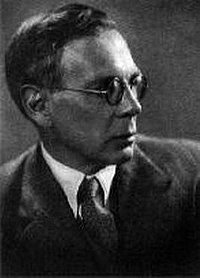
Charles Walter Stansby Williams (September 20, 1886 – May 15, 1945) was a British poet, novelist, playwright, theologian, literary critic, and member of the Inklings, an informal literary discussion group associated with C. S. Lewis and J. R. R. Tolkien at the University of Oxford. Wikipedia
IN January 1940, Charles Williams gave a lecture in Oxford on John Milton. In a previous edition of our Charles Williams Quarterly, Monsignor Graham Leonard wrote:
‘The lecture, [Lewis] said, was “nominally on Comus but really on Chastity. Simply as criticism it was superb because here was a man who really started from the same point of view as Milton and really cared with every fibre fo his being about the sage and serious doctrine of virginity which would never occur to the ordinary modern critic to take seriously,” and added, “I have at last, if only for once, seen a university doing what it was founded to do: teaching wisdom.” In the same year the lecture was printed as the introduction to a new edition of the English Poems of Milton published by the Oxford University Press.’
Here below is the text of that introduction.
INTRODUCTION
WE have been fortunate enough to live at a time when the reputation of John Milton has been seriously attacked. The result of this attack, which has come from various sources otherwise not noticeably sympathetic with each other, has been to distract the orthodox defenders of Milton, and to compel the reconsideration everywhere of his power as a poet. This reconsideration of poetic glory has now reached everyone but Shakespeare—and, it seems, the metaphysicals and W. B. Yeats. All these, it is true, are united by one general tendency—the tendency to suggest, by one means or another, ‘the feeling intellect’ of which Wordsworth spoke. It has been because of his supposed lack of that intellect that Milton has been chiefly repudiated. He has been supposed to be a heavy and, if resounding, yet, one might say, a comatose poet. He has been called, personally, a bad man. Mr. Middleton Murry has said so in so many words: ‘On the moral and spiritual side I fmd it easy enough to place him; he is, simply, a bad man of a very particular kind.’ But Mr. Murry went on to profess himself puzzled: ‘The difficulty is… that a poet so evidently great in some valid sense of the word, should have so little intimate meaning for us. We cannot make him real. He does not, either in his great effects or his little ones, trouble our depths.’ [1]
The success of such an attack—I do not suggest that that particular demonstration was confined to Mr. Murry; I quote him because those sentences form a convenient and compact epigram of the Opposition—lay chiefly in two things: (i) the lack of power in the orthodox party; (ii) the chance that Mr. Eliot had, about the same time, defined certain weaknesses in Milton. The orthodox Chairs of Literature, it must be admitted, had for long professed the traditional view of an august, solemn, proud, and on the whole) unintelligent and uninteresting Milton. Professor Oliver Elton had already committed himself to the hint that Milton’s subject could not concern us. ‘What is made of the central myth? Does it in Milton’s hands embody some enduring truth that speaks to the imagination? I doubt it. [2] The great academic teachers confined themselves to analyses of his diction and his rhythm. Remote from us (they, in fact, declared) was his pre-erupted Eden; the pride of his Satan was his own pride, and be approved it. They argued over his Arianism or his Calvinism. They confined his instrument to the organ. They denied him cheerfulness and laughter (he who, it is said, used to sing while he had the gout!). They gloomed over him, as (they supposed) he, in his arrogant self-respect, gloomed over the world.
In the midst of this monotonous and uncritical praise, there emerged the calm voice of Mr. Eliot commenting on their subject—already admitted by them to be, to all intents and purposes, poetically alien from us. The present writer, disagreeing firmly with the effect of Mr. Eliot and indeed with some of Mr. Eliot, may admit his gratitude to Mr. Eliot for one or two critical statements. But ‘the corrupt following’ of Mr. Eliot went to lengths which Mr. Eliot (so far as I know) never suggested. Some writer—I have forgotten whom and I certainly will not look him up—said that Mr. Eliot had ‘destroyed Milton in a parenthesis’. In fact, it might be permissible to say that no critic of Milton ought to be uninformed of Mr. Eliot’s article, ‘A Note on the Verse of John Milton. [3] I shall not discuss it here, because, frankly, I wish to discuss Milton; it is why other distinguished critics must also be ignored.
The general opposition resolved itself into four statements: (i) that Milton was a bad man; (ii) that Milton was, especially, a proud man and was continual y writing approvingly about his own pride (Blake’s incorrect epigram—that Milton ‘was of the devil’s party without knowing it’–was generally used here); (iii) that Milton’s verse is hard, sonorous, and insensitive; (iv) that Milton’s subject was remote and uninteresting. This being almost exactly what the orthodox party had been, for centuries, saying with admiration, they were quite helpless when they found it said with contempt. The solemn rituals in praise of Milton were suddenly profaned by a change of accent, but the choruses had not altered; what then were the pious worshippers to do?
There had been, of course another possibility all along; it may be put very briefly by saying that Milton was not a fool. The peculiar ignorance of Christian doctrine which distinguished most of the academic Chairs and of the unacademic journalists who had been hymning Milton had not prevented them from arguing about the subtle theological point of the Nature of the Divine Son in Paradise Lost. The peculiar opposition to high speculations on the nature of chastity felt in both academic and unacademic circles had prevented any serious appreciation of that great miracle of the transmutation of the flesh proposed in Comus. And the peculiar ignorance of morals also felt everywhere had enabled both circles to assume that Milton might be proud and that yet he might not at the same time believe that pride was wrong and foolish. It was never thought that, if he sinned, he might repent, and that his repentance might be written as high in his poetry as, after another manner, Dante’s in his. Finally, it was not supposed, in either of those circles, that Satan could be supposed to Satan, and therefore a tempter; that Christ (in Paradise Regained) could be supposed to hold human culture a poor thing in comparison with the salvation of the soul; or that Samson, in the last great poem, could in fact reach a point of humility at which he could bring himself occasionally to protest like Job against the apparent dealings of God with the soul.
I have said nothing here against the explicit denial to Milton of any drama or of any humanity. Those denials, as well as the others, had been consecrated by custom and a false pietas. Yet there was no need for them. The great and sensitive poetry of that august genius had escaped his admirers. ‘Milton’, said Landor, ‘wrote English like a learned language’; no one had thought it worth while to learn it as a living language. All Paradise Lost was supposed to be an image of pride; and yet much of Paradise Lost can be felt to revolve, laughingly and harmoniously, round the solemn and helpless image of pride. To discuss this in full would need a volume. All that can be done here is to dwell on a few chief points in the discussion of Paradise Lost, with one or two comments on the other poems. And we may begin with Comus.
Comus is a kind of philosophical ballet. Comus himself is, no doubt, a black enchanter, but he talks the most beautiful poetry, and he does not seriously interrupt the dance of the three young creatures opposed to him, with their heavenly attendant: there is a particular evasion of violence (when Comus is ‘driven in’). But what is this ritual ballet about? It is about an attempted outrage on a Mystery. The mystery which Comus desires to profane is the Mystery of Chastity. It is no use trying to deal with Comus and omitting chastity; Hamlet without the Prince would be an exciting melodrama compared to the result of that other eviction. Chastity (not only, though perhaps chiefly, that particular form of it which is Virginity; it will be observed that Sabrina, the chaste goddess, it particularly favourable to herds and shepherd life) is the means, in Comus, by which all evils are defeated, the flesh is transmuted, and a very high and particular Joy ensured. It may be true that we ourselves do not believe that to be so, but our disbelief is largely as habitual as our admiration of Comus. That is why it has been possible to admire Comas without any serious realization of the mystery of chastity, in spite of John Milton.
To him that dares Arm his profane tongue with contemptuous words Against the Sun-clad power of Chastity, Fain would I something say, yet to what end? . . And that, as one may say, is that.
Comus is a fool in these matters, and
worthy that thou should’st not know More happiness than is thy present lot.
But the Lady and her brothers and the Attendant Spirit and Sabrina do know. They know that Chastity is the guardian and protector of fruitfulness, that Temperance is the means of intense Joy. In their eyes Comus, by refusing to admit the general principle of things and to be obedient to it, is foolishly and sinfully limiting the nature of Joy. He prefers, drunkenness to the taste of wine and promiscuousness to sensitiveness. He knows nothing about that other power which can make the flesh itself immortal; he prefers to sit about in sepulchres. Let him, cries the whole lovely dance.
Obedience then and Joy are the knowledge, in their degree, of those three Youths of Comus. And Paradise Lost, following long after, did not forget its prelude. It dealt with the same subject, but differently. Obedience, in the longer poem, is no longer that of a particular devotion to a particular law; it is the proper order of the universe in relation to a universal law, the law of self-abnegation in love. This, like chastity, is a mystery, but a mystery so simple that only the two sublimely innocent figures of Adam and Eve — beautiful, august, pure, and lucid—are able to express it; they and the glowing fires of the celestial hierarchy; they, and beyond them the passionate deity of the Divine Son. It is not only a law—something that ought to be obeyed—but a fact—something that obeys and is obeyed. There remains, nevertheless, the possibility of disobedience to the law, of revolt against the fact. That disobedience depends on choice; and it is that choice on which the poem concentrates.
Comus had not gone so far. There is challenge there but no analysis of choice. Indeed, that is a problem which has been very rarely attacked in English verse. Generally the poets have confined themselves, sooner or later, to showing the decision; and certainly the actual motion of the will in its pure essence is inconceivable by the human imagination. Even Shakespeare, in Macbeth, when he reached that point, disguised it; Macbeth is half-determined; he asks if he will be safe; and when he is assured of safety he finds that he is wholly determined. But the actual decision is not there. Twice in Paradise Lost Milton attempted that problem: the first effort is contracted into Satan’s speech on Niphates (iv. 32-113); the second is expanded into Eve’s temptation, which begins with her dream (v. 8-135) and ends with the sensual degradation of her and Adam, so that the two of them, in another sense than Comus had foreseen, are ‘lingering and sitting by a new-made grave’. Her temptation certainly is greater than that of her younger sister, the Lady, though it depends on the sane method of flatter To be praised and lured aside by such lines as love-darting eyes or tresses like the morn’ is well enough; but Eve needs a lordlier and more subtle, even a more metaphysical, attraction:
Wonder not, sovran Mistress, if perchance Thou canst, who art sole Wonder.
This flattery is, however, of the same kind as Satan has previously, one may say, offered to himself; and, in a lesser degree, to the angels whom he persuades to follow him, in that speech (v. 796-302) which is the nearest thing in, English poetry to Antony’s speech in Julius Caesar, though Milton’s lines are perhaps even more highly wrought, as they had to be, the speech being shorter. Every word echoes another; each accent is calculated ‘magnific titles – merely titular’, and so on. The aim in all three instances is the same; it is the awakening, in Satan, in Eve, in the angels, of a sense of proper dignity, of self-admiration, of rights withheld, of injured merit. This, it is asserted, Milton himself felt about himself. Perhaps; but if he did, then he certainly also thought it foolish and wrong. We need not fall back on any exterior evidence for that nor on any exposition of Christian morals; the evidence is in the poem itself. Satan thinks himself impaired, and what is the result? ‘deep malice thence conceiving and disdain’. He is full of injured merit; what is the result? ‘high disdain’. He is the full example of the self-loving spirit, and his effort throughout the poem is to lure everyone, Eve, Adam, the angels, into that same state of self-love. His description of himself in the first two books is truthful enough—
that fixt mind And high disdain from sense of injured merit That with the mightiest raised me to contend…
But it is also ironical. Certainly Satan has this sense; only this sense has landed him in hell and in inaccuracy. Hell is always inaccurate. He goes on to say of the Omnipotence that he and his followers ‘shook his throne’: it is only afterwards that we discover that this is entirely untrue. Milton knew as well as we do that Omnipotence cannot be shaken; therefore the drama lies not in that foolish effort but in the terror of the obstinacy that provoked it, and in the result; not in the flight but in the fall. The irrepressible laughter of heaven at the solemn antics of ‘injured merit’, of the ‘self impair’d’, breaks out. Love laughs at anti-love.
‘Nearly it now concerns us to be sure Of our Omnipotence’ . . . To whom the Son, with cairn aspect and clear Lightning divine, ineffable, serene, Made answer: ‘Mighty Father, thou thy foes Justly halt in derision.’
In fact, the rebel angels only get as far through heaven as they do because God precisely suspends their real impairment–
What sin hath impaired, which yet hath wrought Insensibly, for I suspend their doom.
So much for Milton’s approval of the self-loving spirit. He thought pride, egotism, and a proper sense of one’s own rights the greatest of all temptations; he was, no doubt, like most people, subject to it. And he thought it led straight to inaccuracy and malice, and finally to idiocy and hell. Milton may sometimes have liked to think of himself as proud, but it is extraordinarily unlikely that he liked to think of himself as malicious and idiotic. Yet it is those two qualities he attributes to Satan as a result of his energy of self-love. When Satan sees Eve:
Her graceful Innocence, her every air Of gesture or least action overawed His malice . . That space the Evil one abstracted stood From his own evil, and for the time remained Stupidly good.
It is not, however, Eve alone who is the image of some state of being opposite to Satan’s. It is all the rest of the poem, but especially it is the Divine Son. Precisely as the mark of Satan and the rebel angels is that they will not consent to be derived from anyone else; he Will have it that he was like Topsy and grew by himself; so the mark of the Son, of the angels, of Adam, of Eve, is that they derive, and take delight in deriving, from someone else. Their joy is in that derivation-in-love. The Divine Son carries it into the highest state—
this I my glory account, My exaltation and my whole delight, That thou, in me well pleased declar’st thy will Fulfiled, which to fulfil is all my bliss. So Eve, in a state of passionate and pure love, to Adam: My author and disposer, what thou bid’st Unargued I obey.
Milton had his own views on the relation between the sexes, which (like almost any other views of the relation between the sexes) were probably wrong. But this last quotation does not spring from that only; it springs from the essential fact of things; which is everywhere this derivation-in-love. The Son is the Image of that, as Satan is the Image of personal clamour for personal independence. The casting-out of the rebel angels from heaven is the result of the conflict between the two Images—in so far as there can be any conflict between the state which is in utter union with Omnipotence and the state which is only in union with itself — if that, and the Niphates speech suggests that it is not even that. The obstinate figure of Satan does but throw up the intertwined beauty and lightness of the universe beyond him, the universe (and more than the universe) which understands, enjoys, and maintains, its continuous derivation, lordship, and obedience.
In this sense, therefore, the poem is concerned with a contrast and a conflict between two states of being. But those states are not only mythological; they are human and contemporary, and thus the poem has a great deal of interest for us. The overthrow of the rebel angels is the overthrow, spiritually, of all in whom that deriving and nourishing Love is dead. The very blaze of eyes from the chariot in which the Divine Son rides is the spectacle of a living and stupendous universe rolling on the ‘exhausted’ rebels. There needs no battle; the exposition of the Divine Nature is enough.
Sole Victor, from the expulsion of his foes, Alessi as his triumphal chariot turned.
It is we who are involved, one way or the other: it is not only to Adam that the Archangel’s word is addressed `Remember, and fear to transgress’. [4]
Paradise Lost then is chiefly concerned with the choice between these two states of being, with the temptations which provoke men and women to that sense of ‘injured merit’, as Eve and Satan are provoked, and with the terrible result of indulging that sense. It is true that John Milton was not a man for compromise. When Adam, in the fullness of his passion for Eve, really does abandon heaven and his knowledge of God for her, Milton denounced his act. But it was, after all, Milton who imagined his passion so intensely as to make us almost wish that it could be approved. There and elsewhere Paradise Lost is full of the senses—even Shakespeare hardly made the human hand more moving. This would perhaps be more obvious if we were more attentive to the tenderness of some of the verse. It is no doubt as a result of the long tradition of the organ-music of Milton that the shyness of some of his verse passes unnoticed. The famous prayer to ‘justify the ways of God to man’ is a prayer of humility. This is seen by considering the lines that lead up to it. Milton, invoking the of Spirit, says:
Thou from the first Wast present, and with mighty wings outspread Dovelike sat brooding on the vast abyss, And mad’st it pregnant: what in me is dark Illumine…
And so on. Now the point is that ‘Dovelike’ and ‘pregnant’ are words which cannot be sonorous and tremendous; it would make nonsense of them emotionally. The passage is daring in its hope, but shyly and modestly daring, palpitating with its own wonder at its own audacity. Milton may have been proud on earth (and repented of it), but he was not proud in his approach to heaven.
There is another word, at the other end of the poem, which is another example of a certain misreading. The renewed and repentant passion of Eve for Adam expresses itself.
In me is no delay; with thee to go Is to stay here, without thee here to stay Is to go hence unwilling; thou to me Art all things under heaven, all places thou, Who for my wilful crime art banished hence.
This again is derivation (she from him and he from her), and the knowledge of derivation. After which outbreak of human love, the lines sink again into a shy softness of hope.
This further consolation yet secure I carry hence; though all by me is lost, Such favour unworthy am vouchsafed, By me the promised Seed shall all restore.
‘The promised Seed’ is, of course, Christ. But Milton did not choose to use any such august title. He preferred, there, the word Seed, and the literal meaning is not to be forgotten in the metaphorical. The metaphorical refers back to the glorious, devoted, self-abandoned figure glorious because self-abandoned—which has again and again been deliberately contrasted with Satan throughout the poem; I need name only the pause in heaven and the pause in bell (il. 417-29; iii. 217-26), the two progresses through Chaos (if. 871-4 03 3 ; vii. 192-221 ; and the Chaos is not only exterior; it is also the interior chaos of the human soul); and, of course, the conflict in heaven. But the literal meaning of Seed’ is of the new, tiny, important thing, the actuality of the promise, the almost invisible activity upon which all depends. So small, so intimate, so definite, is the word that the line becomes breathless with it and with the hope of it. That breathless audacity of purpose towards the beginning of the poem is answered by a breathless audacity of expectation towards the end. And at the very end humanity has its turn in the hand again, the hand which has meant so much at certain crises of the poem: at the separation, as if symbolically, of a derived love from its source-
So saying, from her husband’s hand her hand Soft she withdrew;
and in the sin (the derived love working against its human and Divine sources):
So saying, her rash hand in evil hour Forth reaching to the fruit, she plucked, she ate;
and so now in the rejoined union of that penitence and humility which Milton knew so well:
They hand in hand with wandering steps and slow Through Eden took their solitary way.
There are no linked lovers in our streets who are not more beautiful and more unfortunate because of those last lines; no reunion, of such a kind, which is not more sad and more full of hope. And then it is said that Milton is inhuman. The whole of our visibility, metaphysical, psychological, actual, has been increased by him.
It is the word ‘solitary’ however, which looks forward to the last two poems—to Paradise Regained and to Samson. The first is completely different from Paradise Lost. The verse is, on the whole, less infinitely sensitive than that of the earlier poem; it is already changing to something else. There are few personages; in the earlier there had been many. They are brooding rather than active. Arid whereas in Paradise Lost everything had been exposed from the beginning, now the chief thing is hidden. The centre had previously been a spectacle; now it is a secret. The Blessed Virgin is in a state of expectation:
his absence now Thus long to some great purpose he observes.
Christ himself waits:
to what intent learn not yet, perhaps I need not know. For what concerns my knowledge God reveals.
The urgency is in Satan, but even he is here haunted by the unknown: ‘who this is we must learn.’
It is the discovery of this nature, which Satan does not know, and which Christ only half-knows, that is the theme of the poem. Christ’s answers to Satan’s efforts to find out are, in a sense, riddles, for they are given half in his own terms and half in Satan’s. Food; glory; kingdoms; sown terms and half in Satan’s. Food; glory; kingdoms; earthly wisdom—these are the temptations; through all of them, in Milton’s phrase,
the Son of God Went on and stayed not.
He goes on—-or in (‘into himself descended’). It is precisely into his Nature that the argument plunges to seek its discovery, but the moral trials are hardly enough; at the end Milton used something else. He came to the mysterious ‘standing’; a moral temptation is lost in what lies behind it. ‘Stand or cast thyself down’: be whatever you are. But the answer is still a riddle; it has precisely the lightness, almost the happiness, certainly the heavenly mockery which is always the answer to the hellish sneer. Satan is as hopelessly foolish as ever, and Jesus speaks to him, in the technique of this poem, as the Divine on had spoken of him to the Father in the Paradise Lost:
To whom the on with calm aspect and clear Lightning divine, ineffable, serene, Made answer.
To whom thus Jesus: Also it is written Tempt not the Lord thy God; he said and stood, But Satan, smitten with amazement, fell.
He and his had been in the same case before —
They astonished all resistance lost, All courage; down their idle weapons dropped. Exhausted, spiritless, afflicted, fallen.
‘So, strook with dread and anguish, fell the Fiend.’ Heaven is always unexpected to the self-loving spirit; he can never understand whence it derives, for he has self renounced all derivation, as do those who follow him. It was this great and fundamental fact of human existence which Milton very well understood; it was this which his genius exerted all his tenderness and all his sublimity to express; it was this which is the cause of the continual laughter of Paradise Lost, and it was because of this that Milton invoked that Spirit which Itself derives from the co-equal Two.
It is not possible in the remaining space to discuss Samson. The verse again has changed, and I doubt if we have yet properly learnt its style. ‘A little onward lend thy guiding hand’—to what? To the ‘acquist Of true experience from this great event’. What then is our true experience from the poem? Much every way; perhaps not the least is the sense of the union of Necessity and Freewill. That had been discussed in Paradise Lost, as an accompaniment to the spectacle and analysis of man choosing. But there the actual stress had been a little on the choice; here it is a little on ‘dire Necessity’, Here ‘the cherub Contemplation’ is allowed even fuller view. The persons, if they do not exactly accuse God, at least indicate to God the unanswered questions. There is no humility in refraining from asking the questions; the humility consists in believing that there may be an answer. Both asking and believing are desirable, and both are here. In the earlier poems the sense of a full comprehension had been chiefly felt in the Figure of the Divine Son and therefore either in heaven or if among men) then prophesied for the future. But in Samson there is more than a hint that the great satisfaction of all distresses is already there. It is perhaps not by a poetic accident that here and there in the poem Milton wrote like Shakespeare; in other places, like himself with a Dew song. The modest and appealing courage of the opening of Paradise Lost–‘and justify the ways of God to man’s — becomes an angelic beauty of victory–
Just are the ways of God, And justifiable to men, Unless there be who think not God at all. If any be, they walk obscure, For of such doctrine never was there school But the heart of the fool, And no man therein doctor but himself.
That is precisely Satan—and men and women. But ‘Nothing is here for tears’ is here no Stoic maxim, but something beyond something ‘comely and reviving’.
The phrase would cover most of Milton. So far from being granite, his verse is a continual spring of beauty, of goodness, of tenderness, of humility. The one thing be always denounced as sin and (equally) as folly was the self-closed ‘independents spirit, the spirit that thinks itself of ‘merit’, especially ‘of injured merit’. It does not seem a moral entirely without relevance to us. All things seem a moral entirely without relevance to us. All things derive in love—and beyond all things, in the only self- adequate Existence, there is the root of that fact, as of all.It is known in God; the Father speaks .It is known in God; the Father speaks –
and on his Son with rays direct Shone full; he all his Father manifest Ineffably into his face received, And thus the Filial Godhead answering spake.
‘Filial … answering.’ Milton has been too long deprived of half his genius. He did his best to make clear what he was saying. But then, as his admirer John Dryden wrote:
Dim as the borrowed beams of moon and stars To lonely, weary, wandering travellers Is Reason to the soul.
——– CHARLES WILLIAMS. ——–
[1] Studies In Keats, second edition.
[2] Thee English Muse.
[3] Essays and Studies, 1931
[4] The self-loving man!, wrote Pascal about the same time as Milton wrote Paradise Lost, ‘conceives a mortal enmity against that truth which reproves him. He would annihilate it, but unable to destroy it in its essence, he destroys it as far as possible in his own knowledge and in that of others. – ‘Warring in heaven against heaven’s matchless king’: matchless is the whole point.
American physicists recently discovered that a tiny subatomic particle called a muon does not conform to the laws of physics as currently understood, suggesting the potential discovery of a brand-new form of physics. The Onion looks back at a timeline of humankind’s major physics discoveries.
461 BCE: Greek philosopher Anaxagoras becomes first person to suggest that stuff is made up of other stuff.
349 BCE: Aristotle proposes concept of a geocentric universe, like a moron.
1070: Magnetic poles of Earth conclusively established after someone finds a fully functional compass buried in the sand.
1254: Italian theologian Thomas Aquinas discovers that women burn at the same rate whether they’re witches or not.
1687: After tripping and falling in front of colleagues, Isaac Newton set out to prove that it wasn’t him but the Earth’s invisible force that made him look like an idiot.
1895: German physicist Wilhelm Röntgen successfully produces X-rays after being tasked with finding way to view a person’s skeleton without first killing and skinning them.
1955: Velcro.
2004: Tim discovers that if you reach max speed on a motorcycle in Grand Theft Auto and hit a concrete median head on, your guy flies so fucking far.
2643: High school students laugh as teacher explains how primitive 21st-century people didn’t understand simple muons.
I have no idea if these tales are true or not, but they certainly sound plausible and are fascinating to read anyhow
–lew.farcas on Twitter
In George Washington’s days, there were no cameras. One’s image was either sculpted or painted. Some paintings of George Washington showed him standing behind a desk with one arm behind his back while others showed both legs and both arms. Prices charged by painters were not based on how many people were to be painted, but by how many limbs were to be painted. Arms and legs are ‘limbs,’ therefore painting them would cost the buyer more. Hence the expression, ‘Okay, but it’ll cost you an arm and a leg.’ (Artists know hands and arms are more difficult to paint)
As incredible as it sounds, men and women took baths only twice a year (May and October) Women kept their hair covered, while men shaved their heads (because of lice and bugs) and wore wigs. Wealthy men could afford good wigs made from wool. They couldn’t wash the wigs, so to clean them they would carve out a loaf of bread, put the wig in the shell, and bake it for 30 minutes. The heat would make the wig big and fluffy, hence the term ‘big wig.’ Today we often use the term ‘here comes the Big Wig’ because someone appears to be or is powerful and wealthy.
In the late 1700’s, many houses consisted of a large room with only one chair. Commonly, a long wide board folded down from the wall, and was used for dining. The ‘head of the household’ always sat in the chair while everyone else ate sitting on the floor. Occasionally a guest, who was usually a man, would be invited to sit in this chair during a meal. To sit in the chair meant you were important and in charge. They called the one sitting in the chair the ‘chair man.’ Today in business, we use the expression or title ‘Chairman’ or ‘Chairman of the Board..’
Personal hygiene left much room for improvement. As a result, many women and men had developed acne scars by adulthood. The women would spread bee’s wax over their facial skin to smooth out their complexions. When they were speaking to each other, if a woman began to stare at another woman’s face she was told, ‘mind your own bee’s wax.’ Should the woman smile, the wax would crack, hence the term ‘crack a smile’. In addition, when they sat too close to the fire, the wax would melt . . . Therefore, the expression ‘losing face.’
Ladies wore corsets, which would lace up in the front. A proper and dignified woman, as in ‘straight laced’. . Wore a tightly tied lace.
Common entertainment included playing cards. However, there was a tax levied when purchasing playing cards but only applicable to the ‘Ace of Spades.’ To avoid paying the tax, people would purchase 51 cards instead. Yet, since most games require 52 cards, these people were thought to be stupid or dumb because they weren’t ‘playing with a full deck.’
Early politicians required feedback from the public to determine what the people considered important. Since there were no telephones, TV’s or radios, the politicians sent their assistants to local taverns, pubs, and bars. They were told to ‘go sip some ale’ and listen to people’s conversations and political concerns.. Many assistants were dispatched at different times. ‘You go sip here’ and ‘You go sip there.’ The two words ‘go sip’ were eventually combined when referring to the local opinion and, thus we have the term ‘gossip.’
At local taverns, pubs, and bars, people drank from pint and quart-sized containers. A bar maid’s job was to keep an eye on the customers and keep the drinks coming. She had to pay close attention and remember who was drinking in ‘pints’ and who was drinking in ‘quarts,’ hence the term minding your ‘P’s and ‘Q’s
One more and betting you didn’t know this!
In the heyday of sailing ships, all war ships and many freighters carried iron cannons. Those cannons fired round iron cannon balls. It was necessary to keep a good supply near the cannon. However, how to prevent them from rolling about the deck? The best storage method devised was a square-based pyramid with one ball on top, resting on four resting on nine, which rested on sixteen. Thus, a supply of 30 cannon balls could be stacked in a small area right next to the cannon. There was only one problem…how to prevent the bottom layer from sliding or rolling from under the others. The solution was a metal plate called a ‘Monkey’ with 16 round indentations.
However, if this plate were made of iron, the iron balls would quickly rust to it. The solution to the rusting problem was to make ‘Brass Monkeys.’ Few landlubbers realise that brass contracts much more and much faster than iron when chilled.
Consequently, when the temperature dropped too far, the brass indentations would shrink so much that the iron cannonballs would come right off the monkey. Thus, it was quite literally, ‘Cold enough to freeze the balls off a brass monkey.’ (All this time, you thought that was an improper expression, didn’t you.)
If you don’t send this fabulous bit of historic knowledge to any and all your unsuspecting friends, your floppy is going to fall off your hard drive and kill your mouse.
Seán Doran by Seán Doran Based on JAXA / NHK Kaguya Orbiter archive Source is denoised, repaired, graded, retimed & upscaled for this film. ‘Satya Yuga’ by Jesse Gallagher / http://www.youtube.com/nightimegallagher This film is protected by copyright. Illegal distribution is prohibited.
My poet friend Marie Howe gives the students in her ecopoetry class a lovely assignment: At the outset of the semester, each young poet is asked to name the animal they find most repulsive, then to learn everything they can about it — scientifically, historically, culturally. By the conclusion of the course, they have to write a poem about it.
Inevitably, the creatures previously regarded as remote and abstract othernesses, caricatured by a few loathsome features, are gradually rendered interesting by the thousand small details of their being, complex and concrete. Because interest is the crucible of intimacy and intimacy the crucible of connection, because the light of attention cast upon the creatures renders them luminous golden threads indivisible from the tapestry of aliveness that makes our rocky planet an enchanted loom of a world, the poems inevitably become love poems.
So it is that any totality of love is born of the specifics — those footholds of understanding by which we ascend the ladder of appreciation and admiration to arrive at a particular and attentive love that subjectifies what it loves rather than objectifying it, the way Ursula K. Le Guin believed poetry subjectifies the universe.
Attention, after all, is the native poetry of consciousness and the most elemental form of love.
A quarter millennium after William Blake saw “a World in a Grain of Sand and a Heaven in a Wild Flower” and a century after William James laid the foundation of modern psychology with the then-radical assertion that your experience is what you agree to attend to, the great Vietnamese peace activist and Buddhist teacher Thich Nhat Hanh developed a simple, powerful instrument for refining attention, kindred to Marie’s poetic assignment, further miniaturized into a portable everyday aid for living with greater aliveness.
Thich Nhat Hanh
In a section of his 1992 classic Peace Is Every Step (public library) titled “Tangerine Meditation,” he observes that if you are offered a freshly picked tangerine, the magnitude of your enjoyment will depend on the level of your mindfulness:
If you are free of worries and anxiety, you will enjoy [the tangerine] more. If you are possessed by anger or fear, the tangerine may not be very real to you.
He goes on to share a reality-regrounding mindfulness practice from his work with children that is, like a great children’s book, a miniature masterpiece of philosophy and a psychological salve for any stage of life:
One day, I offered a number of children a basket filled with tangerines. The basket was passed around, and each child took one tangerine and put it in his or her palm. We each looked at our tangerine, and the children were invited to meditate on its origins. They saw not only their tangerine, but also its mother, the tangerine tree. With some guidance, they began to visualize the blossoms in the sunshine and in the rain. They saw petals falling down and the tiny fruit appear. The sunshine and the rain continued, and the tiny tangerine grew. Now someone has picked it, and the tangerine is here. After seeing this, each child was invited to peel the tangerine slowly, noticing the mist and the fragrance of the tangerine, and then bring it up to his or her mouth and have a mindful bite, in full awareness of the texture and taste of the fruit and the juice coming out. We ate slowly like that.
Tangerine. (Art from a 1905 agricultural yearbook. Available as a print.)
Each time you look at a tangerine, you can see deeply into it. You can see everything in the universe in one tangerine. When you peel it and smell it, it’s wonderful. You can take your time eating a tangerine and be very happy.
“Democracy is government by the people who show up.”
–Steven Teles, Braver Angels
Braver Angels is a New York-based 501 nonprofit affiliated with the Institute for American Values. The organization runs workshops, debates, and other events where “red” and “blue” participants attempt to better understand one another’s positions and discover their shared values. Wikipedia
Consciousness, sexuality, androgyny, futurism, space, the arts, science, astrology, democracy, humor, books, movies and more




 If you are free of worries and anxiety, you will enjoy [the tangerine] more. If you are possessed by anger or fear, the tangerine may not be very real to you.
