All posts by Mike Zonta

Meekness isn’t weakness – once considered positive, it’s one of the ‘undersung virtues’ that deserve defense today

Author

  1. Timothy J. PawlProfessor of Philosophy, University of St. Thomas

Disclosure statement

Timothy J. Pawl received funding from The John Templeton Foundation for research on the topic of this article.

Partners

View all partners

DOI

CC BY ND

We believe in the free flow of information

Republish our articles for free, online or in print, under a Creative Commons license.

Published: February 23, 2026 (theconversation.com)

What do you envision when you think of meekness?

You probably see a mousy doormat, someone sheepishly acquiescing to the will of the stronger. When Jesus says, “Blessed are the meek, for they shall inherit the earth,” you might think that those wimps will hand it over without a whimper or word of objection to stronger, more ambitious people. The philosopher Friedrich Nietzsche called meekness “craven baseness.”

Indeed, one of the Oxford English Dictionary’s definitions is “inclined to submit tamely to oppression or injury, easily imposed upon or cowed, timid.” Meekness, then, is a weakness. Why would you ever want to be meek?

The same goes for docility, often characterized as a near neighbor of meekness. We can get a feel for its usage these days from the Corpus of Contemporary American English, where one finds that a docile person is slow, controllable, obedient, submissive, compliant, passive and under control.

Or consider condescension. You likely envision someone self-important looking down her nose at a service worker, or some insufferable prig unwilling to come off his high horse to mingle with the peasants. Being condescending, far from being a virtue, is universally acknowledged as a vice.

Meekness, docility and condescension: three traits with no cultural capital today. And yet, our ancestors typically understood these traits to be virtues. How in the world could that be?

We bring the expertise of academics to the public.

About our team

As any philosopher will tell you, in a case of seeming disagreement, you need to settle the definitions of the words in play. How many arguments have been abruptly dissolved by someone saying, “Oh, that’s what you mean”? When we check the meaning of these three terms, I think we come to see that there’s been a switcheroo. As I’ve found in my philosophical research and teaching, some of the virtues that were most celebrated in yesteryear but now go undersung are traits that can help us lead good lives, even now.

Forgotten virtues

Consider meekness – but allow me to start with a little vignette.

In 2018, mixed martial-arts champion Matt Serra was having a family meal in a restaurant when a belligerent drunken man entered, threatening servers and patrons. Serra could have knocked him out cold. But instead, he calmly pinned him, waiting for security to arrive.

A similar trait is on display when exasperated parents react with control, harried teachers don’t rise to students’ provocations, and police de-escalate situations. In each case, they kept control of their emotions, especially their anger. One common feature of these stories is that the person wasn’t powerless; rather, it was precisely because they understood how much power they had that they used restraint.

Such a trait – excellence with respect to one’s anger – used to be called meekness. We hear an echo of this original meaning even today in horse training, where to “meek” a horse means training it to subjugate its great power to its master, not letting its passions take control. Likewise, meekness once meant not becoming weak, but subjugating power to reason – not letting anger take control.

A person rides a brown horse galloping across a field, with trees in the background.
‘Meeking’ a horse means more than subduing it. Mint Images RF via Getty Images

In the Gospels, when Jesus calls himself meek, it is the same Greek word used for a meek horse: “praus.” A horse is not weaker on account of being meeked; no Greek warrior wanted a wimpy steed. The horse retains its strength, now safeguarded by self-control.

This is quite a different notion of meekness than we find in our contemporary lexicon. Yet in its traditional sense, the word names a trait almost everyone deeply values. No one wants her best friend, child, teacher, coach or deputy to be unable to control her anger.

Such control is an important character trait for living a good life, but we no longer have a concept for it. What term do people use today for being disposed to pick battles prudently, not letting anger cloud one’s judgment, not being easily baited into action they’ll come to regret – without being easily biddable or callous to real injustices? “Self-control,” a broad category that covers facing temptations, enduring difficulties and myriad things in between, is too broad a notion to do the work.

Nor do we have a word for someone excellent at receiving instruction and insights – but at the same time who’s unafraid to think for herself, to disregard the advice of a snake-oil salesman. That used to be called docility.

Condescension, the most surprising of the three, now suggests someone deigning to speak down from their lofty height. Yet it once described excellence at respecting people, regardless of their social status: easily connecting with those on a lower rung so they feel seen and valued, but without causing embarrassment or awkwardness. What term do we have now for inculcating such an important trait?

Why words matter

To be clear, I’m not here from the Language Reclamation League. I’m not necessarily advocating for a return to older language – and certainly not just because it is older. But without replacements for ethical concepts we’ve lost, we’re faced with a moral void, unable even to conceptualize the goodness that we want to see in ourselves and those we love.

Maybe you think that not much is lost. Bridges fall when engineers can’t distinguish varieties of physical strength; what’s lost if people can’t distinguish varieties of character strength?

An engineer in a yellow safety vest and white hard hat speaks into a walkie-talkie as he surveys a building site.
Precise language matters for character formation, too. Tanison Pachtanom/E+ via Getty Images

To my mind, there are at least three reasons why it is important to have some term or other for these traits.

First, there’s good psychological evidence that goals of approach – “I want to get healthy,” “I want to get financially stable” – are a stronger motivation for us than avoidance goals – “I want to stop being sick,” “I want not to be poor.” Approach goals typically yield more effort, more satisfaction and more well-being. But they require naming the moral virtue you want to cultivate.

Second, the positive traits named by these old virtues are what you really want. You don’t merely want your loved ones to stop acting out of wrath. You want them to be able to restrain their power in the face of their anger. You are ignorant of your real goal if you don’t have a concept for it.

Third, consider the detriment caused by not having shared language for an ethical concept. The philosopher Miranda Fricker has written of the time before the term “sexual harassment” was coined in 1975. She provides multiple instances of women being wronged in the workplace, but being unable to articulate that wrong to those in power, owing to a lack of a shared label for it. And not only that, but the lack of an adequate concept prevented the victims from fully understanding the wrong themselves.

Having positive concepts for the traits we want to enable in ourselves and others is essential, then, to the moral life. The fact that we’ve let several go the way of “blatherskite” and “bumfuzzled” is telling.

We still have terms for a bloviating windbag or being bewildered, so we don’t need those archaic, though admittedly fun, words to express important truths. But when it comes to undersung virtues, we do need some way to highlight character traits that help form us into our best selves – even if the words of yesteryear no longer fit the bill.

How The Conversation is different

Every article you read here is written by university scholars and researchers with deep expertise in their subjects, sharing their knowledge in their own words. We don’t oversimplify complicated issues, but we do explain and clarify. We believe bringing the voices of experts into the public discourse is good for democracy.

Find out more

Avatar

Beth Daley

Editor and General Manager

Translation Saturday Meeting February 28

February 28:  11:00 AM – 12:00 PM PST

Mike Zonta, H.W., M.

In a crisis — any crisis — The Prosperos offers Translation.  Translation Saturday Meetings is a weekly series of Translation presentations by veteran Translators, live and up to date on the issues of the day.

It is not a Translation workshop,  It is not a Translation class.  It is not a group Translation in the usual sense, though group participation is encouraged.

It is, however, restricted to those who have taken Translation class. So if you have never taken Translation class, check the calendar tab on The Prosperos website (TheProsperos.org) or get in touch with us and we will schedule a class.

See you there.

– – – – – – – – – -Expose Yourself fo Translation!!!- – – – – – – – – –

Here’s the link:  https://us02web.zoom.us/j/81749347119

For more info and link to join please email Mike Zonta at:

zonta1111@aol.com

Weekly Invitational Translation: Some leaders suppress the vote in order to stay in power.

Translation is a 5-step process of “straight thinking in the abstract” comparing and contrasting what seems to be truth with what you can syllogistically, axiomatically and mathematically (using word equations) prove is the truth. It is not an effort to change, alter or heal anything other than our consciousness.

The claims in a Translation should be outrageous and mind-blowing, but they are always (or should always be) based on self-evident syllogistic reasoning. Here is one Translation from this week. 

1)    Truth is that which is so.  That which is not truth is not so.  Therefore truth is all that is.  Truth being all is therefore total, therefore whole, therefore one, therefore not two or more, therefore indivisible.  I think therefore I am.  Since I am and since truth is all that is, therefore the beingness of me is Truth.  since Truth is all that is and since there is no being without awareness of it, therefore Truth is Consciousness.

2)    Some leaders suppress the vote in order to stay in power.

Word-tracking:
vote:  devote, vow, woo, ardent wish, prayer
wish:  venerable, venerate
voice:  word, to speak
leaders:  to guide, to show the way
power:  potent, the ability to be
suppress:  conceal hide

3)    Truth being all that is and Truth being consciousness, nothing can be hidden or concealed from total consciousness, Therefore Consciousness cannot be suppressed.  Truth being all that is and potent meaning the ability to be, therefore Truth is the only power.  Truth being all that is, there can be no way other than Truth, therefore Truth is the only way.  Truth being the only way, therefore Truth is the only vote, the voice.

4)    Consciousness cannot be suppressed.
        Truth is the only power. 
        Truth is the only way. 
        Truth is the only vote, the voice.

5)    Truth is the only vote.

For information about Translation or other Prosperos classes go to: https://www.theprosperos.org/teaching.

Weekly Invitational Translation Group invites your participation.  If you would like to submit a Translation on any subject, feel free to send your weekly Translation to  zonta1111@aol.com and we will anonymously post it on the Bathtub Bulletin on Friday.

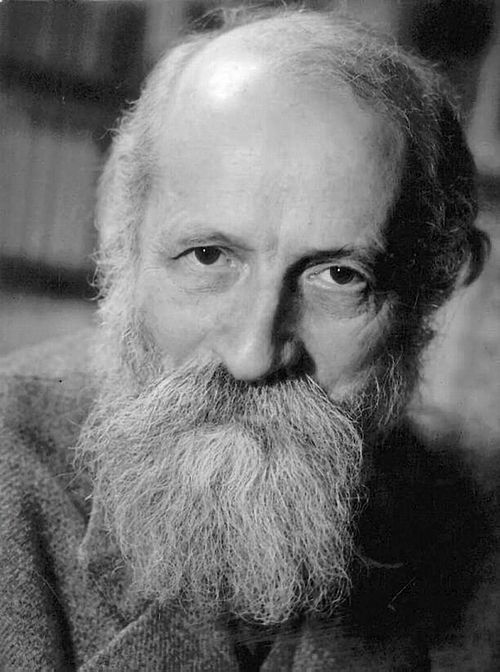
Martin Buber on being in real contact with the world in every way

(Image from Wikipedia.org)

“But a person, I would say, is an individual living really with the world. And ‘with’ the world, I don’t mean in the world- just in real contact, in real reciprocity with the world in all the points in which the world can meet man.”

~ Martin Buber

Martin Buber was an Austrian-Israeli philosopher best known for his philosophy of dialogue, a form of existentialism centered on the distinction between the I–Thou relationship and the I–It relationship. Wikipedia

Born: February 8, 1878, Vienna, Austria

Died: June 13, 1965 

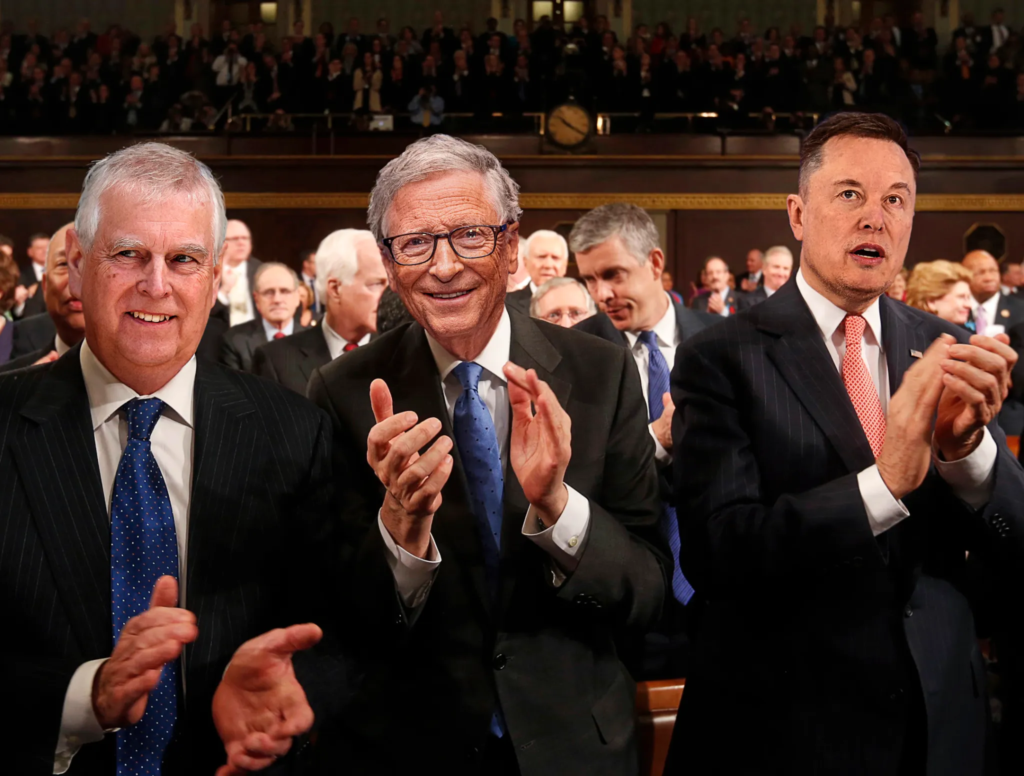
In Brazil and South Korea, leaders who attempt a coup are in prison. In US, they deliver the State of the Union!

Trump is still a threat to our democracy!

Dean Obeidallah

Feb 25, 2026

Donald Trump should not have been delivering the State of the Union last night. He should’ve been in prison for attempting a coup after the 2020 election and inciting the Jan. 6 terrorist attack. We all know that.

But Trump speaking Tuesday in the very chamber he sent his MAGA terrorists to attack on Jan. 6 is made even more atrocious given that two other democratic nations have recently sentenced their leaders to long prison sentences for similar actions.

First, there is Trump’s good friend, former Brazilian leader Jair Bolsonaro who plotted in 2022 to remain in power despite losing his own re-election. Bolsonaro’s illegal scheme included plans to kill then President-elect Luiz Inácio Lula da Silva, Vice President-elect Geraldo Alckmin and a top judge. However, he failed to get the backing of the army and air force commanders.

That is when like Trump he turned to Plan B—which was having his supporters storm the Capitol to prevent the transfer of power.

In Brazil, authorities moved swiftly to send a message that attempts to end their nation’s democracy would not be tolerated. Just seven months after his coup attempt, Bolsonaro was barred by the courts from seeking office until 2030. That removed him from the world of politics.

Bolsonaro was later charged with crimes in connection with his coup attempt. Like Trump, he slammed the investigation as a “witch hunt.” At his trial, the Supreme Court found that the rioters had been incited by Bolsonaro, whose plan was for the military to step in and return him to power. He was rightfully convicted.

In response, Trump and his Secretary of State Marco Rubio threatened Brazil’s government if they dared imprison Trump’s close friend and like-minded aspiring tyrant. In fact, during Bolsonaro’s trial, Trump imposed a 50% tariff on goods from Brazil’s expressly to punish the government for its “politically motivated persecution” of Bolsonaro.

But the leaders in Brazil were undeterred in protecting their democracy. That is why Bolsonaro currently sitting in a prison cell where he will serve for 27 years. In other words, the rest of his life given he’s 70 years old. That is how a nation sends a message to all that if you attempt to end our democracy, this will be your fate.

Same goes for South Korea, where just last week former South Korean President Yoon Suk Yeol was found guilty of leading an insurrection and sentenced to life in prison. In Yoon’s case, he sent the military in December 2024 to surround the National Assembly and imposed martial law where he suspended political activities, took control of the media and publications and allowed arrests without warrants. (This is Trump’s dream.)

Yoon claimed he was taking these extreme measures to protect the country from “anti-state” forces that sympathized with North Korea. He even declared his actions were intended “to protect the freedom and sovereignty of the people and to preserve the nation and its constitution.”

That was a lie. The reality was Yoon was driven by domestic troubles given the opposition party held a parliamentary majority, leaving him a lame duck president. In addition, his wife was the center of various corruption allegations that he wanted to block.

After being formally removed from office in April 2025, Yoon was swiftly charged and held in prison since July pending his trial. And just last week, Yoon was convicted of masterminding an “insurrection” by trying to impose military rule. He was sentenced to life in prison. In addition, former prime minister Han Duck-soo was handed a 23-year jail term for his part in the insurrection, while ex-defense minister Kim Yong-hyun, who advised Yoon to impose martial law, was jailed for 30 years.

As the chief justice stated at the time of sentencing of Yoon, his actions fundamentally damaged South Korea’s democracy and deserves a harsh punishment. Despite this reality, huge crowds of Yoon’s supporters gathered outside the court hours during the hearing–holding banners reading: “Yoon, again.” Many even broke down in tears following the verdict.

That is no different than how the GOP has treated Trump. Despite his clear efforts to end our Republic, they still chanted at rally after rally in the years after his attempted coup, “Trump!”

During his State of the Union on Tuesday, Trump had the audacity to claim Democrats “want to cheat” in our elections, adding, “They have cheated.” He even pretended to care about our elections saying he wants to ensure “voting in our sacred American elections” is protected. This coming from a man convicted of 34 felonies for falsifying business records to cheat in the 2016 election and who was charged with numerous felonies for attempting a coup after the 2020 election!

When you look at Brazil and South Korea, those nations leaders are sending a clear message that if you attempt a coup, you will die in a prison cell. In the United States, the message is that if you are rich and powerful you can attempt a coup, traffic women and even rape children. I ask you which nation looks like banana Republic?!

Free Will Astrology: Week of February 26, 2026

by Rob Brezsny | February 24, 2026 (NewCity.com)

Photo: Remi Clinton

ARIES (March 21-April 19): In woodworking, “spalting” occurs when fungi colonize wood, creating dark lines and patterns that make the wood more valuable, not less. The decay creates beauty as long as it isn’t allowed to progress too far. Here’s the metaphorical moral of the story for you, Aries: What feels like a deteriorating situation might actually be spalting, Aries. Are you experiencing the breakdown of a routine, a certainty, or a plan? It could be creating a pattern that makes your story even more interesting and heroic. So keep in mind that an apparent decomposition may be transforming ordinary into extraordinary beauty. My advice is to play along with the spalting.

TAURUS (April 20-May 20): I suspect you will soon be invited to explore novel feelings and unfamiliar states of awareness. As you wander in the psychological frontiers, you might experience mysterious phenomena like the following. 1. An overflow of reverence and awe. 2. Blissful surprise in the face of the sublime. 3. Sudden glimmers of eternity in fleeting moments. 4. A soft, golden resonance that arises when you hear arousing truths. 5. Amazingly useful questions that could tantalize and feed your imagination for months and even years to come.

GEMINI (May 21-June 20): If I were your mentor, I’d lead you up an ascending trail to a high peak where your vision is clear and vast. If I were your leader, I’d give you a medal for all the ways you’ve been brave when no one was looking, then send you on an all-expenses-paid sabbatical to a beautiful sanctuary to rest and remember yourself. If I were your therapist, I’d guide you through a ninety-minute meditation on your entire life story up until now. But since I’m just your companion for this brief oracle, I will instead advise you to slip out of any silken snares of comfort that dull your spirit, cast off perks and privileges that keep you small, and commune with influences that remind you of how deeply you treasure being alive.

CANCER (June 21-July 22): Biologist Barbara McClintock won the Nobel Prize by developing what she called “a feeling for the organism.” She cultivated an intimate, almost empathic relationship with the corn plants she studied. She didn’t impose theories on her subjects. She listened to them until she could sense their hidden patterns from the inside. When you’re not lost in self-protection, you Cancerians excel at this quality of attention. Here’s what I see as your task in the coming weeks: Transfer your empathic genius away from people who drain you and toward projects, places or problems that deserve your devotion and give you blessings in return.

LEO (July 23-Aug. 22): Sufi writers describe heartbreak, grief and longing as portals through which divine love enters. They say that a highly defended ego and a hardened heart can’t engage with such profound and potent love. In this view, suffering that makes the heart ache strips away illusions and fixations, allowing greater receptivity, humility and tenderness toward all beings. I’m not expecting you to get blasted by an influx of poignancy in the near future, Leo, but I’m very sure you have experienced such blasts in the past. And now is an excellent time to process those old breakthroughs disguised as breakdowns. You are likely to finally be able to harvest the full power they offered you.

VIRGO (Aug. 23-Sept. 22): In traditional Balinese culture, Tri Hita Karana is a concept that means there are three causes of well-being: harmony with God, harmony with people and harmony with nature. When one is out of balance, all suffer. I’m wondering if you would benefit from meditating on this theme now, Virgo. Have you been focused on one dimension at the expense of the others? Are you, perhaps, spiritually nourished but socially isolated? Or maybe you’re maintaining relationships but ignoring your body’s connection to the earth? Here’s your assignment: Do a Tri Hita Karana audit. Which harmony is most neglected? Add to your altar, call a friend or go walk in the great outdoors—whichever one you’ve been shortchanging.

LIBRA (Sept. 23-Oct. 22): You are a diplomat in the struggle between beauty and inelegance. Your aptitude for creating harmony is a great asset that others might underestimate or miss completely. I hope you will always trust your hunger for classiness even if others dismiss it as superficial. One of your key reasons for being here on earth is to keep insisting on loveliness in a world too quick to settle for ugliness. These qualities of yours are especially needed right now. Please be gracefully insistent on expressing them wherever you go.

SCORPIO (Oct. 23-Nov. 21): The bad news: You underestimate how much joy and pleasure you deserve—and how much you’re capable of experiencing. This artificially low expectation has sometimes cheated you out of your rightful share of bliss and fulfillment. The good news: Life is now ready to conspire with you to raise your happiness levels. I hope you will cooperate eagerly. The more intensely you insist on feeling good, the more cosmic assistance you will garner. Here’s a smart way to launch this holy campaign: Renounce a certain lackluster thrill that diverts you from more lavish excitements.

SAGITTARIUS (Nov. 22-Dec. 21): In classical music, a “rest” isn’t the absence of music. It’s a specific notation that creates space, tension and meaning. The silence is as much a part of the composition as the sound. I suggest you think of your current pause this way, Sagittarius. You’re not waiting for your real life to resume. You’re in a rest, and the rest is an essential part of the process you’re following. It’s creating the conditions for what comes next. So instead of anxiously filling every moment with productivity or distraction, try honoring the pause. Be deliberately quiet. Let the silence accumulate. When the next movement begins, you’ll understand exactly why the rest was necessary.

CAPRICORN (Dec. 22-Jan. 19): Interesting temptations are wandering into your orbit. You may be surprised to find yourself drawn toward entertaining gambles and tricky adventures. How should you respond? Should you say “Yes! Now! I’m ready!”? Or is open-minded caution a wiser approach? Conditions are too slippery for me to arrive at definitive conclusions. What I can tell you is this: Merely considering and ruminating on these invitations will awaken uplifting and inspiring lessons. PS: To get the fullness of the blessings you want from other people, you must first give them to yourself.

AQUARIUS (Jan. 20-Feb. 18): The engineer Nikola Tesla (1856–1943) said he envisioned his inventions in intricate detail before building them. He didn’t need literal prototypes because his mental pictures were so vivid. I suspect you Aquarians now have extra access to this power. What scenarios are you dreaming of? What are you incubating in your imagination? I urge you to boldly trust your thought experiments. Your mental prototypes may be unusually accurate. The visions you’re testing internally are reconnaissance missions to futures that you have the power to build. Regard your imagination as a laboratory.

PISCES (Feb. 19-March 20): Sufi mystics tell us that the heart has “seven levels of depth,” each one bearing progressively more profound wisdom. You access these depths by feeling deeper, not thinking harder. Let’s apply this perspective to you, Pisces. Right now, you’re being called to descend past surface emotions (irritation, worry, mild contentment) into the layers beneath: primal wonder, the wild joy you’re sometimes too cautious to express, and the sacred longing that can lead you to glory. This dive might feel risky. That’s good! It means you’re going deep enough. What you discover down there will reorganize everything above it for the better.

Homework: What’s the most taboo thing you want? Can you make it any less taboo? Newsletter.FreeWillAstrology.com

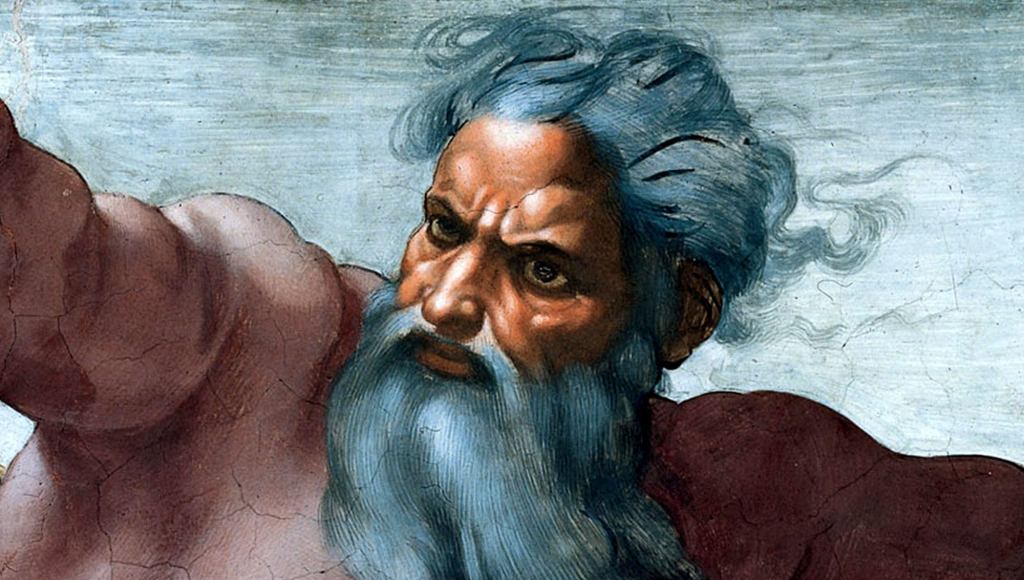
God Loses Decision-Making Coin

Published: March 14, 2001 (TheOnion.com)

HEAVEN–God confirmed Monday that He has misplaced His special decision-making coin. “I have no idea where I put it,” a visibly distraught God said of the coin, which He has used for more than four billion years to determine everything from the direction of breezes to genocides. “I remember flipping it last night for [Monroe, MI, couple Mark and Patti Brenton’s] attempt at conception, but I haven’t seen it since.” God said He hopes to locate the coin before 7:15 a.m. Thursday, when United Flight 251 takes off from Seattle with actress Dixie Carter on board.

God is consciousness | Rupert Sheldrake on panpsychism and spirituality

The Institute of Art and Ideas Oct 30, 2025 Rupert Sheldrake explores the concept of God as the consciousness that exists not only within humans, but within the entire cosmos. Are we all fragments of the same, greater consciousness? With a free trial, you can watch the full talk NOW at https://iai.tv/video/discovering-the-… The modern world’s faith in science has made the idea of the supernatural seem like a silly child’s fantasy, at least in the minds of many. Yet, 50% of people do still believe, or suspend disbelief, in the supernatural. Join radical scientist and spiritualist, Rupert Sheldrake, to explore a reality that lies beyond the scientific view of reality. #consciousness#panpsychism#spirituality#spiritual#god Rupert Sheldrake is an English scientist whose research into parapsychology and evolution led to the theory of morphic resonance. Other topics he has written and spoken on include precognition, the relationships between spirituality and science and the psychic staring effect. Sheldrake’s most recent book is ‘Science and Spiritual Practices’. The Institute of Art and Ideas features videos and articles from cutting edge thinkers discussing the ideas that are shaping the world, from metaphysics to string theory, technology to democracy, aesthetics to genetics. Subscribe today! https://iai.tv/subscribe?utm_source=Y…00:00 We all share the same consciousness 00:26 God, angels, and the supernatural split 02:03 The sacred in Hindu culture 03:30 Mystical encounters and near-death experiences 06:45 The benefits of meditation 08:37 The ground of consciousness of the whole universe 10:40 The varieties of spiritual practice 14:52 Psychedelics, morphic resonance, and the natural world For debates and talks: https://iai.tv For articles: https://iai.tv/articles For courses: https://iai.tv/iai-academy/courses