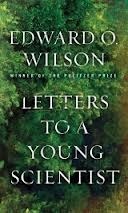
Inspired by Rainer Maria Rilke’s Letters to a Young Poet, Edward O. Wilson has distilled sixty years of teaching into a book for students, young and old. Reflecting on his coming-of-age in the South as a Boy Scout and a lover of ants and butterflies, Wilson threads these twenty-one letters, each richly illustrated, with autobiographical anecdotes that illuminate his career–both his successes and his failures–and his motivations for becoming a biologist. At a time in human history when our survival is more than ever linked to our understanding of science, Wilson insists that success in the sciences does not depend on mathematical skill, but rather a passion for finding a problem and solving it. From the collapse of stars to the exploration of rain forests and the oceans’ depths, Wilson instills a love of the innate creativity of science and a respect for the human being’s modest place in the planet’s ecosystem in his readers.
In 1903, a student at a military academy sent some of his verses to a well-known Austrian poet, requesting an assessment of their value. The older artist, Rainer Maria Rilke (1875–1926), replied to the novice in this series of letters—an amazing archive of remarkable insights into the ideas behind Rilke’s greatest poetry. The ten letters reproduced here were written during an important stage in Rilke’s artistic development, and they contain many of the themes that later appeared in his best works. The poet himself afterwards stated that his letters contained part of his creative genius, making this volume essential reading for scholars, poetry lovers, and anyone with an interest in Rilke, German poetry, or the creative impulse.
Scientists have proposed a way that the universe could stop expanding, ending in a ‘Big Crunch’ that resets space and time as we know it.
A Hubble telescope image showing multiple generations of stars densely layered in a nearby galaxy (Image credit: ESA/Hubble & NASA)
Will the universe end in a bang or a whimper? A pair of theoretical physicists have proposed a third path: perhaps the universe will never end.
In a study that attempts to define the nature of dark energy — a mysterious phenomenon thought to be causing the universe to expand faster and faster every moment — the physicists find that cosmic expansion isn’t always a given. Rather, they write, dark energy may periodically “switch” on and off, sometimes growing the cosmos, sometimes shrinking it down until the conditions are right for a new Big Bang to occur — and for a new universe to be born.
The great escape
Our universe is currently experiencing a phase of runaway expansion: the cosmos is getting bigger faster with every passing moment. Cosmologists do not understand the cause of this acceleration, which they name dark energy. If this acceleration persists, then our universe will eventually expand into oblivion, with all matter and radiation torn apart.
This wouldn’t be the first period of runaway growth. In the earliest moments of the Big Bang, the energies and densities were so extreme that existing physics cannot cope — it predicts a singularity, a point of infinite density where the math breaks down. After that, the universe experienced a period of incredibly rapid expansion known as inflation, which is also poorly understood.
Astronomers have long wondered if these two phases of accelerated expansion — one in the earliest moments of the Big Bang and one in the present epoch — are connected to each other, and whether an entity that drives both of them avoids the problem of the big bang singularity.
Dynamical demons
To answer that, a pair of theoretical physicists published a study Feb. 7 in the preprint database arXiv(opens in new tab) which examined a model of the universe where dark energy has always played a role. Previous research modeled dark energy “switching on” at various times to drive cosmic expansion, but the new research proposes a more realistic model that includes matter and radiation.
They wanted to see if dark energy can avoid a Big Bang singularity, drive inflation, and accelerate the late universe. To avoid that initial singularity, the universe can’t begin from a point of infinite density. Instead, the universe we live in would have to be one in an infinite series of repeated “Big Bounces.”
In this scenario, dark energy drives the universe until it reaches a certain size. But then the dark energy transforms itself, forcing the universe to contract. The cosmos then suffers a big crunch, but right before reaching a state of infinite density, dark energy turns around again, driving a period of incredibly rapid inflation and starting the cycle anew.
A finely tuned mechanism
The researchers found a model of dark energy that performed the trifecta. But crucially, matter and radiation could not be present in the extremely early universe, otherwise they spoiled inflation. Instead, matter and radiation had to appear just after inflation, as a portion of the dark energy decayed away, flooding the universe with light and matter.
While initially successful, the researchers weren’t able to find a generic class of dark energy models that could always lead to the same results. Instead, they had to artificially put in a smaller value for the present-day accelerated expansion than quantum mechanics predicts in order to get the exact right outcome.
However, this new research does point in a promising direction, providing a viable platform for further exploring models like this. Humans are not necessarily destined to live in a cold, empty cosmos, because dark energy might behave differently in the far future. Only continued research will uncover our ultimate fate.
Paul M. Sutter is a research professor in astrophysics at SUNY Stony Brook University and the Flatiron Institute in New York City. He regularly appears on TV and podcasts, including “Ask a Spaceman.” He is the author of two books, “Your Place in the Universe” and “How to Die in Space,” and is a regular contributor to Space.com, Live Science, and more. Paul received his PhD in Physics from the University of Illinois at Urbana-Champaign in 2011, and spent three years at the Paris Institute of Astrophysics, followed by a research fellowship in Trieste, Italy.
Women are pushing back against the unrealistic body ideals that have long dominated American society, speaking out about discriminatory, fatphobic “norms” and sharing stories about related eating disorders. Such conversations still have a long way to go, but they are at least being had. This is not the case among men.
Social psychologist Jaclyn A. Siegel was pursuing her master’s degree at Villanova University in the mid-2010s, researching how workplace environments can support or hinder eating-disorder onset, maintenance, and recovery, when she noticed that little information existed on eating disorders in men. This research gap encouraged Siegel to study the issue as she worked toward her PhD at the University of Western Ontario. Concentrating on the intersection of gender and eating disorders, she published research on topics like self-objectification, body-based social comparisons, body shame, and father-daughter communication about body image. Her current research focuses on the effects eating disorders have on intimate relationships.
At the age of twenty-six, Siegel became a postdoctoral research scholar with the San Diego State Research Foundation. She continues to serve there as project director of the Pride Body Project, an NIH-funded clinical trial of an eating-disorder prevention program for individuals who identify as men and are gay or bisexual, or experience sexual attraction to men. Siegel is also an adjunct professor at San Diego State University, teaching classes on the psychology of human sexual behavior. She sits on the editorial boards for five academic journals — Body Image, Psychology of Women Quarterly, Psychology of Men & Masculinities, Frontiers in Social Psychology (Gender, Sexuality, and Relationships), and Sex Roles — and is the style editor and social-media coordinator for Psychology of Women Quarterly.
Over video calls, Siegel and I discussed how traditional masculinity in the U.S. leads to a certain male body ideal, which has contributed to eating disorders, body-image dissatisfaction, and muscle-dysmorphic disorders in individuals across sexual and gender identities. These issues are compounded by a lack of awareness and research, and in Siegel’s view the field has a lot of room to grow. Ultimately, though, she sees the problem as not with men themselves, but with patriarchal structures that are harmful to society in general. The solution, she says, is to expand our definition of masculinity, and thus expand men’s potential.
Risak: How do you define masculinity?
Siegel: I would describe masculinity as a set of stereotypes about what is “normal” for men. Masculinity is socially constructed, and being seen as a “real man” in the eyes of others is a precarious undertaking. In societies marked by gender inequality, where traditional gender roles are rewarded or socially mandatory, many men feel that they must regularly engage in behaviors consistent with these norms to be perceived as sufficiently masculine and thus avoid stigma, discrimination, and sometimes even violence.
We often talk about “toxic masculinity,” but, in reality, masculinity is multifaceted and contains many beautiful elements. It appears in different ways in different cultures and in different eras.
Risak: How do we typically evaluate masculinity in the United States today?
Siegel: In 2003 James R. Mahalik and colleagues published the Conformity to Masculine Norms Inventory, a psychological inventory we use for evaluating different elements of masculinity, which includes eleven distinct factors: winning (the desire to be high achieving); emotional control (the idea that men shouldn’t cry); risk taking (being unafraid of a challenge, not willing to back down); pursuit of status (the desire to get money or power); primacy of work (choosing your employment over your interpersonal relationships or your personal well-being); violence (not necessarily a desire to engage in physical or verbal violence, but a sense that violence is sometimes warranted); playboy attitude (a desire for multiple sexual partners); self-reliance (don’t ask for help, figure things out on your own, and don’t let anyone see you sweat); power over women (a sense that men are natural leaders and should be in charge of women); dominance (a desire to be in charge of every situation); and homophobia. Obviously this last one does not translate easily to gay or bisexual men, but many experience internalized homophobia, which is strongly positively correlated with body-image dissatisfaction.
Risak: Are these norms specific to the U.S., or would you say they are relatively universal?
Siegel: I mostly study men in the U.S., but I did some work in Canada as well. We see a little less rigidity in masculine norms in Canada. There are certainly other countries in the world where traditional masculinity is highly prized and rewarded, and men there experience more gender-role stress. For example, men in Greece and Japan score higher on measures of gender-role stress than men in countries like Sweden or the Netherlands. But most of the published research on masculinity focuses on countries that are WEIRD — Western, educated, industrialized, rich, and democratic.
Risak: Why do you think that is?
Siegel: The first reason is that most psychological research is conducted on undergraduate students, because they are cheap and available. Participation in research is often a requirement for undergraduate psychology courses. Another reason is that many of the psychological instruments we use to assess masculinity or body image — such as the Conformity to Masculine Norms Inventory — are developed using WEIRD samples and cannot readily be translated into different cultures or languages.
Risak: Have these norms changed throughout history, or have they remained largely static?
Siegel: Social psychologists have been attempting to assess masculinity only for the last few decades, so it’s hard to say with certainty whether changes have occurred. I do think that, as society evolves and gender relations shift, we see changes in what it means to be a man, particularly when it comes to something like attitudes toward the LGBTQ+ community. We are currently seeing the emergence of more-flexible masculinity among celebrities like Harry Styles. But I’m not convinced that, as a society, we are becoming broadly accepting of men who distance themselves from masculine norms, as traditional masculinity is still prized in a variety of domains, such as the workplace. The emergence and popularity of celebrities and influencers who endorse and promote rigid masculinity ideology, such as Andrew Tate and Jordan Peterson, speaks to the broad appeal of these ideologies today.
Risak: How is the “masculine body” defined?
Siegel: It depends on the person and where they live, but in the U.S. we typically see a mesomorphic ideal: lean, muscular, and with a low body-fat percentage. This is persistent across the U.S. and common in LGBTQ+ communities in particular. Sexual-minority men are at elevated risk for eating disorders due in part to the lean ideal being perpetuated in their communities. I do want to note, though, that there are queer subcultures with totally different body ideals. Gay “bears,” for example, idealize larger, hairier men.
Risak: Why is lean and muscular the ideal?
Siegel: There are evolutionary theories: that such a body type suggests the man is probably fertile, capable of getting resources, and would otherwise be a good fit for sexual reproduction. But as a social psychologist, I hesitate to accept biological or purely evolutionary answers to these questions.
The “tripartite influence model” in social psychology focuses not on where these ideals come from but rather on how they are perpetuated. This model was initially proposed to explain why women experience body-image dissatisfaction, but it has since been expanded to capture men’s experiences. How we decide what our body should look like, and why, traditionally comes from our three primary sources of information: peers, parents, and media. Research on men’s body image has also included a fourth source: romantic and sexual partners. When I teach this to my students, I refer to it as the “four Ps”: peers, parents, porn, and partners. Porn is only one subset of media, of course, but there is quite a bit of research suggesting that increased exposure to sexualized media is a predictor of body-image dissatisfaction in men.
The body-related messages communicated from all these sources reinforce the mesomorphic ideal in a variety of ways. People may experience teasing or bullying from peers if their bodies don’t conform to the ideal. This teasing may be about muscularity or about weight. Parents and partners may make disparaging comments about weight or shape, but these are often cast as concerns. Partners may inadvertently reinforce norms through compliments about bodies. And the media certainly perpetuates the mesomorphic ideal.
We learn from these norms and strive to adhere to them, particularly if we’re someone who fears backlash or makes a lot of social comparisons. We know that people who make more social comparisons about their bodies or eating tend to feel worse about themselves, because they believe they’re failing to measure up to their peers.
Risak: What role do these body ideals play in the dynamic between men and women?
Siegel: Body norms work to reinforce unequal gender dynamics, with many men striving to be big and muscular, and many women striving to be dainty and petite. Within the context of most heterosexual relationships, there’s often a consensual reinforcement of these norms: many women, explicitly or not, communicate that they want to be with muscular or tall guys, and many men communicate that they want to be with curvaceously thin women. The bodies we idealize are representing the structural power difference between women and men. For men, actual physical force is a form of social power, and for women, being physically smaller has the potential to make them reliant on men. Feminist scholars have portrayed the cultural obsession with women’s thinness as a feature of patriarchy that keeps women distracted from their lack of power and diminished social status. It can be hard to focus on your civil rights when you are fixated on your appearance or weight.
We often talk about “toxic masculinity,” but, in reality, masculinity is multifaceted and contains many beautiful elements. It appears in different ways in different cultures and in different eras.
Risak: Have these gender dynamics shifted at all in the wake of the #MeToo movement?
Siegel: I don’t know of a study that provides that sort of information. Since #MeToo just happened in 2017, research is unlikely to have been published yet. I am curious, though. I think we did see an initial impact of #MeToo on policies, procedures, and social attitudes. But, as with all social movements, things tend to regress to the status quo. A pretty clear example of this is Black Lives Matter in 2020: There was initial social momentum toward defunding the police. A few years later we’re seeing that people, cities, and organizations are not following through on the promises they made in 2020. I’m not optimistic that the #MeToo movement will maintain its momentum. I hope it will, but the backlash we have seen to it gives me pause.
Risak: How do social norms of gender affect people who don’t conform to the gender binary or who don’t identify as heterosexual?
Siegel: As a person who is cisgender [individuals whose current gender identity is the same as the sex they were assigned at birth — Ed.] and not actively doing transgender research, I can only try my best to summarize this. To get the best information, you should read the original work being done by Jerel Calzo, Claire Cusack, Scout Silverstein, and Allegra Gordon.
Some statistics suggest that transgender individuals have a two- to four-times-greater risk of eating disorders. One reason is that controlling their bodies can help them pass in a transphobic society: Transgender women can pass more easily if they make their bodies smaller. Trans men can pass more easily if hips and curves are bound or hidden. Being thin can reduce gender dysphoria and help transgender individuals avoid the violence and discrimination that are pervasive in our society. It’s a safety strategy.
There is less research on nonbinary individuals. They can be pulled in either direction — toward masculine body presentation or feminine body presentation — or they might fluctuate in between. It’s hard just to be a person who’s not gendered, because we have such strong gender norms and expectations about what bodies are “supposed” to look like.
Risak: Many fitness influencers recommend exercise routines, diets, and nutritional supplements to help followers achieve an ideal physique. At what point does this type of messaging become problematic?
Siegel: Joyful movement is good for you. Getting your heart rate up is healthy. Getting out and being with your friends while moving can provide a positive social experience. But if you are exercising out of a drive for muscularity or thinness, to alter the appearance of your body rather than the functioning of your body, then you might find yourself trapped in a cycle that puts you at risk for an eating disorder.
There are certainly fitness influencers who promote a healthy relationship with the body, regardless of its size. Jessamyn Stanley, the yoga influencer, is a perfect example. But, more often than not, exercise is portrayed as a way to lose weight and become more attractive. Influencers might also encourage certain eating regimens, such as “bulking and shredding,” that have the potential to contribute to dysregulated eating. Not everyone who engages in rigorous exercise or dysregulated eating patterns will develop an eating disorder, but for people who are susceptible to disordered eating, these fitness regimens can potentially cause harm.
Another somewhat insidious way exercise and fitness influencers can have an adverse effect on people’s well-being is through coded language around health. The relationship between health and weight is far more complicated than we might think. Being thin and losing weight are not necessarily signs of good health, and being fat and gaining weight are not necessarily signs that someone is in poor health. Encouraging people to “get healthy” through weight loss is misguided, unscientific, and, frankly, fatphobic.
Exercise is a dicey subject even among eating-disorder researchers. When we look at the definitions of eating disorders in the Diagnostic and Statistical Manual of Mental Disorders (DSM), exercise isn’t involved in many of them. Exercise can be listed as a compensatory behavior in diagnosing cases of bulimia nervosa or anorexia nervosa, but some people experience compulsive exercise outside of that.
We are learning more about the complexity of eating disorders, which have long been understood as a female condition associated with the SWAG stereotype — skinny, white, affluent girl — even though eating disorders have been documented in men as far back as the 1600s. These conditions were called “anorexia nervosa” and “bulimia nervosa,” instead of “anorexia hysteria” and “bulimia hysteria,” because men do develop them, and doctors didn’t believe that men could experience hysteria. For long periods in the twentieth century, however, there was a general misconception that eating disorders affected only women, and the diagnostic criteria and treatment options became gendered. Older versions of the DSM, for example, list “amenorrhea” — cessation of a menstrual period for at least three months — as a diagnostic criterion for anorexia nervosa.
In the 1980s more and more men were entering eating-disorder clinics, and they weren’t presenting in the same ways as women were. Although women often develop eating disorders out of a desire for thinness, the masculine norms of dominance, confidence, sexual success, and physical and emotional self-control make men more likely to develop an eating disorder in an attempt to become muscular. So, many men engage in different behaviors to achieve an ideal body, including excessive exercise, regimented eating behaviors, and appearance- and performance-enhancing substance use.
Men now make up 25 to 33 percent of eating-disorder diagnoses. The threatened-masculinity hypothesis of disordered eating posits that one reason why we’re seeing an uptick in muscularity-oriented disordered eating is men’s desire to reestablish dominance in increasingly gender-egalitarian societies.
I suspect that every statistic we have about men with eating disorders is an underrepresentation of the actual number, because it’s not stereotypically masculine to admit to having these conditions.
Risak: What impact does the feminine association with eating disorders have on men?
Siegel: As I mentioned, self-reliance is one characteristic of traditional masculinity. Because of this, men are less likely to seek help for medical and psychological conditions. They’re not expected to have mental-health problems, because that would shatter the ideal of the strong, stoic man. Add a traditionally “feminine” condition like an eating disorder on top of that, and it puts them at risk of being ridiculed as less manly if they acknowledge or seek help for the condition. I’ve heard men express the fear they might be perceived as gay for having these conditions.
I suspect that every statistic we have about men with eating disorders is an underrepresentation of the actual number, because it’s not stereotypically masculine to admit to having these conditions, and it’s definitely not stereotypically masculine to go to a doctor or specialist and get a diagnosis. So it’s difficult to know how many men are really struggling. And since most treatment plans were developed with women in mind, we don’t often see the same level of effectiveness for men who do get into treatment. Traditional elements of masculinity are not addressed in most eating-disorder programs. I think there are some men who might acknowledge they have a problem but who feel they’re not going to get help once they get in the door. More therapists are becoming knowledgeable and sensitive to these issues, however. So if you don’t succeed with the first therapist, don’t give up. Continuing to seek help, even after negative initial experiences, is always recommended.
Risak: Is it possible to recover from an eating disorder, or is it something a person must learn to live with?
Siegel: That’s a debated question. I’m in recovery from an eating disorder: during my early twenties I was in treatment for acute anorexia. And I believe that full recovery is possible. For the last eight years I’ve been researching people living with eating disorders, and there are definitely some who feel the eating disorder is no longer a meaningful or salient part of their life. Many people go on to live very full lives after the initial eating disorder, and symptoms don’t have to be monitored as closely. But there are also people who have chronic eating disorders and experience periods of relapse and remission throughout their lives. I don’t think professionals in the field have taken a definitive stance on whether full recovery is possible for every person with an eating disorder.
Risak: What is “muscle dysmorphia,” and what are its risks?
Siegel: You will often see muscle dysmorphia colloquially referred to as “bigorexia,” but that’s a bit of a misnomer. Muscle dysmorphia is characterized by obsessive thoughts about muscularity, a perception that one is insufficiently muscular, a powerful desire to become more muscular, and repetitive urges and self-surveillance associated with a desire to be muscular. In many instances muscle dysmorphia is associated with excessive exercise; it is important, however, to note that these studies have small sample sizes. One study showed that 90 percent of men who experience muscle dysmorphia have used appearance- or performance-enhancing drugs. That particular study, however, included laxatives as an “appearance- and performance-enhancing drug,” which is a broader categorization than we typically see. Other research has shown that 40 to 50 percent of men diagnosed with muscle dysmorphia have at least experimented with anabolic steroids — to create the appearance of additional muscle mass — and androgenic steroids, to create more traditionally masculine features, like a stronger jawline.
There are various adverse outcomes associated with steroid use, including cardiovascular disease and psychiatric effects such as mood swings, aggression, and violence. Long-term use has also been associated with hypogonadism [when the sex glands produce fewer hormones — Ed.] and neurotoxicity, though this research is still new. Muscle dysmorphia itself can have a host of physical and social consequences, including muscle or joint damage from compulsive exercise, as well as prioritizing exercise over work, social outings, or romantic relationships.
There’s a lot of debate about whether the muscularity-oriented disordered eating associated with muscle dysmorphia should be labeled as a feeding-and-eating disorder, rather than an obsessive-compulsive disorder. Right now, muscle dysmorphia is a specifier for the “body dysmorphic disorder” label in the DSM, which falls under obsessive-compulsive and related disorders. The major diagnostic criteria for muscle dysmorphia focus on compulsive thoughts and “checking” behaviors. People with the disorder may have difficulty being present with others or focusing on the task at hand because they are constantly plagued by thoughts about their body and are consistently monitoring their body. Some research suggests that men with muscle dysmorphia engage in more body-related social comparisons and are more likely to withdraw socially from their peers.
Risak: Research on muscle dysmorphia focuses almost exclusively on white men. Are there studies of the disorder in individuals of other races and gender identities?
Siegel: I don’t have data readily available on the disorder in women, or in nonbinary people. I have seen a few studies that looked at female bodybuilders to determine whether muscle dysmorphia can exist in women. It seems as though it can, but overall more research is needed on women. There is also scant research on the condition in men who are not white. In fact, there is very little research on the body-image experiences of Black men at all.
Risak: What does the absence of research on Black men suggest to you?
Siegel: That the undergraduates who participate in student sample research are mostly white. We’re diversifying our methods in psychology, but convenience sampling is still the most common, even though it is definitely not the most representative of the population. There’s a belief that Black men are shielded from eating disorders and negative body image, but that’s because of flawed methodology. It’s not grounded in reality. One reason why we’re not seeing Black men with eating disorders is because the tools we use to evaluate eating disorders generally aren’t culturally sensitive. Even if Black men are included in research, we’re missing the specific cultural nuances necessary to assess their disordered eating.
The absence of culturally sensitive tools for finding body-image disorders in Black subjects speaks to a larger problem of generally ignoring the experiences of Black people in our research. The field of psychology is only starting to grapple with its structural racism.
Risak: How difficult is it for men suffering from muscle dysmorphia to ask for help?
Siegel: It can be extremely difficult for people with muscle dysmorphia to even recognize they have this condition. There is a normalization of muscularity-oriented disordered eating among men. It’s hard to know where the boundary lies between “gym-bro” culture and a psychological condition. Some men take pride in strictly adhering to specific dietary practices and exercise behaviors that give them a sense of control and enhance their appearance, and they might not recognize this as a problem. Their friends, if they’re also steeped in gym and exercise culture, might be rewarding them socially, and romantic or sexual partners might make positive comments about the size or shape of their body and musculature.
I don’t want to minimize women’s eating disorders — they are very serious; I would know — but one benefit women have is that people, including medical doctors, are more aware of eating disorders and body-image concerns in women. They are more likely to notice behaviors like skipping meals, restricting certain food groups, losing a lot of weight, or bingeing and purging, and they will call them out. A loved one or friend or parent will step in and say, “This isn’t acceptable. We’re going to get you help.” That’s often not the case for men. Because men with big muscles are praised in our society, it can be difficult for people to intervene and say, “Hey, you need to get help for this.”
Risak: What can we do as a society to make treatment a more accessible option for men?
Siegel: We need to take a threefold approach. First, we have to grapple with traditional masculinity and the adverse behaviors associated with it. We have to acknowledge how it hurts men and makes it difficult for them to get the help they need.
Next, we need to figure out how we can create a more expansive, more colorful version of masculinity that allows men to engage in the elements of it that feel right for them — being assertive, being a leader, taking risks — without harming themselves. Author Tony Porter discusses the “man box” of masculinity, suggesting that rigid adherence to traditional masculinity doesn’t allow men to reach their full potential, because there are elements of femininity necessary for them to succeed. Men who are stuck in the man box can’t feel their feelings or be particularly effective communicators. They might not get the help they need for body-image issues, alcohol-use disorder, depression, or anxiety. Men have the potential to be so much more and do so much more good in the world. If we expand our definition of masculinity, we will help society as a whole.
We also need to destigmatize therapy. I recently spoke with Joe Kelly, who has written a series of books about how men can support their children in getting treatment for eating disorders. He uses the language of coaching rather than therapy with men, because they are more receptive to that approach. He helps men understand that getting help doesn’t make them less of a man. We must also address the financial issues, because therapy can be financially out of reach for many.
Ultimately we want men not to need help. We don’t want these problems to exist in the first place. I talked about the tripartite influence model; we have to think about how we as peers, as parents, as partners, and as consumers and producers of media contribute to men’s unrealistic body ideals. We have to stop promoting this mesomorphic ideal as the best a man can be. The best a man can be has nothing to do with what he looks like, but rather with his kindness, his care for others, his passions. We need to stop venerating men who are nice to look at and instead find role models in men who are nice to others.
It’s worth noting that we live in an extremely fatphobic society. Weight stigma is regarded as one of the last socially acceptable forms of prejudice, perpetuated by doctors, peers, nutritionists, fitness influencers, and others. Trying to make your body lean or thin is a natural response to that pressure. If we truly want to change the way people engage with their bodies, we have to fix our weight-stigma problem.
Risak: What are you working on now?
Siegel: I am researching eating disorders in the context of romantic relationships. I have interviewed more than sixty people, including quite a few men and nonbinary people, who are living with and recovering from eating disorders and are also in romantic relationships. So far my research suggests that relationship quality can play a huge role in determining the trajectory of someone’s recovery — or relapse.
There is not much research on how eating disorders affect relationships, and vice versa, and virtually all of it focuses on the experiences of heterosexual couples in which the woman has anorexia. So I sought out a diverse sample regarding diagnosis, gender, sexual orientation, relationship configuration, and age to shed light on elements that were overlooked in past research.
We talk about relationship-related triggers, ways that partners can effectively support those living with eating disorders, and how they fail to do so. We also discuss how eating disorders affect dating, sex, and pregnancy; how partners can create an environment where the person recovering from the eating disorder feels safe, loved, and supported; as well as any fears they may have for the future.
A lot of people I’ve spoken to, including men, feel anxious about discussing their eating disorders or body-image concerns with their partner, but I consistently find that people who have not disclosed their eating disorder to their romantic partner feel ashamed or embarrassed, as if they had something to hide, whereas people who have disclosed these things feel closer to their partner. They can be more honest. They don’t have to pretend that everything is OK. And their partner can then be more sensitive to their concerns.
Risak: We’re two women discussing issues regarding men’s bodies. If the situation were reversed, it would likely be seen as problematic.
Siegel:Problematic is a word that I try to avoid, because it’s nonspecific and gets thrown around a lot. I think there is room for both lived expertise and research expertise. But deliberately choosing to interview a man about women’s experiences of their bodies could be perceived as overlooking the numerous female experts in this field.
In this context, we are two women discussing men’s body image, and you absolutely could have spoken to a man about this. I don’t have the experience of living in a man’s body, but I have interviewed many men about their bodies. I speak to men about their bodies and body image every single day. Anyone who feels I am providing a partial perspective should speak to the men in their lives about their bodies. I would prefer that. This discussion is a great starting point, but the most important thing people can do is normalize conversations about body image.
There’s a moment that comes to mind: Years ago I was doing a study about how men experience eating disorders in the workplace, and how the workplace can serve as either a barrier or a bridge to recovery for them. One man made a point that has stuck with me. He said, “There’s no script for men to talk about their bodies.” And I think that is right on. He struggled for words throughout the interview because, he said, he’d never been asked about this before, even though he was living with a clinically significant eating disorder.
So go talk to the men in your life. Get the full story from them.
Risak: For a researcher who studies the harmful effects of traditional masculinity, you present men in a mostly positive light.
Siegel: I call myself a capital-F Feminist, and a lot of people, when they speak to me, think I’m going to say, “We just have to get rid of the men; then all of our problems will be solved!” But I’ve seen the best of men. I have witnessed them leverage their power to support women and LGBTQ+ colleagues. I recognize that men are under tremendous pressure to perform traditional masculinity, and they could use our support. I also live with my incredible male partner. He’s a man I enjoy quite a lot. He is the best of men.
Patriarchy is the problem, not men. At the end of the day, patriarchal norms and expectations hurt us all. We need to promote authenticity and reduce the need to adhere to traditional masculine or feminine norms. If we do that, everybody wins.
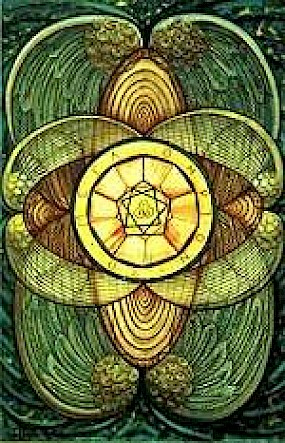
TheAce of Disks marks, on the everyday level, the start of a new project, which is likely to be successful. So it will come up to show a new job, or a new business venture. Usually this will be the sort of project that seems to continuously keep on growing, with each level of attainment producing – almost of itself – the next step in the journey.
Sometimes the Ace will come up to indicate a sudden change of material fortune, or a windfall – though either of these would have to be quite substantial to invoke the Ace. Aces are always big influences, marking the beginning of something new and important. So if we see the card coming up to represent a sudden input of funds, expect this to cause major changes in the querent’s life.
On a more spiritual level, this card relates to the Earth, and to the appreciation of Nature. It might mark a period where we draw closer to environmental issues, or where we engage in a period of study, contemplation and alignment with Earth forces.
One thing that we often miss, when considering spiritual development, is the way that each development grows out of the last. Anyone who has been involved in the search for spiritual truth will already have experienced the weirdly coincidental manner in which spiritual opportunities and teachers present themselves at the relevant stage in our growth.
There’s a saying – ‘The right teacher only appears when the student is ready’. It is as though we grow spiritually from the inside, the same way that trees do. And in so doing, maybe we develop inner rings – just like a tree’s trunk. The outer ring, just under the bark could not exist without all of the others it encircles.
We’re basically the same. The topic that we are exploring today has grown from all of the earlier topics we have looked into. Our experience is formed in layers, each of which is inter-dependent with the earlier ones. The Ace of Disks relates very closely with this method of human development – it shows us the way we grow. And warns us against trying to skip any of the stages!
March 2023 is that month of the year that everyone is excited about – and a bit frightened of.
In March, the 2 “giants”, Pluto and Aquarius, change signs. I can’t emphasize enough what a bit of a deal this is.
On March 12th, 2023 Jupiter and Chiron meet in a rare conjunction in Aries. This transit is a once-in-a-lifetime opportunity to get in touch with our identity wound and heal it.
In a regular month we have 1, maxim 2 conjunctions… in March 2023, we have a record of 7 conjunctions! Conjunctions are when new planetary cycles begin. This is a very strong forward momentum energy.
On March 21st, 2023 we have a New Moon in the first degree of the zodiac (0° Aries). That’s another huge portal that is being opened.
March 2023 is one of those moments in time that we will come back to again and again. Whether or not something concrete happens in your life – this is when major seeds are being planted. This is when completely new chapters in your life are being written.
But let’s take a look at the most important transits of the month:
March 2nd-3rd, 2023 – Venus Conjunct Jupiter And Chiron
On March 2nd, Venus is conjunct Jupiter at 12° Aries. One day later, Venus is conjunct Chiron at 13° Aries.
Normally, Venus conjunct Jupiter is one of the 5-star transits of the year. Venus conjunct Jupiter is a bubbly, optimistic energy that helps us attract what we want.
This particular Venus-Jupiter conjunction is a bit different. Venus and Jupiter also conjunct Chiron; this time, the emphasis is on healing our emotional and relationship wounds.
You may become painfully aware of how some repressed emotional wounds are influencing your life and your relationships. This sudden awareness of the pattern will help you break the emotional cycle that has been chaining you down for so long.
You will no longer tolerate loose boundaries. You will no longer tolerate living other people’s lives. You will no longer accept living a life that is not an expression of YOUR wants, goals, and potential.
The triple Venus-Jupiter-Chiron conjunction is an incredible opportunity to reclaim yourself.
Be careful! The transit can stir some deep, painful emotions. Don’t respond with temper tantrums. Use these powerful emotions to get in touch with yourself and make the necessary changes from a place of awareness.
March 2nd, 2023 – Mercury Conjunct Saturn
On March 2nd, 2023 Mercury is conjunct Saturn at 29° Aquarius.
29° degree is called an anaretic degree, and it brings important culminations and endings. This is the last transit Saturn makes before leaving Aquarius for good.
There is a sense of urgency in the air. You may feel that this is your last chance to do something that is important to you. You may finally get a resolution on a topic you’ve been working on for weeks, months, or even years. Important news, announcements and outcomes will be revealed.
March 7th, 2023 – Saturn Enters Pisces
On March 7th, 2023 Saturnleaves Aquarius and enters Pisces.
This is one of the BIG transits of the year. One area of your life will come to a natural end; and a new door will be open.
Saturn in Pisces will have quite a different vibe from Pluto in Aquarius.
Saturn in Pisces will ask us to find a deeper meaning in our lives. We’ve been there, done that, now what? What does it all mean? Saturn in Pisces is our opportunity to get clarity around our deepest dreams.
March 7th, 2023 – Full Moon In Virgo
On March 7th, 2023 we have a Full Moon at 16° Virgo.
The Full Moon in Virgo is trine Uranus (at 15° Taurus) and square Mars (at 21° Gemini).
This highly energetic Full Moon makes me think of the 7 of Cups Tarot card. We may have lots of options to choose from. But too many opportunities can bring confusion. Which one should we focus on?
Thankfully, the common-sense Virgo energy will help us choose wisely. It’s not about quantity, but about quality.
March 12th, 2023 – Jupiter Conjunct Chiron
On March 12th, 2023 Jupiter is conjunct Chiron. This is once again one of the most important transits of the year. I know I keep repeating myself but March 2023 is really when all the action happens.
You have felt the Jupiter-Chiron conjunction building up for more than a month now. We are really feeling this transit at a collective level. We all feel vulnerable and exposed.
Old wounds will resurface and we will again be reminded of painful experiences we haven’t fully processed. Jupiter conjunct Chiron will help us connect the dots and see what’s the bigger picture behind these wounds, revealing the crucial role they have served in our development.
Jupiter conjunct Chiron is also a great moment in time to find a teacher, a guide, or to become a teacher yourself.
March 16th, 2023 – Venus Enters Taurus
On March 16th, 2023, Venus enters Taurus, her domicile sign. We all know that when Venus is happy, everyone is happy. Amid turbulent transits, Venus in Taurus is that sweet reminder that everything will be alright.
March 16th, 2023 – Mercury Conjunct Sun
On March 16th, 2023, Mercury is conjunct Sun at 27° Pisces.
In March, there’s Saturn, there’s Pluto, there’s Jupiter, there’s Chiron, there’s just so much going on!
And one of the extra things on your plate is the Mercury-Sun conjunction in Pisces.
We are now in the middle of the current Mercury cycle which started back in early January. A project you’ve been working on will now come to life. Some new information you get access to might help you make an important decision.
March 19th, 2023 – Mercury Enters Aries
On March 19th, 2023 Mercury enters Aries.
Mercury will sprint through the first sign of the zodiac. We have only 16 days of Mercury in Aries!
This month, we have a very interesting astrological backdrop where on one hand we are asked to deal with lots of change, and on the other, we don’t really have time to process it (Mercury travels super fast, all planets are direct).
In March, there is no guide or compass. We will have to go with the flow.
March 20th, 2023 – Sun Enters Aries
On March 20th, 2022 Sun enters Aries and we have the Spring Equinox in the Northern Hemisphere and the Autumn Equinox in the Southern Hemisphere. No matter where you live on Earth, the day is equal to the night.
0° Aries is the first degree of the zodiac, so Sun’s ingress into Aries also marks the beginning of a new astrological year. This is a great time to press the ‘reset’ button and start all over again.
The upcoming month is also when we celebrate the Aries people in our lives. We all have something to learn from Aries’ boldness and drive.
This is a time to “just do it” – to follow your instinct and step outside your comfort zone. If something feels right, then it probably is!
March 21st, 2023 – New Moon In Aries
Soon after the Sun moves into Aries, the Moon joins in, so on March 21st, 2023, we have a New Moon at 0° Aries.
The New Moon is conjunct Neptune (25° Pisces), conjunct Mercury (5° Aries), sexile Pluto (29° Aquarius) and square Mars (28° Gemini).
The New Moon in Aries is our bridge between life before March 2023, and life after March 2023. We are still anchored in our our dreams and ideas (New Moon conjunct Neptune). But we now seize new opportunities (New Moon conjunct Mercury).
Change is in the air! There’s an impatience to “act now, or never” (New Moon square Mars). Thankfully, Pluto is there to support us. The new chapter of our lives is build on the solid foundations of our past efforts.
March 23rd, 2023 – Pluto Enters Aquarius
On March 23rd, 2023, Pluto enters Aquarius.
Pluto’s ingress into Aquarius is by far the most important transit of the year, and if you have planets or angles in Aquarius, one of the most important transits of your life.
Pluto only changes signs once every 20 years on average, so when it moves into a different sign, it will start to activate a completely different area of your chart. The impact will be quite dramatic.
Pluto will only spend 3 months in Aquarius in 2023, but that’s enough to give us a taste of what’s about to come in the next 20 years of our life.
I will write an extensive report about Pluto in Aquarius closer to the date. In Plutonic fashion, we are also preparing something behind the scenes at the Astro Butterfly school – more details coming soon.
March 25th, 2023 – Mars Enters Cancer
On March 25th, 2023, Mars enters Cancer. Even if Mars is in fall in Cancer, it’s a fair assumption to say that most people must be looking forward to Mars finally switching signs. It’s been a long 8 months. We are so much “done” with Mars in Gemini. A change – any change – is welcome!
March 28th, 2023 – Mercury Conjunct Jupiter
On March 28th, 2023, Mercury is conjunct Jupiter at 18° Aries.
Mercury’s yearly encounter with Jupiter is our opportunity to go BIG in everything that Mercury stands for. If you want to give a speech or a presentation for example, then your message will be more inspirational and reach more people’s hearts.
With Jupiter, there’s also a tendency to exaggerate or over-idealize an idea, but sometimes we need Jupiter’s infusion of optimism to articulate something that is important and needs to be heard.
March 30th, 2023 – Venus Conjunct Uranus
March 2023 ends on a high note with a Venus-Uranus conjunction at 16° Taurus.
We had an identical Venus-Uranus conjunction (at 16° Taurus) in June 2022. This is v.2 of last year’s transit. Some surprise encounters and opportunities may set you on an exciting, new trajectory in your life. Say YES!
How to Read a Book, originally published in 1940, has become a rare phenomenon, a living classic. It is the best and most successful guide to reading comprehension for the general reader. And now it has been completely rewritten and updated.
You are told about the various levels of reading and how to achieve them – from elementary reading, through systematic skimming and inspectional reading, to speed reading, you learn how to pigeonhole a book, X-ray it, extract the author’s message, criticize. You are taught the different reading techniques for reading practical books, imaginative literature, plays, poetry, history, science and mathematics, philosophy and social science.
Finally, the authors offer a recommended reading list and supply reading tests whereby you can measure your own progress in reading skills, comprehension and speed.
Suppose a person is very concerned about the ethical issues around food and farming, especially animal welfare, but for whatever reason finds that a wholly plant-based diet does not work for them. What is the most defensible step away from veganism – the best compromise to make, if it is a compromise at all?
About a year ago, this question became vivid to me soon after I set out on an experiment: a near-vegan diet for a month. For some time, I have tried to eat in a way mindful of ethical issues, avoiding, albeit imperfectly, the products of inhumane factory farming. But I have eaten animal products, including meat and fish, regularly. After I spent a lot of time in recent years working on questions about animal minds (initially trying to understand octopuses and other cephalopods, and then moving on from there), the ethical questions around food began to feel quite pressing. So I wanted to find out how I felt on a diet with almost no animal products.
My plan was near vegan, as I allowed myself two eggs each day, and some minor deviations (I didn’t worry if I was given butter for my toast, didn’t query the details of Thai sauces and stayed with my usual fish oil tablets). The eggs were included because, ever since another series of dietary experiments a few decades earlier, I have found that a high-protein and fairly high-fat diet is best for my general wellbeing. So, I thought, two eggs would help smooth the transition, along with protein supplements. Free-range eggs I see as the most ethical of all widely available animal products. Some vegans hold that eating eggs of any kind is unethical, while others at least see this choice as more defensible than other animal foods. (Peter Singer, in his book Animal Liberation, regards free-range egg production as acceptable.)
The aim of the experiment was to look at the possibility of heading towards veganism, and to do this primarily for animal welfare reasons. I accept some of the arguments against meat made on environmental grounds, but the issues around animal suffering are primary for me.
To my surprise, the experiment quickly became an illuminating failure. The regimen was, after just a few days or so, much harder than I had expected. I felt unsettled, tired and much of the time quite cold, surprisingly (in February in Australia). Heartburn, headaches, inattention … it did not go well. On day 10, I decided to change plans and add some dairy products to the diet for the middle third of the month. This transition was just as surprising as the previous one. Immediately I felt fine, with all those problems out of the picture. I felt better than fine, in fact – very sharp. Ten days after that, I resumed the near-vegan regime. The results were as discouraging as before, and I switched back. By the end of the month, I’d spent half of it mostly vegan and half as a vegetarian.
Perhaps I should have stuck with the first, mostly vegan diet, and waited to get used to it. (My understanding is that one’s microbiome, one’s gut ecology, has to make a shift.) But I was reluctant to do this, especially during the Covid-19 pandemic. With that unsettled feeling, day after day, I suspected I was more vulnerable to pathogens than usual. I expected to catch Covid-19 at some stage (as I did, a month or so later), and wanted to be physically well-equipped to fight it off.
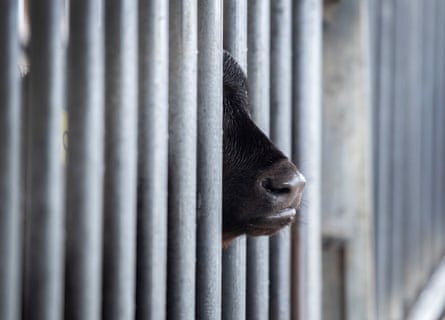
A calf peeks out of a fence at a Florida dairy farm. Photograph: Cristóbal Herrera/EPA
I realise that this was a very short experiment. But the moments of transition between the various diets posed some choices in a clear way. Suppose one decides that a wholly plant-based or near-vegan diet is not going to work, and something must be added. If one is looking for one step away, thinking primarily about animal welfare questions, then three options appear that have completely different kinds of justification:
Humanely farmed meat (especially beef)
Wild-caught fish
Dairy products (conventionally farmed)
These aren’t really the only three options (I will look at others below), but they are some obvious and available ones, within a developed-world urban or suburban setting. Let’s say, initially, that the goal is to choose one of these as the step away. Which should it be?
Isaid above that they have different kinds of justifications and, when one looks closely, something like an incommensurability appears in the situation. This term from philosophy means that you can’t measure or compare alternatives using a common standard that is fair to all of them. No suitable “common currency” or measuring stick is available. These three possible ways of going shopping bring on board quite different ways of looking at the moral issues.
Let’s clarify each option before looking at the ethical side. When I talk about humanely farmed beef, in option 1, I have in mind beef produced so humanely that it makes sense to think that the cows have a good life overall, and a life that is better, most likely, than the life that nearly all nonhuman mammals might have. This is not just supermarket meat labelled “free range”, but a smaller fraction of what is produced. This meat tends to come from specialist butchers who work with individual farms. In many cities, this is obtainable now. It tends to be expensive when compared with less humanely produced meat, and that means it won’t be a feasible choice for everyone. But where it is a live option, it’s certainly worth considering. (What about humanely farmed chickens, pigs, and so on? Yes, they are included, but each case is a bit different and I am going to focus a bit on beef.) These animals have a good life overall. On the other hand, killing is an inevitable part of this kind of farming, and perhaps there is something intractably bad in the practice of raising sentient animals to be killed.
One might instead opt for wild-caught fish (and some other wild-caught seafood) – option 2. In that case, killing is also part of the picture, but our relationship to the animals’ lives is very different from what we saw in the first option. Our role here is to cut short a life that would end anyway; we do not raise the animals to kill them. (If an animal is raised to be fished or hunted, I don’t include it here.) I think that the deaths involved in commercial fishing are probably not especially awful, compared with the deaths that would follow in the wild. But death is death, taking place at our hands, and the numbers involved are huge.
The third option is dairy. I could become one of those epicurean vegetarians who don’t eat meat but have an impressive knowledge of the endless international subtleties of cheese. Here the problems are different. I think that the lives of dairy cows within conventional farming are bad. They are probably nowhere near as bad as those of factory-farmed pigs, but worse than those of cows on humane farms who are being raised to be eaten, perhaps often worse than those of conventionally farmed beef cattle (though I am not sure, and this will depend on the details of the lives in both cases).
I would rather be reincarnated as a beef cow on a humane farm than a dairy cow in nearly any modern dairy
Why do I assume, in this option, that the dairy products are conventionally farmed? Why not assume that this choice involves special, humane farming, as seen in the beef option? When I was thinking about the choices during my experiment, dairy produced in a very humane way was not available where I live, though beef was. This is no accident. It appears to be quite difficult to bring dairy farming close to the welfare level seen in the best humane farming of beef cattle, while remaining economically feasible. I do know of one dairy farm in Australia that is exemplary in this way – How Now Dairy. This farm keeps cows and calves together, sharing the milk; there is no early separation. Some cheese is made using that milk, though it is not easy to obtain where I live. (Disclosure: I own a small number of shares in this dairy.)
It may be that this kind of humane dairy can survive and expand, in which case a dairy option might be clearly best. But, at the moment, much of the milk, cheese and butter eaten by vegetarians is produced in a way that is quite cruel. Does it make a difference to choose “organic” dairy? The rules for “organic” status vary from place to place (as dairy farm conditions do more generally). In some settings it probably does make a significant difference, in others less so. In addition, much cheese has traditionally contained rennet, an enzyme taken from the stomach lining of calves that have been killed, and this has made cheese a more problematic choice for vegetarians. A lot of cheese can now be made with rennet substitutes, though.
Suppose, again, that the dairy products being considered are conventionally farmed, or something close to it. When one eats this food, one is not eating the body of an animal that was killed to be eaten (as in options 1 and 2). One is instead eating something made as food by an animal that remains alive. And a cow often produces 40,000 litres of milk, or more, during its life within modern farming – that is a lot of food (for example, 4,000kg, which is more than four tons, of cheddar). If we ignore waste and the like, then even if one ate half a pound of cheese every day for 50 years, one would eat the output of roughly one cow.
However, that cow’s life is usually far from a good one. Cows must be pregnant, or have recently given birth, in order to produce milk, and the result is an endless cycle of pregnancies through the cow’s rather short life, with the calves removed almost immediately. In some countries, many or most dairy cows are kept indoors for their entire lives. If reincarnated after my own death, I would rather come back as a beef cow on a humane farm than a dairy cow in nearly any modern dairy. Humane dairy with cow and calves together might be best of all, but I am assuming, again, that this is harder to achieve economically than humane beef farming.
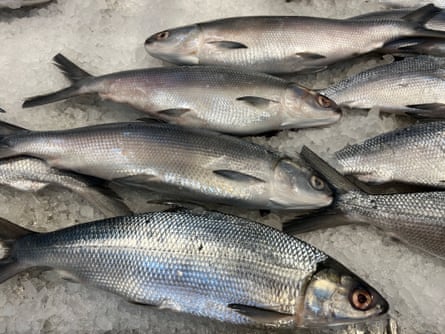
Milkfish at a grocery store in Mississauga, Ontario. Photograph: Creative Touch Imaging Ltd/NurPhoto/Rex/Shutterstock
As I thought about this, I had an initial sense that there ought to be a best choice between the three. I’d be willing to choose any of them if I thought it was clearly the best. When I say that, I don’t mean that I’d never lapse from such a choice, but I don’t see that as the relevant standard. It would be good to have a sense of the best goal to pursue, even if it’s pursued with some flexibility or at least unreliability. But when we look more closely at the arguments, through different avenues of reasoning any of the three might be put on top.
In support of conventional dairy: killing a sentient animal might be a unique harm, and the dairy option minimises it. Far fewer animals are involved, in comparison with the other two options. In the count of lives lost, we should also include a bit over half of the calves that a cow produces. All the males and some of the females will be killed fairly quickly. Their bodies will be put to some use, but they are seen as low-value animals. The body count for dairy will still be much lower than the other options, though.
This argument in favour of the dairy option is, in a way, a pessimistic argument. The practice is agreed to be bad, but there’s not too much of it. In contrast, the humane-beef option has a kind of positive defence. From several ethical viewpoints, this practice may be a positive good. It is familiar to note that a utilitarian might mount a defence like this, where a utilitarian is someone who counts up the totality of good and bad consequences from an action, and assesses the action purely in those terms. But it’s not just utilitarians who might be on board with this kind of beef farming. Utilitarians, controversially, do not worry about the distribution of good and bad consequences over different individuals; one person’s enjoyment, if sufficiently great, can compensate for others’ pain. In the case of humane beef farming, the defence given can be one that counts the good and bad consequences of the practice for each animal individually. Animal X does well overall, over the course of its life, and the costs and benefits to animal Y, or human consumers, need not be in the picture.
In the case of sustainable fishing, I don’t think an argument could be made that this is a positive good for the fish (unless a later death would be a lot more unpleasant). But this practice might be defended by arguing that humans, in this case, are just resuming their historic position in natural food webs. We are not, as with dairy and humane beef, instituting a new and different set of relationships between our lives and the animals’. All of the fish we kill will die one day anyway, and we did not organise, curate, or confine their lives.
The eating of farmed fish would not be included in a defence of seafood of this kind. The animal welfare problems associated with fish farming, at least in many forms, appear to be serious. Fish farming would not receive a defence via any of the avenues discussed in this essay. What about the farming of marine animals for which questions about suffering are either out of the picture or at least much less concerning? Cases of this do probably exist – oysters, clams, mussels – but this is a shorter list than once seemed likely. The list will probably not include shrimp, for example. On the other hand, my defence of eating wild-caught fish would also apply to wild game – (wild) venison and wild boar, for example. Some people might think those cases raise special problems, as mammals are being hunted. The numbers are also much smaller, though.
Would all wild-caught seafood have the same arguments applicable to them as apply to wild-caught fish? Not necessarily, as the handling of wild-caught marine animals can be unusually cruel in some cases, as seen in the boiling alive of lobsters and other crustaceans.
I do feel the incongruity in the claim that humane farming of any kind that includes death might be a positive good. But many views get themselves into awkward places in this area. In the picture below, I have a couple of frames from a short video that was posted on Twitter by an organisation called Animals Australia. My admiration for this organisation, I want to say at the outset, is just about boundless. For many years, they have opposed the extraordinarily cruel live export of sheep and cattle from Australia to the Middle East, and have done many other impressive things, as well. My questioning of this social media message should be read with that as background.
Images from short video that was posted on Twitter by Animals Australia. Photograph: Twitter
The suggestion in the video is that, by choosing plant-based foods, we can give cows “the life they dream of” – a happy, low-stress life. But if plant-based foods come to dominate human diets, the result will not be a “happy cow” scenario, but something closer to a “no more cows” scenario. There will be no reason to give cows any sort of life at all, except perhaps for a few in zoos and the like (and zoos, of course, raise another set of ethical questions). If we want there to be happy cows, in any numbers, that entails a continuation of farming of some kind. This makes vivid the idea that humane beef farming might be justified as a positive good, rather than something that’s not as bad as what happens at present.
I’ve not written this essay as a dialectical exercise in which a particular conclusion is picked out in advance and I want to entice or cajole the reader into getting to the same place as me. I don’t know where the discussion leaves me. Looking at it dispassionately, the arguments for humanely farmed beef seem good, but I do share some of the unease that vegetarians have about this option. Both the other options have their advantages, and I don’t see any of them as inherently unreasonable.
One response to this situation might be: choose all of them! Spread the choices around. If one did this, everything one ate would be defensible on some line of thinking. I sympathise, though, with the rejoinder that says: make up your mind!
A recent line of thought in moral philosophy becomes relevant here. Some hold that if one is working out what to do in a situation of uncertainty about various moral arguments, one should do a kind of “expected value” calculation, choosing the action that comes out best when all the moral theories that might be right are taken into account. If one is torn 50/50 between utilitarianism and a Kantian view based on rights and duties, for example, one can try to find choices that look OK on both. If one is more of a utilitarian but has some Kantian doubts, one can weight utilitarian reasons higher, but still look for something that makes some sense if the Kantian view is right. This talk of a moral theory turning out to be right, in roughly the way that the weather tomorrow will turn out one way or another, seems philosophically off base to me, but I can also see the practical appeal of this move. What would it mean in this case? Might it mean that one can indeed mix or combine the three, or does that ignore that fact that, according to some of the moral outlooks that would figure in the accounting, killing sentient beings is an enormous harm?
Finally, I realise that at least some of the options I am considering here do not “scale up” to yield a solution to questions about diet for humanity as a whole, especially in the long term. These reflections are intended for people right now, in situations where all three of the options discussed are feasible everyday choices, given a person’s economic situation and what is available to them. The future will probably be different, including not just advances in plant-based foods but, if the technology works out, a lot of cultured or lab-grown meat. The fact that, at some time in the future, our food choices will look very different does not change the fact that we do have these choices now. And at least for people whose constitution resists veganism, the choice is vivid. I am not left, at the end of all this, with a definite conclusion.
What do you think?
Peter Godfrey-Smith is professor of history and philosophy of science at the University of Sydney. This essay was originally published in Aeon.