Jalāl al-Dīn Muḥammad Rūmī, also known as Jalāl al-Dīn Muḥammad Balkhī, Mevlânâ/Mawlānā and Mevlevî/Mawlawī (September 30, 1207 – December 17, 1273), but more popularly known simply as Rumi, was a 13th-century Persian poet, Hanafi faqih, Islamic scholar, Maturidi theologian and Sufi mystic originally from Greater Khorasan in Greater Iran. Wikipedia
This image of a solar flare was captured by NASA’s Solar Dynamics Observatory on January 10, 2023. Solar flares are powerful bursts of energy. Flares and solar eruptions can impact radio communications, electric power grids, navigation signals, and pose risks to spacecraft and astronauts. This flare was classified as X1.1. The strongest flare ever recorded was in 2003, classified as X28. Credit: NASA/GSFC/SD
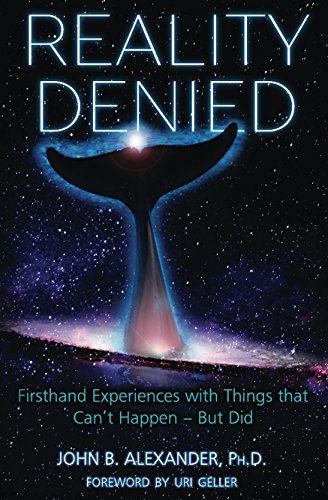
REALITY DENIED confronts conventional wisdom with events that, although quite real, seem to challenge the revered “laws of science,” proving them to be wrong or incomplete. The thorny issues of life after death, mind over matter, UFOs, remote viewing, telepathic communications with animals, and more are all addressed from Col. John Alexander’s firsthand perspective. Here physical and spiritual domains collide, providing glimpses of worlds beyond everyday reality.
“Highly recommended!” — Dr. Eben Alexander, author of “Proof of Heaven”
“When Alexander speaks, I listen.” — Dr. Richard Bandler, co-developer of NLP
“Extraordinarily courageous book…” — Dr. Larry Dossey, author of “One Mind”
“Explicitly challenges traditional scientists…” — George Noory, Coast to Coast AM
“An insider’s take on enigmas…” — Dr. Raymond Moody, author of “Life after Life”
“The universe confronted, if not transformed…” Stanley Krippner, Saybrook University
“Prepare to have your world rocked!” William Bengston, Society for Scientific Exploration
JOHN B. ALEXANDER, Ph.D., is a retired senior Army officer with decades of experience with a wide range of phenomena. Traveling to all eight continents, he has encountered events that defy common explanation. He has met with shamans in the Amazon, the Himalayas, the Andes, East and West Africa, and Northern Mongolia. In Tonga, he dived in open ocean with humpback whales, and was involved with telepathic experiments with wild dolphins in the Bahamas. A psychic adventurer, he practiced psychokinetic metal bending, fire walking, and caused a white crow to fly for the National Academy of Sciences. A founding board member of IRVA, he is a past-president of IANDS, and former SSE councilor. Straddling two worlds, he is also retired from Los Alamos National Laboratory, and served on studies with the National Research Council, the Army Science Board, the Council on Foreign Relations, NATO, and was a senior fellow of a DoD university. Dr. Elisabeth Kübler-Ross headed his doctoral committee. His website is at johnbalexander.com.
Meditation can reduce stress and improve emotional regulation.
GETTY IMAGES
You’ve probably heard someone talk about the benefits of meditation. Countless studies and experts have praised the practice’s transformative qualities.
It’s true—meditation can affect the brain and body in myriad ways, from reducing the risk for chronic diseases to lowering the risk for anxiety and depression.
Maybe most notable in the age of burnout is meditation’s impact on stress levels and its ability to reduce the fight or flight reaction, or the acute stress response that activates your sympathetic nervous system and can raise blood pressure.
“Fighting and fleeing was an adaptive response back when there were saber-toothed tigers, but it’s not very adaptive when the stressor is the morning commute or anticipating a bad email,” Dr. Elizabeth Seng, an associate professor of psychology at the Ferkauf Graduate School of Psychology at Yeshiva University, tells Fortune.
Being mindful through meditation can reduce rumination on negative thoughts and help you stay in the present moment. This can alleviate that heightened stress response in everyday situations.
“You’re teaching yourself to be non-judgmentally aware of the present moment,” Seng says, who works with people taking up meditation for her research. “We want them to be more focused on what’s going on right now than regretting what happened in the past or worrying about what will happen in the future.”
Over time, practicing mindfulness through meditation can improve concentration, clarity, and help us process our emotions more effectively, Maria Gonzalez, a mindfulness coach and author of Mindful Leadership: The 9 Ways to Self-Awareness, Transforming Yourself, and Inspiring Others, tells Fortune.
How meditation affects the brain
Research shows meditation reduces stress, anxiety, and depression symptoms. A 2016 study found that longer-term meditation practice was associated with structural changes of the “white matter” in the brain, which is responsible for “relaying sensory information” and can explain why meditation helps people stay in the present moment and may help combat age-related cognitive decline.
The practice also enhances attention, and increases the ability to cultivate awareness around emotions so they don’t bubble up later, Gonzalez says.
Practicing meditation regulates breathing, Seng says. Unlike being in fight or flight mode, when our stress response jumps into action, meditation enacts the parasympathetic nervous system which is in charge of calming our nerves.
Imagine a highway system with an infrastructure bill, Seng says. If you keep investing in roadways toward places you don’t want to go, those roads only get longer. Our mind works in the same way. The more we fester, catastrophize, and overanalyze, the windier that road becomes, meaning the more our mind gives it validity to keep going.
Mindfulness meditation can help us instead stop the unwanted pathways in their tracks and focus on a smaller dirt road of acceptance, presence, and gratitude, that in time, will also extend the more we give it credence. We slowly create new connections in the brain that teach us to let unwanted thoughts pass by like a train car versus internalize them and lose focus.
“You build more and more neural connections with these pathways, and therefore, it’s easier for you to go down this path,” she says.
How does meditation affect the body?
Given that meditation reduces stress, and chronic stress is a risk factor for other health problems, our physical bodies benefit from meditation.
“So many chronic illnesses are exacerbated by your body being in fight or flight all the time,” Seng says. These chronic illnesses include heart disease and sleep problems.
Stress also lowers immunity, which is why we sometimes feel like we get a cold when we are overwhelmed like studying for an exam. When cortisol (the stress hormone) constantly surges, it depletes the body. When the body relaxes, the immune system doesn’t get challenged.
Routine meditation for 8 weeks was also associated with helping migraine symptoms 6 months after the practice, in a study Seng authored this year.
“Our studies have found that mindfulness produces big changes in headache related disability, which is basically like how many days you didn’t go to work, or weren’t able to be with friends because of migraine attacks,” she says.
For those experiencing chronic pain, meditation also increases symptom awareness. When people can detect subtle symptoms earlier they can intervene and take medication or other proactive measures immediately, Seng says.
How long do you need to meditate to see results?
Studies point to 8-weeks of meditation practice to see results. One study found improvements to memory, emotional regulation, and mood with 8 weeks of 13 minutes of meditation a day. But there isn’t a magic number.
Gonzalez, who has trained over numerous leaders in the practice, says as little as 10 minutes can make a difference. What matters most is dedicating yourself to the technique (that means not checking work notifications in the middle of a practice).
Whether guided meditation, meditation on-the-go, counting your breath, or repeating a mantra, being intentional about committing to mindfulness matters the most.
“If someone were to follow their breath, 10 minutes a day, every single day, I would be really surprised if they didn’t experience benefits,” Gonzalez says.
Seng says starting slowly and incorporating meditation into your day in any form is better than doing nothing.
“Finding something that you do think you can do the most. That can be more important than starting a stopwatch,” Seng says.
“Be quiet in your mind, quiet in your senses, and also quiet in your body. Then, when all these are quiet, don’t do anything. In that state truth will reveal itself to you.”
Kabir (1440-1518) Indian Poet
AN OPPORTUNITY FOR DAILY REFLECTION BROUGHT TO YOU BY THE SCHOOL OF PRACTICAL PHILOSOPHY
The poet Jane Hirshfield invites us to embrace habits of deep noticing and attention — and observe the beauty that unfolds.
Friday, March 3rd, 2023 (NYTimes.com)
I’m Ezra Klein. This is the “Ezra Klein Show.”
Something I’ve noticed is when I do episodes that are deep in the arts or the humanities, I feel the need to really put my shoulder into selling them. If it’s a show on Ukraine or the Republican Party, the topic sells itself. But poetry — does poetry sell itself?
But I want to try to avoid that kind of intro here. Because this is a lovely episode, in part because it’s not a linear argument that is easy to describe. And that is, I think, the point of it, too, that great poetry is not a linear argument. It’s an effort to get beyond that way of thinking about the world, to open yourself up to the deficiencies of it, an effort I’m trying to make more and more myself these days.
So my guest today is Jane Hirshfield. She’s a poet. She’s the author of many collections of poetry, including her most recent “Ledger,” which is probably the book of poetry I’ve gifted to others most often. She’s also the author of two very beautiful books of essays on poetry and how it works and the poetic mind. And if you are intimidated by poetry, I really recommend these, “Nine Gates, Entering the Mind of Poetry” and “Ten Windows, How Great Poems Transform the World.” As always, my email, ezrakleinshow@nytimes.com.
Jane Hirshfield, welcome to the show.
Jane Hirshfield
Thank you. It’s wonderful to be here.
Ezra Klein
One thing that has shifted in your poetry in recent years is that it has turned to the climate crisis. You said in an interview that during the years when you were writing “Ledger,” which is the newer collection, the crisis of the biosphere went from something imagined as future to something current, arrived. How did that shift in your sense of it change your poetry?
Jane Hirshfield
Well, the shift changed me. I had felt a sense of urgency — forgive me for revealing my age, but — since 1970, when I went to the very first Earth Day. It’s not as though everything we are living through now was not knowable then. Carter had solar panels on the White House roof. Imagine if we had paid attention 50 years ago.
But with the California fires and drought, with the Christmas tsunami, which is the one thing which, I suppose, was not a man-made event but recalibrated the man-made ones — made me think about the ethical difference between what we have caused and the — forgive this word — ordinary catastrophes of the natural world. It simply became — I had been writing about climate for a long time. I had been writing about the imperiled natural world for a long time. But it became urgent when it became clear it was no longer future. It was here.
Ezra Klein
Could you read for me the poem “Let Them Not Say,” which is one of the poems that opens up “Ledger“?
Jane Hirshfield
Yes. “Let them not say. Let them not say we did not see it. We saw. Let them not say we did not hear it. We heard. Let them not say they did not taste it. We ate. We trembled.
Let them not say it was not spoken, not written. We spoke, we witnessed with voices and hands. Let them not say they did nothing. We did not enough. Let them say, as they must say something, a kerosene beauty. It burned. Let them say we warmed ourselves by it, read by its light, praised, and it burned.”
Ezra Klein
There’s a striking moment in that poem to me around a kerosene beauty.
Jane Hirshfield
Yes.
Ezra Klein
And I read that as you acknowledging that a lot of what we’ve invented, a lot of what we’ve done, a lot of the damage we’ve done has a beauty to it, a wonder to it. Air travel is beautiful. Electric light is beautiful. Trains are beautiful.
Tell me about the act, the decision, the intuition to acknowledge that beauty in a poem motivated by this kind of fear of the future’s judgment.
Jane Hirshfield
Well, I think that is key to what makes a poem be a poem, is that it is not an advertisement. It is not a piece of propaganda. It is not a screed. It is something which tries to see the wholeness of things from every angle and every side in order to see more clearly, truly, to feel more deeply, widely, and, perhaps, tenderly.
And I’m so glad that that line struck you, because it is a key line. And it is perfectly true. It also holds — besides holding the beauty of everything we have made and the instrumentality of everything we have made, I have spent years reading by kerosene lamps.
And I always feel, if I’m going to speak of these things, that the poem should hold some acknowledgment of the fact that I, too, am creating the problem. I drive a car. I fly on airplanes. I have electric lights.
And my own complicity in what we are doing must be acknowledged. No good poem is ever going to be accusatory. A bad poem might be. But a good poem will not do only that.
And what this poem is was trying to do, I think, was trying to find — because when I begin my poems, I don’t know what they are going to say. I know the first few words that start them, and then I find out what I’m going to say —
I knew that I myself am amongst all of us who are making this future, which will look back on us and see what we have done and whether we have done not enough or not.
Ezra Klein
What do you mean when you say that when you begin a poem, you don’t know what you’re going to say?
Jane Hirshfield
The only thing I knew when I started this poem was the opening words of it: Let them not say. Those words came into my mind. And then the next words came into my mind: We did not see it. And then the next words came into my mind: We saw.
I had some sense that during that time — this was written in 2014 — writing into the crisis of the biosphere was much on my mind. So that was in my unconscious. But consciously, when I write a poem, I listen. I almost never have a preconceived idea of what I’m trying to do or how I’m trying to do it. I have something that troubles me, that fractures me, that requires a different kind of thought and feeling in order to be worked through. And out of that sense, some words will come. I think a poem is a collaboration of conscious and unconscious minds, the way a dream is.
Ezra Klein
Tell me about something you said a moment ago, which is that a good poem is never accusatory.
Jane Hirshfield
So, for me — there might be somebody else who would have a different definition of a good poem, and they are entitled to their own taste and their own preferences. But, for me, if a poem points a finger and shakes it at another person, it is a narrowing of understanding. You can do that without poetry. You don’t need a poem to say j’accuse and point your finger.
But poems are, for me, always an attempt to see from more than one point of view in more than one way, to enlist the collaboration of tongue, heart, mind, body, everything I have ever experienced, and to try to write into an awareness which is larger than the everyday, walking around forms of thought.
Walking around in the everyday, I can have a flash of anger towards certain decisions which are made in the halls of power. But that’s not poetry. Poetry is almost the opposite of that. Poetry is the attempt to understand fully what is real, what is present, what is it imaginable, what is feelable, and how can I loosen the grip of what I already know to find some new, changed relationship, to find something I didn’t know until the poem was written and finished? And then I know something new, and I have been changed.
So the thing about a simple accusation, what’s different before and after that? Nothing. You knew how you felt before, and you knew how you felt after, and there’s been no transformation. But for me, poems are vessels of transformation. They are the glass crucible that a chemical reaction takes place in. And what comes out at the end is a different thing than what went in at the beginning.
Ezra Klein
One of the things that has attracted me to reading a lot more poetry in the last couple of years — and yours in particular — is — I want to call it a fascination, but I think I mean a yearning to have a more poetic mind. And I don’t mean, in that, artistic or beautiful.
But I mean something more along the lines of what you’re saying, which is an openness, that openness to transformation. And so I’m curious here not so much about the artifact of the poem, but the relationship between that state you’re in, that receiving state, where you describe almost channeling something and the production of the thing. We can say what a poem does or doesn’t do. But I’m interested in how you attain that state where you can do that.
Jane Hirshfield
Yeah. So for me, it is recognizably a different condition of being than the person who goes out and buys groceries. Now, when I was young, there was a quicker oscillation between the two. And maybe when I was going out to buy groceries, I would more often be hit by a poem right that moment, and stop and write it down.
But in recent decades, I need to find my way to a more vulnerable and permeable state of being, where I can hear the voice which is otherwise drowned out by what Gregory Bateson used to call purposive consciousness. And purposive consciousness is very useful to our species, but it is not the entirety of how we know the world, or how we navigate the world, or even how we change the world.
My experience is, I must be quiet. I must feel protected, so protected time and space. I can’t write a poem if part of my mind is thinking, oh, at 10:30, I need to leave to go see the dentist. Because I need to be able to fall into the condition of listening and dreaming through words and sounds and music and images that arise and magnetize themselves into being.
And you can’t be watching the clock and do that. And you can’t be expecting the phone to ring. And you certainly can’t be checking for emails. And so this sense of a sort of monastery of consciousness, a sequestration, a rowboat in the middle of the lake — everybody will have their own image for this.
But I think only when I feel that I can deepen my relationship to what I hear and see and feel and allow to come through me, that’s when the discoveries are made. And writing is an act of discovery.
Ezra Klein
I want to ask you, then, to read — I think what may be my favorite poem of yours, which is from your book “The Beauty,” called “My Skeleton.”
Jane Hirshfield
Mm.
“My Skeleton. My skeleton, who once ached with your own growing larger, are now each year imperceptibly smaller, lighter, absorbed by your own concentration.
When I danced, you danced. When you broke, I. And so it was lying down, walking, climbing the tiring stairs. Your jaws. My bread.
Someday you, what is left of you, will be flensed of this marriage. Angular wristbone’s arthritis, cracked harp of rib cage, blunt of heel, open bowl of the skull, twin platters of pelvis — each of you will leave me behind, at last serene.
What did I know of your days, your nights, I who held you all my life inside my hands and thought they were empty? You who held me all your life in your hands as a new mother holds her own unblanketed child, not thinking at all.”
Ezra Klein
One thing I appreciate about this poem, which is true for a lot of your poems, is that it brings a very close awareness to something that is always close to us, and we are very rarely aware of. And I’m curious — because it is something you do often — how that process works for you.
Jane Hirshfield
So thank you, first, for noticing that. Because I do think that for me, one large element that goes into this life of poem-making is a matter of noticing what is ordinarily unnoticed, both for me personally and also for poetry’s work in the world. Other things can look at what’s in the spotlight. Poems like to look at what’s out at the periphery and find out what can be learned from that.
So here we are, always walking around inside what will someday become our skeleton, at least, momentarily. And I began to think about it. And I began to think about it. There has been an increasing awareness of science in my poems for quite a long time now. And some of the things in here that might slip by without noticing are just scientifically true.
So that a skeleton each year grows imperceptibly smaller, lighter, absorbed by your own concentration, that happens. First, the skeleton grows and grows stronger. And then in an increased age, we all know older people get smaller. And this is by a process of the bone being absorbed.
And so this fact, which I’d probably been carrying around for many years before I wrote the poem, suddenly stepped forward and began the speaking of it. And then once I had the idea of, oh, what is my relationship to my skeleton? And, why haven’t I noticed it much? Why haven’t I given it its full credit and gratitude for all the work it’s doing for me all my time?
And, of course, we will go our separate ways at some point. And, what of that? And the process of thinking this through, of saying this through, of thinking “your jaws, my bread” also became, during the writing of the poem, an investigation, which carries on through a lot of the poems.
The opening section of this book, “The Beauty,” that came out in 2015, it starts with a run of poems whose title is all “my” something or other. And taken as a whole — I realized after I had written them — they are all investigating, where does the self begin and end? This question of, is my skeleton me? Am I it? And, what do we do about the fact that selves aren’t actually terribly stable or definable things? Because they are, in the end, inseparable from everything. They are wonderful narratives. They are stories we usefully walk around inside of that evolution gave our species, this world of ideas and concepts and self-regard and the feeling that our own fate is very important for us to take care of.
But I was also very interested in, what is our interconnection to what is beyond my own fate? And my skeleton is mostly beyond my own fate. It was given to me. And maybe it makes a difference if I run every day or don’t run every day or what I eat. But it has its own life. And we conduct ourselves, for however many decades on Earth, as a kind of chorus of two, my lived life and my physical body that it cannot ever happen without.
Ezra Klein
This gets, for me, at something that has been striking about — I don’t want to suggest I have enough awareness of poetry to say modern poetry. But a lot of the poetry I seem to read, which is — I think there’s a reputation of poetry, particularly, contemporary poetry, as very abstract, very intellectualized.
And yet, so much of it is about bodies, animals and the natural world.
Jane Hirshfield
Yes.
Ezra Klein
There’s a deep, intense focus on the tangible material existence we have, in a way that now seems quite different to me than other intellectual disciplines. And I’m curious why — first, if that feels right to you. But if so, why do you think that is?
Jane Hirshfield
Well, it feels entirely right to me. But I do think that our job as poets — as I mentioned a little bit earlier, one of the jobs of all art is to look at what the central focus of the culture is not looking at. And one of those things in our current moment is certainly embodiment, not the body as object of ads about how to make it more attractive, but our actually lived, embodied knowledge, experience, and the complete joyousness of remembering that we are animals.
It is also, I think, one of the ways that poetry expands the knowable. Don’t forget the word “know” itself. There’s the biblical meaning of know, which is carnal knowledge, which is get into bed together and have a wonderful time. That is part of what human beings need to know.
It is also part of the seat of our sense of ethics, our sense of justice or injustice. These are bodily informed. All of the emotions are felt physiologically. You can name where in the body you feel them, how they are turning, whether we find them enormously pleasurable or excruciatingly painful.
And this is the information of a social species. It is extraordinarily important that we honor and preserve that, or we will just continually be slaughtering one another because we haven’t got the subtlety to recognize, oh, I have just created a separation, and that makes it harder to be with this person and do something with them, and I need to correct that somehow. Or, I have just embarrassed myself terribly.
And the three excruciating emotions are shame, embarrassment, anxiety. Grief is pure. Grief is unbearable but bearable. Embarrassment is just unbearable. It is through the body that we know these things. And when it is unbearable and excruciating, we have learned, quite sharply: Behave differently.
So poems hold this physical love of the world, affection for the world. And, again, we will not save this Earth and all the beings upon it because it’s a good idea. We will save this Earth and its beings because we love it. We love them. We love life. We love being alive for the moment or two that we are in the immense span of time.
And poetry is where you get to dwell in these things. Because it’s not trying to do other things. It is its task to reunite us with the senses, with our hungers, with our emotions, with our physical connection to the bones inside of our hands that we so often ignore — unless we have arthritis and they hurt.
Ezra Klein
I want to go back to something you gestured at there, which is what we do and don’t know of the body. My favorite stanza in that poem is, “What did I know of your days, your nights, I who held you all my life inside my hands and thought they were empty?”
A couple of years ago, I read a book about emotion by Lisa Feldman Barrett. And one of the big points of that book is that emotions are constructed as we interocept, as we get sensation from the body. But part of what’s interesting about that is how much sensation we don’t get, which, when you start thinking about it, is really strange. I mean, do we feel arthritis in the hands? Or I can feel digestion, or I can feel my breath if I concentrate. But I can’t feel protein synthesis or cells replicating or thinking — I don’t feel electricity going across my brain. I don’t feel anything that my liver is doing at the moment. It’s very strange how much is happening in the body, and we are getting no sense data from that.
So the line, “What did I know of your days,” I know nothing of its days, almost. And yet, if any of those things stop happening, that’s the end of the thing I think of as me.
Jane Hirshfield
Exactly so, exactly so. And, slightly strange association, the wonderful thinker Ivan Illich wrote a book called “Shadow Work” some decades ago, where he talked about all of the unacknowledged labors that sustain communities and what actually happens in the world.
But within our bodies, there is an enormous amount of shadow work going on. And every once in a while, I get to stop and thank it. Because that’s what poems can do, is they can look and say, ah, I forgot to be grateful for the fact that the bones in my feet are all working.
Then I can look up in this strange world of information we live in. And when I write a poem that talks about our hands, I can rather quickly find that there are 54 bones in our hands and put that in the poem, which is in a different poem in “Ledger,” I think it is.
And somehow, crossing the barricade between what is foreground and what is background is very important to me for my own sense of leading as full and broad a life as I am able to, to take more and more of the unseen and — at least once or twice in a life — bow in its direction, recognize how interconnected and dependent all things are and how continuous we are with those we love, with our friends, with the community that sustains us, with the strangers who we will never meet, but who are all making this world together, and then with the cells and the trees and the lizards.
There is that old idea, Lynn Margulis, the Gaia hypothesis, that in fact, this world — that we are part of a single-bodied world, Gaia, the same way that the cells of my wrist bones are part of me.
I think that’s a nice place to ask you to read another poem, which is from right next door in the same collection, “My Proteins.”
Jane Hirshfield
Yes. So the one thing I need to say before reading this for people is to remind them that the word “protein” comes from the Greek god Proteus. And the way proteins work is by folding and unfolding. That’s how they do the work they do in the body.
So the poem began with a New York Times Science Times page article saying that scientists had figured out how itch works. So it began with talking about itch.
But somewhere along the line, it morphed into the — then not much spoken of, but now pretty widely recognized — microbiome, that there are millions of small beings making their lives inside of us. And that’s part of it all too. That’s part of the story of self, non-self, beyond self.
“My Proteins.
They have discovered, they say, the protein of itch — natriuretic polypeptide b — and that it travels its own distinct pathway inside my spine. As do pain, pleasure and heat. A body it seems is a highway, a cloverleaf crossing well built, well traversed. Some of me going north, some going south.
Ninety percent of my cells, they have discovered, are not my own person, they are other beings inside me. As ninety-six percent of my life is not my life.
Yet I, they say, am they — my bacteria and yeasts, my father and mother, grandparents, lovers, my drivers talking on cell phones, my subways and bridges, my thieves, my police who chase myself night and day.
My proteins, apparently also me, fold the shirts. I find in this crowded metropolis, a quiet corner where I build of not-me LEGO blocks a bench, pigeons, a sandwich of rye bread, mustard, and cheese.
It is me and is not, the hunger that makes the sandwich good. It is not me then is, the sandwich — a mystery neither of us can fold, unfold, or consume.”
So yes, that does rather illustrate everything we have just been talking about. When I was a child, I would lie in bed at night and ponder, when I eat a peanut butter and jelly sandwich, when does it stop being a sandwich and start being Jane? So I was a very metaphysical child.
Forbes Breaking News • Mar 4, 2023 Marianne Williamson launches her 2024 campaign for President at Union Station in Washington, D.C. Fuel your success with Forbes. Gain unlimited access to premium journalism, including breaking news, groundbreaking in-depth reported stories, daily digests and more. Plus, members get a front-row seat at members-only events with leading thinkers and doers, access to premium video that can help you get ahead, an ad-light experience, early access to select products including NFT drops and more:
New Thinking Allo • Mar 2, 2023 Andrew Harvey and Carolyn Baker, PhD, are coauthors of Radical Regeneration: Sacred Activism and the Renewal of the World. Andrew Harvey is the founder and director of the Institute for Sacred Activism. He is a religious and mystical scholar, Rumi translator, and spiritual teacher. He is author of more than 30 books, including The Way of Passion: A Celebration of Rumi, The Direct Path: Creating A Personal Journey to the Divine Using the World’s Spiritual Traditions, and The Hope: A Guide to Sacred Activism. His website is andrewharvey.net. Carolyn Baker, PhD, works closely with the Institute for Sacred Activism. She is a former psychotherapist and professor of psychology and history who writes the Daily News Digest. She offers life and leadership coaching and spiritual counseling. She is author of several books including, Undaunted: Living Fiercely into Climate Meltdown in an Authoritarian World, Dark Gold: The Human Shadow and the Global Crisis, and Collapsing Consciously: Transformative Truths for Turbulent Times. Her website is carolynbaker.net. Andrew Harvey and Carolyn Baker, PhD, offer ways to navigate the “dark night of globe” with sacred activism that is a marriage of the mystic’s passion for God and the activist’s passion for justice that can birth a new divine human race. 00:00 Introduction 02:57 Transformational resilience 14:59 Being proactive and shadow work 17:13 Dark night 19:39 New humanity 25:15 Joy and encouragement 33:22 Needing each other 39:26 Kali Yuga 40:59 Sacred activism 57:21 Conclusion Edited subtitles for this video are available in Russian, Portuguese, Italian, German, French, and Spanish. New Thinking Allowed CoHost, Emmy Vadnais, OTR/L, is an intuitive healer and health coach based in St. Paul, Minnesota. She is the author of Intuitive Development: How to Trust Your Inner Knowing for Guidance With Relationships, Health, and Spirituality. Her website is https://emmyvadnais.com/ (Recorded on February 8, 2023)
Saturn enters Pisces on March 7th, 2023. This is one of the most important transits of the year. Saturn only changes signs once every 2.5 years!
In Pisces, Saturn will join forces with Neptune, helping us turn those Neptunian dreams into realities.
Saturn and Neptune will not meet in a conjunction, but by sharing the sign, they will get to know each other better, and agree on a common approach. When Saturn and Neptune will eventually meet at 0° Aries a few years later, they will be creating a completely new reality.
In the last 5 years, Saturn has been “at home” in Capricorn and Aquarius, working hard to build new structures (Capricron) and a new society (Aquarius).
Saturn in Pisces has a completely different vibe! Pisces’ agenda is not to build, or manifest. Pisces is a water sign that is associated with intuition, spirituality, and creative expression.
Saturn Vs. Pisces
Pisces and Saturn are VERY different. Saturn is structured, planned and goal-oriented. Pisces is fluid, all-encompassing, and goes with the flow… or with the tide.
To Pisces, there’s no “one way” to go about things. Life is a journey, not a destination. Rules are meant to be bent.
Is not that Pisces cannot follow rules; but there’s much more flexibility and “work-aroundness”. Pisces is highly perceptive and sensitive to the environment, and the first to notice when the tide changes.
Pisces is the last sign of the zodiac. It has seen it all, done it all. Pisces is not so interested in worldly achievements, but in a deeper sense of meaning.
In the last 5 years we’ve worked hard. We’ve built some great stuff that we couldn’t have built without Saturn’s determination in its home signs. Now what? What do these achievements actually mean?
In Pisces, Saturn is no longer concerned with climbing the ladder, but with finding a deeper sense of meaning. Pisces is where we connect with the divine.
In Pisces, the only structure Saturn is interested in building is a stairway to heaven.
Everything in life is a little bit of history repeating. To get a feel for what to expect from Saturn in Pisces in the next 3 years, let’s go back in time to see what happened when Saturn was in Pisces.
Saturn is in the same sign every 29-30 years, so the last time Saturn was in Pisces from 1993 to 1996 and from 1964 to 1967.
Saturn in Pisces 1964-1967
The Civil Rights Act of 1964: In July 1964, the Civil Rights Act, which banned racial discrimination in employment, education, and public accommodations was signed. Pisces is a compassionate, inclusive energy, and Saturn made inclusiveness (Pisces) lawful.
The Vietnam War: the war began in the early 1960s, and escalated during Saturn in Pisces. This period was marked by protests and anti-war activism in the United States and around the world.
Beatlemania: The Beatles rose to international fame, and their popularity was at its peak. Among the displays of deity-like worship, fans would approach the band in the belief that they possessed supernatural healing powers.
In 1966, John Lennon controversially remarked that the group had become “more popular than Jesus”. There are many ways to reach the divine, and music is one tool – especially when Saturn is in Pisces.
Chinese Cultural Revolution: In April 1966, Mao, the founder of the People’s Republic of China, launched the Cultural Revolution, a campaign aimed at purging capitalist and traditional elements from Chinese society. A law (Saturn) that alters culture (Pisces) is another great example of the workings of Saturn in Pisces.
Miranda warning: In June 1966, Arizona Supreme Court ruling established the Miranda warning, a legal requirement that police must inform criminal suspects of their constitutional rights before questioning them. “You have the right to remain silent” is a very evocative metaphor for Saturn in Pisces.
Saturn in Pisces 1993-1996
Nelson Mandela: In May 1994, Nelson Mandela is inaugurated as the first black president of South Africa.
Grunge music: In the mid-1990s, the Grunge music movement, which originated in Seattle, became increasingly popular. Bands like Nirvana gained widespread fame and influenced a generation of musicians. Just like with Beatlemania, Saturn in Pisces are times when musicians and artists get cult-like followings.
Amazon: In July 1994, Amazon.com, the world’s largest online retailer, was founded. Amazon is a metaphor for the Piscean oceans; you can find everything on Amazon, while Saturn brought the infrastructure (marketplace, logistics, etc.)
WTO: In January 1995, the first World Trade Organization (WTO) was founded. Trade, and especially global trade, is very Piscean (the first traders were seafarers). And once again, Saturn came to formalize these commercial exchanges.
MP3: In July 1995, the MP3 audio format was introduced, revolutionizing digital music. We have music “Pisces” finding new forms of expressions and delivery (Saturn).
Windows: In August 1995, Windows 95, Microsoft’s groundbreaking operating system, was released. Software is a Piscean theme, and Saturn came with the structure. “Windows” is a metaphor for Saturn’s framework, as well as for Pisces’ vastness and endless possibilities.
Saturn in Pisces 2023-2026
Saturn makes things real, so when in Pisces, Saturn will try to give spirituality a container of concrete expression.
People all over the world – even people who are not necessarily the “woo woo” type, can become more interested in spiritual practices like meditation, music, prayer, yoga – and exploring their connection to the divine.
Saturn in Pisces will encourage artistic expression. Pisces is the artist of the zodiac; Saturn will invite us to materialize our creative drive.
If you’ve always dreamed about picking up painting or music, when Saturn is in Pisces, it’s time to do something concrete about it: buy a watercolor set, get music lessons, or enroll in a pottery workshop.
Saturn is also a great time to go on retreats, travel to far away places, and learn about different spiritual practices.
Saturn in Pisces – Heaven On Earth
Pisces is represented by 2 fish swimming in different directions, but tied together with an umbilical cord. This is a symbol for the gestation phase when we are with one foot in 3D, ready to emerge, and with another foot in 5D, in the peaceful, self-sufficient space where no action is needed.
Pisces has a foot in two worlds. Pisces still remembers – and longs for – the paradise lost, represented by the safe space in our mother’s womb.
The 3D material reality is completely different. We are no longer plugged into support. We need to survive, work hard, and look after ourselves. But we still long for 5D.
In the 3D reality, we connect with that 5D space where we’ve come from by falling in love, listening to music, immersing ourselves in art, or engaging in spiritual practices. Addictions and substance abuse are other ways to disconnect from reality and “get lost” in the Piscean ocean of oneness.
What about Saturn? Saturn’s modus operandi is building and manifesting. Saturn’s goal is to make things real. When in Pisces, Saturn will try to bring heaven here on earth.
Of course, it’s not all sunshine and roses. There’s an intrinsic contradiction between Pisces and Saturn. Saturn is dry and solid. Pisces is wet and fluid. Saturn is not in his element in Pisces.
Saturn is a “what you see is what you get” type of energy. With Saturn, we know where we stand. When Saturn enters Pisces, we may no longer know where we stand.
With Saturn in Pisces, we may struggle to reconcile our practical and spiritual needs. Our attempts to “meditate more” or “do more yoga” in the hope that it’s structure and hard work (Saturn) that will help us find enlightenment (Pisces) may leave us drained, confused and disillusioned.
But every transit is an opportunity. Pisces can learn a great deal from Saturn’s hands-on, “what you see is what you get” approach. And Pisces can help Saturn loosen up a bit.
If we approach Pisces in a goal-oriented, practical Saturnian fashion “I’ll meditate 2 hours for 3 months to heal my anxiety” we may not get anywhere.
But if we’re humble, if, from a place of not knowing we apply Saturn’s discipline and commitment like an apprentice – not like a master – then we might end up getting a taste of paradise.
When Saturn is in Pisces, the end goal is not the point. It’s the act of surrendering to the unknown that will guide us to places we’ve never been before.
Consciousness, spirituality, biography, sexuality, androgyny, futurism, space, the arts, science, astrology, democracy, humor, books, movies and more




 The mountainous regions of California have received more than 40ft of snow since the start of the season. Photograph: Caroline Brehman/EPA 2023