“Star Vision” by Robert McEwen, H.W., M.

MOON IN PISCES
Saturday December 23 6am pacific.

This is a time of compassion and romance. Imagine and visualize the highest qualities. Spirituality is felt in the emotional center. Know with your psychic abilities to feel the energy.

Be clear in your communications and loving expressions to all people in your life. Do not jump into the water with others problems however by trying to fix them.

Align your energy with beingness. Ontological astrology relates the archetypes to the vision of Truth and oneness.

Astrology readings available, as well as holiday gift certificates upon request. Please text your birth information: time, date and place:

503 706-0396.
30 minutes $50
60 min. $75
paypal:  robbystarman@aol.com

–Robert McEwen, H.W., M.

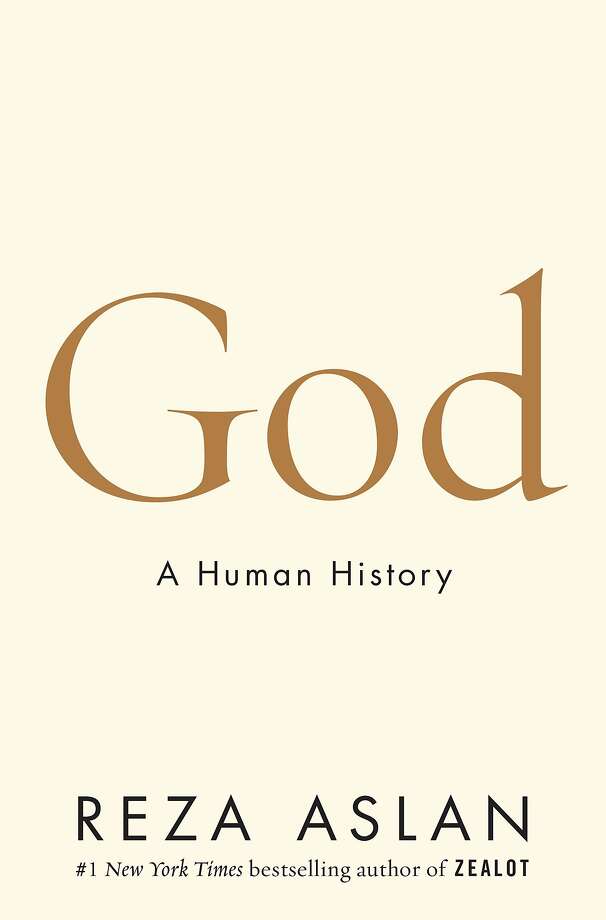
Book: “God: A Human History” by Reza Aslan

December 18, 2017 (SFChronicle.com)

Halting Auction, France Designates Marquis de Sade Manuscript a ‘National Treasure’

By 

The original manuscript of “120 Days of Sodom, or The School of Libertinage,” by the Marquis de Sade.CreditThibault Camus/Associated Press


LONDON — The writings, etched in dark ink on a small scroll, tell the sordid story of four debauched aristocrats who lock themselves away in a castle to play out their wildest sexual fantasies, which run the gamut from orgies and animals to torture — including placing a firework up a bottom.

Even their author — the Marquis de Sade, the 18th-century French nobleman whose libidinous antics helped break sexual mores and inspired the word sadism — considered his work “the most impure tale ever written since the world began.”

France considered Sade such a notorious philanderer that he was jailed under royal orders in the late 1700s, including in the Bastille prison in Paris for over a decade, just before it was stormed by revolutionaries. It was during this time that he wrote his salacious text.

But more than two centuries later, on Tuesday, the French government recognized his work, titled “120 Days of Sodom, or The School of Libertinage,” as a national treasure.

The government decision came just a day before his work was about to be sold off at an auction in Paris, and means that the document, Sade’s earliest work of fiction, may not be taken out of the country for at least 30 months. During that time, the state is expected to shore up funds to purchase it at international rates, according to officials involved in the sale and the government decision.

Officials also designated André Breton’s “Surrealist Manifesto” as a national treasure.

Sade’s work, written on a scroll measuring 39 feet long and just four inches wide, “is a serious document of literature, of France’s literary history,” said Frédéric Castaing, an expert on 18th-century manuscripts and a member of a commission that advises the government on what works should be designated as national treasures.

“Without a doubt, it is a writing that challenges, that reaches into the depths of humanity, of the obscure,” Mr. Castaing said. Sade, he added, was one of France’s most influential authors of the 18th century, alongside Voltaire and Diderot, and inspired the Surrealist movement in the 20th century.

The Ministry of Culture said that the manuscript was “remarkable,” given the prison conditions in which it was written and its extraordinary journey through different hands. The ministry also pointed to the work’s “sulfurous reputation” and its influence on a number of 20th-century French authors.

Photo

A portrait of Sade by Charles Amédée Philippe van Loo.

The writing, it said, “is of great significance, as much as it is his first work as it is his most radical and most monumental.”

The manuscript of “120 Days of Sodom” was expected to go for up to 6 million euros ($7 million) on Wednesday, as part of a sale of historic manuscripts owned by Aristophil, a French investment firm whose founder was charged last year with operating one of the art world’s biggest scams.

The firm went bankrupt in 2015 after buying more than a hundred thousand manuscripts. The entire collection is being liquidated in a process that could take years.

Claude Aguttes, of the namesake auction house who is handling the sale, said the French government had agreed to buy the works by Sade and Breton “at international market rates.”

Mr. Aguttes said “120 Days of Sodom” was the last known work by Sade to be held in private hands. But that could change, he said, if the government fails to come up with the cash within the next 30 months, after which the manuscript’s sale could open up once again to foreign buyers.

Sade kept his manuscript hidden behind a rock in his cell in the Bastille but he was unable to smuggle it out with him when he was transferred to an asylum in 1789, a loss that caused him to weep “tears of blood,” according to scholars.

The document went through various hands, including French aristocrats, a German collector, and most recently a leading collector of erotica in Switzerland. The work and Sade’s other writings were banned from publication in France and overseas until the early 20th century, when a limited circulation found an audience in Surrealist circles and, surprisingly, the medical community.

“It is the most extraordinarily shocking thing ever written,” said Will McMorran, a lecturer at Queen Mary University of London who translated“120 Days of Sodom” into English in 2016, the first time in decades.

The tale tells about the 150 “passions” or perversions committed by a duke, a bishop, a banker and a judge, as told by four aging prostitutes. The acts, which involve a group of teenagers, increasingly turn violent and criminal, ending in some cases in murder. “The passions become more and more criminal,” said Mr. McMorran. In one instance, Sade “kills a girl by putting a firework up her bottom.”

Other acts involve children and pregnant women. “It is a very disturbing text,” he said.

“It is a remarkable transition for an author who was in prison” for his sexual aberrations, he added, “and whose work is now under lock and key.”

“To Juan At The Winter Solstice” by Robert Graves

There is one story and one story only
That will prove worth your telling,
Whether as learned bard or gifted child;
To it all lines or lesser gauds belong
That startle with their shining
Such common stories as they stray into.

Is it of trees you tell, their months and virtues,
Or strange beasts that beset you,
Of birds that croak at you the Triple will?
Or of the Zodiac and how slow it turns
Below the Boreal Crown,
Prison to all true kings that ever reigned?

Water to water, ark again to ark,
From woman back to woman:
So each new victim treads unfalteringly
The never altered circuit of his fate,
Bringing twelve peers as witness
Both to his starry rise and starry fall.

Or is it of the Virgin’s silver beauty,
All fish below the thighs?
She in her left hand bears a leafy quince;
When, with her right hand she crooks a finger, smiling,
How many the King hold back?
Royally then he barters life for love.

Or of the undying snake from chaos hatched,
Whose coils contain the ocean,
Into whose chops with naked sword he springs,
Then in black water, tangled by the reeds,
Battles three days and nights,
To be spewed up beside her scalloped shore?

Much snow is falling, winds roar hollowly,
The owl hoots from the elder,
Fear in your heart cries to the loving-cup:
Sorrow to sorrow as the sparks fly upward.
The log groans and confesses:
There is one story and one story only.

Dwell on her graciousness, dwell on her smiling,
Do not forget what flowers
The great boar trampled down in ivy time.
Her brow was creamy as the crested wave,
Her sea-blue eyes were wild
But nothing promised that is not performed.

Robert Graves


(Submitted by Gwyllm Llwydd.)

Below The Surface: A Drone and AI Expedition | Intel


Parley*SnotBot [not a misprint, read on] is a collaborative mission to gather data from whales and the oceans using transformative, non-invasive technology tools like modified drones that collect the blow, or snot, exhaled from whales when they surface to breathe, and artificial intelligence to analyze the results in real time. See the story of the scientists and Intel technologists who are changing the face of marine research.

(Submitted by Michael Kelly.)

How the Blockchain Revolution Will Decentralize Power and End Corruption

Brian Behlendorf (BigThink.com)

Technology Entrepreneur

When the world has gone corrupt, who can you trust? Blockchain is stepping up. The word might ring a bell for its connection with Bitcoin, but internet pioneer Brian Behlendorf is looking at this technology beyond its use in cryptocurrency. Blockchain is an open ledger system where transactions are irreversibly recorded and immediately shared to a distributed network of witnesses (companies, agencies, individuals). The beauty of this idea is in its decentralization—if no one person or institution holds power, then that power cannot be abused. The potential for this technology is enormous: it could significantly lower corruption and eliminate fraud in many industries like banking, freight, construction, and even trace the provenance of goods like diamonds. “Blockchain technology allows us to build these same kind of systems but in a world where we don’t want to or we can’t trust central actors,” says Behlendorf. Here he describes how a blockchain system is being used to protect civilian land titles in developing nations, and demonstrates how blockchain could have prevented or severely lessened the impact of the 2008 financial crisis. Brian Behlendorf is the executive director of Hyperledger; for more info, visit hyperledger.org.

  • Transcript

TRANSCRIPT

Brian Behlendorf: What are the strengths of the blockchain technology? The strengths are that we can take many business processes today—and by business processes you might even include land titles and buying and selling a home, you might include provenance tracking of products like diamonds and food supply, that sort of thing. One of the real strengths is being able to take these systems that today depend very much on bureaucracy and paperwork—very human processes for sure, but processes that get bogged down—and actually automate them and cut the cost of a lot of this, but also, by automating them, improve the auditability of them.

People pay a lot of money to have third-party auditors come in and make sure that the claims that are in their books are actually real. It’s a tremendous burden and it’s why bureaucracy often requires three signatures to do anything interesting. To send a shipping container, for example, from Asia to the United States, about half the cost of that is in the paperwork involved in coordinating between 20 to 30 different organizations for sign off, from the biller materials all the way to the person it’s delivered to.

If blockchain technology can help us automate these systems, make them more efficient, it may also ensure that we keep the opportunities for fraud and the opportunities for corruption to a minimum. If we make it hard to steal people’s land, or to ship illicit product in shipping containers—or simply in approving a permit for construction on your home, holding that up for days or months until you pay me an expediter fee—which all too often happens in home remodeling—if we can make these processes a bit more automated, more transparent, then I think we can do a lot to improve society in these ways.

And that kind of wraps together two or three different advantages of this. The other advantage is: it’s a fun space to be in. There’s a lot of dynamic thinking going on, a lot of new companies, a lot of technologists talking about very far-off concepts, and it’s finally a place to get people excited about technology, especially as it is so much about decentralization.

What are the challenges? One of the challenges right now for sure is that it’s early days with the technology. There are a couple of places where there’s clearly a lot of value being created, there’s clearly a lot of activity, say, in the cryptocurrency space, but in many ways, again, like the early days of the web we don’t yet know what the big winners will be from the technology, but we know that this is something everybody will need in one way or another.

So the challenge right now is that there are a lot of options, and many of them are fairly immature when it comes to actually building and running them for big systems. That’s one reason we’ve chosen, at Hyperledger, to focus on: what are the simplest things we can do now and ship out as product that people can use that they can actually run?

And the second thing is really understanding that—and this is really hard for many industries and many actors in industries—every use case I could give you around where blockchain technology is applicable, you could always come back to me as a technologist and say, “Wouldn’t this be more efficient, faster, cheaper to do as a central database? Isn’t somebody just going to pull a Google or pull an Amazon and build a central database to track all the fish supply catches and shipping this or that?”

And the answer is always yes, that it is more efficient and cheaper, but it’s also expensive when you think about the cost of having, politically and from a business perspective, having a central actor in a marketplace. Many marketplaces simply don’t want that.

The banks of the world don’t want one big bank at the center. People who care about their land title worry about the corruptibility of the land title office. In certain countries that’s a big issue.

Blockchain technology allows us to build these same kind of systems but in a world where we don’t want to or we can’t trust central actors. And that’s hard to wrap your head around, especially because everyone believes they can be trusted. “Hey, if I’m the center of a market you can trust me! What do you mean you can’t trust me?” It feels like a very personal affront, perhaps, even to say that. But it’s essential, I think, to realize you can’t really grow your market beyond those who can really trust you if that’s your business model.

So that’s, I think, hard for some people to get the conceptual model around, just like it might’ve been hard in 1993 to understand what it means to send an email to someone on the other side of the planet or to buy a television or buy a car through a website. You would’ve been told you were crazy to think that people would be doing that in 1993, now we take it almost for granted. So these are the challenges, but I see many people addressing these challenges.

But most recently I was a venture capitalist. And so I looked at a lot of different companies, including companies in the Bitcoin space, and increasingly the blockchain space, and I was kind of bored by all the examples I was given until I saw one company approach us and talk about land titles and emerging markets. Land titles—why would that be interesting?

Well, there’s an economist named Hernando de Soto who wrote a book ‘The Fortune at the Bottom of the Pyramid’, who talked about how in many countries citizens don’t have title to the land that they might have been living on for generations.

Where a title is something we understand as a set of documents recorded by a county registrar or in a government office that allows us to prove not only to someone we’re hoping to sell some property to that we actually own it, but also prove to a mortgage lender that we have this property, and we’d like a loan and if we fail to pay the loan then they get the property. That’s something that many people in the emerging markets do not have access to or historically have not.

So many countries started to digitize and introduce land titling systems and realized they had a problem where if that was digital it was also very easy for somebody to corrupt.

It’s easy for a government bureaucrat who desired a piece of property, perhaps for their son to have some beachfront property north of the capital or because an oil company wanted to come in and drill, it was pretty easy for them to step in and erase all history of somebody’s ownership of property in a way that—because it’s digital—disappears forever. When something is paper, yes, you can set fire to a paper record, but it’s actually really hard to completely eliminate a rich paper trail in something like land title.

So this is a problem and the solution to that problem that this company had come up with was to implement a land title system as a distributed ledger, as a database—but one that is shared immediately, every time something is recorded into this database it’s shared with a large circle of other companies and agencies and NGOs that act as witnesses for that transaction.
And if somebody’s land was taken away from them, A, it would be noticed very quickly; that person would have a history of what happened on that property and they would be able to see that immediately, but B, if their signature wasn’t on the right document, it wouldn’t even be accepted as a transaction on that network.

So land titling, and the reason I bring it up here is this is interesting when you’re talking about a country like Honduras or the Republic of Georgia or Estonia like other countries that have started to adopt this for economic development reasons, but think about the mortgage crisis in 2008.
For any of you who have seen the movie ‘The Big Short’, you remember these scenes of panic selling of these instruments which were tranches of risk in the mortgage industry where nobody really had a clear understanding of what the underlying assets were, the houses and the mortgages that pointed to those houses; who owned the paperwork for those mortgages? Who owned the title on those homes? This was data that was lost inside of these bureaucracies that didn’t have the manpower to respond to the queries, and in many cases you ended up with people selling assets for pennies on the dollar and for people with homes with 95 percent paid-off mortgages getting eviction notices from somebody who owned less than a percent of the interest in that mortgage.

All of this to say there are many people who believe that if blockchain technology had been implemented at the beginning of the 2000s for the land title and mortgage industry, not only would you have had the data there to understand who owned these assets, but those mortgages, if they had been built as smart contract systems and those tranches of risk as smart contract systems, that unwinding process where everybody felt like they needed to move out of that asset might have been a more orderly, programmatic, ‘Here’s all the data, here’s how it plays out; now we don’t have to sell it for pennies on the dollar, we can sell it for ten percent off of the price that we thought it was actually worth.’

And that might have saved a lot of peoples’ homes, avoided a lot of real friction in the market but also a lot of the volatility that we saw. And so the opportunity for distributed ledgers to both give us new capabilities but also help us with auditing, help us with the stability of markets, even in scenarios where trust is really at a premium—that’s the real potential here. And this might sound like back-office or science fiction kind of scenarios, but that’s what’s driving a tremendous amount of interest in the industry today.

A New Article Reveals What the U.S. Defense Dept. Knows About UFOs

Article Image
(US DEPARTMENT OF DEFENSE)

To civilians, they’re “flying saucers,” but to U.S. military personnel, they’re “TicTacs,” named for the way they often appear on pilots’ displays. That U.S. military personnel even have a name for them is just one of the surprises in a stunning article in the New York Times reported by Helene CooperRalph Blumenthal, and Leslie Kean. Whether you’re a Close Encounters of the Third Kind devotee eager to meet ET, or a Three Body Problem Dark Forester who prays we never do, the article is shocking, and arguably represents a historical inflection point in our attitudes regarding UFOs. It’s based on the testimony from Luis Elizondo, the man who until recently ran the Pentagon’s Advanced Aerospace Threat Identification Program.

Luis Elizondo

Luis Elizondo (JUSTIN T. GELLERSON, NEW YORK TIMES)

Elizondo’s testimony is so startling that Cooper was skeptical at first, only finally becoming convinced after former senator Harry Reid confirmed that he had, in fact, requested and surreptitiously inserted funding for the super-secret program into the Defense Department’s (DoD) budget in 2007. He was supported at the time by two-other then members of the defense spending subcommittee, the late Ted Stevens and Daniel K. Inouye. “This was so-called black money,” says Reid. “Stevens knows about it, Inouye knows about it. But that was it, and that’s how we wanted it.” Reid stands by his actions, saying, “I’m not embarrassed or ashamed or sorry I got this thing going. I think it’s one of the good things I did in my congressional service. I’ve done something that no one has done before.” And absent Reid’s confirmation, we might still be in the dark, since the Pentagon says it closed down the program in 2012; Times sources say it’s still in operation.

It turns out that military personnel have been seeing inexplicable things in the skies for some time. As Elizondo pointed out in The Daily podcast on December 18, 2017, the fact that phenomena can’t be explained doesn’t necessarily mean their source is extraterrestrial, but have a look at this recently released, previously classified DoD footage of one such encounter, and try to imagine that someone somewhere on earth has been secretly able to develop such capabilities.

(US DEPARTMENT OF DEFENSE)

When the TicTac shoots off to the left, Elizondo notes in The Daily that it’s not the camera that shifts — the object is just really that fast. (US DEPARTMENT OF DEFENSE)

Cooper first met with Elizondo in the lobby of an undisclosed hotel near Union Station in Washington D.C. to hear his story. Elizondo had recently resigned his post in a letter to Secretary of Defense James Mattis, feeling that 2012 budget cuts, the stigma attached to UFO research, and obstacles posed by excessive security were preventing the program from effectively serving the DoD, whose “job is to identify and, if necessary, neutralize any threats to U.S. national security.” He felt the Advanced Aerospace Threat Identification Program was not receiving the support it merited, and so he’s now gone public about it.

In his letter to Mattis, Elizondo wrote of “the many accounts from the Navy and other services of unusual aerial systems interfering with military weapon platforms and displaying beyond-next-generation capabilities,” adding, “there remains a vital need to ascertain capability and intent of these phenomena for the benefit of the armed forces and the nation.” A previous director of the program had even written in a 2009 summary, according to the Times, that “what was considered science fiction is now science fact,” concluding the U.S. armed forces were no match against the technology being witnessed by our trained personnel.

The Advanced Aerospace Threat Identification Program has apparently collected numerous audio and video recordings of craft whose source remains a mystery. Blumenthal tells MSNBC that there’s more: “They have some material from these objects that is being studied, so that scientists can try to figure out what accounts for their amazing properties. It’s some sort of compound they do not recognize.” Below is the video from an event over Sand Diego in 2004 involving two Navy F/A-18F fighter jets and…something.

(US DEPARTMENT OF DEFENSE)

The suspicion that the U.S. government knows more about UFOs than it’s willing to acknowledge goes way back to the middle of the 20th century at least, an unsettled corner of the American psyche. To see UFOs suddenly emerge from the X Files and into real life is disorienting, to say the least. Really, it’s jaw-dropping.

We don’t know where these things come from or why, and we have reason to be scared: Are they just observing or preparing for something? But if it’s all really real, we need to start dealing with it. And it seems to be, with Elizondo telling the Times that his team concluded the craft don’t originate from any country’s military, and that “That fact is not something any government or institution should classify in order to keep secret from the people.”

There are so many scientific questions these revelations raise. If the nearest life is hundreds or thousands of light years away, what’s in these craft, exactly, that survives extended travel over hundreds of years? Is there some way of getting around the universe quickly that we don’t yet know about? Is it possible there’s life much nearer by than we’ve imagined? And on and on.

Navy Jets Intercept UFO


The Young Turks
Published on Dec 19, 2017

Do Aliens exist? Ask the Pentagon. Cenk Uygur, the host of The Young Turks, breaks down the IRL Pentagon UFO program. Tell us what you think in the comment section below.

Read more here: https://www.huffingtonpost.com/entry/…

“Days after the The New York Times published an investigative report detailing the Pentagon’s secret and supposedly defunct UFO research program, the military intelligence official who led the initiative is speaking out on one of the universe’s greatest mysteries.

“My personal belief is that there is very compelling evidence that we may not be alone,” Luis Elizondo told CNN’s Erin Burnett on Monday night.

Elizondo, who ran the Advanced Aerospace Threat Identification Program during its tenure from 2007 to 2012, said he no longer works for the U.S. government. The Department of Defense says it shut down the initiative in 2012, but the Times reported that some backers say the program is still operating.

“I will tell you unequivocally that through the observation ― scientific methodologies that were applied to look at this phenomenon ― that these aircraft … are displaying characteristics that are not currently within the U.S. inventory nor in any foreign inventories that we are aware of,” he added.

Elizondo told the Times that he resigned from his role leading the program in October and that a new successor was named.

Check out Elizondo’s full response in the video above.”

Hosts: Cenk Uygur

Cast: Cenk Uygur

***

The Largest Online News Show in the World. Hosted by Cenk Uygur and Ana Kasparian. LIVE STREAMING weekdays 6-8pm ET. https://goo.gl/tJpj1m

Subscribe to The Young Turks on YouTube: https://goo.gl/a3JY9i

Young Turk (n), 1. Young progressive or insurgent member of an institution, movement, or political party. 2. A young person who rebels against authority or societal expectations.(American Heritage Dictionary)

Consciousness, spirituality, biography, sexuality, androgyny, futurism, space, the arts, science, astrology, democracy, humor, books, movies and more